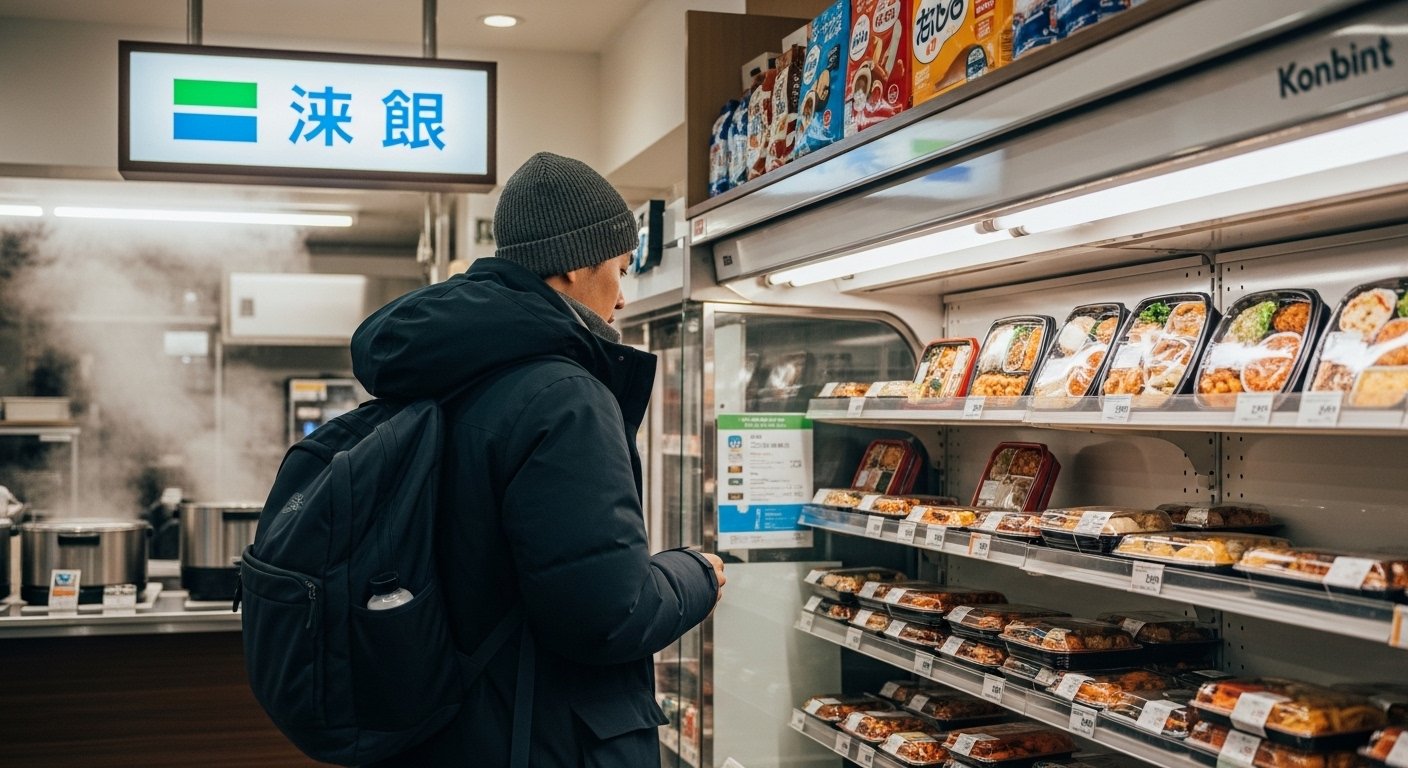
*Images used in this article are for illustration only. They may not be directly related to the content.
Beat the Winter Chill: Your Guide to Warm, Budget-Friendly Japan Conbini Breakfasts
Waking up early in Japan during winter can be exhilarating, especially if you’re aiming to catch that first train or visit iconic spots before the crowds. But when the temperatures drop, finding a warm, affordable breakfast before most cafes open can be a genuine challenge, leaving you feeling cold, hungry, and potentially overspending. You’re looking for quick fuel without compromising on warmth or your travel budget.
This guide is designed to remove that friction. As your local fixer, I’ll show you exactly how Japan’s omnipresent convenience stores – or “conbinis” – are your secret weapon for a satisfying, warm, and wallet-friendly breakfast, accessible 24/7. You’ll learn what to look for, how to get your food heated, and even a few key Japanese phrases to make your morning routine seamless.
Table of Contents
- The Early Morning Breakfast Dilemma in Japan
- Why Conbinis Are Your Winter Breakfast Hero
- Navigating the Conbini for Warmth: Your Visual Guide
- Warm Breakfast Champions at Japan Conbinis
- Getting Your Food Heated Up
- Japan Conbini Breakfast Price Breakdown
- 🇯🇵 Point & Speak: Essential Phrases for Your Conbini Run
- 🎯 Pro-Tips for a Seamless Conbini Breakfast
- 📋 Quick Reference Card: Your Conbini Breakfast Cheat Sheet
- Frequently Asked Questions About Conbini Breakfast
The Early Morning Breakfast Dilemma in Japan
Winter mornings in Japan, especially in cities like Tokyo or Kyoto, can be surprisingly brisk. You’ve planned your day to maximize sightseeing, maybe even beat the crowds to popular shrines or temples. This often means an early start, long before many traditional restaurants or cozy cafes have opened their doors. Finding a warm, substantial meal at 6:00 AM becomes a scramble.
Beyond the limited hours, budget can also be a significant concern. Daily cafe breakfasts can quickly add up, eating into your travel funds. For international visitors, the sheer variety of food items in a Japanese convenience store can also feel overwhelming, making it hard to identify what’s warm, what’s a good deal, and how to even ask for assistance with heating. You want to start your day energized, not stressed or cold.
Why Conbinis Are Your Winter Breakfast Hero
This is where Japan’s convenience stores — 7-Eleven, FamilyMart, and Lawson — truly shine as your local fixers. They are not just stores; they are essential infrastructure, offering practical solutions to common travel challenges. In winter, they become particularly valuable for breakfast.
First, their accessibility is unparalleled. Conbinis operate 24 hours a day, 7 days a week, nationwide. No matter how early you wake up, a warm meal is always within a short walk. Secondly, they are ubiquitous; in any populated area, you’re rarely more than a few minutes from a conbini. This removes the guesswork and wasted time of searching for an open eatery.
Most importantly for winter mornings, conbinis stock an impressive array of warm food options, from freshly brewed coffee to ready-to-microwave meals, all at budget-friendly prices. They provide a quick, efficient, and cost-effective way to get a comforting start to your day without language barriers becoming a major hurdle. Think of them as your personal, always-open pantry and kitchen.
Navigating the Conbini for Warmth: Your Visual Guide
Stepping into a Japanese conbini for the first time can be a sensory experience. Here’s how to quickly locate your warm breakfast options, using visual cues:
-
Step 1: Spot the Store
Visual cue: Look for the distinctive logos: 7-Eleven (orange, green, red stripes), FamilyMart (blue and green stripes), or Lawson (blue milk can logo). These are your primary targets.
What to do: Enter confidently. Most stores have an automatic door and are well-lit.
-
Step 2: Head to the Hot Food Counter
Visual cue: Directly near the cashier, you’ll almost always see a clear glass display case. This is the “hot snack” counter. It’s typically illuminated with warm light, showcasing items like fried chicken, croquettes, hot dogs, and often, steamed buns (Nikuman).
What to do: Browse the items. Point to what you want, or use the English names if the staff is comfortable. For example, “Karaage-kun” at Lawson, or “Nanachiki” at 7-Eleven.
-
Step 3: Find the Oden Pot (Seasonal)
Visual cue: In autumn and winter, look for a large, simmering pot with various items skewered or in mesh baskets, usually next to the hot food counter. This is Oden, a Japanese stew.
What to do: Point to the items you want. Staff will use tongs to place them in a small cup with broth. Don’t be shy; it’s a staple warm food.
-
Step 4: Locate Hot Drinks
Visual cue: Many conbinis have heated display fridges, clearly marked with ‘HOT’ labels, for bottled or canned coffee, tea, and other beverages. For freshly brewed coffee, look for a self-service coffee machine, typically prominent near the cashier or at a dedicated counter.
What to do: Grab a pre-packaged hot drink, or purchase a coffee cup at the register for the self-service machine. Instructions for the machine are usually in Japanese, but visuals are often clear. If unsure, ask the staff for help after buying the cup.
-
Step 5: Identify Microwaveable Meals
Visual cue: Look in the refrigerated sections for bento boxes, pasta dishes, rice bowls (donburi), and sometimes even pre-packaged soups. These items will often have a small microwave icon or text indicating “レンジ対応” (renji taiou – microwaveable).
What to do: Select your item and take it to the register. The cashier will almost always ask if you want it heated.


Warm Breakfast Champions at Japan Conbinis
When you need warmth and sustenance, these items are your best bets for a satisfying conbini breakfast in Japan:
- Oden (おでん): A beloved winter staple. Various ingredients like daikon (radish), boiled eggs, fish cakes, and konnyaku simmered in a light soy-flavored dashi broth. It’s customizable, deeply warming, and very affordable. Choose your preferred items, and the staff will serve them hot.
- Nikuman / Chūkaman (肉まん / 中華まん): Steamed buns filled with savory pork (Nikuman), pizza ingredients (Pizza-man), sweet bean paste (Anman), or various other fillings. Found in the hot food display, these are soft, fluffy, and incredibly comforting on a cold morning.
- Fried Chicken & Hot Snacks: Each major conbini chain has its signature fried chicken (e.g., Lawson’s Karaage-kun, 7-Eleven’s Nanachiki, FamilyMart’s FamiChiki). These are freshly fried, crispy, and served hot, perfect for a protein boost. Other hot snacks like croquettes (korokke) and hash browns are also common.
- Microwaveable Bento Boxes & Rice Bowls: From classic Japanese breakfasts with grilled fish and rice to donburi (rice bowls with toppings like gyudon or katsudon) and pasta dishes, these are designed for quick heating. They offer a more substantial meal than snacks.
- Hot Sandwiches & Wraps: While not as universally available as other hot items, some conbinis offer pre-packaged sandwiches designed to be heated, providing a warm and familiar option. Look for items that specify “レンジ対応” or are in packaging that indicates microwave-readiness.
- Instant Noodles (Cup Ramen/Udon/Soba): Conbinis have a vast selection of instant noodles. While not typically heated by staff, they provide boiling water dispensers, allowing you to prepare a hot, hearty bowl of ramen or udon instantly. A classic budget warmer.
- Freshly Brewed Coffee & Hot Bottled Drinks: A hot cup of coffee, latte, or even a hot bottled tea or soup from the heated display is essential for warming up. The self-service coffee machines offer surprisingly good quality for the price.

Getting Your Food Heated Up
One of the best services at Japanese conbinis is the complimentary heating of microwaveable items. This is particularly crucial for your warm winter breakfast.
When you bring a bento box, rice bowl, or other microwaveable item to the cashier, they will almost always ask you “温めますか?” (Atatamemasu ka?), which means “Shall I heat this up for you?”
Your simple and polite reply should be: “はい、お願いします。” (Hai, onegai shimasu.) – “Yes, please.”
If for some reason they don’t ask, or if you want to be proactive, you can use the phrase provided in the “Point & Speak” section below. The staff will then take your item, microwave it, and return it to you perfectly warmed, often in a small plastic bag to help retain heat. This service is quick and standard, designed for customer convenience.
🎯 Local Pro-Tip: If you’re buying multiple microwaveable items and plan to eat them at different times (e.g., one for now, one for later), politely specify which one you’d like heated. You can point and say “これだけ温めてください” (Kore dake atatamete kudasai – Please only heat this one).
Japan Conbini Breakfast Price Breakdown
One of the most appealing aspects of a conbini breakfast is its affordability. You can easily get a filling, warm meal for less than a typical cafe coffee. Here’s a general idea of what you can expect:
💰 Price Breakdown
| Item | Cost (Approx.) |
| Onigiri (rice ball) | ¥120-250 |
| Nikuman (steamed bun) | ¥150-200 |
| Karaage-kun / Fried Chicken piece | ¥220-280 |
| Oden (2-3 items) | ¥250-400 |
| Microwaveable Bento/Pasta/Donburi | ¥400-700 |
| Freshly Brewed Coffee (Small) | ¥100-150 |
| Hot Bottled Tea/Coffee | ¥130-180 |
Prices verified as of January 2026. A substantial breakfast (e.g., a bento and hot coffee) typically ranges from ¥500 to ¥800.
🇯🇵 Point & Speak: Essential Phrases for Your Conbini Run
While Japanese conbini staff are incredibly efficient and often anticipate your needs, knowing a few key phrases can make your experience even smoother, especially if there’s a slight language barrier. Don’t hesitate to point to this section if you need to!
🇯🇵 Point & Speak
Show this section to staff if you’re stuck. They can read the Japanese.
English: Could you please heat this up?
温めてください。
(Atatamete kudasai.)
English: For here. (When using an eat-in space)
ここで食べます。
(Koko de tabemasu.)
English: To go. (Takeaway)
持ち帰りです。
(Mochikaeri desu.)
English: Thank you.
ありがとうございます。
(Arigatou gozaimasu.)
English: Coffee, please. (After buying a coffee cup to use the machine)
コーヒー、お願いします。
(Kōhī, onegai shimasu.)
🎯 Pro-Tips for a Seamless Conbini Breakfast
To maximize your Japan conbini breakfast experience and make it as smooth as possible:
🎯 Local Pro-Tip: Utilise Eat-In Spaces: Many larger conbinis, especially in urban areas, feature a small “eat-in space” (イートインスペース – īto-in supēsu) with counters or tables. If you plan to eat your heated food there, inform the cashier by saying “ここで食べます” (Koko de tabemasu) when paying. Be aware that items consumed in-store are subject to a 10% consumption tax, while takeaway is 8%.
🎯 Local Pro-Tip: Explore Seasonal Items: Conbinis frequently rotate their stock with seasonal offerings. In winter, look for limited-time Oden ingredients, special hot beverages, or unique steamed bun flavors. These often provide a fresh and exciting addition to your usual choices. Don’t be afraid to try something new.
🎯 Local Pro-Tip: Payment Flexibility: Conbinis are incredibly flexible with payment. Beyond cash, they widely accept major credit cards (Visa, Mastercard, JCB), popular IC cards like Suica, Pasmo, and Icoca (which you likely use for trains), and various QR payment methods like PayPay or LINE Pay. This convenience further streamlines your early morning transaction.
🎯 Local Pro-Tip: Combine for a Balanced Meal: Don’t just stick to one item. A perfect conbini breakfast often involves a mix. For example, a warm onigiri, a piece of fried chicken, and a hot coffee makes for a balanced and warm meal around ¥500. Add a yogurt or a piece of fruit from the refrigerated section for a more complete spread.
📋 Quick Reference Card: Your Conbini Breakfast Cheat Sheet
Screenshot or print this section for easy access on your phone. It’s your compact guide to a warm and budget-friendly Japan conbini breakfast.
📋 Quick Reference Card
Screenshot or print this section for easy access:
- ✅ Open 24/7: Always available for early risers.
- ✅ Warm Options: Look for Oden, Nikuman, fried chicken (hot counter), and microwaveable bentos/pasta.
- ✅ Heating Service: Cashiers will usually ask. If not, say “温めてください” (Atatamete kudasai).
- ✅ Budget-Friendly: A satisfying warm breakfast costs ¥300-¥600.
- ✅ Payment: Cash, credit cards, IC cards (Suica/Pasmo), QR pay are all accepted.
- ✅ Eat-in: Some stores have seating. Say “ここで食べます” (Koko de tabemasu) if using.
Save this image to your phone for quick reference!
Frequently Asked Questions About Conbini Breakfast
Frequently Asked Questions
Are Japanese convenience store foods fresh?
Yes, Japanese conbinis are known for their high standards of freshness and quality control. Food items like bentos, onigiri, and sandwiches are delivered multiple times a day. Hot items like fried chicken and Oden are regularly refreshed to ensure optimal taste and safety, even at early morning hours.
Can I find vegetarian or vegan options at a conbini for breakfast?
Finding strictly vegetarian or vegan options can be challenging, as many items contain dashi (fish stock), meat extracts, or dairy. For breakfast, some onigiri might be vegetable-based (like seaweed or pickled plum), plain bread, certain salads (check dressing), or fruit are possibilities. For hot food, Oden items like daikon (radish), konnyaku, or plain mochi can be vegetarian, but the broth usually contains dashi. Always check labels if you have strict dietary requirements or stick to clearly marked options like plain instant rice or fruit. Language apps can assist with basic label translations.
Is it rude to eat inside a conbini’s eat-in space?
No, it’s not rude at all, provided the store has a designated “eat-in space” (イートインスペース). These areas are specifically for customers to consume purchases from the store. Remember to clean up after yourself, dispose of trash in the provided bins, and keep noise to a minimum. If there’s no designated area, it’s generally expected that you take your food to go.
What are the best convenience store chains for warm breakfast items?
All three major chains—7-Eleven, FamilyMart, and Lawson—offer excellent warm breakfast options. Each has its own specialties. 7-Eleven is known for its wide variety of bentos and Oden. FamilyMart is famous for its FamiChiki fried chicken and extensive hot snack selection. Lawson’s Karaage-kun is a beloved fried chicken snack, and they often have unique steamed bun flavors. You can’t go wrong with any of them for a solid, warm breakfast.
Can I get hot water at a conbini for instant noodles?
Absolutely. Most conbinis have a hot water dispenser, typically located near the instant noodle aisle or in the eat-in space. This is provided for customers to prepare instant noodles, soups, or rehydrate freeze-dried items purchased in-store. It’s a convenient way to get a piping hot meal quickly, especially if you want a warm breakfast item like cup ramen.
Conclusion
Don’t let the winter chill or early morning hours dictate your breakfast options in Japan. By harnessing the power of the humble convenience store, you unlock a world of warm, budget-friendly, and surprisingly delicious meals, available whenever you need them. From steamy Oden to crispy fried chicken and hearty microwaveable bentos, a satisfying start to your day is always within reach.
Embrace the conbini experience. You’ll not only save money and stay warm, but you’ll also gain a practical insight into an essential part of daily life in Japan. Go forth, explore, and enjoy your warm Japan conbini breakfast!
Disclaimer
The information provided in this guide is for general informational purposes only and is accurate as of the last verified date. Prices, product availability, and specific services at convenience stores in Japan may vary by location and time. While we strive for accuracy, please note that dietary restrictions (e.g., allergies, vegetarian/vegan needs) require individual verification of product labels or direct inquiry with staff, as ingredient lists can change and staff English proficiency varies. Always exercise personal judgment and discretion when consuming food or navigating unfamiliar environments.