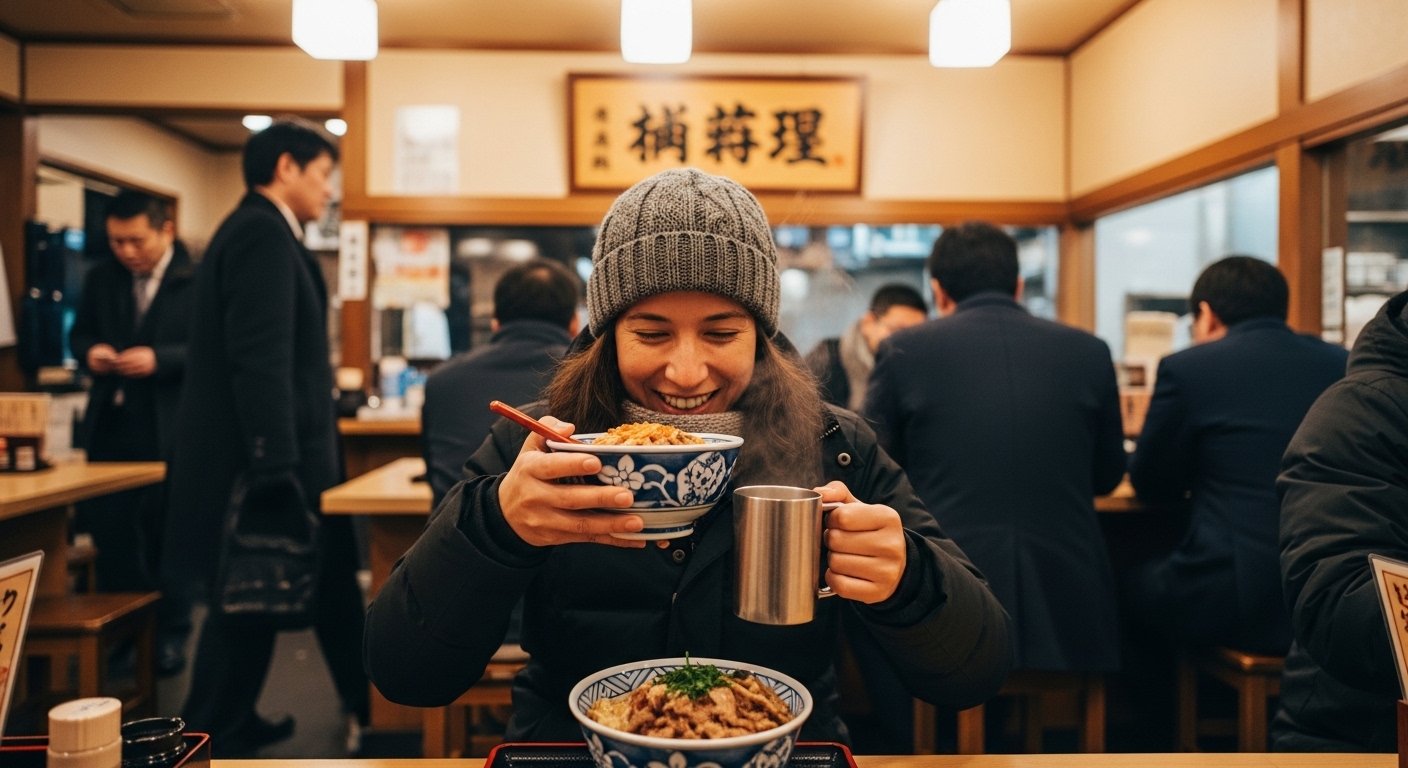
*Images used in this article are for illustration only. They may not be directly related to the content.
Cozy & Cheap: Your Guide to Late-Night Winter Dinners in Japan (Beyond Konbini)
It’s a common scenario: you’ve spent a day exploring Japan, the winter chill has set in, and suddenly it’s 9 PM. Your stomach rumbles, but many charming local eateries have already closed their doors. You don’t want another convenience store meal, nor do you want to break your budget on a generic chain. You’re looking for something warm, comforting, and genuinely Japanese. This guide is your solution.
Finding an appealing, affordable, and authentic late-night dinner in Japan during winter can feel challenging. Many visitors struggle to locate warm food after traditional dinner hours without overspending or resorting to familiar, yet uninspiring, options. This post cuts through the noise. We’ll show you exactly where to find those cozy, budget-friendly meals, complete with practical tips and essential Japanese phrases, ensuring your culinary adventures don’t end when the sun goes down.
Table of Contents
The Late-Night Challenge: Why Finding Food Can Be Tricky
You’re not alone in facing this. Japan’s dining scene often operates on a different rhythm. While major cities buzz, many independent restaurants, especially those offering authentic local fare in residential areas, typically close their kitchens between 9:00 PM and 10:00 PM. This timing can leave visitors scrambling for appealing options, particularly when the winter cold makes a warm meal a necessity.
Beyond opening hours, the desire for an authentic experience clashes with the prevalence of convenience stores and fast-food chains that dominate after-hours. Language barriers can also add a layer of complexity when trying to inquire about menus or closing times. However, with the right knowledge, these hurdles are easily overcome.
Your Late-Night Winter Dining Map: Cozy & Cheap Options
Forget the convenience store bentos. Japan offers a rich variety of warm, affordable, and authentic late-night dining experiences. Here’s where to look and what to expect:
Gyudon (Beef Bowl) Chains: The 24/7 Budget MVP
When you need a quick, hot, and unequivocally cheap meal, gyudon chains are your go-to. Yoshinoya, Sukiya, and Matsuya are prominent names, often found near train stations and in entertainment districts. They serve a simple yet satisfying bowl of rice topped with thinly sliced beef and onions simmered in a savory sauce. Many operate 24/7, making them reliable at any hour.
Why it’s great for winter: A steaming bowl of gyudon is a quick warmth infusion. Customization with miso soup, eggs, or various toppings makes it a versatile comfort food.
How to find them: Look for their distinctive bright storefronts (orange for Yoshinoya, red for Sukiya, yellow for Matsuya). Most have picture menus or ticket vending machines.

Ramen: The Quintessential Warm-Up
No discussion of late-night comfort food in Japan is complete without ramen. These noodle shops are ubiquitous, with many staying open until midnight or later, especially in urban centers and entertainment areas. From rich tonkotsu (pork bone broth) to light shio (salt) or shoyu (soy sauce) bases, there’s a ramen style for every preference.
Why it’s great for winter: A piping hot bowl of savory broth and chewy noodles is the ultimate cold-weather antidote. Many shops have a cozy, bustling atmosphere that’s inviting after dark.
How to find them: Ramen shops often feature large signs with their names in Japanese (ラーメン) or prominent noodle illustrations. Many use ticket vending machines at the entrance for ordering.

Izakaya (Japanese Pubs): Variety and Atmosphere
For a more diverse culinary experience, an izakaya is an excellent choice. These Japanese pubs serve a wide array of small dishes (tapas-style) alongside alcoholic beverages. You can find yakitori (grilled skewers), karaage (fried chicken), sashimi, salads, and seasonal hot pots (nabe) perfect for winter. Many izakaya remain open until 11 PM to 2 AM.
Why it’s great for winter: The communal, lively atmosphere provides warmth beyond the food. Hot dishes like oden or nabe are staples, and the variety allows you to sample many flavors.
How to find them: Look for “akachochin” (red lanterns) or “noren” (traditional fabric curtains) outside. Be aware of the “otoshi” (お通し), a mandatory small appetizer/cover charge, usually ¥300-¥500 per person.

Oden Specialty Shops: Winter’s Comfort Food
Oden is a traditional Japanese winter hot pot, featuring a variety of ingredients like daikon radish, boiled eggs, fish cakes, and konjac simmered in a light, soy-flavored dashi broth. It’s deeply comforting and often available at izakaya, but specialty oden restaurants offer a dedicated, authentic experience.
Why it’s great for winter: Oden is the epitome of warm, savory comfort. You select items individually, allowing for a personalized, affordable meal.
How to find them: Look for shops with a large, simmering pot display or signs explicitly mentioning “おでん” (Oden). Some smaller, traditional establishments may have limited English support, but pointing is always an option.

Tachigui Soba/Udon (Standing Noodle Shops): Quick, Hot, Cheap
Often found within or very near train stations, tachigui (standing) soba or udon shops offer incredibly fast, hot, and cheap noodle dishes. These are perfect for a quick bite before catching a late train or when you need immediate warmth. Some have limited seating, but the primary model is standing at a counter.
Why it’s great for winter: Instant warmth from the hot broth and noodles, and incredibly convenient for those on the move.
How to find them: Look for small, often unassuming shops, frequently identified by signs displaying “そば” (Soba) or “うどん” (Udon), especially in station complexes.

Family Restaurants (Fami-Resu): Diverse & Dependable
Family restaurants like Gusto, Denny’s (Japan), Jonathan’s, and Saizeriya offer extensive menus ranging from Japanese staples to Western-style dishes, often at very reasonable prices. Many have extended late-night hours, with some even operating 24/7, particularly in urban and suburban areas.
Why it’s great for winter: A warm, comfortable environment with a diverse menu, ensuring everyone finds something they like. Good for groups and offering a relaxed atmosphere for lingering.
How to find them: These chains have prominent, brightly lit storefronts. Look for their specific brand names. Most will have English menus or menu pictures, making ordering straightforward.

Navigating with Ease: Practical Tips
Visual Cues: What to Look For
Japan is excellent for visual communication, which helps overcome language barriers when finding late-night Japanese food.
- Red Lanterns (赤提灯 – akachochin) or Noren (暖簾 – traditional fabric curtains): Often signal an Izakaya or traditional Japanese restaurant, many of which operate late.
- Plastic Food Models (食品サンプル – shokuhin sample): Displayed in glass cases outside, these provide a clear visual of dishes and prices. Pointing to your desired meal is an effective way to order.
- Ticket Vending Machines (食券機 – shokkenki): Common at ramen, udon, soba, and gyudon shops. Select your meal and pay before sitting down. Look for pictures on the buttons; it simplifies ordering immensely.
- Bright, Illuminated Storefronts: Especially in primary colors (red, yellow, white), these are hallmarks of 24/7 or late-night chain restaurants (e.g., Yoshinoya, Sukiya, Matsuya).
- “営業中” (eigyōchū) Signs: This means “open for business.” Look for it on door signs or windows. Alternatively, “〜時まで” (~ji made) indicates “until [time].”

Language Made Simple: Essential Japanese Phrases
While many establishments in major tourist areas have English menus, having a few key phrases can significantly enhance your experience. These are designed for practicality.
🇯🇵 Point & Speak
Show this section to staff if you’re stuck. They can read the Japanese.
English: What time do you close?
何時まで開いていますか?
(Nanji made aiteimasu ka?)
English: Is it okay for one person?
一人でも大丈夫ですか?
(Hitori demo daijōbu desu ka?)
English: I’d like to order this (pointing).
これをください。
(Kore o kudasai.)
English: Do you have an English menu?
英語のメニューはありますか?
(Eigo no menyū wa arimasu ka?)
English: Do you have any recommendations for a warm winter dish?
冬に温かいおすすめ料理はありますか?
(Fuyu ni atatakai osusume ryōri wa arimasu ka?)
English: The check, please.
お会計お願いします。
(Okaikei onegai shimasu.)
Budgeting Your Bites: A Price Breakdown
Here’s an estimate of what you can expect to pay for your cheap winter food in Japan, per person, excluding drinks unless specified:
💰 Price Breakdown
| Restaurant Type / Dish | Average Cost (per person) |
| Gyudon (Beef Bowl) | ¥300-¥800 |
| Ramen (single bowl) | ¥800-¥1500 |
| Izakaya (multiple small dishes + drinks) | ¥2,000-¥4,000 (includes otoshi) |
| Oden (selection of items) | ¥500-¥1500 |
| Tachigui Soba/Udon | ¥300-¥700 |
| Family Restaurants | ¥1,000-¥2,000 |
Prices verified as of January 2026. Note that “otoshi” (お通し) is a mandatory cover charge at most izakaya, typically ¥300-¥500 per person, which often includes a small appetizer. Factor this into your budget for izakaya visits.
Local Pro-Tips for a Smoother Experience
🎯 Local Pro-Tip: Download and use a translation app. Google Translate’s camera function is invaluable for translating menus or signs on the fly. Simply point your camera, and it provides an on-screen translation, minimizing language friction.
🎯 Local Pro-Tip: Check last orders (ラストオーダー). Even if a restaurant is open until midnight, the kitchen’s last order might be an hour or two before closing. Confirm this to avoid disappointment, especially for a sit-down meal.
🎯 Local Pro-Tip: Utilize online search tools. Websites like Tabelog (tabelog.com/en/) and Gurunavi (gurunavi.com/en/japan/categories/menu/) allow you to filter by opening hours, cuisine, and even “English menu available.” Google Maps is also a powerful tool for discovering nearby options and checking their hours and reviews.
Common Mistakes to Avoid
- Assuming all restaurants stay open late: This is the biggest pitfall. Many independent eateries close early. Prioritize establishments known for late hours or located in bustling entertainment districts.
- Ignoring “otoshi” at izakaya: Expect this cover charge. It’s standard practice, not an attempt to overcharge. Being aware prevents confusion when the bill arrives.
- Expecting Western-style tipping: Tipping is not customary in Japan and can be considered rude. The price on the menu is the final price.
- Not checking last train times: Public transportation, especially trains, usually stops around midnight or slightly after. Plan your meal location relative to your accommodation or be prepared for a taxi.
- Sticking only to tourist traps: While convenient, these might not offer the best value or authenticity. Venture slightly off the main thoroughfares for better experiences.

Frequently Asked Questions
What’s the best way to find a late-night restaurant with an English menu?
Your best bet is to use online search tools like Tabelog or Gurunavi, which allow you to filter for English menus. Major chains (Gyudon, Family Restaurants) and popular ramen shops in tourist areas often have English menus or visual ordering systems (like ticket machines with pictures and numbers). Don’t be afraid to ask, “Eigo no menyū wa arimasu ka?”
Is it rude to eat alone in Japan, especially late at night?
Absolutely not. Solo dining is common and perfectly acceptable, particularly at ramen shops, gyudon chains, and tachigui soba/udon counters. Many izakaya also welcome solo diners. You might even find specific counters designed for single patrons.
Are there vegetarian or vegan late-night options available?
Finding strictly vegetarian or vegan options late at night can be more challenging, as dashi (fish stock) is a common base in many dishes. However, some ramen shops offer vegetable-based broths, and family restaurants might have salads or specific sides. Always use a translation app to clearly communicate your dietary needs. Larger cities like Tokyo and Kyoto have a growing number of specialized vegetarian/vegan establishments, but their late-night hours vary.
What is the typical etiquette for paying at a Japanese restaurant?
In most casual Japanese restaurants, you don’t pay at your table. Instead, you’ll take your bill (often presented in a small basket or folder) to a cash register near the exit. At ticket vending machine establishments, you pay upfront. If you’re unsure, watch what others do or ask “Okaikei onegai shimasu” (The check, please) and follow their instructions.
Conclusion
Navigating Japan’s late-night winter dining scene beyond the convenience store is not just possible, but highly rewarding. With these practical tips, essential phrases, and a clear understanding of your options, you’re now equipped to discover warm, authentic, and affordable meals, even after 9 PM. Embrace the chill of the Japanese winter with a cozy bowl of ramen, a vibrant izakaya experience, or a comforting plate of oden.
Don’t let the late hours deter you from experiencing Japan’s rich culinary culture. Go forth, explore, and savor every moment of your authentic late night Japanese food adventure!

Disclaimer
Opening hours, prices, and specific menu items are subject to change without notice. Always verify information directly with establishments, especially for specific dietary requirements or last-minute changes. This guide provides general advice and recommendations. Always exercise personal judgment and awareness when traveling.