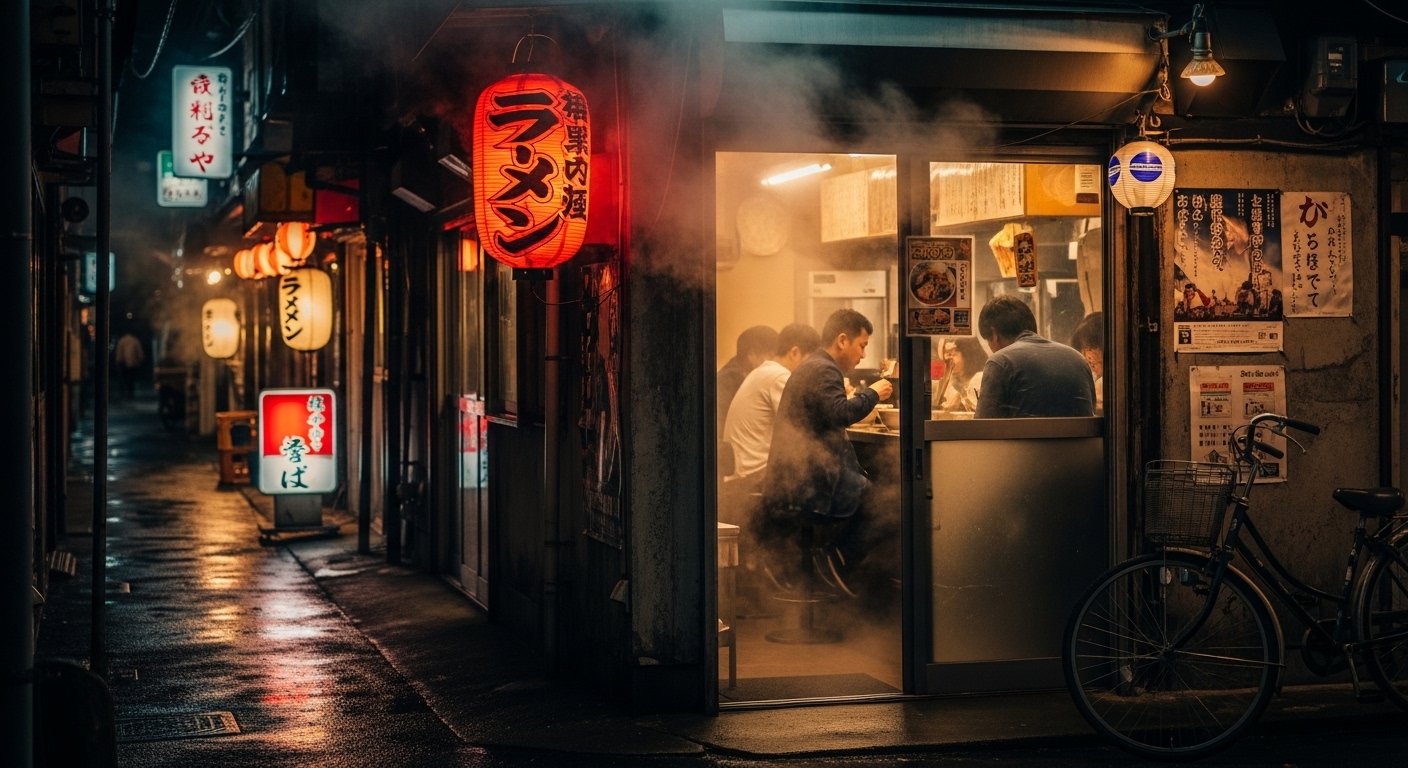
*Images used in this article are for illustration only. They may not be directly related to the content.
Cozy & Crowd-Free: Your Guide to Late-Night Winter Dinners in Japan (21:00+ for Solo & Dietary Needs)
You’ve spent the day exploring Japan’s stunning winter landscapes or bustling city streets. Now, past 9 PM, the cold has set in, and you’re ready for a warm, comforting meal. But the thought of navigating crowded restaurants, especially during the noisy bōnenkai season or the quiet New Year’s holiday, feels daunting. Add to that the challenge of dining solo or finding options that respect your dietary needs, and the search for a simple dinner can feel like an impossible task.
You’re not alone in facing these frustrations. Many international visitors struggle to find suitable late-night, non-chain dining options in Japan, particularly when seeking warmth, tranquility, and specific food requirements. This guide cuts through the noise, providing practical, actionable strategies to secure that perfect cozy, crowd-free winter dinner, tailored specifically for solo travelers with basic dietary needs. We’ll show you where to look, what to say, and how to enjoy Japan’s culinary delights on your terms, even after 9 PM.
Table of Contents
- Navigating Japan’s Late-Night Winter Dining Landscape
- Your Strategy for Finding Cozy, Crowd-Free Options After 9 PM
- Point & Speak: Essential Japanese Phrases for Late-Night Dining
- Beyond Language: Reading Visual Cues for a Welcoming Spot
- Pro-Tips for a Seamless Solo Winter Dinner
- Common Pitfalls to Avoid When Dining Late in Japan
- Quick Reference: Your Late-Night Winter Dining Checklist
- Frequently Asked Questions About Late-Night Winter Dining
Navigating Japan’s Late-Night Winter Dining Landscape
Japan offers an incredible culinary scene, but finding the right spot after 9 PM, especially during winter and solo, requires specific knowledge. Many independent restaurants outside major entertainment or station districts typically close between 9 PM and 10 PM. This timing is compounded by seasonal challenges.
**Bōnenkai Season (Late November – December 30th):** This is Japan’s year-end party season. Popular izakayas and restaurants will be heavily booked and exceptionally noisy with celebratory groups. Finding a quiet corner or a table for one can be challenging, though not impossible if you know where to look.
**Shōgatsu (New Year’s Holiday: December 31st – January 3rd):** This period sees widespread closures. Many independent establishments and even some chains will be shut, allowing staff to return home or observe traditions. Major chains, department store restaurants, and hotel dining might remain open, but often with limited hours or special menus.
**Solo Dining & Dietary Needs:** Some smaller, high-end establishments, particularly those with limited seating, may not accept solo reservations. Furthermore, basic dietary restrictions like vegetarianism are still less common, and ingredients like dashi (fish stock) are pervasive, even in dishes that appear plant-based. Explicit communication is often necessary.
These factors create friction for international visitors seeking a comfortable late-night meal. Understanding these challenges is the first step toward overcoming them.
Your Strategy for Finding Cozy, Crowd-Free Options After 9 PM
Securing a delightful late-night dinner requires preparation and a focused approach. Here’s how to streamline your search for Japan late night dinner spots:
Targeted Search & Research (Before You Go Out)
-
Utilize Online Platforms: Your best friends are Tabelog, Google Maps, and HappyCow.
- On Tabelog (Japanese site, but usable with browser translation), filter by “open late” (深夜営業) and look for establishments with high ratings that mention “counter seating” (カウンター席).
- Google Maps allows you to search for “restaurants open now” and filter by cuisine. Check specific restaurant hours and review photos for counter seating or quiet areas. Many establishments update holiday hours here.
- HappyCow is indispensable for vegetarian and vegan options. It’s user-generated, so reviews often highlight English-speaking staff or clear menus.
-
Prioritize “Last Order” Times: Many restaurants have a “last order” (ラストオーダー) time 30-60 minutes before closing. Arriving past 9 PM means you need to confirm this. Websites or signs often display this. Call ahead or check online if you’re close to their indicated closing time.
-
Check Reviews for Solo-Friendliness and Noise Levels: Look for reviews that mention “solo dining” (一人ご飯 – hitori gohan) or “quiet atmosphere” (静かな雰囲気 – shizuka na fun’iki). This helps avoid establishments primarily catering to groups.
Establishment Types That Deliver on Comfort & Convenience
Certain types of Japanese restaurants are inherently more solo-friendly and often operate later, making them ideal for your late-night winter dinner:
-
Ramen-ya (Ramen Shops): A classic choice for a warm, hearty meal. Many ramen shops have counter seating, are used to solo diners, and some stay open very late, especially in urban centers. Broths vary, so check for vegetarian options (less common but growing).
-
Oden-ya (Oden Stalls/Restaurants): Perfect for winter. Oden is a Japanese hot pot dish with various ingredients stewed in a light, savory dashi broth. Many small, cozy oden spots feature counter seating and are excellent for a quiet, warm meal. Be aware of the dashi base for dietary needs (often fish-based).
-
Yakitori-ya (Grilled Skewer Shops): While some can be boisterous, many smaller yakitori-ya with counter seating offer a relaxed atmosphere. You can order individual skewers of chicken, vegetables, or even seafood. Look for places slightly off the main thoroughfares for a quieter experience. Great for pescatarians or those seeking grilled vegetable options.
-
Udon/Soba-ya (Noodle Shops): Similar to ramen, these offer comforting noodle soups. Many have counter seating and quick service. Again, verify dashi ingredients for vegetarian diets.
-
Izakayas (Japanese Pubs): While many are party central, some smaller, local izakayas (especially those not in prime entertainment areas) can be cozy and welcoming for solo diners, particularly if you arrive past 9:30 PM after the initial rush. Look for ones with prominent counter seating (カウンター席 – kauntā seki). They offer a wide menu, often including vegetarian-friendly sides like edamame, pickles, or grilled vegetables, and some pescatarian options.
-
Small, Independent Shokudō (Diners): These often have a local feel and serve home-style Japanese cooking. Their late hours might be inconsistent, but a quick check on Google Maps can reveal hidden gems with counter seating and warm dishes.
-
Family Restaurants (e.g., Denny’s, Gusto, Jonathan’s): As a last resort, these chains are reliably open late, widely available, and usually have English menus. They often have vegetarian options and a relaxed atmosphere, though they lack the unique charm of independent spots.

Navigating Bōnenkai Season (Late November – December 30)
During the peak bōnenkai season, finding a quiet spot requires a tactical approach. Aim to dine after 9:30 PM, when many groups are finishing up or moving on. Focus on smaller establishments that might not be able to accommodate large groups anyway. Exploring side streets slightly off the main drag can also yield quieter, more authentic finds.
🎯 Local Pro-Tip: At an izakaya during bōnenkai season, opting for counter seating is key. Solo diners are less disruptive to group bookings and you might find a spot even when tables are full. Plus, you get a direct view of the kitchen action!
Consider less popular cuisines or establishments that aren’t typical bōnenkai venues, such as a specialized ramen shop or a serene sushi counter (though solo bookings can be tricky here if it’s very high-end).
Dining During Shōgatsu (New Year’s Holiday: December 31 – January 3)
The New Year’s holiday requires significant pre-planning for dining. Many independent restaurants will be closed for a few days, so confirm hours diligently. Your best bets for late-night meals during this period include:
-
Hotel Restaurants: Higher-end hotels often have multiple dining options that remain open, though they might have special holiday menus and prices.
-
Department Store Dining Floors (Depachika Restaurants): While not always open late-late, some restaurant floors in major department stores might have extended hours or be open when independent shops are not. Always check specific store websites.
-
Major Chain Restaurants: Gyudon chains (Sukiya, Yoshinoya, Matsuya), some ramen chains, and family restaurants are generally your safest bet for guaranteed open doors. They might be crowded, but they are reliable.
-
Convenience Stores: While not a “dinner out,” Japanese convenience stores (7-Eleven, FamilyMart, Lawson) offer an incredible array of fresh, warm, and ready-to-eat meals, including noodles, bentos, and hot snacks, available 24/7. This can be a surprisingly good option if all else fails.
If you plan to dine out during Shōgatsu, making reservations well in advance for any non-chain restaurant is highly recommended.
Addressing Dietary Needs: Asking for What You Can Eat
Communicating dietary restrictions in Japan, especially late at night when English-speaking staff might be fewer, requires clarity. Remember that “vegetarian” might not always mean “vegan” or “no dashi.”
-
Be Specific: Instead of just “vegetarian,” specify “no meat” (肉なし – niku nashi) and “no fish/seafood” (魚/魚介類なし – sakana/gyokairui nashi). If avoiding dashi is critical, you’ll need to explain this, which can be harder as it’s a fundamental flavor base. “出汁なし” (dashi nashi) means “no dashi.”
-
Use Translation Apps: Google Translate’s camera feature is invaluable for menu translation. Pre-type and save phrases for quick access. This also helps you identify dishes that are likely safe.
-
HappyCow is Your Friend: This app focuses on vegetarian and vegan restaurants, often with reviews detailing the options and how easy it was to communicate restrictions. It’s often the most reliable resource for non-meat eaters.
-
Look for Specific Dishes: Consider dishes that are more likely to be vegetarian-friendly, such as vegetable tempura (confirm no fish ingredients in batter/sauce), various pickles (漬物 – tsukemono), edamame, and sometimes tofu dishes. For pescatarians, grilled fish (焼き魚 – yakizakana) or sashimi are generally straightforward.

Point & Speak: Essential Japanese Phrases for Late-Night Dining
These phrases are your direct communication tools. Show this section to staff if you’re stuck; they can read the Japanese.
🇯🇵 Point & Speak
Show this section to staff if you’re stuck. They can read the Japanese.
English: Excuse me, are you open?
すみません、開いていますか?
(Sumimasen, aiteimasu ka?)
English: Do you have a seat for one person?
一人ですが、席ありますか?
(Hitori desu ga, seki arimasu ka?)
English: Is there a quiet place?
静かな場所はありますか?
(Shizuka na basho wa arimasu ka?)
English: Do you have vegetarian options?
ベジタリアンのメニューはありますか?
(Bejitarian no menyū wa arimasu ka?)
English: Does this contain meat/fish/seafood?
これは肉/魚/魚介類が入っていますか?
(Kore wa niku/sakana/gyokairui ga haitteimasu ka?)
English: What time is your last order?
ラストオーダーは何時ですか?
(Rasuto ōdā wa nanji desu ka?)
English: Do you have something warm?
温かいものはありますか?
(Atatakai mono wa arimasu ka?)
Beyond Language: Reading Visual Cues for a Welcoming Spot
Even without understanding Japanese, you can decipher a lot about a restaurant just by looking. These visual cues are crucial for finding a Japan late night dinner that fits your needs:
-
Noren (暖簾): A traditional fabric curtain hanging at the entrance signifies the shop is open. If it’s pulled aside, absent, or neatly tied up, it might be closed. A subtle detail, but often reliable.
-
Plastic Food Models (食品サンプル – shokuhin sanpuru): These realistic models in the window clearly display dishes and often prices. They are incredibly useful for non-Japanese speakers to visualize options and gauge cost, eliminating guesswork.
-
“Open” Signs: Look for “営業中” (Eigyōchū – Open for business) or “OPEN” in English. Conversely, “準備中” (Junbichū – Preparing/Closed) or “CLOSE” means they’re not serving.
-
Counter Seating (カウンター席 – kauntā seki): Visible counter seating from the street is a strong indicator of a solo-friendly establishment. These seats are designed for individual diners and often provide a more intimate dining experience.
-
Red or White Lanterns (提灯 – chōchin): Hanging lanterns are common for izakayas, yakitori-ya, and ramen-ya, many of which operate late. They create a welcoming, traditional ambiance.
-
Handwritten Menu Boards (手書きメニュー – tegaki menyū): While they require translation, these often signal smaller, independent establishments. They might be worth the effort for a unique, local experience.
-
“Last Order” Signage: A sign explicitly stating “ラストオーダー” (Last Order) usually with a time, often displayed near closing time, is crucial to note upon entry.

Pro-Tips for a Seamless Solo Winter Dinner
-
Cash is King (Still): While cards are becoming more accepted, many smaller, independent late-night establishments still operate primarily with cash. Always carry sufficient yen, especially for smaller bills.
-
Explore Slightly Off the Main Path: Busy main streets attract chain restaurants. Venturing a block or two into a side street can reveal quieter, cozier, and often more authentic independent restaurants with later hours.
-
Be Mindful of Last Trains/Buses: If you’re out late, always keep an eye on public transportation schedules. Trains and buses stop running around midnight to 1 AM in most major cities. Missing the last train means an expensive taxi ride back to your accommodation.
-
Consider “O-tōshi” (お通し): At many izakayas, a small appetizer (o-tōshi) is served automatically with your first drink, and a small charge is added to your bill. This is a common cultural practice and not a scam. You generally cannot refuse it.
-
Embrace the Warmth: Winter dining in Japan often features comforting, hot dishes. Look for nabe (hot pot) options for a truly warm and cozy experience, or classic oden, which is designed to be eaten slowly and warmly.
Common Pitfalls to Avoid When Dining Late in Japan
Steering clear of these common mistakes will save you time and frustration:
-
Assuming All Restaurants are Open Late: Outside major entertainment hubs, many local eateries close by 10 PM. Don’t leave your dinner plans entirely to chance after 9 PM without checking.
-
Ignoring “Last Order” Times: Arriving 15 minutes before closing means you might be turned away or rushed. Always aim to be seated well before the last order time.
-
Not Clearly Communicating Dietary Needs: Vague requests can lead to misunderstandings. Be specific, use written phrases if necessary, and reconfirm key ingredients.
-
Trying to Book High-End Restaurants Solo Last Minute: Limited seating and perceived revenue loss often mean high-end Japanese restaurants (e.g., specific sushi-ya, kaiseki) do not accept solo reservations, especially during peak times. Plan these far in advance if they’re a priority.
-
Underestimating Holiday Closures: Especially during Shōgatsu, failing to check specific operating hours can leave you with very limited options.
Quick Reference: Your Late-Night Winter Dining Checklist
📋 Quick Reference Card
Screenshot or print this section for easy access:
- ✅ Search online first: Use Tabelog/Google Maps for “open late” and “counter seating.”
- ✅ Prioritize: Ramen, Oden, Yakitori, some Izakayas (with counter seats).
- ✅ Check Last Order (ラストオーダー): Aim to arrive at least 45 mins before.
- ✅ Bōnenkai Season (Nov-Dec): Dine after 9:30 PM, seek quieter side streets.
- ✅ Shōgatsu (Dec 31-Jan 3): Expect closures; check hotel/chain restaurants.
- ✅ Dietary Needs: Use specific phrases (e.g., “no meat/fish”), HappyCow, Google Translate.
- ✅ Look for Visual Cues: Noren, food models, “OPEN” signs, counter seating.
- ✅ Carry Cash: Many smaller places are cash-only.
- ✅ Watch the Clock: Be aware of last train schedules.
Frequently Asked Questions About Late-Night Winter Dining
Can I find truly vegetarian options for late-night dinner in Japan?
Yes, it is possible, but it requires diligent searching and clear communication. While less common than in some Western countries, vegetarian and vegan-friendly restaurants are increasing, especially in major cities. Use HappyCow, Google Maps filters, and our “Point & Speak” phrases. Remember to specify “no meat, no fish, no dashi” for stricter diets.
Are all izakayas noisy and crowded, even after 9 PM?
Not all. While many can be lively, especially during bōnenkai season, smaller, independent izakayas, particularly those slightly off main tourist routes or in residential areas, can offer a more relaxed atmosphere. Arriving after 9:30 PM often means the initial dinner rush is over. Look for establishments with counter seating for a more solo-friendly and often quieter experience.
What’s the best way to handle solo dining without feeling awkward?
Solo dining is common and widely accepted in Japan, especially at specific types of restaurants. Ramen shops, udon/soba shops, and many places with counter seating (sushi, yakitori, oden) are designed for individual diners. You will not feel out of place. Embrace the opportunity to observe local life and enjoy your meal without distraction.
How late do convenience stores serve hot food, and is it a viable dinner option?
Japanese convenience stores (konbini) operate 24/7. They continuously replenish their hot food sections, offering items like fried chicken, oden, and steamed buns, even very late. They also have a wide selection of fresh bentos, sandwiches, and ready-to-heat meals that can be a perfectly viable and budget-friendly dinner option, especially during the New Year’s holiday when other establishments might be closed.
Conclusion
Finding a cozy, crowd-free, and suitable late-night winter dinner in Japan as a solo traveler with dietary needs is entirely achievable. By understanding local dining habits, utilizing smart search tools, learning key phrases, and knowing where to look, you can bypass the common frustrations and enjoy the warm, comforting meals Japan has to offer.
Don’t let the late hour or specific requirements deter you. With these strategies, you’re well-equipped to discover your own perfect late-night sanctuary. Go forth and savor the quiet moments and delicious flavors of Japan’s winter nights.
⚠️ Disclaimer
While we strive for accuracy, restaurant operating hours, dietary information, and crowd levels can change rapidly, especially during holiday periods. Always verify information directly with establishments or through the most current online resources. Dietary needs, especially severe allergies, require extreme caution and explicit communication; this guide provides general advice for basic restrictions. Your safety and satisfaction are your responsibility.