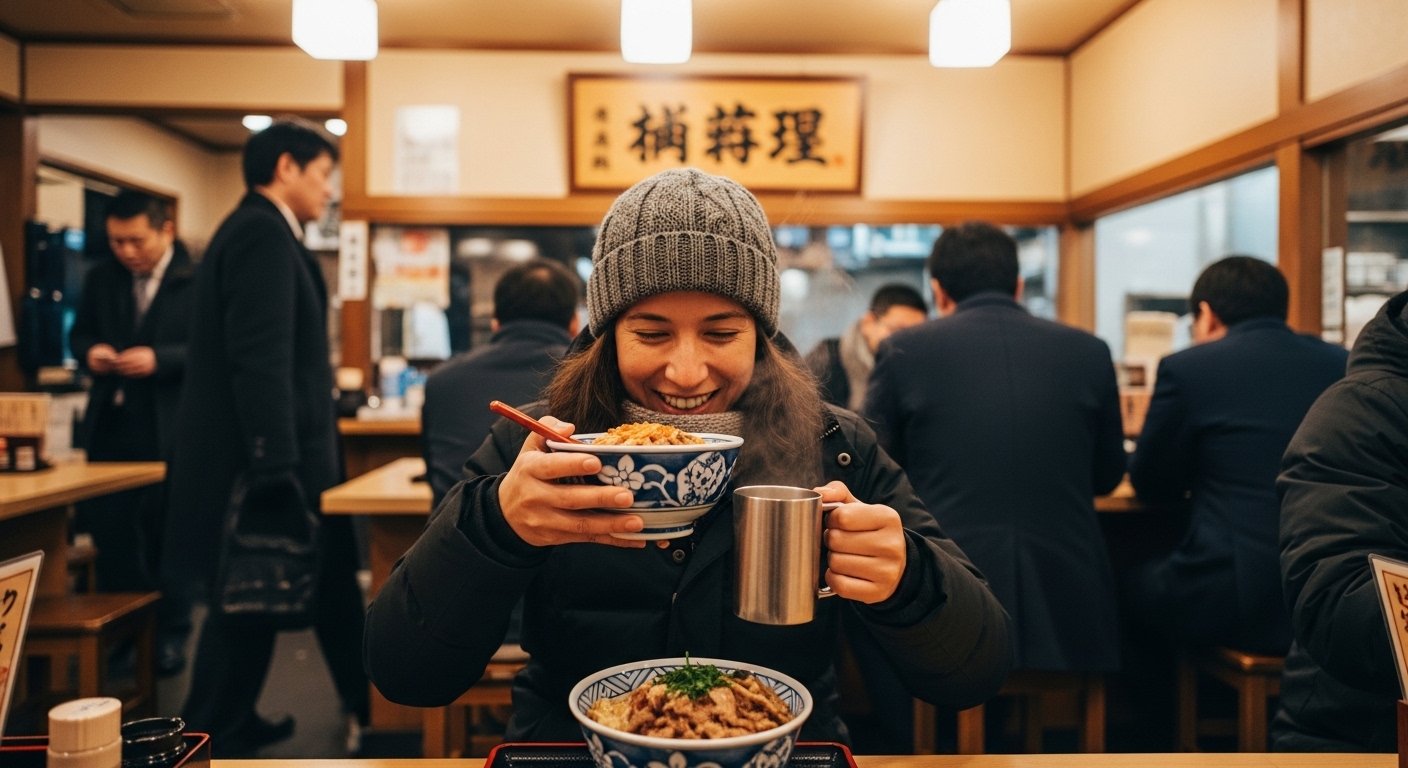
*Images used in this article are for illustration only. They may not be directly related to the content.
Japan New Year’s Breakfast: Warm, Easy Options When Restaurants Close
Planning a trip to Japan over the New Year’s holiday? You’ve likely heard of the magic and tradition that fills the air. However, beneath the festive surface lies a practical challenge for international visitors: finding a warm, substantial breakfast when most eateries unexpected close. The frustration of walking past shuttered shops, especially in the cold, is a common pain point for many.
This comprehensive guide is your local fixer, designed to eliminate that friction. We’ll navigate Japan’s unique “Nenmatsu Nenshi” (年末年始) holiday period, ensuring you know exactly where to find comforting, affordable breakfast options. Forget expensive hotel buffets or cold packaged snacks; we’ll show you how to leverage a cornerstone of Japanese daily life for a satisfying start to your holiday mornings.
Table of Contents
- The New Year’s Breakfast Challenge in Japan
- Your Reliable Lifeline: The Japanese Convenience Store
- Konbini Warm Breakfast Staples
- Navigating the Konbini: Getting Your Warm Meal
- Japanese Phrases for a Smooth Konbini Visit
- Breakfast on a Budget: Konbini Price Breakdown
- Beyond Konbini: Other Considerations
- Pro-Tips for a Smooth New Year’s Breakfast
- Quick Reference Card
- Frequently Asked Questions
The New Year’s Breakfast Challenge in Japan
Japan’s New Year’s holiday, known as Nenmatsu Nenshi (年末年始), is a significant time for families. It typically runs from around December 29th/30th to January 3rd/4th. During this period, many independent restaurants, small cafes, and specialty shops close their doors completely or operate with significantly reduced hours.
This extensive closure can be a surprise for first-time visitors. You might find yourself walking through usually bustling streets in major cities, only to discover most local eateries are dark. For budget travelers, this situation is compounded by the fact that the few places that remain open, such as hotel restaurants, often come with a higher price tag.
🎯 Local Pro-Tip: Plan your meals a day ahead, especially for December 31st and January 1st. Supermarket hours can also be unpredictable, so stocking up on essentials by December 28th or 29th is a smart move if you have a kitchen or want specific items.
Compounding this is the winter weather. New Year’s in Japan can be quite cold, especially in northern regions or mountainous areas. A warm, substantial breakfast isn’t just about hunger; it’s about comfort and providing energy for a day of exploring. Relying solely on cold snacks becomes unappealing quickly.
Your Reliable Lifeline: The Japanese Convenience Store
When the rest of Japan slows down for Nenmatsu Nenshi, the humble convenience store, or “konbini,” stands as a beacon of reliability. Chains like 7-Eleven, FamilyMart, and Lawson operate 24/7 nationwide, including during the New Year’s holiday. They are ubiquitous, easily identifiable, and your primary source for warm, affordable breakfast.
These stores are more than just shops; they are mini-markets providing a wide array of ready-to-eat meals, snacks, drinks, and essential services. During the holiday period, their consistency makes them invaluable for any traveler.
Konbini Warm Breakfast Staples
Convenience stores offer a surprising variety of options for a warm and satisfying morning meal:
- Steamed Buns (Nikuman / Anman / Pizza-man): These fluffy, savory or sweet buns are kept hot in a glass warmer at the counter.
- Nikuman (肉まん): Pork buns, typically filled with ground pork and vegetables. A classic warm treat.
- Anman (あんまん): Sweet bean paste buns, a good option for those with a sweet tooth.
- Pizza-man (ピザまん): Pizza-flavored buns, a more modern twist.
Visual cue: Look for a clear glass warmer cabinet near the register, often steaming. The buns are usually labelled with their names.
- Microwaveable Onigiri (Rice Balls): While many onigiri are eaten cold, several varieties are designed to be heated. These often have fillings like grilled salmon (鮭 – sake), cod roe (たらこ – tarako), or fried chicken (からあげ – karaage).
- Visual cue: Check the packaging for microwave instructions or a warming symbol. Often found in the chilled section, but staff will heat them for you.
- Instant Noodles (Cup Ramen / Cup Udon / Cup Soba): Japan’s instant noodle selection is extensive and gourmet-level. A cup of hot noodles is a quick, inexpensive, and warming breakfast.
- Visual cue: Found in dedicated aisles. Look for a hot water dispenser, usually near the coffee counter or an eat-in space, for self-service.
- Instant Soups & Miso Soup: Similar to instant noodles, you can find a range of instant soups (like corn potage or onion soup) and traditional miso soup packets. Just add hot water.
- Pre-packaged Sandwiches: While often eaten cold, some stores offer toasted sandwich options or ones that can be warmed.
- Hot Drinks: A variety of hot coffees, teas, and cocoas are available from self-service machines or in pre-packaged containers at the counter.
- Visual cue: Coffee machines are prominent, often with milk and sugar stations. Canned/bottled hot drinks are kept in heated displays.


🎯 Local Pro-Tip: For a quick and hearty combination, grab a couple of microwaveable onigiri and a cup of instant miso soup. This provides a balance of carbs, protein, and warmth.
Navigating the Konbini: Getting Your Warm Meal
Getting your warm breakfast at a Japanese convenience store is straightforward, even with a language barrier. Here’s a step-by-step guide:
- Step 1: Locate Your Konbini.
Visual cue: Look for the prominent red, green, and orange 7-Eleven logo; green, white, and blue FamilyMart logo; or blue and white Lawson logo. They are practically everywhere in urban and suburban areas.
What to do: Use Google Maps to find the nearest one. They are usually marked clearly.
- Step 2: Browse and Select Your Items.
Visual cue: Steamed buns are in glass warmers at the counter. Onigiri are in refrigerated sections. Instant noodles/soups are on shelves in dedicated aisles. Hot beverages are in heated displays or from self-service machines near the counter.
What to do: Pick out what you want. If it’s a steamed bun, you’ll order it at the counter (see “Point & Speak”).
- Step 3: Head to the Counter.
Visual cue: The cashier’s counter is usually at the front of the store. Look for the register and staff.
What to do: Bring your items to the register. If you have microwaveable items like onigiri or a bento, present them to the staff.
- Step 4: Request Warming (If Needed).
Visual cue: The microwave is typically located behind the counter, for staff use only.
What to do: As you hand over your items, simply say “Atatamete kudasai” (温めてください) for “Please warm this up.” The staff will understand and heat it for you, usually free of charge. If you bought instant noodles or soup, ask for hot water (see “Point & Speak”).
- Step 5: Pay.
Visual cue: The cash register displays the total price. Look for card readers or cash trays.
What to do: You can pay with cash (yen) or often with international credit/debit cards, IC cards (Suica, Pasmo, Icoca), or even phone payment systems. The staff will bag your items. Most stores have small eating areas or counters if you wish to consume your food there, especially for instant noodles.


Japanese Phrases for a Smooth Konbini Visit
A few key phrases can make your convenience store experience even smoother. Don’t hesitate to use them; staff are generally helpful and understanding.
🇯🇵 Point & Speak
Show this section to staff if you’re stuck. They can read the Japanese.
English: Is this open during New Year’s?
年末年始も営業していますか?
(Nenmatsu Nenshi mo eigyō shite imasu ka?)
(Useful for any shop you hope might be open.)
English: Do you have hot water?
お湯はありますか?
(O-yu wa arimasu ka?)
(For instant noodles or soup.)
English: Please warm this up.
温めてください。
(Atatamete kudasai.)
(When purchasing a microwaveable item. Hand it to the staff as you say this.)
English: I’d like a steamed bun.
肉まんください。
(Nikuman kudasai.)
(You can substitute あんまん Anman or ピザまん Pizza-man for other types.)
Breakfast on a Budget: Konbini Price Breakdown
One of the greatest advantages of relying on convenience stores during Nenmatsu Nenshi is the cost-effectiveness. A full, warm breakfast can be had for a fraction of what you might pay at a hotel or a specialty cafe (if you could even find one open).
💰 Price Breakdown: Typical Konbini Breakfast Costs
| Item | Approximate Cost (¥) |
| Onigiri (Rice Ball) | ¥120-200 |
| Nikuman (Pork Bun) | ¥150-250 |
| Instant Cup Noodles | ¥150-300 |
| Instant Miso Soup | ¥80-150 |
| Small Hot Coffee | ¥100-180 |
| Packaged Sandwich | ¥250-450 |
| Typical Warm Breakfast Total (e.g., Onigiri + Nikuman + Coffee) | ¥400-630 |
Prices verified as of December 2025. Subject to minor variations by store and item.
As you can see, a satisfying warm breakfast can easily be achieved for less than ¥700. Compare this to typical hotel breakfast buffets, which can easily range from ¥1,500 to ¥3,000+ per person.
Beyond Konbini: Other Considerations
While convenience stores are your most reliable option, there are a few other possibilities to keep in mind, albeit with caveats:
- Hotel Breakfasts: Many larger hotels, especially international chains, will continue to offer breakfast service during New Year’s. This is often a buffet, providing a wide selection. However, as noted, these are typically the most expensive option. If your accommodation includes breakfast, then it’s a convenient choice.
- Chain Restaurants: Some larger chain restaurants, particularly those attached to train stations or department stores, might operate on reduced hours or open for part of the holiday. Examples include fast food (McDonald’s, MOS Burger), some family restaurants (Gusto, Denny’s Japan), or specific station kiosks. However, their operating hours will still be limited and unpredictable compared to konbini. Always check in advance.
- Supermarkets: Major supermarkets might be open on certain days during the holiday period, but often with significantly shorter hours (e.g., closing by 6 PM). Smaller, local supermarkets are more likely to be completely closed. If you have a kitchen or microwave in your accommodation, buying bread, eggs, yogurt, or microwaveable meals from a supermarket before the closures can be an option.
Pro-Tips for a Smooth New Year’s Breakfast
To ensure your mornings during Nenmatsu Nenshi are as smooth as possible, consider these practical tips:
- Scout Your Nearest Konbini: Upon arrival, locate the closest 7-Eleven, FamilyMart, or Lawson to your accommodation. Familiarize yourself with the route.
- Check Hotel Amenities: Does your hotel room have an electric kettle? This is ideal for making instant noodles, soups, or hot drinks purchased from a convenience store.
- Buy Ahead for Peace of Mind: If you’re particularly worried about early mornings or being far from a konbini, consider purchasing instant noodles, instant coffee/tea, or shelf-stable bread on December 28th or 29th.
- Embrace Japanese Coffee: Don’t overlook the delicious and affordable hot coffee available at konbini. Often brewed fresh, they are a welcome start to a cold winter day.
- Carry Cash: While many konbini accept cards, having some yen on hand is always a good idea, especially for smaller purchases.
Quick Reference Card
Screenshot or print this summary for quick access during your Japan New Year’s trip:
📋 Quick Reference Card: New Year’s Breakfast in Japan
Your essential guide to warm, easy breakfast options:
- ✅ Core Solution: 7-Eleven, FamilyMart, Lawson (24/7 during New Year’s).
- ✅ Warm Options: Steamed buns (nikuman), microwaveable onigiri, instant noodles/soups, hot drinks.
- ✅ Heating Food: Ask staff, “温めてください (Atatamete kudasai).”
- ✅ Hot Water: Ask staff, “お湯はありますか? (O-yu wa arimasu ka?)” or look for dispenser.
- ✅ Budget-Friendly: Full breakfast typically under ¥700.
- ✅ Key Dates: Dec 29th/30th to Jan 3rd/4th for widespread closures.
Frequently Asked Questions
Are all restaurants in Japan closed during New Year’s?
No, not all, but a significant number, especially independent local restaurants and cafes, close for the “Nenmatsu Nenshi” holiday period (roughly Dec 29 – Jan 4). Large chain restaurants or those in major transport hubs might have reduced hours. Convenience stores (konbini) are a consistent exception, operating 24/7.
Can I find vegetarian or vegan options at convenience stores for breakfast?
Finding strictly vegetarian or vegan options can be challenging as many items, even seemingly simple ones, may contain dashi (fish stock) or animal derivatives. However, you can often find plain rice balls (onigiri), some types of instant noodles/soups (check ingredients carefully), fresh fruit, bread, and vegetable salads. Look for labels or use a translation app for ingredients. Anman (sweet bean bun) is often vegetarian. Carrying a “no meat/fish” Japanese phrase might also help.
Are hotel breakfasts the only alternative if convenience stores aren’t preferred?
Hotel breakfasts are a viable, albeit typically more expensive, alternative. Some larger chain restaurants or fast food outlets might be open with reduced hours. If you have cooking facilities, buying groceries from a supermarket (before closures become widespread around Dec 29-30) is another option. However, for immediate, warm, and budget-friendly choices, konbini remain the most reliable during this specific holiday period.
How can I tell if a convenience store item needs to be heated?
Many items, especially rice bowls (donburi), bento boxes, and some onigiri, are explicitly designed to be warmed. Look for a small microwave symbol or text indicating “温める” (atatamete – to warm) on the packaging. When in doubt, simply ask the cashier “Atatamete kudasai?” (温めてください? – Please warm this up?). They will typically warm it if it’s meant to be.
Conclusion
Navigating Japan during the New Year’s holiday can present unique challenges, particularly when it comes to dining. However, with a clear understanding of the Nenmatsu Nenshi closures and the dependable role of convenience stores, you can ensure your mornings are filled with warmth and ease.
Embrace the konbini as your local fixer for breakfast. It’s an essential part of the practical Japan travel experience, especially during holidays. With these tips, you’re now equipped to enjoy your New Year’s adventure without unexpected breakfast worries.
Disclaimer
This guide provides general information based on current knowledge and typical operating procedures. Store hours, specific item availability, and prices may vary. Always verify local conditions. Travel plans should account for personal dietary needs and preferences. This information is for guidance and does not constitute official advice.