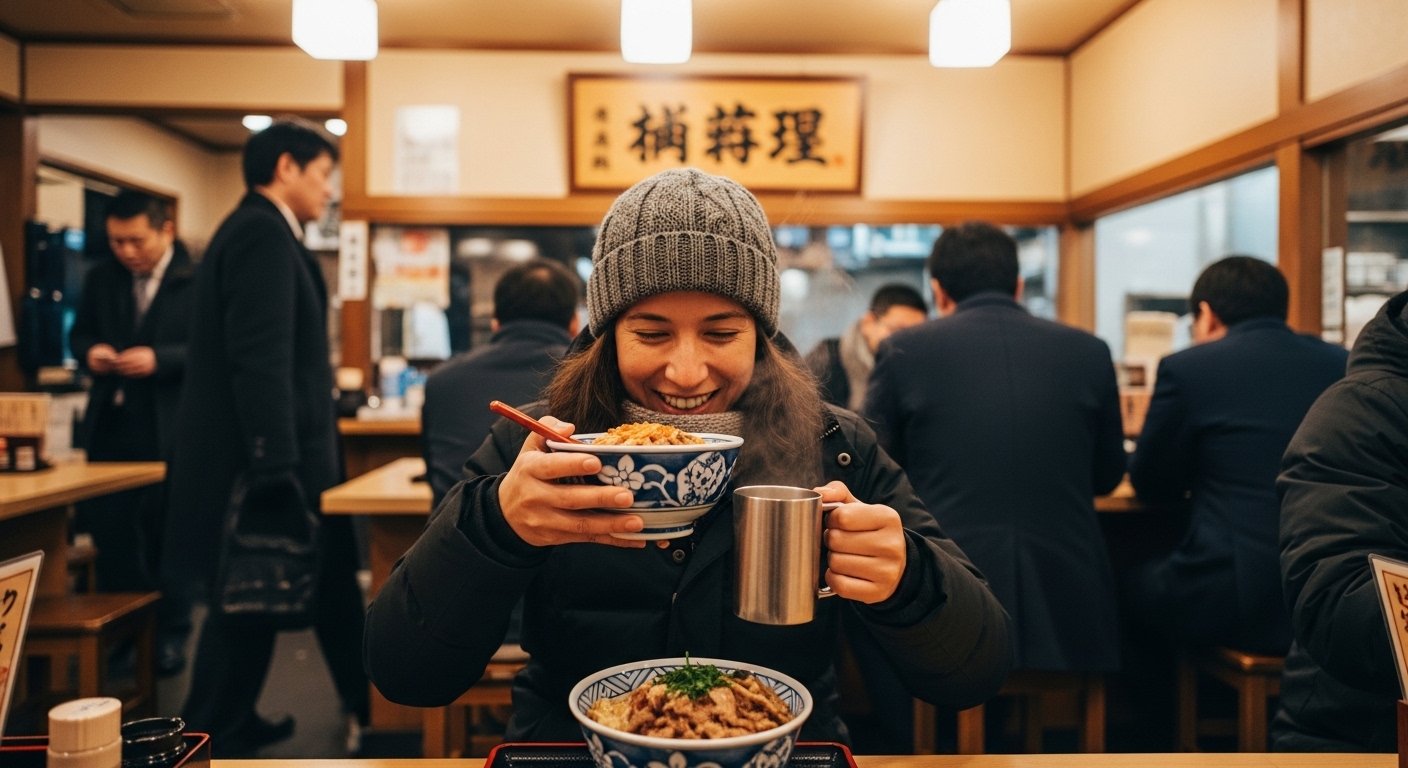
*Images used in this article are for illustration only. They may not be directly related to the content.
Japan New Year’s Late-Night Food Guide (2025-2026): Avoid Closures & Find Dinner
Planning a trip to Japan over the New Year’s holiday (December 30 – January 3) can be an unforgettable experience. However, many international visitors encounter an unexpected challenge: widespread restaurant closures, especially late at night. You arrive, hungry, after 9 PM, only to find the streets unusually quiet and your dinner plans evaporated. It’s a common frustration, and one that can easily be avoided with the right information.
This comprehensive guide is designed to remove that friction. As your local fixer, I’ll equip you with practical strategies, reliable late-night food options, and essential Japanese phrases to ensure you’re never stranded without a meal during Japan’s New Year’s holiday. From emergency convenience store runs to traditional Toshikoshi Soba, we’ll cover how to eat well, even when most places are shut down.
Table of Contents
- The New Year’s Food Freeze: Understanding Japan’s Holiday Closures
- Your Late-Night Lifelines: Reliable Food Options During New Year’s
- Navigating the Holidays: Practical Strategies & Pro-Tips
- Bridge the Language Gap: Essential Japanese Phrases
- Your Quick Reference: New Year’s Food Survival Card
- Common Mistakes to Avoid
- Frequently Asked Questions
The New Year’s Food Freeze: Understanding Japan’s Holiday Closures
Japan’s New Year’s holiday, known as Oshōgatsu (お正月), is the most significant holiday period of the year. Unlike Western New Year, which is often a single day, Oshōgatsu traditionally runs from December 31st (Omisoka, 大晦日) to January 3rd. During this time, many Japanese return to their hometowns to spend time with family, visit shrines (Hatsumōde), and consume traditional New Year’s dishes (Osechi Ryori).
This strong cultural emphasis on family and tradition translates directly into widespread business closures. Many independent restaurants, specialty shops, and even some department store food halls will close their doors from roughly December 30th or 31st until January 2nd or 3rd. Early closures on New Year’s Eve (Dec 31) are particularly common. This means that finding late-night dinner options, especially after 9 PM, becomes increasingly difficult for international visitors who are not aware of this practice.
The closures are not malicious; they are simply a part of the holiday tradition. For tourists, however, it can be a source of significant inconvenience and hunger if not prepared for. Limited English information about specific holiday operating hours exacerbates the problem, making spontaneous dining nearly impossible.
Your Late-Night Lifelines: Reliable Food Options During New Year’s
While many establishments close, not all do. Here are your most reliable options for late-night food during the New Year’s holiday period.
Convenience Stores (Konbini): Your 24/7 Anchor
Convenience stores—konbini (コンビニ)—are your absolute best and most consistent bet for food during the New Year’s holiday, especially for late-night meals. Chains like 7-Eleven, FamilyMart, and Lawson typically operate 24/7, even on New Year’s Day.
What to expect: Konbini offer a wide array of ready-to-eat meals, including:
- Bento (pre-made meal boxes with rice, meat, and vegetables)
- Onigiri (rice balls with various fillings)
- Sandwiches and salads
- Hot snacks like fried chicken (karaage), steamed buns (nikuman), and hot dogs
- Instant noodles, soups, and microwaveable pasta dishes
- Bread, pastries, sweets, and various drinks
Many konbini also have seating areas where you can eat your purchased items. They are clean, well-stocked, and ubiquitous, often found within a few minutes’ walk in urban areas.
💰 Price Breakdown: Konbini Essentials
| Item | Cost (Approx.) |
| Onigiri (rice ball) | ¥120-200 |
| Bento box (full meal) | ¥400-800 |
| Instant ramen | ¥150-300 |
| Karaage (fried chicken, 2-3 pieces) | ¥200-350 |
| Sandwich | ¥250-400 |
Prices verified as of December 2025. Subject to change.
Hotel Dining: Pre-Planned Comfort (High-End & Reservations Required)
Major hotel restaurants, especially in larger international hotels, generally remain open throughout the New Year’s holiday. They cater specifically to guests and often offer special, higher-priced holiday menus (New Year’s Eve/Day buffets, multi-course dinners).
Considerations:
- Cost: Expect significantly higher prices than average, reflecting the holiday period and special offerings.
- Reservations: Advance reservations are almost always required, particularly for New Year’s Eve and New Year’s Day. Book these well in advance if this is your preferred option.
- Availability: While generally open, specific hours or menu availability might be limited. Confirm directly with your hotel’s dining concierge.
🎯 Local Pro-Tip: Check your hotel’s official website or call their dining reservations desk weeks, if not months, before your arrival. They will have the most accurate information on holiday operating hours and special menus.
Family Restaurants & Fast Food Chains: Predictable & Accessible
Chain family restaurants and fast-food outlets are often reliable options for sit-down meals or quick bites. While some may have slightly reduced holiday hours, many in major urban areas and near train stations will remain open, sometimes even late into the night.
Family Restaurants (e.g., Denny’s Japan, Gusto, Jonathan’s, Joyfull):
- Offer a diverse menu from Japanese comfort food to Western dishes.
- Generally provide a comfortable, clean environment.
- Expect potential wait times, especially during peak meal hours, as they’ll be handling increased traffic due to other closures.

Fast Food Chains (e.g., McDonald’s, Yoshinoya, Sukiya, Matsuya, KFC):
- Quick service and budget-friendly.
- Often located in high-traffic areas like train station vicinities.
- Some operate 24 hours, but smaller branches might have reduced holiday hours, so confirm if possible.

Izakaya & Soba Shops: Cultural Bites on Omisoka
For a taste of tradition, particularly on New Year’s Eve (December 31st), look for izakaya (Japanese pubs) and soba (buckwheat noodle) restaurants.
- Izakaya: Those located in major entertainment districts (e.g., Shinjuku, Shibuya, Umeda, Dotonbori) are more likely to be open late on Omisoka and throughout the holiday period. Be aware that some may implement a holiday surcharge.
- Soba Restaurants: On New Year’s Eve, many Japanese eat Toshikoshi Soba (年越しそば – year-crossing noodles) just before midnight. This tradition is for good luck and longevity. Consequently, many soba restaurants, especially in larger cities, will specifically remain open for this, some even past midnight. This is an excellent opportunity to partake in a local tradition while securing a late dinner.

Navigating the Holidays: Practical Strategies & Pro-Tips
Beyond knowing *where* to go, *how* you approach New Year’s dining in Japan makes a significant difference.
Plan Ahead: Before December 30th
- Stock Up: If your accommodation has a mini-fridge or kitchen access, consider visiting a supermarket on December 30th to buy snacks, drinks, and easy-to-prepare meals. Most supermarkets will close earlier on Dec 31st and remain closed until Jan 2nd or 3rd.
- Check Hotel Dining: If staying in a hotel, proactively inquire about their dining options and operating hours for the entire holiday period. Make reservations if necessary.
- Research Specific Locations: For major chains, check their official Japanese websites (use translation tools if needed) or Google Maps for specific branch holiday hours.
On-the-Ground Tactics: What to Look For
- Visual Cues: Learn to recognize common Japanese signs for “closed” or “open.”
- Closed: Look for kanji such as ‘年末年始休業’ (Nenmatsu Nenshi Kyūgyō) meaning ‘Year-end and New Year’s Holiday Closure’, ‘本日休業’ (Honjitsu Kyūgyō) meaning ‘Closed Today’, or simply ‘休み’ (Yasumi) meaning ‘Holiday/Closed’. These are often handwritten or printed signs taped to doors.
- Open: ‘営業中’ (Eigyō-chū) means ‘Open for Business’. ’24時間営業’ (Nijū-yon jikan eigyō) means ’24-hour operation’.
- Translation Apps: Utilize image-based translation apps (like Google Translate’s camera function) to quickly decipher signs on restaurant doors or menus.
- Stay Central: Restaurants in major entertainment and tourist districts are more likely to be open than those in quieter residential areas.

The Oshōgatsu Ryōkin (Holiday Surcharge)
Be aware of the potential for an ‘Oshōgatsu Ryōkin’ (お正月料金 – New Year’s holiday surcharge) at some restaurants, especially izakayas and higher-end establishments that choose to operate during this period. This is a common practice to compensate staff working during the holidays. It’s usually a small, flat fee per person or a percentage added to the bill. While not universal, it’s good to be prepared.
🎯 Local Pro-Tip: Always have a backup plan. Even if you’ve targeted a specific restaurant, unforeseen closures or early last calls can happen. Knowing the location of the nearest 24/7 convenience store or having some instant meals at your accommodation is a critical safety net.
Bridge the Language Gap: Essential Japanese Phrases
These phrases can help you confirm operating hours and navigate dining options. Show this section to staff if you’re stuck; they can read the Japanese.
🇯🇵 Point & Speak
Show this section to staff if you’re stuck. They can read the Japanese.
English: Are you open today?
今日開いてますか?
(Kyō aitemasu ka?)
English: What are your opening hours during the New Year’s holiday?
お正月休み中の営業時間は何時ですか?
(Oshōgatsu yasumi-chū no eigyō jikan wa nan-ji desu ka?)
English: Do you have anything available after 9 PM?
夜9時過ぎでも、何か食べられますか?
(Yoru kuji sugi demo, nanika taberaremasu ka?)
English: Takeaway/To go, please.
持ち帰りお願いします。
(Mochikaeri onegai shimasu.)
English: Is this open 24 hours?
ここ、24時間営業ですか?
(Koko, nijū-yon jikan eigyō desu ka?)
English: I’d like Toshikoshi Soba.
年越しそばをお願いします。
(Toshikoshi soba o onegai shimasu.)
Your Quick Reference: New Year’s Food Survival Card
📋 Quick Reference Card: Japan New Year’s Food Survival
Screenshot or print this section for easy access:
- ✅ Dates to Watch: Dec 30 – Jan 3 (peak closures). Dec 31st (Omisoka) for Toshikoshi Soba.
- ✅ #1 Lifeline: Convenience Stores (7-Eleven, FamilyMart, Lawson) – 24/7, diverse food.
- ✅ Backup 2: Fast Food (McDonald’s, Yoshinoya) & Family Restaurants (Denny’s, Gusto) – check hours.
- ✅ Pre-Book: Hotel restaurants – often open, but require advance reservations.
- ✅ Cultural Experience: Soba shops for Toshikoshi Soba on Dec 31st.
- ✅ Keywords: ‘年末年始休業’ (Nenmatsu Nenshi Kyūgyō – Holiday Closed) vs. ‘営業中’ (Eigyō-chū – Open).
- ✅ Language Help: Use translation apps or the “Point & Speak” section above.
Common Mistakes to Avoid
To ensure a smooth and well-fed New Year’s trip, avoid these common pitfalls:
- Assuming Normal Hours: This is the biggest mistake. Normal operating hours are irrelevant during Oshōgatsu for many establishments. Always verify.
- Ignoring Convenience Stores: Some visitors might dismiss konbini food as “not authentic Japan.” While true for a gourmet experience, during New Year’s, they are a culinary lifesaver offering surprisingly high-quality, fresh options. Don’t underestimate them.
- Last-Minute Scrambling: Waiting until 10 PM on New Year’s Eve to start looking for dinner is a recipe for disappointment. Have a plan or at least a confirmed backup.
- Expecting English Menus Everywhere: While major chains and tourist-heavy areas might have English, smaller places open during the holiday are less likely to. Be ready to point, use apps, or rely on visual menus.
- Not Budgeting for Surcharges: Forgetting about potential ‘Oshōgatsu Ryōkin’ can lead to an unexpected increase in your bill.
Frequently Asked Questions
Are all restaurants in Japan closed during New Year’s?
No, not all. Many independent restaurants and smaller shops do close from Dec 30/31 to Jan 2/3. However, major convenience store chains (7-Eleven, FamilyMart, Lawson), chain family restaurants (e.g., Denny’s Japan, Gusto), fast food chains (McDonald’s, Yoshinoya), and hotel restaurants typically remain open, often with special holiday hours or menus. Soba restaurants on Dec 31st are also a good bet for Toshikoshi Soba.
What is Toshikoshi Soba, and where can I find it?
Toshikoshi Soba (年越しそば) are “year-crossing noodles” traditionally eaten on New Year’s Eve (Dec 31st) before midnight. The long noodles symbolize longevity and the cutting nature of soba is believed to sever the hardships of the past year. Many soba restaurants in major cities will be open specifically to serve this dish, some even past midnight. Look for small, local soba shops or check larger restaurant chains that might offer it as a special.
Can I use food delivery services like Uber Eats during the New Year’s holiday in Japan?
Online food delivery services such as Uber Eats and Demae-can may have reduced restaurant availability and limited operating hours during the New Year’s holiday period, especially on January 1st and 2nd. Delivery fees might also be higher. While they can be an option, availability will be less reliable compared to normal days. It’s best to check the app in real-time for current options.
Will supermarkets be open for me to buy groceries?
Most large supermarkets in Japan will close earlier on December 31st and remain closed until January 2nd or 3rd. It will be challenging to purchase fresh groceries during this core holiday period. If you plan to cook or stock up, aim to do so on December 30th. Convenience stores, while not full supermarkets, will be your best bet for basic groceries and ready-to-eat items during the closure period.
Conclusion
Navigating Japan’s New Year’s holiday as an international visitor requires awareness and practical planning, particularly when it comes to food. The widespread closures are a cultural phenomenon, not a personal inconvenience. By understanding these patterns, leveraging reliable options like convenience stores and chain restaurants, and preparing with a few key phrases, you can ensure your trip remains enjoyable and well-fed.
Embrace the unique aspects of this special time in Japan. With this guide, you’re now equipped to confidently find your late-night meals and focus on experiencing the magic of a Japanese New Year. Stay prepared, stay nourished, and enjoy your holiday in Japan!
Disclaimer
Operating hours and specific menu availability mentioned in this guide are based on general knowledge and common practices for the New Year’s holiday period (2025-2026). While efforts have been made to provide accurate information, individual establishment hours can vary. Always check directly with businesses (via their official websites or by calling) for the most up-to-date information, especially for specific dates and late-night options. Prices are approximate and subject to change, with holiday surcharges possible at some venues.