*Images used in this article are for illustration only. They may not be directly related to the content.
Late Night in Japan? How to Score Cozy, Budget Winter Dinners (Ramen, Oden, Izakaya) After 9 PM
Alright, listen up. I’ve been living in Japan for ten years, and if there’s one thing I’ve learned the hard way, it’s this: when that hunger pang hits at 9 PM, and all the “nice” restaurants are pulling down their shutters, you can very quickly find yourself in a deep, dark hole of convenience store instant noodles. Been there, done that, bought the soggy sandwich. More times than I care to admit.
My first winter here, I remember wandering Shibuya after a late work event, stomach rumbling like a distant thunderstorm. Every place Google Maps suggested was either shut, full, or looked like it required a second mortgage to eat there. I ended up, defeated, in a Family Mart, staring at lukewarm fried chicken. The sheer frustration! It felt like Japan, a country famous for its food, was actively hiding its culinary delights from me after dark. Especially when I was trying to stick to a budget for something genuinely warming and local.
But over the years, after countless wrong turns, awkward miming sessions, and a few truly unforgettable meals, I cracked the code. There is a secret world of budget-friendly, soul-warming winter dinners in Japan that comes alive after 9 PM. It’s not about flashy tourist traps; it’s about the real deal, the places locals flock to, where the warmth from the food seeps right into your bones. Think ramen that makes you forget the cold, oden that feels like a hug, and izakaya eats that are surprisingly affordable if you know what you’re doing.
This isn’t some generic guidebook advice. This is your personal roadmap from a seasoned expat who’s been there, done that, and still gets excited about a late-night bowl of goodness. Let’s get you fed, properly and without breaking the bank.
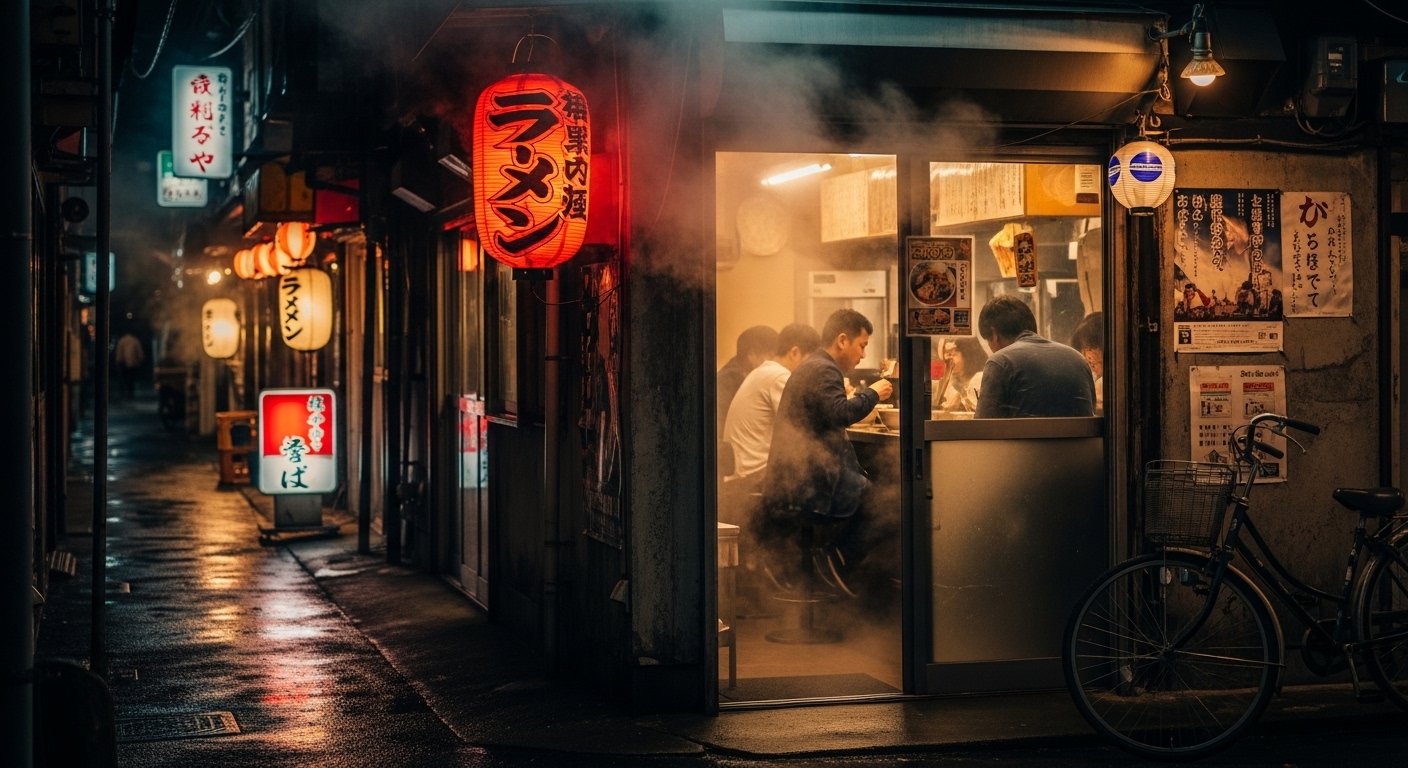
Table of Contents
- The Real Struggle: Why is Finding Late-Night Food in Japan So Hard?
- Your Late-Night Winter War-Wagon: Ramen, Oden, Izakaya
- Step-by-Step Solution: Navigating the Night
- Price Breakdown: What to Expect (and How to Save)
- Common Pitfalls & How to Dodge Them
- 🇯🇵 Point & Speak: Essential Phrases for Late-Night Bites
- FAQ About Late-Night Winter Dining in Japan
The Real Struggle: Why is Finding Late-Night Food in Japan So Hard?
You’re tired. You’ve walked miles, seen temples, maybe even climbed a mountain. Now it’s past 9 PM, your phone battery is at 15%, and your stomach is staging a full-blown rebellion. This is usually the moment visitors hit a wall. Why? Because Japan, for all its convenience, has a few quirks when it comes to late-night dining:
- “Closed” Doesn’t Always Mean Closed: Many places that look open might be closing up shop soon or are already last-order. I’ve sprinted into a promising-looking ramen joint at 9:15 PM only to be met with a polite, firm “すみません、もう終わりです” (Sorry, we’re closing). It’s crushing.
- The Budget Black Hole: Finding any food after 9 PM is one thing. Finding quality, authentic Japanese food that doesn’t cost an arm and a leg? That’s the real challenge. You want something beyond a lukewarm convenience store sandwich, right? Something that actually warms you from the inside out, as the locals do, without blowing your daily budget.
- Tourist Trap Overload: Without knowing where to look, you’ll default to the shiny chain restaurants or the places with English menus plastered outside. While convenient, they often lack the soul and the wallet-friendliness of a true local spot. You’re missing out on the genuine, cozy family meal experience that’s part of everyday Japanese life, as Sakura, an Osaka mom, shared – simple Oden meals are a cornerstone of their budget-friendly family moments.
- The Language Barrier Blues: Even if a place is open, ordering can be a minefield. Picture this: you’re exhausted, the staff speaks zero English, and the menu is a beautiful, inscrutable tapestry of kanji. It’s enough to send you straight back to that sad convenience store.
- Information Overload (or Lack Thereof): Guidebooks and generic travel blogs tend to focus on prime-time dining. Specific, reliable info for after 9 PM and on a budget is surprisingly scarce. It’s like cutting through a thick fog of generic advice to find that one golden nugget. That’s why I’m here – to cut through the noise for you.
But fear not, my hungry friend! I’ve got the intel.
Your Late-Night Winter War-Wagon: Ramen, Oden, Izakaya
When the mercury drops and the clock ticks past 9 PM, these are your holy trinity for a cozy, convenient, and budget-friendly dinner. They’re designed to warm you from the inside out and are deeply integrated into local culture.
Ramen: The OG Late-Night Warmth
Let’s be real, ramen is the quintessential late-night Japanese comfort food. Imagine stepping in from the biting cold, the air thick with the smell of rich broth and garlic, steam fogging your glasses. You slide onto a stool at a counter, watching the chefs work their magic, and within minutes, a steaming bowl of pure joy is placed before you.
- Why it’s perfect: It’s fast, incredibly satisfying, relatively cheap, and often open super late, especially in bustling areas of Tokyo. My go-to after a long day in Shinjuku or Shibuya is almost always a ramen shop. There’s nothing quite like a piping hot bowl of tonkotsu (pork bone broth), thick and creamy, to reset your system. Or maybe a spicy miso ramen to really get the blood flowing.
- What to look for: Small, unassuming shops often tucked away on side streets. If you see a vending machine outside for tickets, you’re usually in a good, efficient spot. Most ramen shops will have a choice of shio (salt), shoyu (soy sauce), miso (fermented bean paste), or tonkotsu (pork bone) broth. Don’t be afraid to experiment!
Oden: Your Cozy, Budget-Friendly Hug in a Bowl
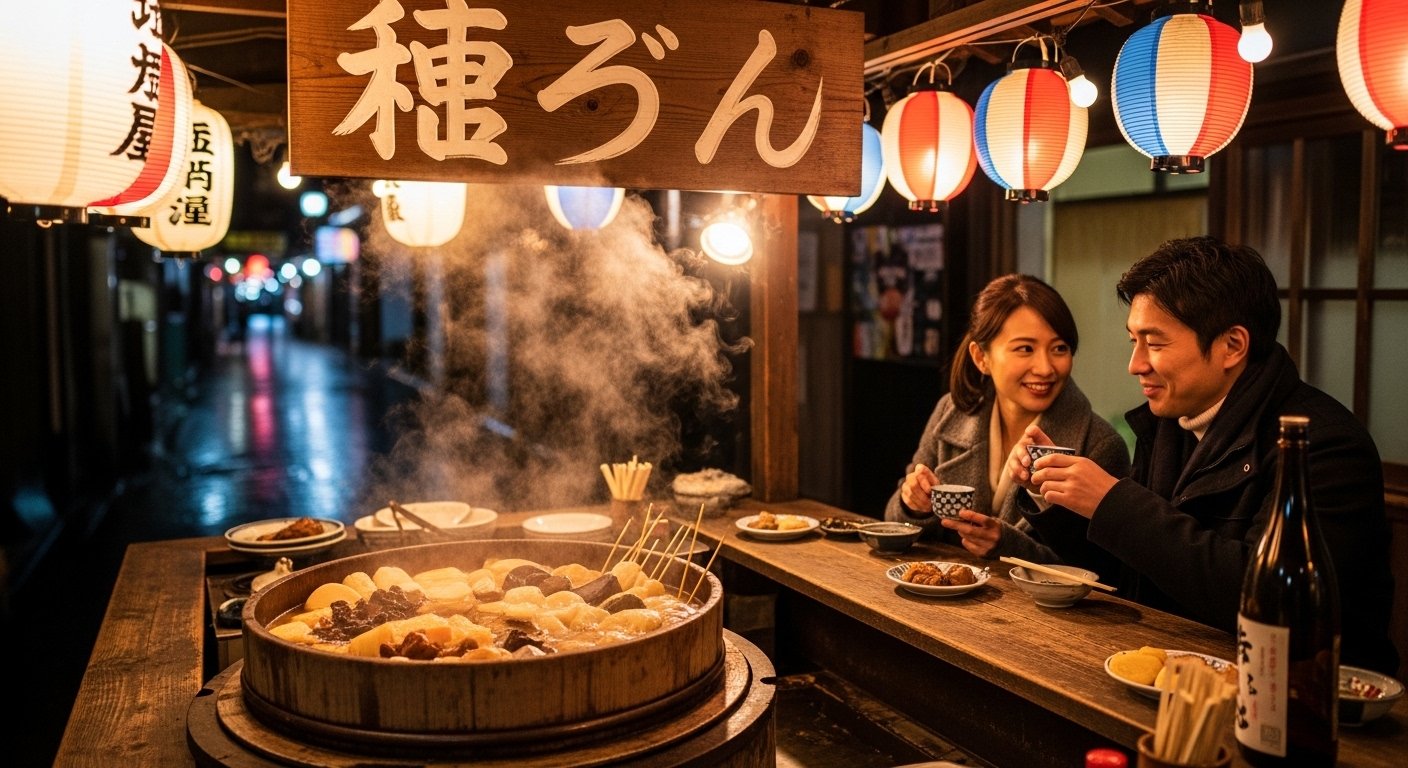
This is where you graduate from “tourist” to “in-the-know.” Oden is Japan’s ultimate winter comfort food, a true local secret for warmth and coziness. It’s a collection of various ingredients – daikon radish, boiled eggs, fish cakes (chikuwa, hanpen), konjac, tofu – slowly simmered in a light, savory dashi broth.
- Why it’s perfect: It’s incredibly cheap, customizable, and deeply warming. It’s also part of those simple, everyday moments and family life, as I mentioned with Sakura in Osaka. It truly is a dish for “cozy family time.” You pick what you want, and they plate it for you. Many convenience stores have oden, but for the real experience, you need to hit up a proper oden stall or a specialized oden restaurant. The broth from a dedicated shop is usually a thousand times richer and more nuanced.
- What to look for: Small, often standing-room-only shops, or a specific counter within an izakaya. You’ll see the ingredients simmering in a large, divided pot. Just point to what you want! The daikon radish (大根) is a must-try; it soaks up all that delicious broth.
Izakaya: More Than Just Drinking (Seriously)
Okay, an izakaya isn’t just about getting tipsy. While they are pubs, they’re also fantastic places for small, affordable plates of food, especially if you go for the less fancy, local spots. They’re communal, lively, and many stay open past midnight. Tokyo, in particular, offers exceptional late-night izakaya options that are both budget-friendly and authentically Japanese.
- Why it’s perfect: Variety! You can order several small dishes – grilled skewers (yakitori), fried chicken (karaage), edamame, gyoza, grilled fish, salads – and share them. This makes it super easy to control your budget. Plus, the atmosphere is usually buzzing, offering a real slice of local life.
- What to look for: Avoid the massive, brightly lit chains near major stations if you’re truly on a budget. Instead, dive into the side streets for smaller, older establishments. Look for paper lanterns (提灯 – chōchin) and signs that look a bit worn, maybe handwritten specials. If you don’t drink, it’s perfectly fine to just order food and soft drinks like tea or soda.
Step-by-Step Solution: Navigating the Night
You’ve got your hunger, you’ve got your desired dish. Now, how do you actually find these elusive late-night gems?
-
Go Local (and Small):
The best late-night spots aren’t usually on the main thoroughfares. They’re tucked away in side alleys or under train tracks (especially for ramen). Look for places with handwritten signs, a few salarymen already inside, or a generally “unpretentious” vibe. If it looks too polished and tourist-friendly, it probably isn’t the budget-friendly gem you’re seeking. These are the places that offer cozy warmth.
-
Master the Search (with Apps):
Your phone is your best friend here, but you need to use it smartly.
- Google Maps: Search for “Ramen,” “Oden,” or “Izakaya” near your location. IMPORTANT: Filter by “Open Now” and check the actual closing times. A restaurant might be “open now” but close at 9:30 PM, leaving you scrambling. Cross-reference with reviews for mentions of late-night dining.
- Tabelog (食べログ – Tabelogu): This is Japan’s equivalent of Yelp, but much more reliable for local spots. It’s mostly in Japanese, but the filters are fairly intuitive. You can filter by cuisine, area, and crucially, “operating hours” (営業時間 – eigyō jikan). Look for places open until after 22:00 or 23:00. Use Google Translate’s camera function for the menu if needed.
-
Budget Like a Pro:
To keep costs down, especially in izakayas:
- Skip the Booze (or go light): Alcohol is where the bill really racks up. Soft drinks are always an option.
- Focus on smaller dishes: At an izakaya, order 2-3 small plates per person instead of one large entree. This lets you sample more and manage your spending.
- Look for set menus (セットメニュー – setto menyuu): Some places, especially ramen shops, have a set that includes ramen, gyoza, and maybe a small side for a good price.
- Oden is your friend: Individually priced items mean you control exactly how much you spend. Start with a few pieces and add more if you’re still hungry and within budget.
-
Embrace the Konbini (for emergencies, not dinner):
I know I ragged on them, but sometimes, they’re unavoidable. If it’s 1 AM and everything truly is shut, a Family Mart or 7-Eleven can save you from starvation. Grab some *onigiri* (rice balls), a hot tea, or some pre-made sandwiches. Just don’t make it your primary late-night winter dinner strategy if you want that authentic, cozy experience!
-
Know Your Peak Times (and Off-Peak Gold):
Most izakayas will be busy right after work (6 PM – 8 PM). After 9 PM, they often thin out, making it easier to snag a seat. Ramen shops can stay busy late, but sometimes hit a lull between the salaryman rush and the after-bar crowd. The post-New Year period can be tricky as some places take extended breaks, but reliable options are still available if you know where to look.
🎯 Insider Tip: If you’re near a major train station like Shinjuku, Shibuya, or Ueno, check the areas *underneath* or *adjacent* to the train tracks. These often house clusters of tiny, no-frills ramen and izakaya joints that cater to commuters and stay open very late. Look for places with a bustling atmosphere and a lot of steam from the kitchens.
Price Breakdown: What to Expect (and How to Save)
Here’s a rough idea of what you can expect to pay for a satisfying late-night winter dinner on a budget. These are general ranges, and prices can vary slightly by region (Tokyo can be a bit pricier, for example).
| Dish Type | Typical Price Range (per person) | Budget Tip |
| Ramen (1 bowl) | ¥700 – ¥1,200 | Order a basic bowl; extra toppings add up quickly. Look for set deals (ramen + gyoza) for better value than ordering separately. |
| Oden (3-5 pieces + broth) | ¥500 – ¥1,000 | Pick cheaper items like daikon, eggs, and konjac. Fish cakes can vary in price. It’s one of the most budget-friendly authentic options. |
| Izakaya (2-3 small dishes + soft drink) | ¥1,500 – ¥2,500 | Crucially, avoid ordering too many alcoholic drinks. Stick to smaller, cheaper dishes like edamame, gyoza, or a couple of yakitori skewers (¥100-¥200 per skewer). Look for “otoshi” (お通し – small appetizer charge) which is common but can be politely declined at some places (though it might be frowned upon at others). |
| Nabe (Japanese Hot Pot) | ¥1,500 – ¥3,000+ (often for 2+ people) | Excellent for groups, as it’s usually ordered per pot. Can be very filling and warming. Cheaper if shared. |
| Yakiimo (Roasted Sweet Potato) | ¥300 – ¥700 | A fantastic, cheap snack that warms you up instantly. Look for street vendors with small trucks, often identified by their distinctive song or a sign with ‘焼き芋’ in Japanese. Not a full dinner, but a great budget warmer. |
Common Pitfalls & How to Dodge Them
Even with the right strategy, Japan can throw curveballs. Here are a few I’ve personally faced:
- The “Last Order” Ambush: You think you’re golden, sitting down at 9:30 PM, only to be told it’s last order. Always clarify closing times if you can, especially if it’s nearing 10 PM. A quick “何時までですか?” (Nanji made desu ka? – Until what time?) can save you.
- Hidden Charges at Izakayas: Many izakayas automatically charge a small “otoshi” (お通し) or “sekiryō” (席料 – seating charge) per person, which usually comes with a small appetizer you didn’t order. It’s typically ¥300-¥500. It’s part of the culture, so don’t be surprised. You can sometimes decline it, but it’s a bit rude, especially in smaller establishments. Just factor it into your budget.
- The “Tourist Trap” Menu: If a place has massive photos of food, plastic replicas outside, and English menus almost exclusively, chances are it’s geared towards tourists and might be pricier or less authentic. Not always bad, but not what we’re aiming for here.
- Cash Only Conundrum: Many smaller, older, and more authentic late-night spots are cash-only. Always carry enough cash, especially late at night. Finding an ATM that works with your foreign card after 10 PM can be a quest in itself (look for 7-Bank ATMs in 7-Eleven stores or post offices).
🇯🇵 Point & Speak: Essential Phrases for Late-Night Bites
Don’t let the language barrier intimidate you. A few key phrases, combined with pointing, can get you fed like a pro. Seriously, a little effort goes a long way and staff really appreciate it.
🇯🇵 Point & Speak
Show this to staff:
English: Is this open late? (asking about closing time)
遅くまで開いていますか?
(Osoku made aiteimasu ka?)
English: How much is this? (point to item)
これ、いくらですか?
(Kore, ikura desu ka?)
English: I’ll have one of these, please. (point to item on menu or in oden pot)
これ、一つください。
(Kore, hitotsu kudasai.)
English: Can I get the check, please?
お会計お願いします。
(Okaikei onegai shimasu.)
English: Is there a set menu?
セットメニューはありますか?
(Setto menyuu wa arimasu ka?)
FAQ About Late-Night Winter Dining in Japan
Q1: Is it really hard to find quality food open after 9 PM in Japan, especially outside of major cities?
A1: Honestly, yes, it can be tricky. In major hubs like Tokyo or Osaka, you’ll find plenty of ramen shops and izakayas open late. However, as you venture into smaller towns or residential areas, options become much more limited. Many family-run restaurants close around 8 or 9 PM. Your best bet is always to check Google Maps or Tabelog for operating hours, filtering for places open until at least 10 PM. Prioritize areas around train stations or entertainment districts, as these are more likely to have late-night eateries.
Q2: How can I find authentic local winter dishes like Oden without falling into a tourist trap?
A2: The key is to look for smaller, less flashy establishments. Avoid places with huge, multi-language menus and plastic food displays. For Oden, specifically, look for small counter-style restaurants or a dedicated Oden section within a cozy izakaya, often identifiable by the large pot simmering various ingredients. If you see locals happily slurping their broth, you’re likely in a good spot. Tabelog (Japan’s local review site) is excellent for finding these hidden gems; look for places with high ratings and recent reviews from Japanese users.
Q3: What’s the best way to stick to a limited budget for late-night winter dinners in Japan?
A3: Your best friend for budget-friendly late-night dining is ramen and oden. A hearty bowl of ramen is typically ¥700-¥1200. For oden, you can easily get a satisfying meal for ¥500-¥1000 by picking a few pieces. At izakayas, the budget can quickly escalate with alcohol. Stick to soft drinks, order 2-3 small plates (like edamame, gyoza, or a couple of yakitori skewers), and share if you’re with company. Always carry cash, as many smaller, cheaper establishments might not accept cards, helping you avoid unexpected ATM fees.
Don’t Starve, Thrive!
Look, the truth is, Japan can be a little intimidating when you’re jet-lagged, hungry, and out of your element. I’ve been there, stomach growling, utterly lost in translation and struggling to find anything beyond a sad triangle of convenience store rice. It’s frustrating.
But with a little insider knowledge, a dash of courage, and these tips in your pocket, you won’t just survive the late-night hunger pangs this winter; you’ll thrive. You’ll find yourself sitting in a steamy ramen shop, the rich broth warming you from the inside out, or at a cozy oden counter, picking out perfectly simmered daikon, feeling like a true local. These are the experiences that stick with you, the ones that make you feel truly connected to this incredible country.
So go on, embrace the night. Your cozy, budget-friendly Japanese winter dinner awaits. You’ve got this.


