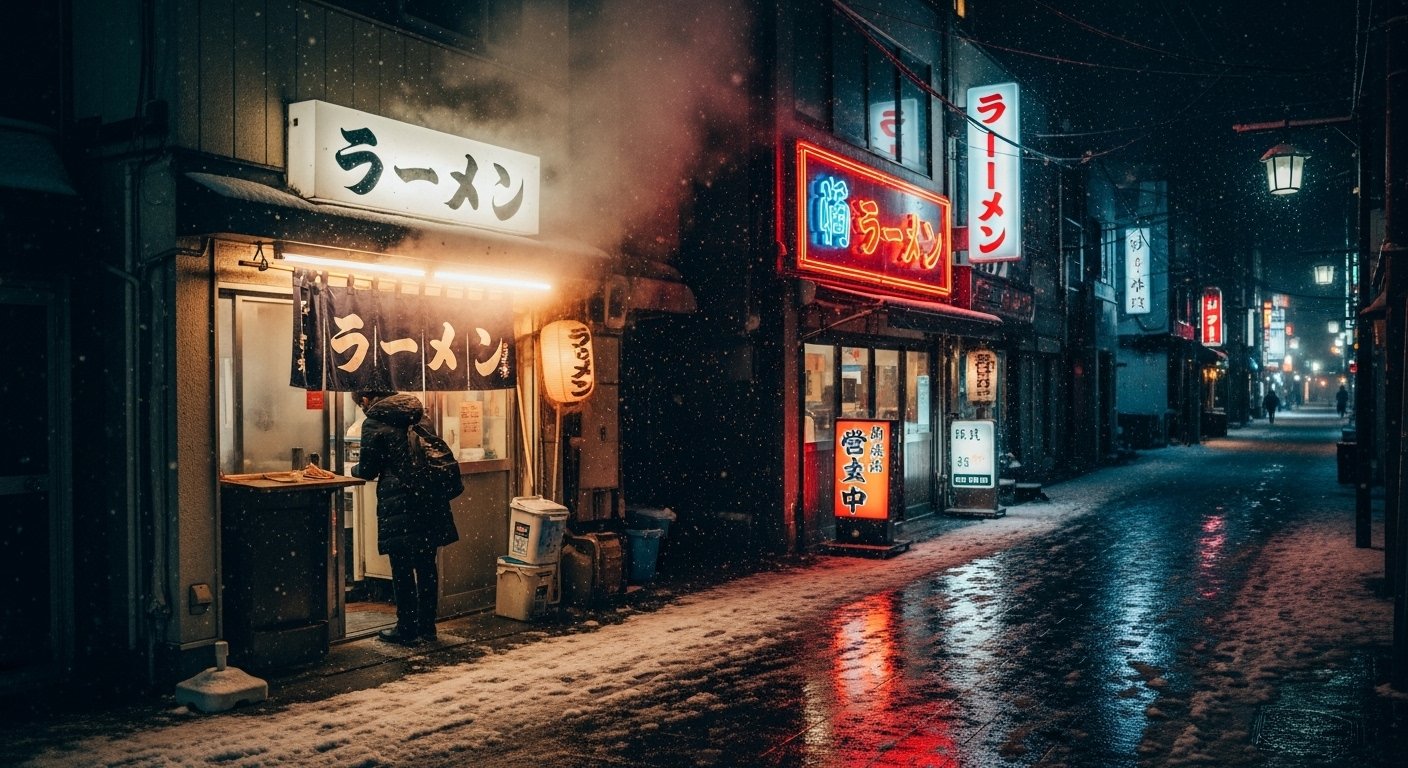
*Images used in this article are for illustration only. They may not be directly related to the content.
Tokyo’s Dec 23 Late-Night Dinner: Solo-Friendly Warm Bowls & Holiday Opening Hacks
Planning a late-night dinner in Tokyo on December 23rd? You’re in a unique position. While the main New Year’s closures haven’t fully hit, some establishments begin adjusting their hours, and the city hums with pre-holiday energy. Finding a warm, comforting meal, especially if you’re dining solo and tired after a day of exploration, can feel like a challenge. You want to avoid awkwardness, cold food, and closed doors.
This guide, crafted by your Japan Local Fixer, cuts through the uncertainty. We’ll equip you with practical strategies, specific recommendations for solo-friendly, warm meals, and crucial tips for navigating holiday operating hours. Forget the guesswork; this is your actionable plan to enjoy Tokyo’s late-night culinary scene, even when traveling alone during the festive season.
Table of Contents
- The December 23rd Dilemma: Why Finding Food Can Be Tricky
- Your Late-Night Dining Strategy: Reliability & Warmth
- Top Picks for Warm Bowls & Solo Comfort
- Visual Guide: Mastering the Vending Machine (食券機 – Shokken-ki)
- 🇯🇵 Point & Speak: Essential Phrases
- 💰 Price Breakdown: Budgeting Your Late-Night Meal
- 🎯 Local Pro-Tips for Seamless Solo Dining
- 📋 Quick Reference Card: Your Go-To Guide
- Common Mistakes to Avoid
- Frequently Asked Questions
- Conclusion: Enjoy Your Tokyo Nights
- Disclaimer
The December 23rd Dilemma: Why Finding Food Can Be Tricky
Navigating Tokyo’s dining scene late in the evening is usually straightforward, but December 23rd presents specific considerations. This date, while not a national holiday itself since 2019, sits just before the major New Year’s holiday period. Many independent restaurants, particularly smaller, family-run establishments, begin their preparations for extended closures. This can mean reduced hours or even early closures, making your search for a late meal less predictable.
Beyond the hours, the cold Tokyo winter naturally steers you towards warm, comforting food. You might also feel some apprehension about dining alone in unfamiliar, potentially crowded venues. The goal is to find a spot that is reliably open, welcoming to solo diners, offers a warm meal, and is easy to navigate even with a language barrier. This is where strategic planning becomes essential.
Your Late-Night Dining Strategy: Reliability & Warmth
To eliminate friction and ensure a satisfying late-night dinner, focus on reliability, solo-friendliness, and warmth. Here’s how to approach it:
-
Prioritize Major Chain Restaurants
The Fix: Major chain restaurants are your most reliable allies for late-night and holiday dining. Brands like Yoshinoya, Sukiya, Matsuya (gyudon/beef bowls), and Ichiran (ramen) are highly likely to operate normally, often offering 24/7 service or extended late-night hours. They are accustomed to a steady flow of customers, including solo diners, and are less affected by holiday adjustments.
Visual Cue: Look for their distinct orange (Yoshinoya), blue (Sukiya), or yellow/orange (Matsuya) signboards. Ichiran has a recognizable green and red logo.
Benefit: Consistent quality, clear menus (often with pictures or English options), and streamlined ordering make them excellent choices.
-
Embrace Convenience Stores
The Fix: For unparalleled accessibility and a surprisingly diverse range of warm options, head to a 7-Eleven, FamilyMart, or Lawson. These stores are open 24/7, even during holidays. During winter, look for the ‘Oden’ (おでん) pot, a hot stew of various ingredients, which is incredibly comforting.
Benefit: Immediate, budget-friendly warm food like instant ramen, bentos (lunch boxes), steamed buns, and hot drinks. They are also perfect for grabbing a quick bite if other options fail.
Visual Cue: Recognizable logos, brightly lit interiors, and often a distinctive ‘Oden’ counter near the register in winter.
-
Target High-Activity Neighborhoods
The Fix: Concentrate your search in Tokyo’s busiest entertainment and business districts. Shinjuku (especially Kabukicho and areas around Shinjuku Station), Shibuya, Roppongi, Ueno, and Ikebukuro have the highest concentration of late-night establishments, including many chain restaurants and izakayas that cater to a constant stream of customers.
Benefit: These areas have a higher probability of finding open restaurants, even independent ones that might slightly adjust hours but remain open late due to demand.
-
Leverage Technology to Verify Hours
The Fix: Always check opening hours before heading out. Utilize Google Maps, Tabelog (tabelog.com/en/), or Gurunavi (gurunavi.com/en/). Search for “Holiday Hours” (年末年始の営業時間 – nenmatsu nenshi no eigyou jikan) or simply look at the listed hours for Dec 23rd.
Benefit: While not always perfectly updated far in advance, these platforms provide strong indicators of general trends and specific restaurant closures. Look for “24h” or “Open until XX:XX” next to the date.
🎯 Local Pro-Tip: Even if a specific restaurant’s Dec 23rd hours aren’t explicitly listed, observe their typical operating hours. If they usually close early, they’re more likely to close earlier during the holiday lead-up. If they are normally 24/7, they likely will remain so.


Top Picks for Warm Bowls & Solo Comfort
When the Tokyo chill sets in, a warm bowl of food is exactly what you need. These options are not only comforting but also inherently solo-friendly.
Ramen (ラーメン)
Ramen is the quintessential warm bowl. Tokyo offers endless varieties: rich tonkotsu (pork bone broth), savory shoyu (soy sauce), or hearty miso (fermented soybean paste). Many ramen shops are designed for efficiency and solo diners, especially those with counter seating.
- Ichiran Ramen (ichiran.com/english/): The ultimate solo dining experience. Individual ‘flavor concentration booths’ with bamboo blinds ensure privacy. You order via a sheet (English available) and a vending machine. Perfect for those who prefer minimal interaction.
- General Ramen Shops: Look for places with long counters (カウンター席 – kauntā seki) where diners sit side-by-side. You’ll often see businesspeople and travelers eating alone.

Gyudon (牛丼 – Beef Bowl)
Quick, satisfying, and hot. Gyudon is thinly sliced beef simmered in a sweet soy sauce broth, served over rice. These are chain strongholds, meaning reliability for late hours.
- Yoshinoya (yoshinoya.com/en/)
- Sukiya (sukiya.jp/en/)
- Matsuya (matsuyafoods.co.jp/english/)
All three offer similar menus with slight variations, including pork bowls (butadon) and curry. Most have counter seating and quick service.

Udon (うどん) & Soba (そば)
Thick (udon) or thin (soba) wheat noodles in a dashi-based broth. These are lighter than ramen but equally comforting. Options include kitsune udon (fried tofu), tempura udon/soba (fried shrimp/vegetables), or simple kake soba/udon (plain broth).
- Found in small, often standing-only shops near train stations (駅そば – eki soba) or in larger food court settings. Many also use vending machines.

Oden (おでん) at Convenience Stores
A winter staple, Oden is a Japanese hot pot stew with various ingredients like daikon radish, boiled eggs, fish cakes, and konjac, simmered in a light dashi broth. It’s available at convenience stores during the colder months.
- Walk up to the Oden counter, point to what you want, and the staff will serve it in a cup with broth. It’s cheap, quick, and incredibly warming.

Visual Guide: Mastering the Vending Machine (食券機 – Shokken-ki)
Many ramen and donburi shops use vending machines for ordering, which removes language barriers and streamlines service. This is particularly helpful for solo travelers.
Step 1: Locate the Ticket Machine
Visual cue: This machine (食券機 – shokken-ki) is usually located just inside the entrance, sometimes even outside. It can be a large upright machine, often with a screen showing pictures of dishes.
What to do: Enter the restaurant and look immediately to your left or right. It’s often the first thing you encounter.

Step 2: Select Your Meal
Visual cue: Buttons on the machine will have pictures of the dishes. The largest or top-left button is often the shop’s signature or most popular item. Look for prices listed next to the buttons.
What to do: Press the button corresponding to your desired meal. If you want extras (e.g., extra noodles, egg), these are usually smaller buttons below the main dish options.

Step 3: Insert Payment
Visual cue: A slot for banknotes (紙幣 – shihei) and coins (硬貨 – kōka) will be present. The machine will display the total amount and often “お釣り” (otsuri) for change.
What to do: Insert cash. Most machines take ¥1,000 notes and various coins. Some newer machines accept IC cards (like Suica or Pasmo), but cash is universal. Your ticket(s) and change will be dispensed.

Step 4: Hand Over Your Ticket
Visual cue: You’ll receive a small paper ticket (or multiple, if you ordered extras) from the machine. Head to the counter or a designated seat.
What to do: Hand your ticket(s) to the staff. They will take your order and guide you to a seat if one isn’t immediately obvious. In some smaller shops, you might place the ticket on the counter in front of your seat.

🇯🇵 Point & Speak
Show this section to staff if you’re stuck. They can read the Japanese.
English: Are you open now?
今、営業していますか?
(Ima, eigyou shiteimasu ka?)
English: What are your holiday hours?
年末年始の営業時間はどうなりますか?
(Nenmatsu nenshi no eigyou jikan wa dou narimasu ka?)
English: Table for one, please. / One person.
一人です。
(Hitori desu.)
English: Is there counter seating?
カウンター席はありますか?
(Kauntā seki wa arimasu ka?)
English: This one, please. (Pointing at a menu item)
これをお願いします。
(Kore o onegai shimasu.)
English: Thank you for the meal (before eating).
いただきます。
(Itadakimasu.)
English: Thank you for the meal (after eating).
ごちそうさまでした。
(Gochisōsama deshita.)
💰 Price Breakdown: Budgeting Your Late-Night Meal
Late-night dining in Tokyo can be very budget-friendly, especially with chain restaurants and convenience stores. Here’s what to expect:
Typical Costs for Solo Late-Night Meals
| Item | Cost Range |
| Standard Gyudon (beef bowl) | ¥400-¥700 |
| Basic Ramen (e.g., Shoyu, Tonkotsu) | ¥700-¥1,200 |
| Udon/Soba bowl | ¥400-¥900 |
| Convenience Store Oden (3-4 items + broth) | ¥300-¥600 |
| Convenience Store Bento/Instant Ramen | ¥300-¥800 |
| Mid-range Izakaya (dinner for one, 2-3 dishes + drink) | ¥2,000-¥4,000 |
Prices verified as of November 2024. Exact costs vary by location and specific order.
🎯 Local Pro-Tips for Seamless Solo Dining
Make your late-night Tokyo dining experience smooth and stress-free with these insider tips.
🎯 Local Pro-Tip: Carry Cash. While larger chains and convenience stores increasingly accept card or IC card payments, many smaller, independent late-night ramen shops, izakayas, or standing soba shops operate primarily on cash. Having ¥1,000 notes and coins is essential for vending machines and quick transactions.
🎯 Local Pro-Tip: Solo Dining is Normal. Discard any apprehension about dining alone. In Japan, especially at ramen shops, gyudon chains, and places with counter seating, solo dining is not only common but expected. Many establishments are designed for efficiency and cater specifically to individuals. You’re simply blending in.
🎯 Local Pro-Tip: Google Translate’s Camera Feature. If you encounter a menu without English or pictures, use the Google Translate app’s camera function. It can often provide a rough translation of text in real-time, helping you understand options, especially for ingredients or specific dish names.
📋 Quick Reference Card: Your Go-To Guide
Screenshot or print this section for easy access. It’s your compact checklist for late-night dining on December 23rd.
Tokyo Late-Night Dining (Dec 23) Checklist
Screenshot or print this section for easy access:
- ✅ Reliable Options: Yoshinoya, Sukiya, Matsuya, Ichiran, 7-Eleven, FamilyMart, Lawson.
- ✅ Top Solo Foods: Ramen, Gyudon, Udon/Soba, Convenience Store Oden.
- ✅ Neighborhoods: Shinjuku, Shibuya, Roppongi, Ueno, Ikebukuro.
- ✅ Verify Hours: Use Google Maps, Tabelog, Gurunavi (search for ‘年末年始の営業時間’).
- ✅ Cash Ready: Essential for many late-night and vending machine establishments.
- ✅ Solo Friendly: Counter seating and vending machines make it easy.
Common Mistakes to Avoid
Steer clear of these pitfalls to ensure a smooth late-night dining experience during the holiday season:
-
Assuming All Shops Are Open
Why it’s a mistake: While Dec 23rd isn’t New Year’s Day, many smaller, independent shops begin winding down or adjusting hours for the upcoming extended holiday. You might find your favorite quaint eatery closed.
The Fix: Always verify hours using online tools like Google Maps, Tabelog, or Gurunavi, especially for non-chain restaurants. Stick to major chains or convenience stores if you need absolute certainty.
-
Not Having Enough Cash
Why it’s a mistake: Relying solely on credit cards or mobile payments can leave you stranded at a vending machine-only ramen shop or a traditional izakaya that’s cash-only.
The Fix: Keep a good amount of yen in small denominations (¥1,000 notes and coins) on hand. ATMs are available at convenience stores, but plan ahead.
-
Hesitating to Dine Solo
Why it’s a mistake: Feeling awkward or intimidated by solo dining can prevent you from trying some of Tokyo’s most authentic and delicious late-night options.
The Fix: Understand that solo dining is a normal and respected practice in Japan. Embrace it as an opportunity to immerse yourself in the local culinary scene without distraction. Many places are specifically designed for it.
-
Ignoring Your Cravings for Warmth
Why it’s a mistake: December in Tokyo is cold. Opting for lighter, cold meals late at night can leave you feeling unsatisfied and chilly.
The Fix: Actively seek out the warm bowls: ramen, gyudon, udon, soba, and especially convenience store oden. These are not just meals; they are comfort.
Frequently Asked Questions
Is December 23rd a national holiday in Japan, and will shops be closed?
December 23rd ceased to be a national holiday after the Emperor’s abdication in 2019. While it’s not a public holiday, it falls just before the extended New Year’s holiday period. This means some smaller, independent shops might start adjusting their hours or closing early in preparation, though major chains and convenience stores will largely operate normally.
Can I rely on credit cards for late-night dining in Tokyo?
While many larger establishments and convenience stores accept credit cards or IC cards (like Suica/Pasmo), it’s highly recommended to carry cash, especially in smaller denominations. Many traditional ramen shops, izakayas, and vending machine-only restaurants are cash-only. Always be prepared with physical yen.
Are English menus widely available at late-night restaurants?
Major chain restaurants (Yoshinoya, Sukiya, Matsuya, Ichiran) often have English menus or picture-based ordering systems (like vending machines) that minimize the need for English text. However, smaller, local establishments may not. Utilize the Google Translate app’s camera function or the Japanese phrases provided in this guide to help you order.
What if I have dietary restrictions?
Dietary restrictions can be challenging with limited English communication. Your best approach is to research specific restaurants beforehand if possible. For on-the-spot communication, use Google Translate on your phone (typing in your restriction) or try to point to ingredients. Convenience stores offer ingredient lists on packaged foods. Saying “This one, please” (これをお願いします – Kore o onegai shimasu) while pointing to a visual menu item avoids direct ingredient questions.
Conclusion: Enjoy Your Tokyo Nights
Finding a delicious, warm, and solo-friendly late-night dinner in Tokyo on December 23rd is entirely achievable with the right strategy. By prioritizing reliable chain restaurants, embracing the convenience store experience, and leveraging technology to verify hours, you can navigate the pre-holiday season like a seasoned local. Don’t let perceived language barriers or solo dining apprehension deter you; Tokyo is ready to welcome you.
Warm bowls await, from the private booths of Ichiran to the bustling counters of a gyudon shop or the comforting warmth of oden from a 24/7 convenience store. Embrace the efficiency, enjoy the flavors, and make your Tokyo evenings memorable.
Disclaimer
This guide provides general information and recommendations based on typical operating patterns and publicly available data. Restaurant hours and specific offerings can change without notice, especially during holiday periods. Always verify current operating hours and availability directly with the establishment or via reliable online sources (Google Maps, Tabelog, Gurunavi) before making plans. While we aim for accuracy, we cannot guarantee real-time updates for all businesses.