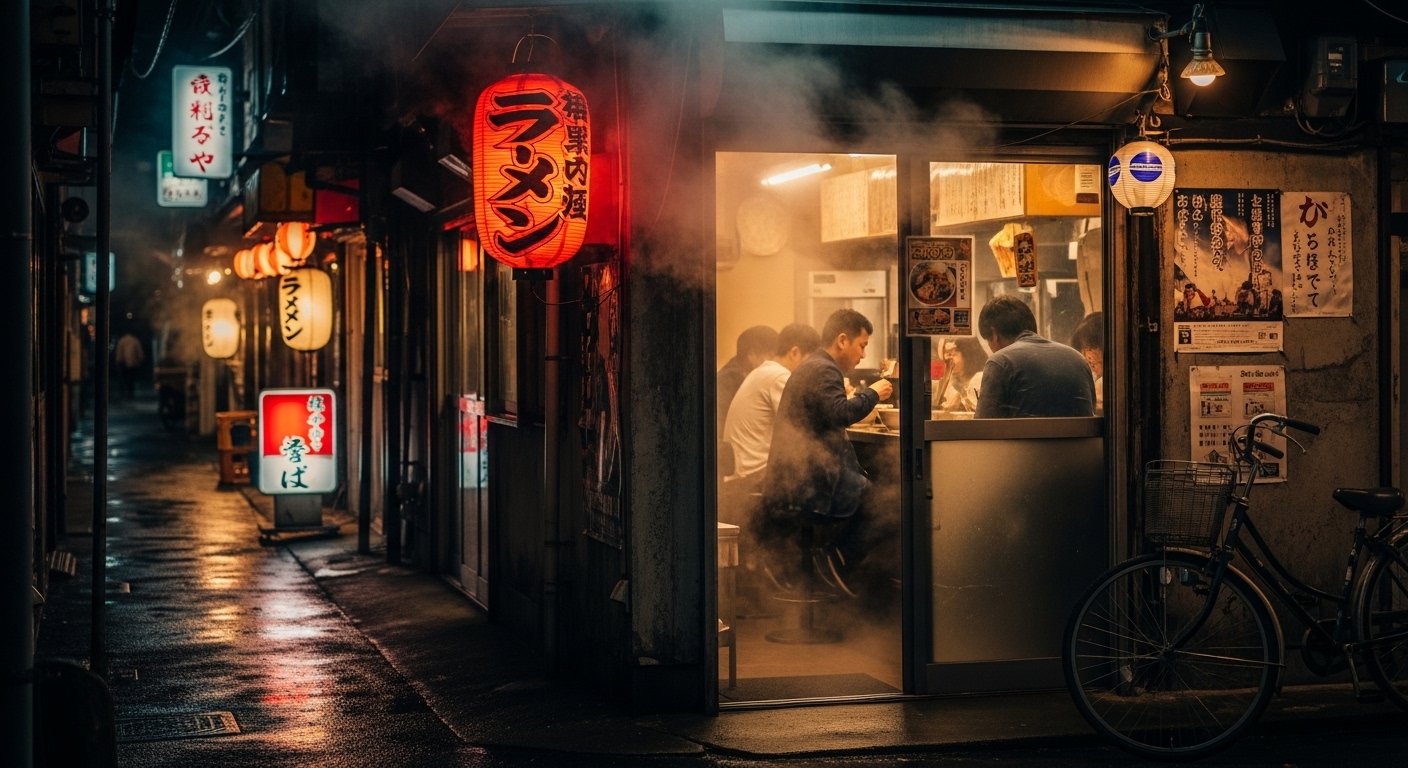
*Images used in this article are for illustration only. They may not be directly related to the content.
Vegan Late Night Dinner Japan: Your Warm, Budget Meal Guide After 9 PM
You’ve had a long day exploring Japan, the winter air is crisp, and now it’s past 9 PM. Your stomach rumbles, but a familiar panic sets in: “Where can I find open restaurants? Will they have anything vegan? And can I afford it?” Finding a satisfying, plant-based, and budget-friendly meal late at night in Japan, especially in winter when you crave warmth, can feel like navigating a maze.
This guide is your practical solution. We’ll cut through the confusion and show you exactly where to find reliable, warm vegan food options after 9 PM without breaking your budget. No more going hungry, no more uncertainty – just straightforward advice to keep you fueled and warm.
Table of Contents
- The Late-Night Vegan Challenge in Japan
- Your Strategy for a Warm Vegan Dinner After 9 PM
- 🇯🇵 Point & Speak: Essential Japanese Phrases
- 💰 Budget Breakdown: Late-Night Vegan Costs
- 📋 Quick Reference Card: Late-Night Vegan Survival
- 🎯 Pro-Tips for Success
- Common Mistakes to Avoid
- Frequently Asked Questions
The Late-Night Vegan Challenge in Japan
Finding food after 9 PM in Japan presents specific hurdles. Many independent restaurants and smaller eateries often close by 9 PM or 10 PM, with last orders typically taken 30-60 minutes before closing. This limits your choices significantly, especially outside major entertainment districts or near transport hubs.
For plant-based eaters, the challenge intensifies. While vegan options are growing, Japan’s culinary landscape still heavily relies on dashi (出汁), a fish-based broth, even in dishes that appear vegetarian. This often makes seemingly safe choices like miso soup, many noodle broths, or even some pickles, unsuitable. Explicit vegan labeling is not yet standard, making ingredient verification crucial.
Furthermore, late-night dining, particularly at izakayas or sit-down restaurants, can quickly become expensive. When the winter chill sets in, the craving for something warm and comforting amplifies these difficulties, as cold, pre-packaged items might not suffice.
Your Strategy for a Warm Vegan Dinner After 9 PM
Don’t despair. With a clear strategy, you can reliably find warm, budget-friendly vegan food after 9 PM. Your best allies will be convenience stores and, in some specific cases, fast-food chains.
Option 1: The Ubiquitous Convenience Store (Konbini)
Convenience stores (konbini) like 7-Eleven, FamilyMart, and Lawson are your most reliable resource. They operate 24/7 across Japan and offer a surprising array of potentially vegan-friendly items, many of which can be served warm.
🎯 Local Pro-Tip: The staff at Japanese convenience stores are typically very helpful, even with a language barrier. Using pre-translated phrases or pointing clearly will assist them in helping you find what you need.
Konbini Winter Warmers: What to Look For
-
Oden (おでん): The Steaming Hot Pot
Visual cue: Look for a dedicated, steaming counter, often near the cashier, filled with various items soaking in broth.
Oden is a Japanese stew popular in winter, consisting of various ingredients simmered in a light, soy-flavored dashi broth. While the broth is almost always fish-based, you can often find accidentally vegan items to enjoy if you purchase them *without* the broth, or rinse them if possible (though less common). The staff will scoop your chosen items into a cup. For absolute safety, avoid Oden due to the dashi. However, if you’re comfortable with items cooked in dashi but not directly containing animal products, consider:
- Daikon (大根): Large, tender pieces of radish.
- Konnyaku / Konjac (こんにゃく): Gelatinous yam cake, often triangular or noodle-like.
- Mochi Kinchaku (餅きんちゃく): A small pouch of fried tofu skin (aburaage) filled with mochi (rice cake). Ensure the mochi itself is plain.
Crucial: Be aware that items like ‘chikuwa’ (fish cake), ‘hanpen’ (fish paste), and ‘satsuma-age’ (fried fish cake) are common. Stick to clearly identifiable plant-based items. If unsure, avoid.
-
Instant Ramen & Cup Noodles: Your Emergency Fix
Visual cue: Aisle stacked with various colorful cups and packets. Look for labels like ‘Vegan’, ‘Plant-based’, ‘動物性原料不使用’ (Dōbutsu-sei genryō fushiyō – no animal ingredients), or ‘プラントベース’ (puranto bēsu).
Many konbini stock vegan-friendly instant ramen. They will also have a hot water dispenser for you to prepare your noodles on the spot. This is one of the most reliable and affordable warm vegan options. After buying, simply take it to the hot water station, fill it up, and wait a few minutes.
-
Steamed Buns (Chūka Man): A Quick Hand Warmer
Visual cue: Hot food warmer near the cashier, containing large, round steamed buns.
In winter, konbini offer a range of steamed buns. The most common vegan option is ‘Anman’ (あんまん), a sweet bun filled with red bean paste. Sometimes, vegetable buns (野菜まん – yasai man) are available, but these need careful checking as they can contain meat or dairy. Ask for ‘Anman’ or show the phrase “これに乳製品は入っていますか?” (Kore ni nyūseihin wa haitte imasu ka? – Does this contain dairy?).
-
Microwaveable Meals (Rarely Explicitly Vegan)
Visual cue: Refrigerated section with pre-packaged meals, often rice or pasta dishes.
While less common to find explicitly vegan options here, some plain rice dishes or vegetable-based pasta might be accidentally vegan. Staff can heat these for you. This requires careful label reading, which can be challenging due to the language barrier.
-
Hot Beverages
Visual cue: Beverage fridges, vending machines, or hot drink dispensers.
You can find hot teas, coffees, and often soy milk (豆乳 – tōnyū) in cartons, which can be heated. Many vending machines also offer ‘HOT’ (ホット) options for various drinks.


Option 2: Fast Food Chains (with caution)
Some major gyudon (beef bowl) chains have started introducing plant-based options, and they often operate late. However, menus can vary by location and time, so always verify.
-
Sukiya (すき家)
Sukiya has offered a ‘Soy Meat Gyudon’ (ソイミート牛丼) in the past. This is usually served over rice. Always confirm if the sauce/broth is vegan-friendly, as even soy meat options can sometimes use dashi or other animal products in the seasoning. Show the “Is this vegan?” phrase.
-
Matsuya (松屋)
Matsuya sometimes features a ‘Plant-Based Curry’ (植物性カレー) or a basic curry that can be vegan if ordered without additional toppings like cheese or meat. Similar to Sukiya, the curry base needs verification for dashi or animal fats. While a good potential option, it requires diligence.


Important: Yoshinoya, another major gyudon chain, has generally fewer clear vegan options. Focus on Sukiya or Matsuya if you’re trying fast food.
🇯🇵 Point & Speak: Essential Japanese Phrases
🇯🇵 Point & Speak
Show this section to staff if you’re stuck. They can read the Japanese.
English: Is this vegan? (No meat, no fish, no dairy, no eggs, no dashi)
これはヴィーガンですか?(肉なし、魚なし、乳製品なし、卵なし、だしなし)
(Kore wa vīgan desu ka? (Niku nashi, sakana nashi, nyūseihin nashi, tamago nashi, dashi nashi))
English: Do you have plant-based food?
植物性の食べ物はありますか?
(Shokubutsu-sei no tabemono wa arimasu ka?)
English: Hot food, please.
温かい食べ物をください。
(Atatakai tabemono o kudasai.)
English: Is there hot water for this?
これにお湯はありますか?
(Kore ni o-yu wa arimasu ka?)
English: Takeaway, please.
持ち帰りでお願いします。
(Mochikaeri de onegai shimasu.)
💰 Budget Breakdown: Late-Night Vegan Costs
Here’s a realistic look at what you can expect to pay for a late-night vegan meal.
💰 Price Breakdown
| Item Type | Typical Cost | Notes |
| Instant Vegan Ramen (Konbini) | ¥200-500 | Hot water usually free. |
| Oden items (Konbini) | ¥80-200 per item | Choose 2-3 for a small meal (beware dashi). |
| Anman (Steamed Bun) (Konbini) | ¥130-180 | Sweet red bean. Check for other buns. |
| Onigiri (Plain/Pickled) (Konbini) | ¥100-200 | Can be eaten cold, but some hot drinks warm it up. |
| Hot Soy Milk / Tea (Konbini/Vending) | ¥120-200 | Good for warmth. |
| Sukiya Soy Meat Gyudon (Fast Food) | ¥500-800 | Verify vegan status. |
| Matsuya Plant-Based Curry (Fast Food) | ¥500-700 | Verify vegan status. |
Prices verified as of January 2026. Exchange rates may vary. Expect to spend ¥300-800 for a solid konbini meal, or ¥500-1000 at a fast-food chain.
📋 Quick Reference Card: Late-Night Vegan Survival
📋 Quick Reference Card
Screenshot or print this section for easy access:
- ✅ Priority 1: Convenience Stores (Konbini) – 7-Eleven, FamilyMart, Lawson are 24/7.
- ✅ Warm Options: Instant vegan ramen (look for labels!), anman (red bean bun), specific oden items (daikon, konnyaku, mochi kinchaku – confirm dashi comfort), hot soy milk.
- ✅ Key Phrases: “Is this vegan? (No meat, no fish, no dairy, no eggs, no dashi)” and “Hot food, please.”
- ✅ Visual Cues: ’24H’ signs, ‘Vegan’/’Plant-based’ labels, Oden counter, Chūka Man warmer.
- ✅ Budget: Expect ¥300-800 per meal at konbini.
🎯 Pro-Tips for Success
🎯 Local Pro-Tip: Before 9 PM, if you have time, consider purchasing vegan-friendly items from a supermarket or a dedicated vegan restaurant (check HappyCow for opening hours: HappyCow Japan) to store for later. While not warm, it expands your options significantly.
- Download a Translation App: Google Translate with camera function can help decipher ingredient lists on packaging for packaged snacks or microwave meals.
- Carry a Printout: Keep a small card with the key Japanese vegan phrases. Your phone might run out of battery.
- Pre-scout Locations: Use Google Maps to identify convenience stores near your accommodation or planned late-night activities. Look for the distinct 7-Eleven, FamilyMart, or Lawson logos.
- Check HappyCow Early: While dedicated vegan restaurants rarely stay open past 9-10 PM, checking HappyCow (HappyCow Japan) during the day can help you find options for earlier dinners or places with vegan snacks you can save.
- Official Allergy Info (Japanese): For deep dives, official konbini websites provide allergy information in Japanese. For 7-Eleven: 7-Eleven Japan Allergy Info (PDF). For FamilyMart: FamilyMart Allergy Info. This requires Japanese reading skills.
Common Mistakes to Avoid
- Assuming “Vegetarian” is Vegan: In Japan, “vegetarian” often includes dashi (fish broth), eggs, and dairy. Always specify “no dashi, no fish, no meat, no dairy, no eggs” to be safe.
- Not Checking for Dashi: This is the most frequent pitfall. Many broths, sauces, and seasonings contain dashi. Explicitly ask or look for “dashi nashi” (だしなし) or “動物性原料不使用” (dōbutsu-sei genryō fushiyō – no animal ingredients) labels.
- Relying Only on Visual Cues: Plastic food models (sampuru – サンプル) outside restaurants are helpful, but don’t indicate hidden ingredients. Always confirm with staff.
- Waiting Until Last Minute: Plan your late-night meal. Knowing your options reduces stress and the risk of settling for non-vegan food out of hunger.
- Forgetting About Hot Water: If you buy instant ramen, remember to ask “Kore ni o-yu wa arimasu ka?” (これにお湯はありますか?) for hot water.
Frequently Asked Questions
Are all convenience store instant ramens vegan?
No, not all instant ramens are vegan. Many contain animal-derived ingredients or dashi. You must actively look for specific labels like ‘Vegan’, ‘Plant-based’, or ‘動物性原料不使用’ (no animal ingredients). Dedicated vegan brands are becoming more common in larger konbini.
Can I trust the “vegetarian” label in Japan?
Generally, no, not if you are strictly vegan. The Japanese definition of “vegetarian” often includes dashi (fish broth), eggs, and dairy. For vegan diets, always use the explicit “vegan” phrase and specify “no meat, no fish, no dairy, no eggs, no dashi” to avoid miscommunication.
How can I find out if a specific oden item is vegan?
This is challenging due to the shared dashi broth, which is almost always fish-based. Even if the item itself (like daikon or konjac) is plant-based, it’s cooked in the dashi. If you are comfortable with items cooked in dashi, visually identify plain daikon, konnyaku, or mochi kinchaku. For strict vegans, Oden is generally not recommended unless explicitly stated otherwise.
What if I don’t speak any Japanese?
Prepare. Carry a physical card with essential Japanese vegan phrases, use a translation app with a camera function, and rely on visual cues for labels like ‘Vegan’ or ‘Plant-based’. Japanese staff are generally helpful, and a prepared phrase can bridge the communication gap effectively.
Are there any late-night dedicated vegan restaurants in Japan?
Dedicated vegan restaurants are becoming more common, but very few operate past 9-10 PM, especially in winter. Always check platforms like HappyCow for the latest opening hours and locations. For true late-night needs, convenience stores and specific fast-food chains are your most realistic options.
Conclusion
Don’t let the fear of finding late-night vegan food in Japan disrupt your winter travels. By understanding local closing times, knowing where to look (convenience stores are your best friend), and equipping yourself with a few key phrases, you can reliably find warm, budget-friendly plant-based meals after 9 PM. Stay prepared, stay warm, and enjoy every moment of your Japanese adventure.
Disclaimer
Ingredient formulations and menu items in Japan can change without notice, especially for chain restaurants and convenience stores. Always verify ingredients and allergy information at the point of purchase. This guide provides general advice, and personal dietary responsibility remains paramount.