*Images used in this article are for illustration only. They may not be directly related to the content.
Warm & Wallet-Friendly Japanese Breakfasts: Beyond Konbini for Winter Mornings
You’ve arrived in Japan, ready to explore, but the crisp winter air hits hard. As morning breaks, the thought of another cold sandwich from the convenience store (konbini) might not be appealing. You crave something warm, substantial, and authentically Japanese, but budget constraints and language barriers can make finding it feel daunting. You’re not alone in defaulting to quick konbini stops, but there’s a world of satisfying, affordable, and warm Japanese breakfast options waiting.
This guide is designed to remove that friction. We’ll show you how to find delicious, budget-friendly, and truly warm Japanese breakfast experiences, easily navigating early hours, diverse menus, and the occasional language hurdle. Get ready to start your winter days in Japan feeling fueled and immersed in local culture, without breaking the bank.
Table of Contents
The Morning Chill: Why Konbini Falls Short in Winter
Japan’s winter mornings can be surprisingly cold. While convenience stores are a bedrock of convenience, their breakfast offerings – often cold sandwiches, onigiri, or pastries – don’t always provide the internal warmth needed to brave the day. You might find yourself defaulting to these options due to their ubiquity and the perception of affordability, or because you’re unsure where else to go.
The desire for an authentic, local experience is strong, but language barriers and unfamiliar ordering systems can create hesitation. Early morning operating hours also play a role; many traditional eateries don’t open until later. This often leaves visitors feeling stuck, sacrificing comfort and local flavor for simplicity. But there are better ways to start your day, offering substantial, warm Japanese breakfast meals that are both budget-friendly and accessible.
Your Guide to Warm, Affordable Japanese Breakfasts
Ditch the cold konbini breakfast for these reliable, warm, and wallet-friendly alternatives. These establishments are designed for speed, efficiency, and consistent quality, making them ideal for an international visitor seeking an authentic start to their day.
1. Gyudon Chains: Fast, Filling, & Frugal
Gyudon (beef bowl) chains like Sukiya, Yoshinoya, and Matsuya are mainstays for quick, hot meals. They are especially popular for their “Asa-teishoku” (morning set meals), offering remarkable value. These sets typically include a small bowl of rice, warm miso soup, and a choice of protein or side dishes such as grilled fish, natto (fermented soybeans), or a raw egg.
Most branches open early, with many operating 24/7, making them ideal for an early start. Prices for an Asa-teishoku generally range from ¥300 to ¥600. The warmth of the rice and miso soup is particularly comforting on a cold winter morning.
Visual Cue: Look for prominent red (Yoshinoya), yellow/blue (Sukiya), or yellow/red (Matsuya) signboards. Many utilize a ticket machine (食券機 – shokkenki) near the entrance for ordering, which often features large pictures.
2. Family Restaurants: Comfort & Choice
Family restaurants such as Gusto, Denny’s Japan, Jonathan’s, and Joyfull offer a more relaxed dining experience with a wider range of breakfast options. You’ll find both Japanese and Western breakfast sets available. Japanese sets often feature grilled fish, rice, miso soup, and side dishes, providing a traditional and warm start to your day.
These establishments are generally open from 6 or 7 AM and have a nationwide presence, often found near major stations or along main roads. Prices for breakfast sets usually range from ¥500 to ¥1000. The atmosphere is typically spacious, providing a comfortable respite from the cold.
Visual Cue: Easily recognizable large logos like Gusto (ガスト – blue/orange logo), Denny’s Japan (デニーズ – green logo with coffee cup), or Jonathan’s (ジョナサン – green/yellow logo). Menus almost always feature large, clear photos of dishes, making ordering straightforward.

3. Coffee Chains: A Cozy Start
Japanese coffee chains, including Komeda Coffee, Doutor, and Excelsior Cafe, offer excellent “Morning Sets” (モーニングセット) that are both warm and budget-friendly. These deals are typically available until 10:30 or 11 AM.
Komeda Coffee is particularly notable for its generous offering: you receive free toast and a boiled egg (or other spread like red bean paste) with any drink purchase. With drinks starting around ¥450-¥600, this can be a very economical way to get a warm drink and a light, satisfying breakfast. Doutor also offers toast sets starting from approximately ¥400.
Visual Cue: Komeda Coffee (コメダ珈琲店 – red/white logo with a man holding a coffee cup) or Doutor Coffee (ドトールコーヒー – black/orange logo). Look for ‘モーニング’ (Morning) or ‘朝食’ (Breakfast) on exterior signs or menu boards.

4. Tachigui Soba/Udon: The Quickest Warm-Up
“Tachigui Soba/Udon” (立ち食いそば/うどん) literally means “stand-and-eat soba/udon.” These are small, bustling noodle shops, frequently found within or immediately outside train stations. They are the epitome of quick, warm, and cheap. A hot bowl of udon or soba with various toppings (such as tempura, egg, or fried tofu) can be yours for ¥300-¥600.
Many tachigui shops open as early as 6 AM, providing an immediate internal warmth on the coldest mornings. Service is incredibly fast, designed for commuters on the go. While a standing-only experience, it’s an authentic slice of Japanese daily life and an effective antidote to winter’s chill.
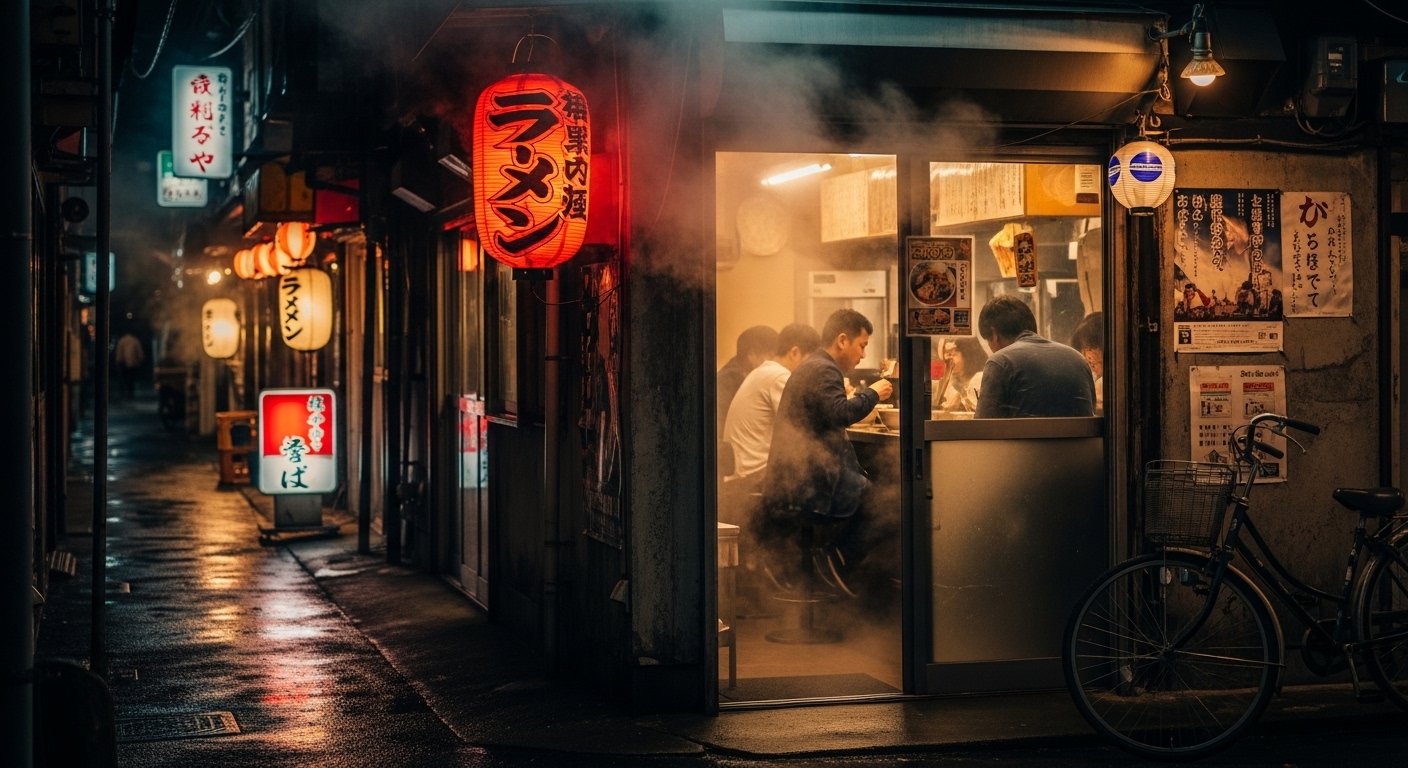
Visual Cue: Often small, counter-style shops with steam rising from the kitchen. Look for prominent displays of noodle bowls and sometimes a ticket machine. They are usually right at the entrance to a station platform or just outside ticket gates.

Navigating Your Morning Meal: Practical Tips
🇯🇵 Point & Speak: Essential Phrases for Breakfast
🇯🇵 Point & Speak
Show this section to staff if you’re stuck. They can read the Japanese.
English: Good morning!
おはようございます!
(Ohayō gozaimasu!)
English: Breakfast menu, please.
朝食メニューをお願いします。
(Chōshoku menyū o onegai shimasu.)
English: This one, please. (While pointing)
これをお願いします。
(Kore o onegai shimasu.)
English: Eat here. (When asked if eating in or taking out)
店内で。
(Ten’nai de.)
English: Thank you for the meal.
ごちそうさまでした。
(Gochisōsama deshita.)
💰 Price Breakdown: Comparing Your Options
💰 Price Breakdown
| Breakfast Type | Typical Cost (Set/Meal) |
| Gyudon Chain (Asa-teishoku) | ¥300-¥600 |
| Family Restaurant (Japanese/Western Set) | ¥500-¥1000 |
| Coffee Chain (Morning Set) | ¥400-¥700 (includes drink) |
| Tachigui Soba/Udon (Basic Bowl) | ¥300-¥600 |
Prices are approximate and can vary by location and specific menu items. Verified as of January 2026.
📋 Quick Reference Card: Your Morning Cheat Sheet
📋 Quick Reference Card
Screenshot or print this section for easy access:
- ✅ Look for: ‘朝食’ (chōshoku – breakfast) or ‘モーニング’ (mōningu – morning) on signs/menus.
- ✅ Ordering: Utilize ticket machines (食券機 – shokkenki) or point at picture menus.
- ✅ Early Bird: Gyudon chains, tachigui soba, and some cafes open by 6-7 AM.
- ✅ Warmth: Prioritize miso soup, grilled fish, and hot noodles for internal comfort.
- ✅ Value: Morning sets often include a drink or multiple items for a low price.
🎯 Local Pro-Tip: Mastering the Ticket Machine
Many efficient Japanese eateries, especially gyudon chains and tachigui soba shops, use ticket machines for ordering. Insert cash, select your item (often with clear pictures), take your ticket and change, then hand the ticket to the staff. This streamlines the process and minimizes language issues. Don’t wait for staff to seat you if there’s a machine; go directly to it.
Common Mistakes to Avoid
While exploring these options, keep a few things in mind to ensure a smooth experience:
- Waiting to be seated at a ticket machine venue: If you see a ticket machine, use it first. Staff at these fast-paced places will expect you to order there before finding a seat.
- Expecting full English menus everywhere: While family restaurants and some coffee chains may have English menus, smaller or more traditional spots like tachigui soba shops might not. Rely on pictures and the “Point & Speak” phrases.
- Underestimating portions: Japanese breakfast sets, while affordable, are often substantial. Don’t over-order unless you’re very hungry, especially if you plan to try different foods throughout the day.
- Not checking operating hours: While many places open early, always double-check with a quick online search or by observing. Early morning hours can vary slightly by location.
Frequently Asked Questions About Japanese Breakfast
Are these warm breakfast places open very early in the morning?
Yes, many of the options listed are specifically known for early openings. Gyudon chains and tachigui soba/udon shops often open by 6 AM, with many gyudon chains operating 24/7. Family restaurants and coffee chains typically open between 6 AM and 8 AM, making them accessible for early risers.
Can I find vegetarian or vegan options at these breakfast spots?
Finding strictly vegetarian or vegan options can be challenging, as dashi (fish stock) is a common base for miso soup and noodle broths. However, some coffee chains offer plain toast or fruit. At family restaurants, you might find salads or plain rice. Always ask about ingredients if you have strict dietary requirements. Using phrases like “これは肉が入っていますか?” (Kore wa niku ga haitte imasu ka? – Does this contain meat?) can be helpful.
How do I pay at these restaurants?
Cash is always accepted and often preferred. Many chain restaurants, especially family restaurants and some coffee chains, also accept credit cards and various electronic payment methods (like IC cards, PayPay, etc.). At places with ticket machines, cash is typically required for the machine itself, then you hand the ticket to staff. Confirm payment methods by looking for signs or asking.
Are these options available across Japan, or mostly in big cities like Tokyo and Kyoto?
The major chains mentioned (Sukiya, Yoshinoya, Matsuya, Gusto, Komeda Coffee, Doutor) have a strong nationwide presence. You will find them in most cities and even many smaller towns across Japan. Tachigui soba/udon shops are particularly prevalent near train stations throughout the country. This makes them reliable choices no matter where your winter travels take you.
Conclusion
Winter mornings in Japan don’t have to start with a cold, unfulfilling meal. By stepping beyond the convenience store, you unlock a range of warm, authentic, and wallet-friendly Japanese breakfast experiences. From the hearty sets at gyudon chains to the comforting noodles of a tachigui soba stand or the cozy atmosphere of a coffee shop, there are abundant options to fuel your day affordably.
Embrace these local alternatives, armed with your new knowledge of visual cues, ordering tips, and essential phrases. You’ll not only enjoy a warmer, more satisfying start to your day but also gain a deeper appreciation for daily life in Japan. Start your winter adventure right, one warm breakfast at a time.
Disclaimer
Prices and operating hours mentioned are general estimates and subject to change. It is advisable to verify current details for specific locations, especially for smaller establishments. While efforts are made for accuracy, menu offerings and availability can fluctuate seasonally or due to store-specific policies. This guide is for informational purposes only and does not constitute endorsement of any specific establishment.