*Images used in this article are for illustration only. They may not be directly related to the content.
Tokyo Winter Day Trips: Gentle Hikes, Onsen & Stargazing for Non-Skiers
Planning a winter trip to Tokyo but not interested in skiing or snowboarding? You’re not alone. Many international visitors seek outdoor activities that offer a different perspective on Japan’s colder months—something more gentle, perhaps with the reward of a warm bath or a clear night sky. Finding accessible, safe, and unique winter hobbies beyond the slopes can be a challenge, especially when navigating holiday crowds or language barriers.
This guide removes that friction. We’ll provide practical, actionable advice for serene winter day trips from Tokyo, focusing on gentle hikes, relaxing open-air onsen, and clear stargazing opportunities. We’ll also cover essential tips for navigating winter conditions and avoiding the busiest New Year’s holiday periods, ensuring your experience is both enjoyable and well-prepared.
Table of Contents
- Gentle Winter Hikes from Tokyo: Mt. Takao
- Post-Hike Relaxation: Open-Air Onsen Experience
- Stargazing Near Tokyo: Escaping City Lights
- Navigating Winter Travel in Japan: Key Considerations
- Your Winter Day Trip Budget: Price Breakdown
- Essential Japanese Phrases for Your Winter Journey
- Frequently Asked Questions
Gentle Winter Hikes from Tokyo: Mt. Takao
Mt. Takao (高尾山) is a prime example of an accessible winter day trip from Tokyo. Located less than an hour by train from Shinjuku, it offers multiple trails suitable for various fitness levels, making it ideal for a gentle winter hike. While not a high-altitude peak, its elevation can offer crisp winter views and a sense of escape from the city.
Trails range from paved paths (Trail 1) to moderate dirt trails. During winter, the main trails are generally clear, but higher elevation paths or less trafficked routes may have ice or packed snow. Waterproof hiking boots with good grip are advisable. Consider trekking poles for added stability. Always check the local weather forecast and trail conditions on the morning of your trip.
🎯 Local Pro-Tip: Navigating New Year’s Crowds at Mt. Takao
During the New Year’s period (December 31st – January 3rd), Mt. Takao, particularly around Yakuo-in Temple, experiences extremely high visitor numbers for Hatsumode (first shrine/temple visit). Expect significant crowds, potential delays on cable cars/chair lifts, and congestion. If your priority is to avoid crowds, plan your visit for December 28-30 or consider less famous alternatives like quieter parts of the Okutama or Chichibu regions during the peak holiday.
Getting There: Your Visual Step-by-Step
Reaching Mt. Takao is straightforward via the Keio Line, offering a direct and efficient connection from central Tokyo.
Step 1: Board the Keio Line to Takaosanguchi Station
Visual cue: At Shinjuku Station, look for signs directing you to the Keio Line platforms. Keio trains are often light blue or pink. Ensure you board a train bound for Takaosanguchi or one that directly connects without requiring a transfer.
What to do: Purchase a ticket at a ticket machine or use your IC card (Suica/Pasmo). A round-trip ticket from Shinjuku to Takaosanguchi costs approximately 790 JPY. The journey takes about 50 minutes.
Step 2: Arrive at Takaosanguchi Station
Visual cue: Takaosanguchi Station is the final stop on the Keio Takao Line. The station building itself is distinct, often featuring wooden elements, directly at the base of Mt. Takao.
What to do: Exit the station. You will immediately see the area for the cable car and chair lift, as well as the Keio Takaosan Onsen Gokurakuyu.

Step 3: Accessing the Mountain: Cable Car or Chair Lift
Visual cue: Cable car and chair lift ticket booths are clearly marked with “切符売り場” (kippu uriba – ticket sales) and often display pictures of the cable car/chair lift. The cable car is a larger cabin, while the chair lift is an open-air seat.
What to do: A round-trip ticket for either costs approximately 950 JPY. Choose based on your preference; the chair lift offers open views but is colder in winter. Both ascend about halfway up the mountain, significantly shortening your hike to the summit.

Post-Hike Relaxation: Open-Air Onsen Experience
After a refreshing winter hike, nothing compares to soaking in a warm onsen. The Keio Takaosan Onsen Gokurakuyu (京王高尾山温泉 極楽湯) is conveniently located right next to Takaosanguchi Station, making it an ideal post-hike destination for warmth and relaxation.
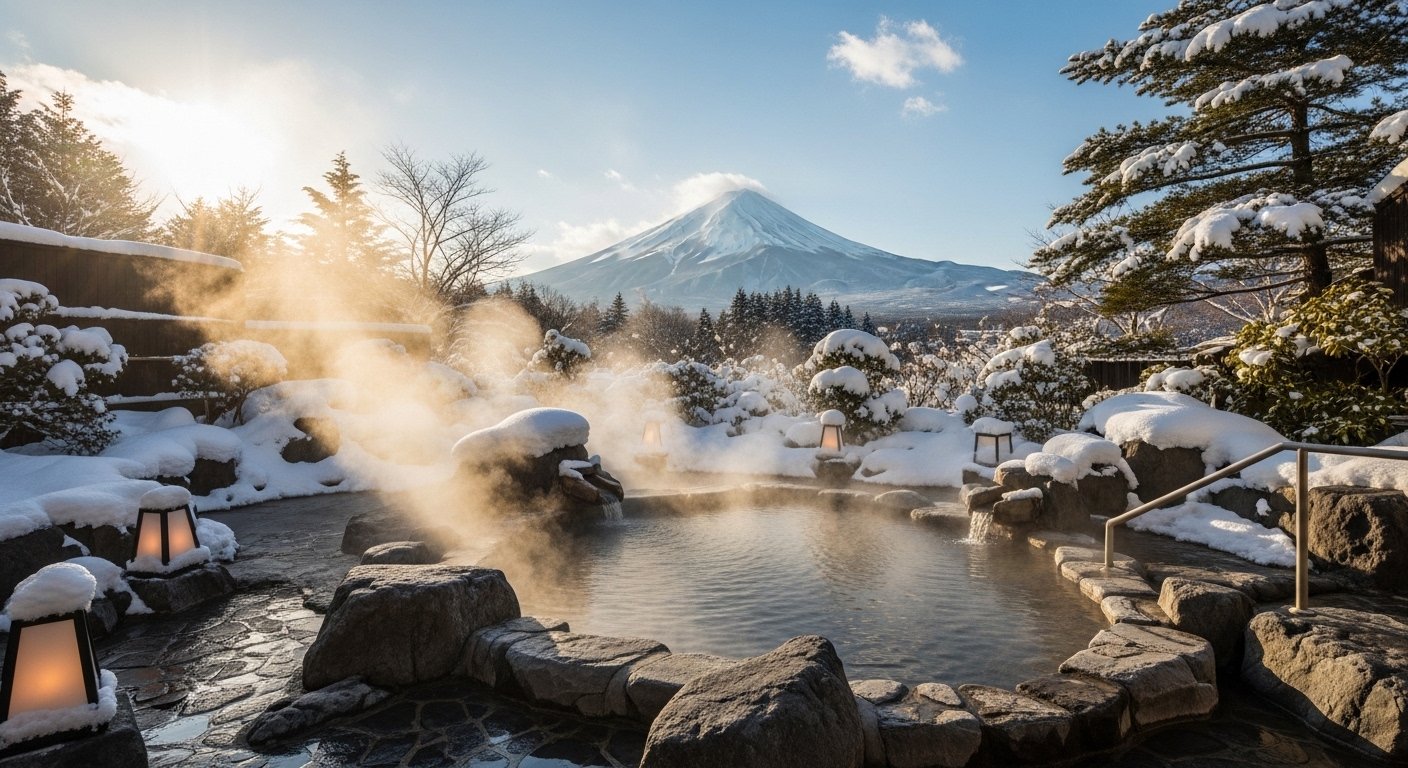
This popular day-trip onsen offers several indoor and open-air baths (rotenburo). An open-air bath in winter, with steam rising against a cool backdrop, is a quintessential Japanese experience. The entry fee is around 1,000-1,200 JPY, varying slightly between weekdays and weekends.
Onsen Etiquette: What You Need to Know
Onsen culture emphasizes cleanliness and respect. Here are key points:
- **Wash Thoroughly:** Before entering the communal baths, you must wash your entire body at the shower stations. Sit on the provided stool, use soap, and rinse off completely.
- **No Clothes in the Bath:** Onsen are enjoyed naked. Your small modesty towel (tenugui) can be placed on your head or at the side of the bath, but not in the water.
- **Tattoos:** Traditionally, tattoos were restricted in many onsen due to their association with Yakuza. While some facilities are becoming more lenient, particularly towards foreign visitors with small tattoos, it’s always advisable to check individual facility policies. Some visitors use waterproof tattoo covers (available online or at some pharmacies) as a discreet solution.
- **Silence and Relaxation:** Maintain a calm and quiet demeanor. Avoid splashing or loud conversations.
🇯🇵 Point & Speak: Onsen & Access Phrases
Show this section to staff if you’re stuck. They can read the Japanese.
English: How do I get to Takaosanguchi Station?
高尾山口駅へはどう行きますか?
(Takaosanguchi-eki e wa dō ikimasu ka?)
English: Does this onsen allow tattoos?
この温泉はタトゥーOKですか?
(Kono onsen wa tatū OK desu ka?)
English: Are there any open-air baths?
露天風呂はありますか?
(Rotenburo wa arimasu ka?)
Stargazing Near Tokyo: Escaping City Lights
While Tokyo’s metropolitan glow makes stargazing difficult, destinations further from the city’s light pollution offer clearer night skies, especially during the crisp winter months. The Okutama (奥多摩) region in Western Tokyo and parts of the Chichibu (秩父) area in Saitama Prefecture are recommended for better stargazing potential.
These areas also feature gentle hikes and local onsen, making them ideal for a multi-faceted winter day trip that extends into the evening. However, they generally require longer travel times and potentially additional bus connections compared to Mt. Takao. Planning your return journey is crucial.
Planning Your Stargazing Trip
- **Check the Forecast:** Clear, moonless nights are best for stargazing. Winter often provides excellent clarity, but temperatures will drop significantly after sunset.
- **Dress Warmly:** Layering is essential. Include thermal underwear, a warm jacket, hat, gloves, and thick socks. Hand warmers (kairo) are highly recommended.
- **Transportation:** Verify last train and bus times meticulously. Many rural bus services stop relatively early. Use apps like Jorudan (link below) for accurate public transport schedules.
- **Light Source:** Bring a red-light headlamp or flashlight to preserve your night vision.
🎯 Local Pro-Tip: Final Transit Check
For any day trip extending into the evening, especially for stargazing, always confirm the last train or bus departure time from your destination. Missing the last service can leave you stranded in areas with limited overnight options. Public transport schedules often change on holidays, so double-check if traveling during the New Year’s period.
Navigating Winter Travel in Japan: Key Considerations
Winter day trips from Tokyo offer unique experiences, but require specific preparation, particularly concerning holiday periods and weather.
The Problem: New Year’s Crowds & Closures
The period from December 31st to January 3rd is Japan’s most significant holiday. Many smaller shops and some restaurants, especially in rural areas, may have irregular opening hours or be closed. Major tourist facilities, onsen, and larger transport hubs generally remain open but operate on holiday schedules with potentially reduced frequency. Expect all major transportation lines and popular tourist spots (like temples for Hatsumode) to be exceptionally crowded.
Seasonal Considerations: Stay Warm and Safe
Winter means shorter daylight hours. Start your day trips early to maximize your time for hiking and exploration. Temperatures can drop significantly, especially in mountain regions and after sunset. Layering clothing is essential: a moisture-wicking base layer, insulating mid-layers (fleece), and a waterproof/windproof outer shell. A warm hat, gloves, and a scarf are critical. Be aware that even at relatively low altitudes near Tokyo, trails can have snow or ice from late December through February.
Language Assistance: Bridging the Gap
While major tourist areas often have English information, smaller, more remote destinations may not. Rely heavily on translation apps (e.g., Google Translate, DeepL) for reading signs or asking complex questions. The pre-prepared Japanese phrases in this guide are crucial for basic interactions. Look for “Tourist Information” centers (観光案内所 – kankō annaijo), which often have English-speaking staff and can provide local advice on trail conditions or bus schedules.
Your Winter Day Trip Budget: Price Breakdown
A typical winter day trip to Mt. Takao, combining a gentle hike and an onsen, is relatively affordable. Here’s an estimated cost breakdown per person:
💰 Price Breakdown: Mt. Takao Day Trip
| Item | Estimated Cost (JPY) |
| Round-trip train (Shinjuku to Takaosanguchi, Keio Line) | ¥790 |
| Round-trip Cable Car / Chair Lift | ¥950 |
| Keio Takaosan Onsen Gokurakuyu Entry | ¥1,000-1,200 |
| Lunch/Snacks (approx.) | ¥1,000-2,000 |
| Total Estimated Cost | ¥3,740-4,940 |
Prices verified as of December 2025. Costs do not include incidentals or souvenirs.
Budget Tip: If you plan to make multiple stops on the Keio Line, consider purchasing a Keio One-Day Pass (approx. 1,500 JPY) for potential savings on transportation. This pass is primarily for Keio Line travel, so check your itinerary to see if it provides value.
Essential Japanese Phrases for Your Winter Journey
Having a few key phrases can significantly ease your travels. These are practical for navigating and interacting in areas where English may not be widely spoken.
🇯🇵 Point & Speak: Essential Phrases
Show this section to staff if you’re stuck. They can read the Japanese.
English: Are the hiking trails safe/open today?
ハイキングコースは今日安全ですか/開いていますか?
(Haikingukōsu wa kyō anzen desu ka / aite imasu ka?)
English: Where can I buy a ticket for the cable car?
ケーブルカーのチケットはどこで買えますか?
(Kēburukā no chiketto wa doko de kaemasu ka?)
English: Is it crowded today?
今日は混んでいますか?
(Kyō wa konde imasu ka?)
English: What time is the last train/bus?
最終電車/バスは何時ですか?
(Saishū densha / basu wa nanji desu ka?)
Frequently Asked Questions
Are winter hikes from Tokyo safe for beginners?
Yes, destinations like Mt. Takao offer gentle, well-maintained trails suitable for beginners, even in winter. However, always wear appropriate waterproof hiking boots with good grip, dress in layers, and check weather and trail conditions on the day of your trip. Avoid less-trafficked or higher-altitude trails if you are inexperienced or if conditions are icy.
How can I avoid large crowds on my winter day trip, especially during New Year’s?
To avoid crowds during the New Year’s holiday (Dec 31 – Jan 3), consider visiting popular spots like Mt. Takao before Dec 31st or after Jan 3rd. During the peak holiday, opt for less famous destinations such as quieter areas in Okutama or Chichibu, or visit popular sites in the late afternoon/evening after the initial Hatsumode rush, being mindful of last train/bus times.
What should I pack for a winter day trip from Tokyo?
Essential packing includes layered clothing (thermal base, fleece, waterproof/windproof outer shell), waterproof hiking boots with good grip, a warm hat, gloves, and a scarf. Bring a small backpack with water, snacks, a fully charged phone, and a portable charger. For stargazing, add a red-light headlamp/flashlight and hand warmers (kairo).
Is it possible to go stargazing near Tokyo without a car?
Yes, destinations like Okutama and Chichibu are reachable by train and bus. However, public transport in these areas, especially buses, can be infrequent and stop operating early. Meticulously plan your route using a transit planner (like Jorudan) and confirm last train/bus times to ensure you can return to Tokyo. Consider combining your stargazing trip with an overnight stay in the area if transport options are limited.
Conclusion
Exploring Japan’s winter landscape doesn’t require a ski pass. From gentle winter hikes up Mt. Takao to the rejuvenating warmth of an open-air onsen, and the quiet clarity of a stargazing night, Tokyo offers diverse outdoor hobbies that cater to every interest. With careful planning, attention to seasonal conditions, and a few practical phrases, you can enjoy unique and memorable winter day trips.
Prepare well, embrace the seasonal beauty, and discover a different side of Japan this winter.
Useful Links for Your Trip:
- Keio Corporation – Mt. Takao Access & Information
- Mt. Takao Official Website (English)
- Keio Takaosan Onsen Gokurakuyu (Japanese)
- JNTO – Okutama Area Guide
- JNTO – Chichibu Area Guide
- Japan Transit Planner (Jorudan)
- Japan Meteorological Agency (Weather Forecasts)
Disclaimer
This information is current as of December 2025. Prices, operating hours, and specific policies (e.g., tattoo allowances at onsen) can change without notice. Always verify details with official sources prior to your trip. Outdoor activities carry inherent risks; assess your abilities and conditions carefully. We are not responsible for any incidents or changes to the information provided.