*Images used in this article are for illustration only. They may not be directly related to the content.
Caught a Cold in Japan? Your ‘Fixer’s’ Guide to Clinics, Insurance & Emergencies
I remember it like it was yesterday: my first proper winter in Japan, huddled under a ridiculously thin futon in a tiny apartment, shivering and sweating. My throat felt like I’d swallowed razor blades, my head pounded with every beat of my heart, and my nose was a perpetual faucet. I had come to Japan expecting pristine efficiency, beautiful temples, and delicious food. What I got was a full-blown flu, isolation, and a crippling realization: I had no clue how to get help.
I tried the obvious. “Do you have a doctor?” I croaked to my next-door neighbor, a sweet elderly lady who only spoke Japanese. She just looked confused and offered me a persimmon. I trudged to the local konbini, hoping to find some kind of miracle cure, but all I found were tiny bottles of energy drinks and a shelf full of inscrutable cold medicines. I stood there, feverish and defeated, the fluorescent lights of the convenience store doing nothing to brighten my mood. It was an isolating, frustrating, and genuinely scary experience.
Fast forward ten years, and I’ve seen it all, both personally and through countless friends and visitors. Japan is an incredible country, but when you’re sick, the language barrier and the unfamiliarity of the system can turn a minor sniffle into a major panic. That’s why I’m here, your “Japan Local Fixer,” to walk you through exactly what to do when winter’s chill brings more than just beautiful snow.
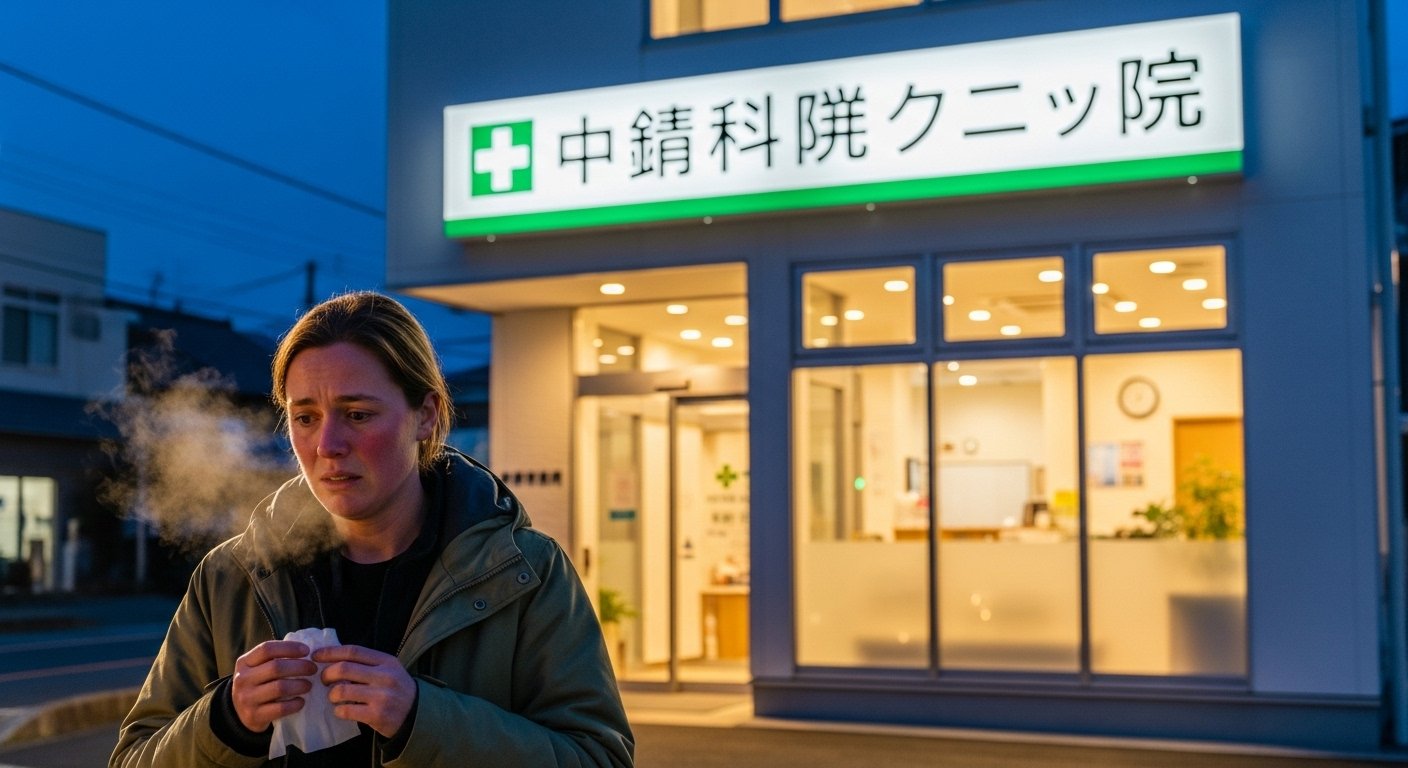
Table of Contents
- The Real Struggle: Why Getting Sick in Japan Can Be So Hard
- Urgent vs. Emergency: Knowing When to Call for Help
- Your Travel Insurance Lifeline: Don’t Leave Home Without It
- Step-by-Step Solution: Finding the Right Care for Winter Illnesses
- Price Breakdown: What to Expect When You Pay
- Common Pitfalls & How to Avoid Them
- 🇯🇵 Point & Speak: Essential Phrases for the Clinic
- FAQ: Your Burning Questions Answered
The Real Struggle: Why Getting Sick in Japan Can Be So Hard
You’re here for a good time, not a medical drama. But when that nagging cough turns into something more, the serene efficiency of Japan can suddenly feel like an impenetrable wall. The pain points for travelers are incredibly consistent:
- The Language Barrier: This is the big one. Most local clinics, especially outside major tourist hubs like Tokyo or Kyoto, have staff who speak little to no English. Trying to explain your symptoms – “My chest feels tight,” “I have a sharp pain here,” “I’m allergic to penicillin” – can be a terrifying game of charades when you’re already feeling like death warmed over. I once had to use Google Translate to describe a persistent earache, and the doctor just kept nodding politely, utterly confused.
- Understanding the Japanese Medical System: It’s not like back home. We’re used to urgent care centers for non-emergencies or just walking into a hospital. Japan’s system is very clinic-centric for minor illnesses. You typically go to a small local clinic (iin or kurinikku) first. Major hospitals (byouin) are reserved for serious conditions, referrals, or emergencies. Showing up at a large hospital with a common cold without an appointment or referral will often result in long waits, higher fees, and a polite redirection to a local clinic. This lack of prior understanding of Japan’s healthcare system and emergency procedures can really hinder your ability to navigate effectively.
- Using Travel Insurance Effectively: Your policy might cover you, but how do you actually use it here? Many clinics and even some hospitals won’t deal directly with foreign insurance companies. They expect payment upfront, and you claim reimbursement later. This means you need cash or a credit card with a high enough limit, and you need to meticulously collect all your receipts and diagnosis forms. It’s a logistical nightmare when you’re just trying to get better.
- Finding Appropriate Care Quickly: Google Maps is great for ramen, less so for finding an English-speaking pediatrician open on a Sunday. Knowing where to look for a doctor who can understand you, or at least has English-speaking support, is crucial. This is even harder when you’re not in a big city.
- Distinguishing Between Urgent & Emergency: Is that fever just a bad flu, or something that needs immediate hospitalization? When do you call an ambulance? Knowing the difference is vital for your health and for avoiding unnecessary ambulance calls that strain local resources and incur costs.
It’s a minefield, folks. But with a bit of preparation and this guide, you won’t have to stumble through it like I did.
Urgent vs. Emergency: Knowing When to Call for Help
This is probably the most critical distinction you need to make. Japan has excellent emergency services, but they are for emergencies. Not for a bad cold.
-
Emergency (Call 119): Think life-threatening situations.
- Severe chest pain, symptoms of a heart attack or stroke.
- Unconsciousness or sudden collapse.
- Major injuries (severe bleeding, broken bones).
- Difficulty breathing (gasping for air, severe asthma attack).
- Severe allergic reactions (anaphylaxis).
- Loss of vision or sudden severe headache (potential stroke).
- If you cannot get yourself to a hospital safely.
- When in doubt, and you believe it’s life-threatening, call 119. The operators may not speak English fluently, so try to have someone who speaks Japanese call for you if possible, or use the “Point & Speak” phrases below.
-
Urgent (Visit a Clinic/Hospital or call an ambulance if no other option): These are serious medical issues that require prompt attention but are not immediately life-threatening.
- High fever (especially if persistent or accompanied by other severe symptoms).
- Deep cuts that may need stitches.
- Sudden, severe pain that isn’t life-threatening but is debilitating.
- Possible minor fractures or sprains.
- Severe vomiting or diarrhea leading to dehydration.
- For urgent but non-emergency situations, your first step should always be to try and find an open clinic during regular hours. If it’s outside of hours and you genuinely feel you need to see a doctor but it’s not a 119 emergency, some larger hospitals have after-hours clinics.
Crucial Point: If you call an ambulance (119) and it’s deemed a non-emergency when you arrive at the hospital, you might be charged for the ambulance ride and potentially face long waits. Use it wisely.
Your Travel Insurance Lifeline: Don’t Leave Home Without It
This isn’t a suggestion; it’s a non-negotiable requirement. Understanding Japan’s health care system and emergency procedures is crucial for navigating any medical situations that may arise during a visit, and travel insurance is your safety net.
Before you even step on the plane, get comprehensive travel insurance. Seriously. I once had a friend who broke his leg snowboarding in Hokkaido. The ambulance, the surgery, the hospital stay, the special flight home – it all cost a small fortune. His travel insurance saved him from financial ruin.
Here’s what you need to know about using it:
- Read Your Policy (Before You Go!): Understand what’s covered, what the deductibles are, and what the claim process entails. Look specifically for medical coverage, emergency evacuation, and repatriation.
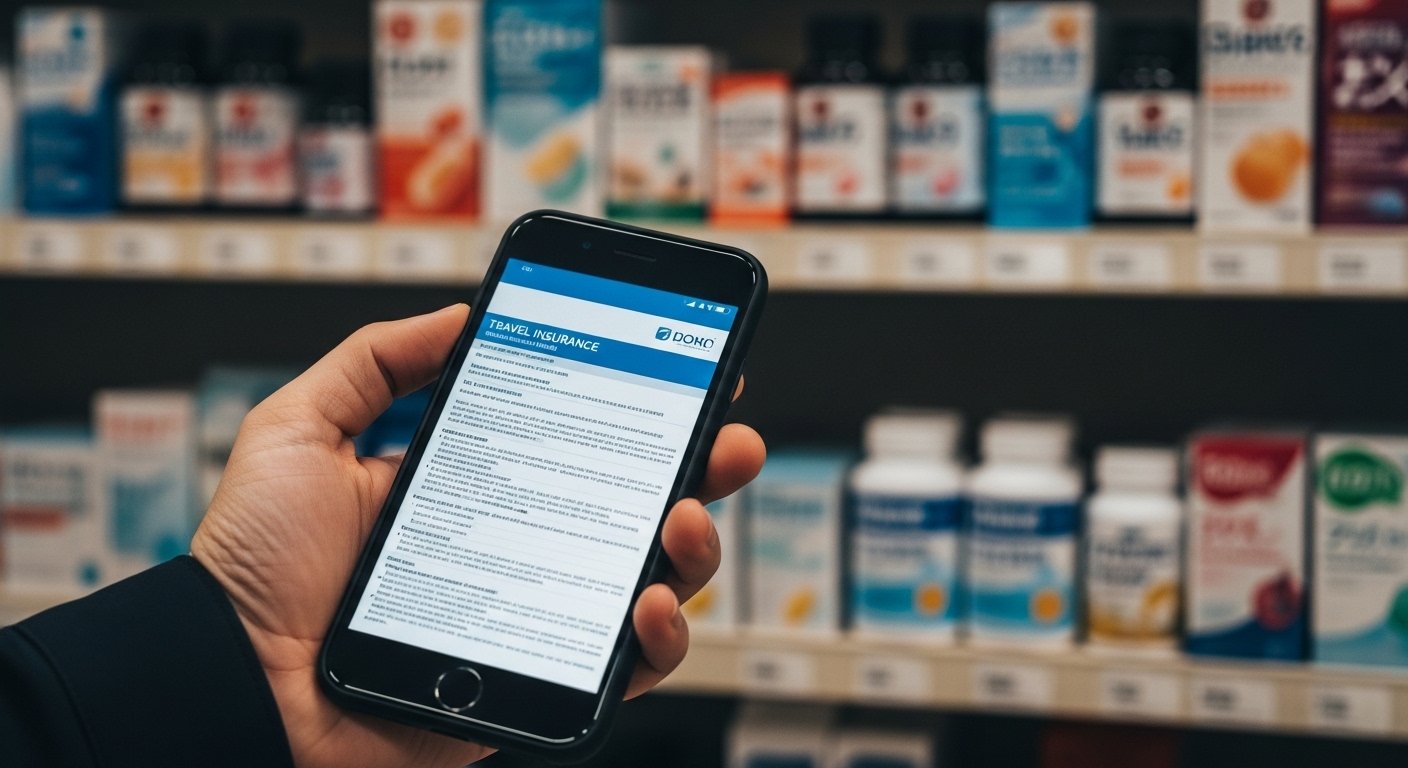
- Keep Policy Details Handy: Print out your policy number, your insurer’s emergency contact number, and a summary of your benefits. Store it digitally on your phone too. I actually put it in my physical wallet and have a photo on my phone’s lock screen. You never know when your phone might die.
- Contact Your Insurer ASAP: If you need medical attention beyond a simple cold, call your insurance provider’s emergency hotline before or immediately after seeking care. They can often recommend English-speaking facilities, pre-approve treatment, or guide you through the process.
- Pay Upfront, Claim Later (Usually): As I mentioned, most Japanese clinics and hospitals expect payment at the time of service. Get an official receipt (ryōshūsho) and a detailed medical certificate (shindan-sho) outlining your diagnosis and treatment. You’ll need these for your claim. Insist on getting them, even if it takes a while.
- Don’t Lose Receipts: Every single receipt, no matter how small, related to your medical care (medications, consultation fees, transport to the clinic) is gold. Keep them organized.
🎯 Insider Tip: Always have a printout or screenshot of your travel insurance policy details and their emergency contact number. Many Japanese clinics won’t deal directly with foreign insurance, so you’ll almost certainly pay upfront and claim later. Keep these documents in a separate bag or photo album on your phone so they’re easily accessible even if your main phone battery dies or gets stolen.
Step-by-Step Solution: Finding the Right Care for Winter Illnesses
Okay, you’re sick. It’s not an emergency, but you definitely need a doctor. Here’s your game plan:
-
Assess Your Situation & Symptoms:
- Minor Cold/Flu (Self-Care First): If it’s just a sniffle, mild cough, or slight sore throat, try over-the-counter remedies first. Japanese pharmacies (look for a green cross sign, or a drugstore like Matsumoto Kiyoshi or Daikoku Drug) have a good selection of cold and flu medications. Ask the pharmacist (if they speak English) for recommendations for “kaze kusuri” (cold medicine) or “seki dome” (cough suppressant). Brands like Pabron or Lulu Attack are common. Rest, hydrate, and give it a day or two.
- More Severe Symptoms (Clinic Visit): If symptoms worsen, a high fever persists, you have severe body aches, intense sore throat, chest congestion, or suspect something more serious like influenza or strep throat, it’s time for a clinic.
-
Find an Appropriate Clinic:
- Your Hotel/Accommodation Staff: This is your absolute first resource. They deal with sick tourists all the time and often have a list of local English-speaking clinics or doctors. They might even call ahead for you to make an appointment.
- Tourist Information Centers: In major cities, these centers (look for the “i” symbol) are incredibly helpful and often have staff who speak multiple languages. They can point you to English-speaking medical facilities.
- AMDA International Medical Information Center (AMDA): This is a lifesaver. They provide medical information and introduce medical institutions to foreign residents and tourists in Japan. They offer telephone services in multiple languages. Their website is a good starting point. Just search for “AMDA Japan.”
- Japan National Tourism Organization (JNTO): JNTO also maintains a list of medical facilities with English-speaking staff. Check their official website for updated lists.
- Online Search: Google “English-speaking clinic [your city/ward]” or “foreigner friendly doctor [your city/ward]”. Websites like “Tokyo Medical and Surgical Clinic” or “International Medical Center of Japan” often pop up in major cities.
-
Make an Appointment (or Prepare for Walk-in):
- Many clinics, especially smaller ones, operate on a walk-in basis, but an appointment is always better to reduce wait times. If you have someone who can call for you, do it.
- Clinic Hours: Be aware that many clinics close for lunch (typically 12:00 PM – 2:00 PM) and often close earlier on Saturdays and are completely closed on Sundays and national holidays. Planning ahead is key.
-
Prepare for Your Visit:
- Bring Your Passport: Always carry identification.
- Bring Your Travel Insurance Info: As discussed, policy number, emergency contacts.
- Bring Cash/Credit Card: Be prepared to pay upfront. Cash is often preferred, especially at smaller clinics.
- Write Down Your Symptoms: Even if you think the doctor speaks English, having your symptoms written down in simple English (e.g., “fever,” “cough,” “sore throat,” “body aches,” “duration”) can be incredibly helpful for them to translate or understand. Note any allergies or current medications.
- “Point & Speak” Phrases: Have these ready on your phone or written down (see section below).
-
At the Clinic:
- Registration (Uke-tsuke): You’ll fill out a form with your personal details and symptoms. They might ask for your address in Japan (your hotel is fine). Hand over your passport and insurance details.
- Waiting Room: Be prepared to wait. Japanese clinics can be busy.
- Consultation (Shinsatsu): The doctor will call you in. Be clear and concise with your symptoms. Use your written notes if needed. Don’t be shy about showing where it hurts.
- Prescription (Shohōsen): If medication is needed, the doctor will give you a prescription. You’ll take this to a separate pharmacy (yakkyoku). Sometimes, smaller clinics dispense basic medication directly.
- Payment (Okaikei): You’ll pay at the reception desk. Remember to ask for a ryōshūsho (receipt) and a shindan-sho (medical certificate/diagnosis form) for your insurance claim.
-
At the Pharmacy (Yakkyoku):
- Take your prescription (shohōsen) to a pharmacy. Look for the “薬” kanji or “pharmacy” sign.
- The pharmacist might ask about your allergies or other medications.
- You’ll pay for the medication there. Again, get a receipt.
- They will explain how to take the medicine (e.g., “食後” shokugo – after meals, “1日3回” ichinichi sankai – three times a day). If you don’t understand, ask them to write it down or use a translation app.
Price Breakdown: What to Expect When You Pay
Without Japanese health insurance, you’ll be paying 100% of the cost. Here’s a rough idea of what to expect. These are estimates, not fixed prices, and can vary based on the clinic’s location, facilities, and the complexity of your case.
| Service Description | Estimated Cost (JPY) | Notes for Tourists |
| Basic Clinic Consultation (e.g., for cold/flu) | ¥5,000 – ¥10,000 | This is for a standard doctor’s visit at a local clinic. Prices might be slightly higher at clinics specifically catering to foreigners. |
| Medication (e.g., antibiotics, cold medicine) | ¥2,000 – ¥8,000 | Depends heavily on the type and quantity of medication prescribed. Stronger prescriptions are usually more expensive. |
| Flu Test (e.g., rapid antigen test) | ¥3,000 – ¥5,000 | If the doctor suspects influenza, they might perform a quick nasal swab test. |
| X-Ray (if needed for cough/chest pain) | ¥5,000 – ¥15,000 | If pneumonia is suspected, an X-ray might be ordered. This usually happens at a larger clinic or hospital. |
| Emergency Room Visit (non-admission) | ¥15,000 – ¥30,000+ | For after-hours or urgent care at a hospital ER without admission. Can vary wildly. Often includes an additional “after-hours” surcharge. |
| Ambulance Service (if deemed non-emergency) | ¥0 – ¥10,000+ | Technically, ambulance service is free for true emergencies. However, if you are transported and your condition is later determined non-urgent by hospital staff, you might be charged. |
As you can see, even a simple clinic visit can add up quickly without insurance. This is why I stress travel insurance so much!
Common Pitfalls & How to Avoid Them
I’ve made almost all of these mistakes, so learn from my misery!
- Assuming English is Spoken Everywhere: Nope. Even in major cities, many smaller, excellent clinics have minimal English. Always verify or have a translation app ready. My friend once tried to explain a stomach ache using only gestures and ended up with a prescription for eye drops. True story.
- Going Straight to a Big Hospital for a Minor Issue: As mentioned, this is a waste of your time and money. Hospitals are for serious conditions. You’ll wait for hours, pay more, and likely be told to go to a clinic.
- Not Checking Clinic Hours: This one gets everyone. Clinics have specific hours, often closing for lunch, and definitely closing on weekends. Don’t assume you can just walk in at 4 PM on a Sunday. Use Google Maps to check their hours before you leave your hotel.
- Forgetting Your Insurance Details/Passport: Crucial for identification and claiming reimbursement. Keep them safe but accessible.
- Not Getting Proper Documentation: If you pay for anything, get a detailed receipt (ryōshūsho) and a diagnosis certificate (shindan-sho). Your insurance company will demand these. Sometimes you have to specifically ask for the shindan-sho.
- Relying Solely on Cash: While many smaller places prefer cash, having a credit card is essential for larger bills or if you unexpectedly need to visit a hospital.
- Being Too Polite: This isn’t about being rude, but about being clear and firm when communicating your needs, especially regarding your pain or requesting documents for insurance. Japanese politeness can sometimes lead to misunderstandings if you’re not direct enough about your discomfort.
🇯🇵 Point & Speak: Essential Phrases for the Clinic
Show this to staff:
English: I have a fever.
熱があります。
(Netsu ga arimasu)
English: I have a cough.
咳が出ます。
(Seki ga demasu)
English: My throat hurts.
喉が痛いです。
(Nodogaitai desu)
English: I feel nauseous.
吐き気がします。
(Hakike ga shimasu)
English: I need a doctor for my cold/flu symptoms.
風邪の症状で医者が必要です。
(Kaze no shoujou de isha ga hitsuyou desu)
English: I need a receipt (for insurance).
領収書をお願いします。(保険のため)
(Ryōshūsho o onegai shimasu. (Hoken no tame))
English: I need a diagnosis certificate (for insurance).
診断書をお願いします。(保険のため)
(Shindan-sho o onegai shimasu. (Hoken no tame))
The truth is, getting sick abroad always sucks. But Japan, for all its wonderful qualities, throws a few extra curveballs at you when you’re under the weather. My first miserable winter here taught me that preparation is everything. Don’t be like me, shivering in a konbini aisle. Get your insurance sorted, know your emergency numbers, and arm yourself with this knowledge.
A little planning goes a long way in ensuring that even if you do get hit by a winter bug, you can get back to enjoying Japan’s unique charm as quickly as possible. Stay warm, stay healthy, and enjoy your trip!
FAQ: Your Burning Questions Answered
Can I just go to a major hospital in Japan for a cold or flu?
Generally, no. Japanese healthcare is designed with smaller clinics (医院 or クリニック) as the first point of contact for common illnesses like colds or the flu. Major hospitals (病院) are usually for serious conditions, referrals from clinics, or true emergencies. Showing up at a large hospital with a minor ailment will likely result in long waits, higher fees (due to an “unreferred patient fee”), and potentially being redirected to a local clinic. Always try to find a clinic first.
Do Japanese doctors and clinic staff typically speak English?
In larger cities and international clinics, you’ll find doctors and staff who speak English. However, in smaller local clinics, especially outside tourist-heavy areas, English proficiency can be very limited. It’s a common pain point for travelers. Always try to find clinics advertised as “English-speaking” or use resources like the AMDA International Medical Information Center, your hotel staff, or tourist information centers to find appropriate facilities. Having key phrases written down or a translation app on hand is also highly recommended.
What’s the emergency number in Japan, and when should I call it?
The emergency number for an ambulance (and fire department) in Japan is **119**. You should call 119 only for life-threatening emergencies such as severe chest pain, unconsciousness, major injuries, severe difficulty breathing, or if you cannot safely get yourself to a hospital. For non-life-threatening but urgent issues (like a persistent high fever or a sprain), you should try to find an open clinic or hospital during regular hours. Calling 119 for a minor illness can strain emergency resources and might result in a charge if your condition is deemed non-urgent upon arrival at the hospital.


