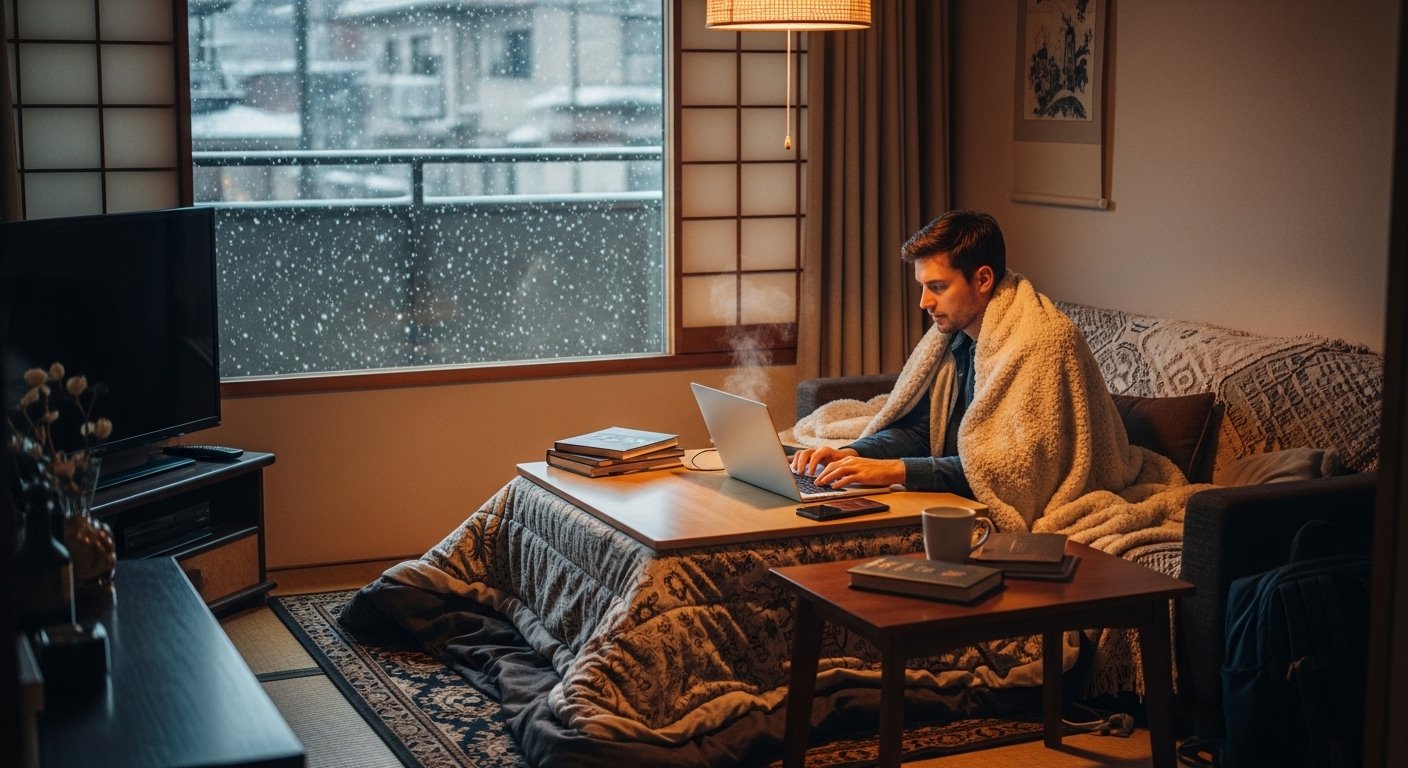
*Images used in this article are for illustration only. They may not be directly related to the content.
Digital Nomads in Japan: Your Winter Survival Guide for Warmth, Work, and Community
Japan in winter offers unique beauty, but for digital nomads, it also presents distinct challenges. The dream of productive remote work can quickly turn into a chilly reality, battling high heating costs, poorly insulated apartments, and a sense of isolation as outdoor activities wane. You’re not alone in feeling this friction.
This comprehensive guide is engineered to remove those pain points. We’ll provide practical, budget-conscious strategies to keep you warm, identify reliable and affordable remote work environments, and connect you with thriving communities, ensuring your winter in Japan is both productive and comfortable. Prepare to navigate Japan’s colder months with confidence and local insight.
Table of Contents
Navigating Japan’s Winter Living: Affordable Warmth at Home
One of the first realities many digital nomads encounter in Japan is the insulation (or lack thereof) in older apartments. While newer buildings are better, many traditional Japanese homes are designed for summer airflow, making them notoriously cold in winter. This leads to higher heating costs and uncomfortable living spaces.
The Problem: Cold Living Spaces & High Heating Bills
Japanese apartments, especially those built before modern energy standards, often feature single-pane windows and thin walls. This allows heat to escape quickly and cold air to seep in, meaning your heating system works harder to maintain a comfortable temperature. The result? Utility bills that can quickly escalate, eating into your budget.
Average monthly heating costs can range from ¥5,000 to ¥15,000+ depending on apartment size, insulation quality, and your heating habits. Understanding efficient methods is key to mitigating these expenses.
The Solution: Budget-Friendly Home Heating Strategies
Staying warm doesn’t have to mean breaking the bank. A combination of strategic heating and insulation hacks will improve your comfort and reduce costs.
1. Master Your Air Conditioning Unit (Eakon – エアコン)
Most Japanese apartments come equipped with an air conditioning unit that doubles as a heater. These units are generally more energy-efficient for primary heating than standalone electric fan heaters, especially newer models.
- Use “Danbō” Mode (暖房): Ensure your remote control is set to heating mode.
- Optimal Temperature: Set the temperature to a comfortable but not excessive 20-22°C (68-72°F). Every degree higher consumes more energy.
- Timer Function: Utilize the timer to turn the heat on 30 minutes before you wake up or arrive home, and off before you leave or sleep.
- Clean Filters: Regularly clean the unit’s filters for optimal performance.

2. Embrace the Kotatsu (炬燵)
The kotatsu is a traditional Japanese heated table, covered by a heavy blanket, with a heating element underneath. It’s an exceptionally efficient way to stay warm without heating an entire room, costing around ¥500-¥1,500/month in electricity for typical usage.
How it Works: You sit on the floor (or low chairs) with your lower body under the blanket, trapping the heat. It creates a cozy, localized warm zone perfect for working, eating, or relaxing.
Where to Buy: Kotatsu are widely available at major electronics stores like Bic Camera, Yodobashi Camera, and Yamada Denki, as well as online retailers. You’ll need the table frame, a heater unit (often integrated), and a specialized kotatsu blanket (布団 – futon).

🎯 Local Pro-Tip: Combine an AC unit set to a moderate temperature with a kotatsu. The AC takes the general chill out of the air, and the kotatsu provides direct, efficient warmth where you spend most of your time. This dual approach saves energy and keeps you comfortable.
3. Apartment Insulation Hacks
Even if your apartment has poor insulation, you can implement simple, affordable fixes:
- Draft Stoppers (隙間テープ – Sukima Teipu): Apply adhesive foam tape around windows and doors to block drafts.
- Thick Curtains (厚手のカーテン – Atsude no Kāten): Heavy, thermal curtains can significantly reduce heat loss through windows.
- Window Films (窓断熱シート – Mado Dannetsu Shīto): Transparent insulating film can be applied to windows to create an extra layer of insulation. These are available at ¥100 shops (Daiso, Seria, Can Do) or home centers.
- Area Rugs/Carpets: Covering bare floors, especially near windows or exterior walls, can help retain warmth.

💰 Price Breakdown: Typical Home Heating Costs & Solutions
| Item/Service | Estimated Monthly Cost/Purchase Price |
| Apartment AC Unit (electricity) | ¥5,000 – ¥15,000+ |
| Kotatsu (electricity) | ¥500 – ¥1,500 |
| Draft Stopper Tape | ¥100 – ¥500 |
| Thermal Window Film (per roll) | ¥500 – ¥2,000 |
| Thick Curtains (per window) | ¥2,000 – ¥8,000+ |
Prices verified as of January 2026. Costs vary based on usage, quality, and store.
Productive & Warm Workspaces: Beyond Your Apartment
Working from a cold apartment is distracting and unproductive. Finding warm, reliable, and affordable remote work environments is crucial for digital nomads in Japan during winter. Fortunately, Japan offers diverse options to suit different needs and budgets.

The Problem: Cold Home Offices & Unreliable Public Wi-Fi
While cafes offer a temporary escape, relying solely on them can be challenging due to varying Wi-Fi stability, limited power outlets, and expectations to make continuous purchases. A cold home office further reduces productivity and comfort.
The Solution: Finding Your Ideal Remote Work Hub
Consider these alternatives for a consistent, warm, and productive workspace.
1. Coworking Spaces
For focused work requiring dedicated amenities, coworking spaces are a top choice. They offer reliable high-speed internet, ample power outlets, comfortable seating, and a consistently heated environment.
- National Chains: WeWork and Regus have locations in major cities like Tokyo, Osaka, and Fukuoka. They offer flexible plans from day passes to monthly memberships. Day passes typically cost ¥1,000 – ¥3,000.
- Local & Regional Spaces: Look for independent coworking spaces in your city, or chains like Nifrel. These can sometimes offer more community-focused environments or more budget-friendly daily rates.
What to Expect: Professional environment, meeting rooms (often extra), free coffee/tea, printing services. Some spaces offer silent zones for deep work.
WeWork Japan | Regus Japan | Nifrel Coworking Spaces
2. Manga Kissa / Internet Cafes (漫画喫茶 / ネットカフェ)
Often overlooked by international visitors, manga kissa (manga cafes) or netto kafe (internet cafes) are excellent, affordable options for focused work, especially if you need a private space.
- Amenities: Private cubicles, high-speed internet, power outlets, comfortable chairs, and often unlimited soft drinks/coffee. Some even have showers and serve basic food.
- Cost: Typically ¥500 – ¥1,500 for a few hours, with discounts for longer packs (e.g., 3-hour, 6-hour, overnight).
- Chains: Manboo!, Gran Cyber Cafe Bagus, Popeye.
Considerations: Some locations may have smoking sections, so inquire about non-smoking areas. While private, they are not always completely soundproof. Look for signs like ネットカフェ (Netto Kafe) or 漫画喫茶 (Manga Kissa).

3. Cafes (Starbucks, Tully’s, Doutor, Komeda Coffee)
Cafes are a convenient stop for warmth and Wi-Fi, but they come with limitations.
- Pros: Widespread, warm, consistent Wi-Fi (usually), and a comfortable atmosphere.
- Cons: Power outlets can be scarce and highly coveted. Noise levels can make focused work difficult. There’s an expectation to purchase a drink every 1-2 hours. Not ideal for long, intensive work sessions.
Visual Cues: Look for “Wi-Fi” or “フリーWi-Fi” (Free Wi-Fi) signs. Power outlet symbols are often a small lightning bolt or a standard electrical socket icon near tables.
Tokyo Cheapo – Finding Free Wifi (useful external guide)
🎯 Local Pro-Tip: For cafes, arrive early on weekdays to secure a spot with a power outlet. Weekends are generally busier and less conducive to work. If you plan to stay longer, consider a larger chain like Starbucks or Tully’s, as they often have more work-friendly layouts than smaller, local cafes.
📋 Quick Reference Card: Finding Your Winter Workspace
Screenshot or print this section for easy access:
- ✅ Coworking Spaces: Best for reliability, dedicated work. Day pass ¥1,000-¥3,000.
- ✅ Manga Kissa: Best for budget, privacy. Few hours ¥500-¥1,500. Check smoking rules.
- ✅ Cafes: Good for short stints. Look for Wi-Fi/outlet symbols. Expect to buy drinks.
- ✅ Essentials: Portable charger, headphones.
Battling Winter Isolation: Building Community & Connection
Winter in Japan often means fewer outdoor activities and potentially feeling more isolated. For digital nomads, this can impact mental well-being. Proactively seeking community and connection is essential.

The Problem: Fewer Outdoor Activities & Feeling Disconnected
The shorter daylight hours and colder temperatures can make it harder to meet new people or engage in spontaneous social activities. This can lead to feelings of loneliness, especially when operating on a remote work schedule.
The Solution: Engaging with Local & Expat Communities
Japan has active communities, even in winter. You just need to know where to look.
1. Meetup.com: Your Gateway to Social Events
Meetup.com is the primary platform for finding English-speaking groups and events in Japan. It hosts a wide array of activities, from language exchange groups to hiking clubs (even winter hikes!), board game nights, cultural workshops, and social gatherings.
- Explore Interests: Search for groups based on your hobbies (photography, writing, sports, etc.).
- Language Exchange: A common and easy way to meet both Japanese locals and other expats.
- Seasonal Events: Look for indoor-specific events like ‘nabe’ (hot pot) parties, cooking classes, or art workshops.
Major cities like Tokyo, Osaka, Kyoto, and Fukuoka have particularly active Meetup communities. Don’t hesitate to join a few different groups to find the right fit.
2. Local Community Centers & Libraries
Public libraries often host free events, and community centers (公民館 – kōminkan) sometimes offer classes or gatherings, many of which are open to foreigners. While primarily in Japanese, some might have international-friendly events or staff who can provide information in English.
3. Coworking Space Events
Many coworking spaces, especially smaller, local ones, organize networking events, workshops, or casual social hours. This is a great way to meet other professionals and digital nomads in a relaxed setting.
🎯 Local Pro-Tip: Don’t underestimate the power of food and drink for socializing in Japan. Attending an izakaya (Japanese pub) with new friends is a fantastic way to experience local culture and build connections. Many Meetup groups organize izakaya outings.
Essential Gear & Japanese Phrases for Winter Nomads
Beyond heating your space, personal warmth is paramount. Additionally, a few key Japanese phrases will remove common communication barriers in winter.
Personal Warmth: Layer Up with UNIQLO
UNIQLO is your best friend for winter layering in Japan. Their HEATTECH line of innerwear is globally renowned for its thin, heat-retaining properties, allowing you to stay warm without bulky clothes. Their Ultra Light Down jackets are also excellent for lightweight, packable warmth.
These items are affordable and available nationwide at UNIQLO stores, which are ubiquitous in most cities.
UNIQLO Official Website (Global)
🇯🇵 Point & Speak
Show this section to staff if you’re stuck. They can read the Japanese.
English: Can I turn on the heating?
暖房をつけてもいいですか?
(Danbō o tsukete mo ii desu ka?)
English: Is there Wi-Fi here?
Wi-Fiはありますか?
(Waifai wa arimasu ka?)
English: Are there any power outlets?
コンセントはありますか?
(Konsento wa arimasu ka?)
English: A day pass, please.
一日利用をお願いします。
(Ichinichi riyō o onegai shimasu.)
English: How much is it for X hours?
X時間でいくらですか?
(X jikan de ikura desu ka?)
English: Are there any events for foreigners?
外国人のイベントはありますか?
(Gaikokujin no ibento wa arimasu ka?)
Frequently Asked Questions
Is it really that cold in Japanese apartments during winter?
Yes, many Japanese apartments, especially older ones, are known for poor insulation. They are often designed for airflow in summer, which means they struggle to retain heat in winter. Single-pane windows and thin walls are common, making indoor temperatures comparable to outdoor temperatures in some cases. It’s advisable to prepare with proper layering and supplementary heating solutions.
Can I use portable electric heaters in my rental apartment?
Generally, yes, you can use portable electric heaters. However, always check your rental agreement or clarify with your landlord/host. Some older apartments may have limited electrical capacity, and running multiple high-wattage appliances (like several electric heaters) simultaneously could trip a circuit breaker. For efficiency, consider a kotatsu or utilizing your apartment’s built-in air conditioning unit for primary heating.
What’s the best way to find reliable Wi-Fi for remote work in Japan?
For consistent and reliable Wi-Fi, dedicated coworking spaces are the best option. They offer stable, high-speed connections. Manga Kissa (internet cafes) also provide reliable internet in private cubicles. While cafes offer Wi-Fi, it can be less stable, and you’re expected to make continuous purchases. For on-the-go connectivity, consider renting a pocket Wi-Fi device or purchasing a local SIM card with a generous data plan.
How can I meet people and combat isolation if I don’t speak much Japanese?
Meetup.com is an excellent resource for finding English-speaking groups and events tailored to various interests, including language exchange, social gatherings, and hobbies. Many coworking spaces also host networking events. Don’t be afraid to try language exchange events; they are designed for mutual learning and are welcoming to all levels. Even a few basic Japanese phrases can significantly enhance your interactions and open doors to new connections.
Are all coworking spaces in Japan expensive?
Not all. While major international chains like WeWork can be pricey for full monthly memberships, they often offer affordable day passes (¥1,000-¥3,000). Many local and regional coworking spaces are more budget-friendly, sometimes offering multi-day passes or flexible hourly rates that are cheaper than big chains. Manga Kissa (internet cafes) provide a very affordable alternative for private workspace for a few hours. It pays to research options in your specific area.
Conclusion
Japan’s winter can be a transformative experience for digital nomads, not merely a challenge. By adopting smart heating strategies, leveraging diverse workspaces, and actively seeking out community, you can transform potential discomfort into an opportunity for growth and connection. Stay warm, stay productive, and continue to explore Japan’s unique rhythm, even when the temperatures drop.
Embrace the season with these practical solutions, and make your winter workation in Japan truly memorable. Your journey, optimized for comfort and connection, awaits.
Disclaimer
This guide provides general information and practical advice. Prices, availability of services, and local regulations can vary. Always verify specific costs, check rental agreements, and confirm business hours or event details before making plans. Prioritize your safety and well-being in all circumstances.