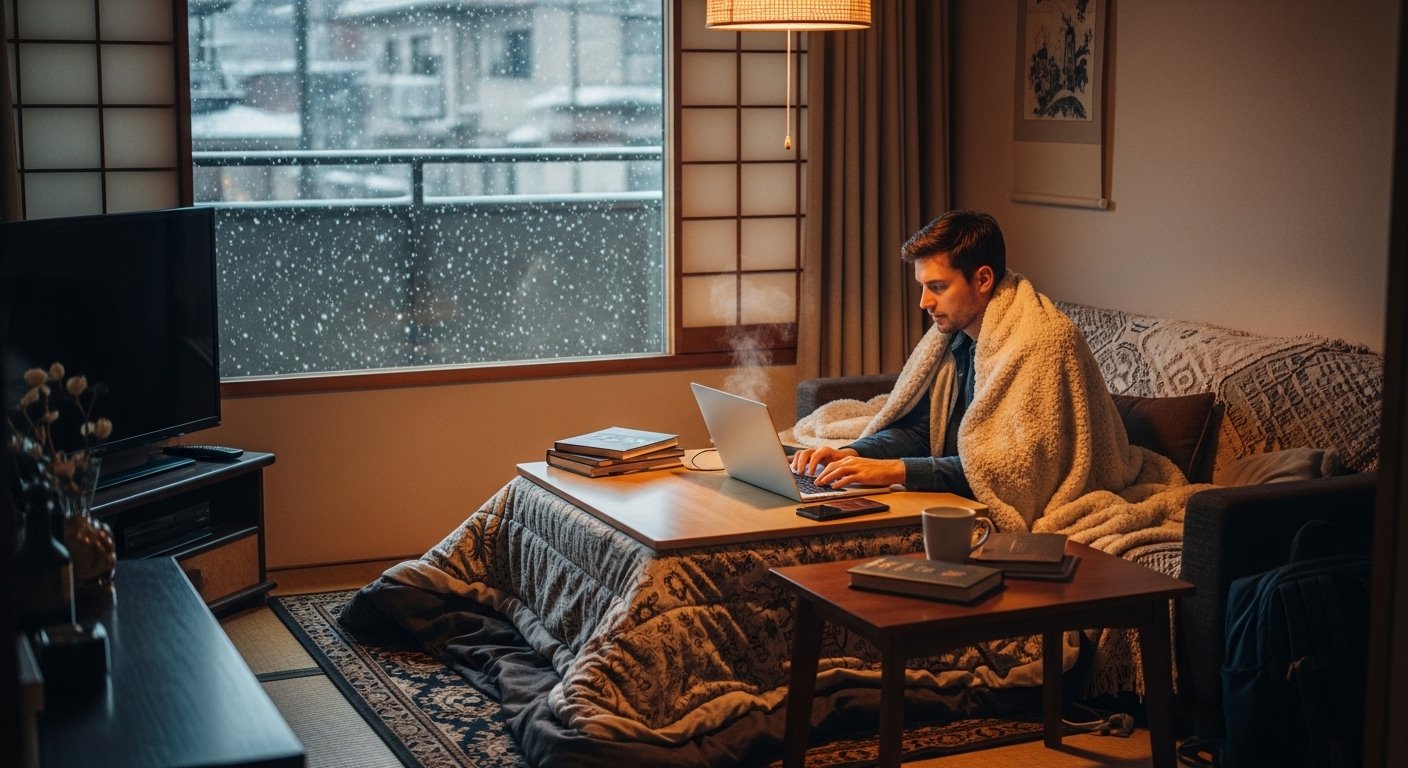
*Images used in this article are for illustration only. They may not be directly related to the content.
Conquer Japan’s Winter: Your Digital Nomad Guide to Warm Workspaces, Budget Hacks & Thriving in the Cold
You’ve envisioned picturesque snowy landscapes and tranquil temples, but the reality of a Japanese winter, especially inside a poorly insulated apartment, can be a rude awakening for the uninitiated digital nomad. The cold can be relentless, impacting your productivity, your budget, and even your mental well-being.
This comprehensive guide is your practical toolkit for navigating winter in Japan. We cut through the guesswork, offering actionable strategies to find warm, productive workspaces, manage unexpectedly high heating bills, and maintain your focus and morale. Say goodbye to shivering through deadlines and hello to a comfortable, cost-effective winter work-life balance.
Table of Contents
- Decoding Japan’s Winter Chill: The Housing Reality
- Smart Heating & Budgeting: Keep Warm, Not Broke
- Productive Havens: Finding Warm Workspaces in Japan
- Battling the Winter Blues: Stay Connected & Motivated
- Quick Reference: Essential Winter Nomad Checklist
- Common Mistakes Digital Nomads Make in Japan’s Winter
- Frequently Asked Questions
Decoding Japan’s Winter Chill: The Housing Reality
For many international visitors, the surprise of Japan’s indoor winter temperatures is significant. Unlike countries with widespread central heating, many traditional Japanese homes and older apartments, especially outside major new developments, are not built with robust insulation in mind. This often leads to cold interiors, even when outdoor temperatures aren’t extreme. Peak winter heating season typically runs from late November to late March.
You’ll quickly find that individual room heaters are the norm. These can range from air conditioning units with heating functions (エアコン – eakon) to kerosene heaters (ストーブ – stove) or gas fan heaters. Understanding these systems and their efficiency is crucial for any digital nomad battling cold Japan winters.
🎯 Local Pro-Tip: Invest in high-quality indoor layering from brands like Uniqlo’s Heattech. This is a common and highly effective strategy among locals to stay warm without excessive heating. Thermal socks, fleece-lined pants, and vests can make a significant difference.
Common Mistakes with Winter Housing
- Underestimating the Indoor Cold: Many expect indoor temperatures to be comfortable regardless of outside weather. Japanese apartments often feel colder than you anticipate.
- Blasting the AC Unstrategically: Running your AC at maximum heat for extended periods in an poorly insulated space is like heating the outdoors – expensive and inefficient.
- Ignoring Drafts: Small gaps around windows or under doors can let significant cold air in, making heating efforts futile.
Smart Heating & Budgeting: Keep Warm, Not Broke
One of the biggest pain points for digital nomads in Japan during winter is the unexpectedly high utility bill. Due to less efficient heating methods and older infrastructure, keeping warm can significantly impact your budget. Average monthly electricity bills for a 1-person household can range from 8,000 to 15,000 JPY or higher, with gas adding another 3,000 to 8,000 JPY. Understanding how to manage these costs is key to enjoying your stay without financial stress.
Strategic Heating Solutions
- Zone Heating with Your Air Conditioner (Eakon):
- Most Japanese apartments use reverse-cycle air conditioners for heating. Use the “暖房” (danbō – heating) setting.
- What to do: Only heat the room you are currently using. Close doors to other rooms. Use timer functions to pre-heat a room before you wake up or return home. Set the temperature to a comfortable but not overly warm 20-22°C (68-72°F).
- Visual cue: Air conditioner units (エアコン – ‘eakon’) are usually mounted high on the wall, often with a remote control nearby. Check the remote for ‘暖房’ (danbō – heating) setting, often indicated by a sun symbol or the character itself.
- Embracing Kerosene Heaters (Stove):
- Kerosene heaters (ストーブ – stove) are an effective and often cheaper option for single rooms. They provide quick, powerful heat.
- What to do: Purchase kerosene (燈油 – tōyu) from gas stations or specialized vendors. Always ensure proper ventilation (e.g., crack a window periodically) to prevent carbon monoxide build-up. Never leave them unattended for long periods, especially while sleeping.
- Visual cue: Kerosene heaters are standalone units, often with a visible tank for fuel and a fan vent on the front. Gas stations displaying ‘灯油’ (tōyu) banners or signs, often with a price per liter. Look for specific pumps for kerosene (usually red or green nozzle, distinct from gasoline).
- Where to buy: Gas stations (ESSO, Eneos, Idemitsu are common) or home centers like Cainz Home or Kohnan. Some areas offer online delivery.
- Eneos Kerosene Delivery (Example)
- Insulation Hacks:
- Window Film: Apply temporary insulating film to windows to reduce heat loss. Available at 100-yen shops or home centers.
- Draft Stoppers: Place fabric draft stoppers under doors or use adhesive strips around windows.
- Traditional Items: Consider a kotatsu (a low table with a heater underneath and a blanket), hanten (traditional winter jacket), or yutanpo (hot water bottle) for personal warmth.
💰 Price Breakdown: Estimated Monthly Winter Heating Costs (1-person household)
💰 Price Breakdown
| Item/Service | Estimated Monthly Cost |
| Electricity (primarily for AC heating) | ¥8,000 – ¥15,000+ |
| Gas (if used for heating) | ¥3,000 – ¥8,000 |
| Kerosene (if used as primary heating) | ¥2,000 – ¥5,000 (plus initial heater cost) |
| Insulation film/draft stoppers | ¥100 – ¥2,000 (one-time purchase) |
| Uniqlo Heattech items | ¥1,000 – ¥3,000 per item |
Prices verified as of January 2026. Costs vary significantly by region, usage, and provider.
🇯🇵 Point & Speak: Heating & Kerosene
Show this section to staff if you’re stuck. They can read the Japanese.
English: Is there a heater in the room?
部屋に暖房はありますか?
(Heya ni danbō wa arimasu ka?)
English: Where can I buy kerosene?
灯油はどこで買えますか?
(Tōyu wa doko de kaemasu ka?)
Productive Havens: Finding Warm Workspaces in Japan
Maintaining productivity when your apartment is perpetually chilly is a significant challenge. Fortunately, Japan’s urban centers are well-equipped with warm, reliable workspaces that cater to the needs of a digital nomad. Identifying and accessing these spots with good Wi-Fi and power outlets is crucial for staying focused and comfortable.
You have several options to consider, from bustling cafes to dedicated coworking spaces and even public facilities.
Cafe Chains: Your Everyday Warm Spot
Major cafe chains are ubiquitous, offering dependable warmth, Wi-Fi, and often power outlets. They are excellent for short work sessions or when you need a quick escape from the cold. Expect some background noise, especially during peak hours.
- Starbucks, Tully’s Coffee, Doutor Coffee: These are your go-to options. Most locations offer Wi-Fi, and many have designated power outlets. Look for outlets near wall seats or communal tables.
- Visual Cue: Look for the blue ‘Wi-Fi’ symbol (📶) or a sticker on the window indicating ‘Wi-Fi available’. Identify wall outlets, often near tables or under counters in cafes; they may be indicated by a small plug icon (🔌) or just be visible.
🎯 Local Pro-Tip: Download each chain’s app if you plan to frequent them. This can sometimes offer loyalty points, exclusive deals, or even mobile ordering for quicker service. Starbucks Japan has a user-friendly English app.
Starbucks Japan Store Locator
Coworking Spaces: Dedicated Productivity Zones
For longer, more focused work periods, coworking spaces are an ideal solution. They offer stable internet, ergonomic setups, quiet zones, and often amenities like printers, meeting rooms, and complimentary drinks. They also combat isolation by providing a community aspect.
- Search Online: Use terms like “coworking Tokyo,” “shared office Osaka,” or “remote work space Fukuoka” to find options in your city. Websites like Coworking Japan (hypothetical aggregator) can be helpful.
- Pricing: Expect daily passes (around ¥1,000-¥3,000) or monthly memberships. Many offer trial days.
- Benefits: Reliable Wi-Fi, guaranteed power outlets, professional environment, networking opportunities.
Free & Low-Cost Warm Public Spaces
Don’t overlook public facilities for occasional warmth and a change of scenery, especially when managing your budget travel Japan winter expenses.
- Libraries: Often quiet, warm, and offer free Wi-Fi (though sometimes with sign-up hassles). Power outlets can be scarce.
- Department Stores & Shopping Malls: Large, warm, and excellent for people-watching. You might find benches or designated seating areas, but power and Wi-Fi are usually not guaranteed for extensive use.
- Train Stations: Major train stations, especially those with shopping complexes, are warm. Some offer paid lounges with Wi-Fi and power.
- Community Centers (公民館 – kōminkan): These often have free, warm common areas. Wi-Fi and power vary greatly by location.
🇯🇵 Point & Speak: Workspaces
Show this section to staff if you’re stuck. They can read the Japanese.
English: Is there Wi-Fi and power outlets here?
Wi-Fiと電源はありますか?
(Waifai to dengen wa arimasu ka?)
English: Can I have the Wi-Fi password, please?
Wi-Fiのパスワードをお願いします。
(Waifai no pasuwādo o onegai shimasu.)
Battling the Winter Blues: Stay Connected & Motivated
Long-term stays during winter can bring about feelings of isolation or “winter blues,” especially when compounded by language barriers and cultural differences in social interaction. Maintaining productivity and mental well-being requires proactive strategies.
As a digital nomad, your mental health is as critical as your physical comfort. Don’t let the shorter days and colder temperatures diminish your experience in Japan.
Strategies for Winter Well-being
- Seek Community & Connection:
- Expat Groups: Join online expat groups on Facebook or Meetup.com. Many organize social gatherings, even in winter.
- Language Exchange: Participate in language exchange events (often held in cafes or bars) to meet locals and other foreigners.
- Coworking Spaces: The social aspect of coworking is invaluable. Even simple greetings with regulars can combat loneliness.
- Embrace Winter Activities:
- Onsen (Hot Springs): A perfect way to warm up and relax. Many offer day-use options.
- Winter Festivals: Check local tourism boards (JNTO) for winter illuminations, snow festivals, or regional events.
- Indoor Hobbies: Explore Japanese arts like calligraphy, tea ceremony, or cooking classes.
- Maintain Routine & Self-Care:
- Exercise: Stay active, whether it’s an indoor gym, a swim, or brisk walks on milder days.
- Healthy Diet: Ensure you’re eating nutritious meals. Japanese winter cuisine often features warming stews (nabe) and root vegetables.
- Natural Light: Maximize exposure to natural light during the day. Consider a light therapy lamp if you’re prone to seasonal affective disorder.
🇯🇵 Point & Speak: Social Connection
Show this section to staff if you’re stuck. They can read the Japanese.
English: It’s cold, isn’t it?
寒いですね。
(Samui desu ne.)
📋 Quick Reference: Essential Winter Nomad Checklist
📋 Quick Reference Card
Screenshot or print this section for easy access:
- ✅ Layer Up Indoors: Thermal underwear is a game-changer.
- ✅ Strategic Heating: Only heat occupied rooms. Use timers.
- ✅ Kerosene Heater Safety: Ventilate well if using.
- ✅ Workspaces: Cafes (Wi-Fi, outlets), Coworking (stability, community).
- ✅ Budget: Factor in higher utility bills. Look for deals.
- ✅ Combat Isolation: Join groups, explore winter activities.
- ✅ Learn Key Phrases: For Wi-Fi, heating, kerosene purchase.
Common Mistakes Digital Nomads Make in Japan’s Winter
Avoiding these pitfalls will save you discomfort, money, and frustration:
- Ignoring Apartment Insulation: Assuming all apartments are modern and warm. Verify heating types and insulation when booking accommodation.
- Underestimating Utility Costs: Being surprised by high electricity/gas bills. Factor these into your budget, especially if relying heavily on electric heating.
- Not Leveraging Public Warm Spaces: Forgetting that libraries, large department stores, and sometimes train station lounges offer free or low-cost warmth and Wi-Fi.
- Neglecting Mental Well-being: Focusing solely on work and forgetting to engage with others or explore local winter culture, leading to isolation.
- Not Asking for Help: Hesitating to use simple Japanese phrases or translation apps to ask for Wi-Fi passwords, power outlet locations, or heating instructions.
Frequently Asked Questions
Q: Is central heating common in Japanese apartments?
A: No, central heating is rare outside of very new, high-end developments or colder northern regions like Hokkaido. Most apartments rely on individual room heaters, typically reverse-cycle air conditioners, kerosene heaters, or gas fan heaters. This means you generally only heat the room you are currently occupying.
Q: How can I find warm coworking spaces in Tokyo or other major cities?
A: Start by searching online for “coworking spaces [city name] Japan” or “shared office [city name] English.” Websites like Coworking Japan (hypothetical) or major chains like WeWork, Regus, and local Japanese brands (e.g., LIG) are good starting points. Many offer day passes, allowing you to try out the environment. Major cafe chains like Starbucks and Tully’s also provide warm spaces with Wi-Fi and power, suitable for shorter work sessions.
Q: Are utility bills significantly higher in winter?
A: Yes, utility bills, particularly for electricity and gas, can be substantially higher in winter due to heating needs. It’s common for a single person’s electricity bill to jump from around ¥5,000 in summer to ¥8,000-¥15,000 or more in winter, depending on usage and insulation. Budgeting an extra ¥5,000-¥10,000 per month for heating is a realistic expectation.
Q: What are some effective ways to stay warm indoors without breaking the bank?
A: Layering with thermal clothing (like Uniqlo’s Heattech), using heating pads or hot water bottles (yutanpo), and strategically heating only the room you’re in are highly effective. Consider using a kotatsu (heated table) for focused work or relaxation. Simple insulation hacks like draft stoppers for doors and window film can also make a noticeable difference in preventing heat loss. Exploring free warm public spaces like libraries or department stores can also offer temporary relief.
Conclusion
Japan’s winter, while beautiful, presents unique challenges for digital nomads seeking warmth, productivity, and comfort. By understanding the local heating realities, applying smart budgeting strategies, and proactively seeking out warm workspaces and social connections, you can transform a potential struggle into a truly enriching experience.
Arm yourself with these practical insights, embrace the Japanese approach to staying cozy, and continue your remote work journey with confidence. Don’t just survive the winter; thrive in it.
Disclaimer
This guide provides general advice for digital nomads in Japan during winter. Prices, availability of services, and local conditions can vary significantly by region and over time. Always verify current information, especially for utility costs and local services. Safety practices, particularly concerning heating appliances, should be strictly followed. This information is not a substitute for professional legal, financial, or medical advice.