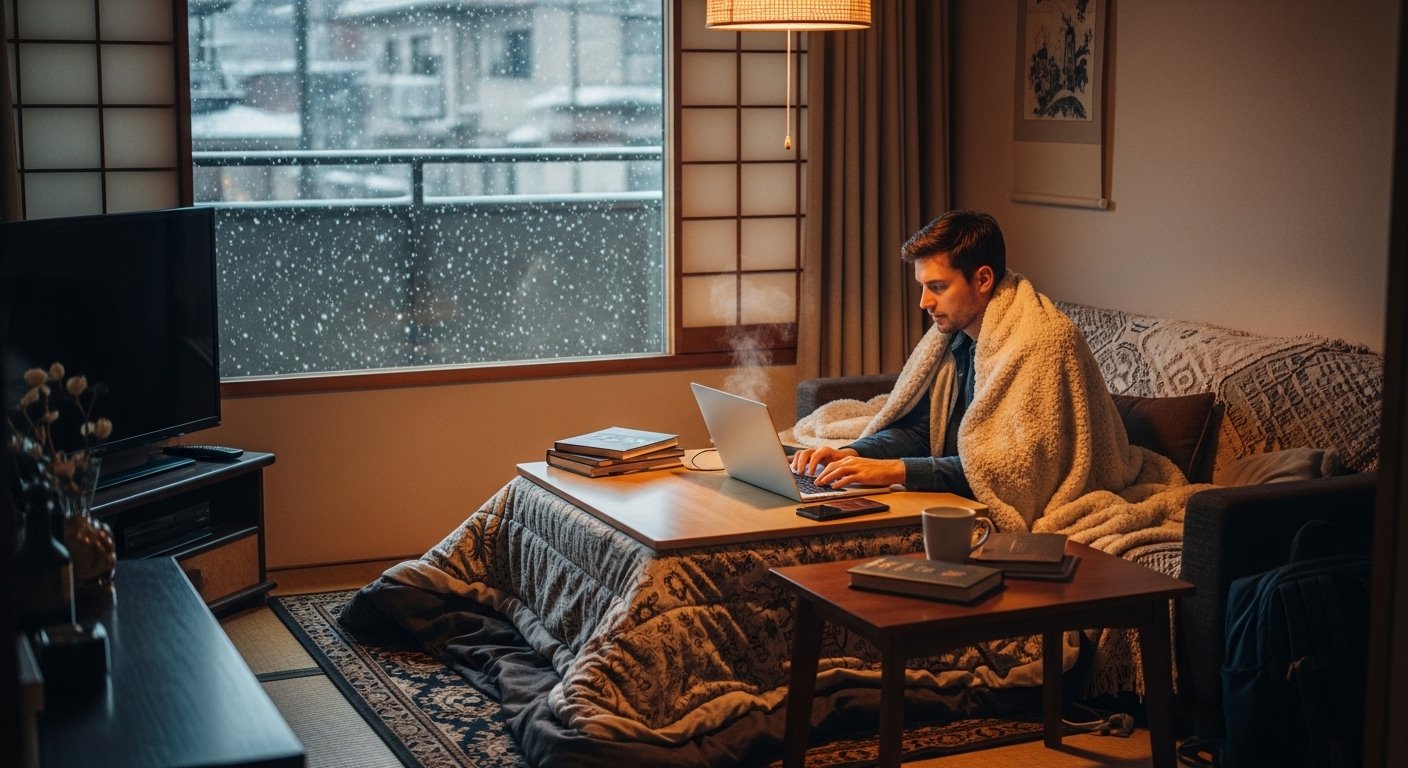
*Images used in this article are for illustration only. They may not be directly related to the content.
Japan Winter Nomads: Beat the Chill, Find Affordable Warmth & Thrive Remotely
You’ve envisioned a winter in Japan: serene snowscapes, warm ramen, and productive remote work sessions. But for many international visitors and Japan winter nomads, the reality of Japanese interiors can be a rude awakening. Despite heating systems, you might find your accommodation surprisingly cold, leading to discomfort, reduced productivity, and unexpectedly high utility bills. You’re not alone in facing these challenges.
This guide cuts through the confusion, offering practical solutions to stay warm, manage costs, and maintain your remote work flow. We’ll show you how to find suitable stays, master local heating methods, and hack your way to a comfortable, cost-effective winter in Japan. Our goal is to remove friction, allowing you to focus on your work and enjoy your time, not shiver through it.
Table of Contents
- 1. The Unseen Chill: Why Japanese Winters Are Different
- 2. Finding Your Warm Base: Accommodation Strategies
- 3. Smart Heating Hacks: Budget-Friendly Warmth
- 4. Productivity in the Cold: Remote Work Solutions
- 5. Navigating Logistics & Language
- 6. Common Mistakes to Avoid in Japanese Winter
- 7. Frequently Asked Questions
- 8. Conclusion
1. The Unseen Chill: Why Japanese Winters Are Different
You might expect efficient heating in a developed nation, but Japan’s approach to indoor warmth can be surprising. Understanding why your apartment feels cold, even with the AC on, is the first step to solving the problem.
Why Japanese Homes are Different
Many older Japanese homes and apartments are built with significantly less insulation compared to Western standards. This design often prioritizes ventilation for hot, humid summers, rather than sealing in warmth for winter. What this means for you is:
- Poor Insulation: Walls, windows, and doors may not retain heat effectively, leading to significant heat loss.
- Drafts: Cold air can seep in through gaps around windows and doors, creating uncomfortable drafts that negate any heating efforts.
- Localized Heating: Rather than central heating for the entire dwelling, Japanese homes often rely on spot heating – warming only the room or area you are currently in.
🎯 Local Pro-Tip: Don’t expect your entire apartment to feel uniformly warm. Embrace the concept of “heating the person, not the room” for efficient comfort.
The Cost of Comfort
High electricity costs, especially during peak winter months (December-February), are a major concern for Japan winter nomads. Relying solely on the wall-mounted air conditioner (AC) for heating can be very expensive. These units, while effective for small spaces, consume a lot of electricity when used continuously to fight heat loss from poor insulation.
- High Electricity Bills: Continuous AC heating can push your utility costs significantly higher than expected.
- Inefficiency: Trying to heat a poorly insulated space with an AC unit is like trying to fill a bucket with holes. Much of the heat escapes.
2. Finding Your Warm Base: Accommodation Strategies
Securing a warm and functional temporary home is crucial for an enjoyable remote work Japan winter experience. Here’s how to approach your search:
Short-Term Rentals: What to Ask
When booking Airbnbs or short-term rentals, be proactive. Don’t assume. Many hosts are aware of the heating challenges.
- Inquire About Heating: Directly ask what heating methods are available. “暖房はありますか? (Danbō wa arimasu ka?)” is your key phrase.
- Look for Specifics: Does the listing mention a kotatsu, electric blanket, or ceramic heater? These are positive signs.
- Read Reviews: Past guests often mention if an accommodation was particularly cold or well-heated.
- Consider Building Age: Newer buildings generally offer better insulation, though this is not a guarantee.
Be wary of listings that only mention “air conditioning.” While AC units often have a heating function, they might be inefficient as a primary heat source in winter.
Shared Houses & Monthly Mansions: A Cozier Option?
For longer stays, these options can offer more stability and often simplify utility management.
- Shared Houses (シェアハウス, shea hausu): Often furnished and may include utilities in the rent. While room insulation can vary, communal living spaces are typically well-heated, offering a warm spot to socialize and work.
- Monthly Mansions (マンスリーマンション, mansurī manshon): Fully furnished apartments rented on a monthly basis. Many include utilities, simplifying budgeting. Some newer buildings cater to international residents and might have better insulation.
Check out platforms like Sakura House and Oakhouse for foreigner-friendly options.

3. Smart Heating Hacks: Budget-Friendly Warmth
To combat the cold without astronomical bills, you need to think like a local. Here are effective strategies for affordable heating Japan style.
Leveraging Local Heating Devices
These supplementary devices are game-changers for japan winter nomads.
- Kotatsu (炬燵): A low table with a blanket and a built-in heater underneath. This is a quintessential Japanese winter comfort. It provides intense lower-body warmth for very low running costs. Perfect for working from the floor or relaxing.
- Electric Blankets (電気毛布, denki mōfu): Essential for a warm night’s sleep. They consume minimal electricity compared to heating an entire room.
- Electric Carpets (電気カーペット, denki kāpetto): Heated floor mats that warm your immediate standing or sitting area. Great for personal warmth zones.
- Small Ceramic Heaters (セラミックヒーター, seramikku hītā): Portable and good for spot heating under a desk or in a small bathroom.
- Kerosene Heaters (灯油ストーブ, tōyu sutōbu): These offer powerful, efficient, and cost-effective spot heating. They are common in Japanese homes, especially outside major urban centers. However, they require careful use and ventilation.
You can purchase these devices at electronics retailers like Yodobashi Camera and Bic Camera, or home centers like Kohnan and Cainz.
💰 Price Breakdown: Supplementary Heating
| Item | Estimated Purchase Cost | Running Cost (Approx. hourly) |
| Kotatsu (basic) | ¥8,000-¥20,000 | ¥3-¥8 |
| Electric Blanket | ¥3,000-¥8,000 | ¥1-¥5 |
| Ceramic Heater (small) | ¥4,000-¥10,000 | ¥10-¥30 |
| Kerosene Heater (basic) | ¥10,000-¥25,000 | ¥15-¥30 (depending on model and fuel price) |
| Kerosene (18L tank) | ¥1,800-¥2,200 | N/A (fuel cost) |
Prices verified as of late 2025/early 2026 projections. Running costs are approximate and depend on usage, electricity plan, and model efficiency.

Using Kerosene Heaters Safely (Visual Step-by-Step)
Kerosene heaters are efficient, but safety is paramount due to carbon monoxide risks.
Step 1: Obtain Kerosene (灯油, tōyu) and a Tank (ポリタンク, poritanku)
Visual cue: You’ll need an empty, typically red or blue 18L or 20L plastic tank. These are sold at home centers or sometimes with the heater itself.
What to do: Purchase kerosene at gas stations (ガソリンスタンド, gasorin sutando) or home centers. Look for pumps clearly labeled ‘灯油’ (tōyu), often separate from gasoline pumps. Some stations are self-service, others may have staff assist you. Delivery services are also available in many areas.

Step 2: Fill Your Heater’s Internal Tank
Visual cue: Kerosene heaters have a removable internal fuel tank, usually accessible from the side or back. It will have a cap.
What to do: Carefully remove the tank. Use a manual or electric pump (often sold separately, or you can use the pump at the gas station if allowed) to transfer kerosene from your large outdoor tank into the heater’s tank. Do this outdoors or in a very well-ventilated area to avoid fumes. Do not overfill.

Step 3: Place and Ignite the Heater
Visual cue: The heater unit itself is typically box-shaped with a grill at the top or front.
What to do: Place the heater on a stable, flat surface, away from curtains or flammable materials. Ensure sufficient clearance around the unit. Follow the heater’s instructions for ignition, usually involving turning a dial and pressing an ignition button. You’ll see a flame through a small window.

Step 4: Ensure Proper Ventilation
Visual cue: A slightly open window, even a crack, in the room where the heater is operating.
What to do: This is CRUCIAL. Kerosene heaters produce carbon monoxide. You MUST open a window slightly (a few centimeters is enough) every 1-2 hours for fresh air. This prevents dangerous gas buildup. Never use a kerosene heater overnight while sleeping or in a completely sealed room.

🎯 Local Pro-Tip: Consider purchasing a carbon monoxide detector if you plan to rely heavily on a kerosene heater. Safety first.
4. Productivity in the Cold: Remote Work Solutions
Working remotely in a cold environment is challenging. Maintain your productivity with these strategies for remote work Japan winter style.
Co-working Spaces: Your Best Bet
In urban centers and major regional cities, co-working spaces are widely available. They offer the ideal environment: warmth, reliable Wi-Fi, power outlets, and a professional atmosphere.
- Warm & Equipped: Guaranteed heated environments, stable internet, and comfortable desks.
- Networking Opportunities: Meet other professionals, locals, and expats.
- Cost-Effective: Often cheaper than running your apartment’s AC all day for heating.
Look for major chains like WeWork, Basis Point (Japanese only), or local options. Many hostels like WeBase also offer co-working facilities.

Cafe Strategies
Japanese cafes are generally warm and inviting, providing a good alternative for a few hours of work.
- Warmth & Ambiance: Enjoy a coffee and comfortable temperature.
- Power Outlets: While not guaranteed, many cafes (especially chains like Starbucks, Tully’s) offer power outlets. Ask: “コンセントを使ってもいいですか? (Konsento o tsukatte mo ii desu ka?)”
- Wi-Fi: Many cafes provide free Wi-Fi, though it might require registration or have time limits.
Personal Comfort Gear
When working from your accommodation, invest in personal warmth.
- Layers: Thermal underwear, fleece, warm socks, and slippers are your best friends.
- Fingerless Gloves: Keep your hands warm while typing.
- Hot Beverages: A thermos with tea or coffee can provide internal warmth.
- Hot Water Bottle (湯たんぽ, yutanpo): A simple, effective, and very low-cost way to keep warm under a blanket or at your feet.
5. Navigating Logistics & Language
Language barriers and unfamiliar systems can add to winter stress. Here’s how to overcome them.
🇯🇵 Point & Speak: Essential Winter Phrases
Show this section to staff if you’re stuck. They can read the Japanese.
English: Is there heating?
暖房はありますか?
(Danbō wa arimasu ka?)
English: It’s cold inside.
室内が寒いです。
(Shitsunai ga samui desu.)
English: How do I turn on the heating?
暖房はどうやってつけますか?
(Danbō wa dō yatte tsukemasu ka?)
English: Where can I buy kerosene?
灯油はどこで買えますか?
(Tōyu wa doko de kaemasu ka?)
English: Do you have a space heater / electric blanket?
電気ヒーター/電気毛布はありますか?
(Denki hītā / Denki mōfu wa arimasu ka?)
English: Is there a co-working space nearby?
近くにコワーキングスペースはありますか?
(Chikaku ni kowākingu supēsu wa arimasu ka?)
Understanding Utility Bills
If your accommodation doesn’t include utilities, you’ll face monthly bills. Electricity bills (電気代, denki-dai) will likely be your highest expense in winter. While navigating Japanese utility billing can be complex, many temporary rentals simplify this by either including utilities or providing English guides.
🎯 Local Pro-Tip: Take photos of your electricity meter readings when you check in and check out if you’re responsible for utilities. This helps prevent disputes and track your consumption.
Purchasing Kerosene: A Practical Guide
If you’re using a kerosene heater, knowing how to get fuel is essential.
- Locate a Source: Gas stations (ガソリンスタンド, gasorin sutando) or home centers (ホームセンター, hōmu sentā) are the main places.
- Bring Your Tank: You need a dedicated kerosene tank (ポリタンク, poritanku). Do not use containers meant for other liquids.
- Look for 灯油 (Tōyu): This is the kanji for kerosene.
- Self-Service vs. Full-Service: At self-service stations, you’ll likely pump it yourself. At full-service stations, staff will assist.
Remember, kerosene prices fluctuate seasonally. Plan your purchases accordingly to keep your affordable heating Japan strategy intact.

6. Common Mistakes to Avoid in Japanese Winter
Steer clear of these common pitfalls that can lead to discomfort, high costs, or safety hazards for japan winter nomads.
- Relying Solely on AC for Heating: As discussed, this is inefficient and expensive due to poor insulation. Use it for initial warm-up, then switch to supplementary heaters.
- Ignoring Ventilation with Kerosene Heaters: This is a serious safety risk. Always ensure fresh air circulation to prevent carbon monoxide poisoning.
- Underestimating the Cold: Even if temperatures seem mild on paper, the dampness and lack of insulation make indoor spaces feel much colder than you might expect. Pack warm layers.
- Not Asking About Heating Before Booking: Never assume. Always confirm what heating options are available and if they are sufficient for your needs.
- Leaving Windows Open Too Long: While ventilation is crucial for kerosene, continuously leaving windows wide open will quickly undo any heating efforts, especially when using AC.
- Not Investing in Personal Warmth: Simple items like an electric blanket, thick socks, and warm loungewear make a significant difference.
7. Frequently Asked Questions
Is Japan really that cold indoors during winter?
Yes, many Japanese homes, especially older ones, lack modern insulation, leading to cold interiors even when outdoor temperatures aren’t extreme. This is a common surprise for international visitors and Japan winter nomads.
Are kerosene heaters safe to use?
Kerosene heaters are safe when used correctly. The most critical safety measure is proper ventilation: always open a window slightly every 1-2 hours to prevent carbon monoxide buildup. Never use them while sleeping or in unventilated spaces.
How can I reduce my heating bill in a Japanese apartment?
Minimize reliance on your AC for heating. Instead, use localized heating devices like a kotatsu, electric blanket, or ceramic heater. Dress in layers, and consider using a co-working space for daytime productivity to save on apartment heating costs. Insulate windows with temporary film if possible (check with your host).
Where can I find apartments that are well-insulated for winter?
Newer construction typically offers better insulation. When searching on platforms like Sakura House or Oakhouse, look for properties explicitly mentioning good insulation, double-pane windows, or those built more recently. Be sure to ask the host directly about winter warmth.
Can I work remotely from cafes in Japan during winter?
Yes, many cafes offer a warm environment, Wi-Fi, and sometimes power outlets, making them good spots for short remote work sessions. However, for extended work, a dedicated co-working space will offer more reliability and comfort for remote work Japan winter needs.
Conclusion
Navigating a Japanese winter as a Japan winter nomad doesn’t have to be a battle against the cold or high utility bills. By understanding local construction, embracing traditional and supplementary heating methods, and strategically choosing your workspaces, you can ensure your stay is both comfortable and productive.
Empowered with these practical hacks and essential phrases, you’re ready to embrace the unique charm of a Japanese winter without the friction. Stay warm, stay focused, and enjoy your journey.
Disclaimer
This guide provides general information and practical advice. Utility prices and product availability are subject to change. Always prioritize safety, especially when using heating appliances like kerosene heaters. Follow all manufacturer instructions and local safety guidelines. Consult with your landlord or host regarding specific heating options and regulations in your accommodation.