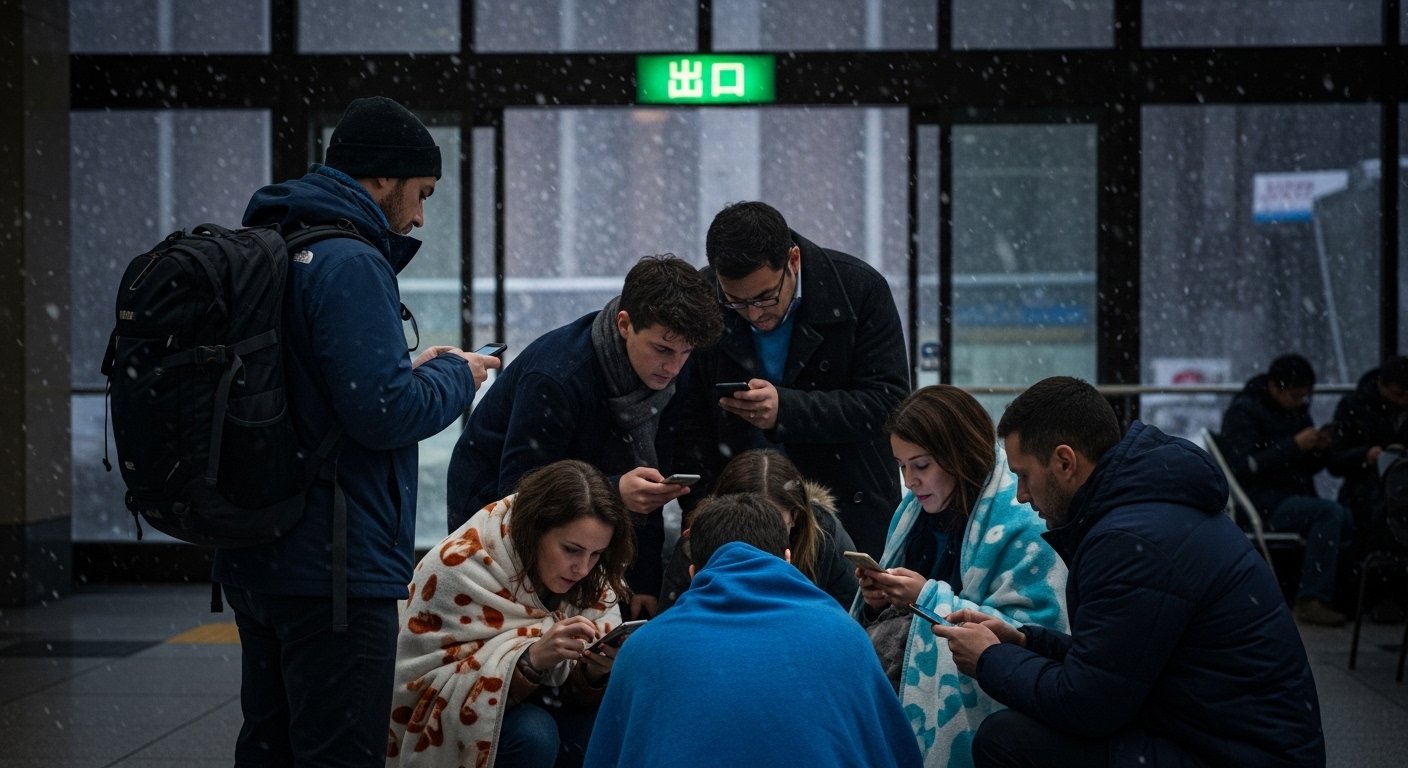
*Images used in this article are for illustration only. They may not be directly related to the content.
Japan New Year Medical Emergency: Your Guide to Finding Help When Clinics Close
Planning a trip to Japan over the New Year holidays? It’s a period of unique cultural charm, but it also presents a significant challenge for international visitors: navigating medical emergencies when most standard clinics and pharmacies are closed. The thought of needing urgent medical attention in a foreign country is stressful enough; compound that with language barriers and widespread closures, and you have a recipe for real friction. You are not alone in this concern.
This comprehensive guide is designed to remove that friction. We will provide you with clear, actionable steps, essential Japanese phrases, and direct contacts to ensure you know exactly how to find medical care, refill prescriptions, and get help during Japan’s New Year period, typically from December 29th to January 3rd/4th. Our goal is to equip you with the practical knowledge to handle any health concern confidently, so you can focus on enjoying your time in Japan.
Table of Contents
- The New Year Medical Challenge in Japan
- Immediate, Life-Threatening Emergencies: Dial 119
- Urgent But Not Life-Threatening: How to Find an Open Clinic
- Refilling Prescriptions During the Holidays
- Emergency Contacts for Japan
- 🇯🇵 Point & Speak: Japanese Phrases for Medical Situations
- Navigating Costs: Medical Insurance in Japan
- 📋 Quick Reference Card
- Common Mistakes to Avoid
- 🎯 Pro-Tips for Medical Preparedness
- Frequently Asked Questions
- Conclusion
- Disclaimer
The New Year Medical Challenge in Japan
Japan’s New Year (Oshōgatsu) is the most significant holiday period, with many businesses closing down for several days. This includes the vast majority of small clinics (町医者 – machi-isha) and private pharmacies (薬局 – yakkyoku). From approximately December 29th to January 3rd or 4th, you will find these facilities largely inaccessible. This presents a genuine concern if you require medical attention or need to refill ongoing prescriptions.
For international visitors, this period introduces several key pain points:
- Difficulty Finding Open Facilities: Your usual search methods may yield closed clinics. Knowing where to look for open facilities is critical.
- Language Barrier: Communicating symptoms or medical history in an urgent situation without Japanese proficiency can be challenging.
- Confusion on Emergency Procedures: Understanding Japan’s emergency numbers and protocols is vital, as they differ from many home countries.
- Prescription Refills: Running out of essential medication during this closure period can become a serious health issue if not managed correctly.
Understanding these challenges is the first step toward effective preparation and response. The good news is that systems are in place to support you, provided you know how to access them.
Immediate, Life-Threatening Emergencies: Dial 119
If you or someone with you experiences a severe accident, sudden critical illness (like a heart attack or stroke), or a life-threatening injury, do not hesitate. Call Japan’s emergency services immediately.
How to Call 119 for an Ambulance
- Dial 119: This number is free from any phone (landline, mobile, or public phone).
- State Your Emergency: As soon as someone answers, clearly state “Kyūkyū desu” (救急です – It’s an emergency) for an ambulance, or “Kaji desu” (火事です – It’s a fire) if applicable.
- Provide Your Location: This is the most critical piece of information. Give your precise address. If you don’t know the exact address, describe your surroundings: nearby landmarks, street names, specific building names, or even intersection details.
- State Your Name and Phone Number: Provide your name and the number you are calling from.
- Describe the Situation: Briefly explain what happened and the patient’s condition. For example, “Mune ga itai desu” (胸が痛いです – My chest hurts) or “Kega o shimashita” (怪我をしました – I was injured).
- Language Barrier: If you struggle with Japanese, immediately state “Nihongo ga hanasemasen” (日本語が話せません – I can’t speak Japanese) and ask “Eigo o hanaseru hito wa imasu ka?” (英語を話せる人はいますか? – Is there anyone who can speak English?). Emergency services often have access to interpretation services.
- Stay on the Line: Do not hang up until instructed to do so. The operator may ask further questions or provide instructions.
🎯 Local Pro-Tip: Before you travel, write down the address of your accommodation (hotel, Airbnb, etc.) on a piece of paper or in your phone. This way, if you need to call 119, you can simply show it or read it out. Also, know the specific train station names or major landmarks nearest to you.
Ambulances are white with red crosses and usually “救急車” (Kyūkyūsha) written on the side. They will transport you to the nearest appropriate hospital with an emergency department.
Urgent But Not Life-Threatening: How to Find an Open Clinic
For less severe but urgent conditions that do not warrant an ambulance (e.g., high fever, severe cold, minor injury, acute stomach pain), you need to find an open medical facility. During New Year’s, this means looking beyond regular clinics.
Step-by-Step: Finding Holiday Medical Care
- Contact the JNTO Japan Visitor Hotline: Your first point of contact for non-life-threatening issues. They offer multilingual support and can help you locate open medical facilities.
- Number: 050-3816-2787
- Hours: 24/7, year-round.
- What they can do: Provide information on hospitals/clinics with English-speaking staff, directions, and sometimes even act as an interpreter.
This is your most reliable resource for a non-life-threatening Japan medical emergency New Year.
- Search for Emergency Medical Information Centers (救急医療情報センター): Many prefectural governments operate these centers. They provide real-time information on open clinics and hospitals during off-hours and holidays.
- How to find them: Search online for “[Your Prefecture/City Name] Emergency Medical Information Center” (e.g., “Tokyo Kyūkyū Iryō Jōhō Sentā”). Many have dedicated websites or phone lines. Some offer multilingual support directly or via interpretation services.
- Example for Tokyo: Tokyo Metropolitan Medical Institution Information (Himawari) provides information on medical facilities in Tokyo. Their website and hotline often have English support.
- Locate Holiday Clinics (休日診療所) or Night Clinics (夜間診療所): These are facilities specifically designated by local municipalities to provide basic medical care during holidays and nights.
- How to find them: Check your local city or ward office website (e.g., “[Your City] holiday clinic” or “[Your City] kyūjitsu shinryōjo”). Look for sections on “Health and Welfare” or “Emergency Medical Care.”
- Visual Cues: These clinics will often have signs indicating “休日当番医” (Kyūjitsu Tōban-i – holiday duty doctor) or “夜間・休日診療” (Yakan Kyūjitsu Shinryō – night/holiday clinic).
- Head to a Hospital with an Emergency Department (救急外来 – Kyūkyū Gairai): If holiday clinics are unavailable or your condition feels more serious, a larger hospital with a 24/7 emergency department is your next option.
- Visual Cues: Hospitals usually have a prominent ‘H’ symbol or a red cross symbol on their signs. The emergency entrance (救急外来 – Kyūkyū Gairai) is often clearly marked, sometimes with a separate driveway.
- Expectation: Be prepared for potentially long wait times, especially if your condition is not deemed critical. You may be triaged, and less urgent cases will wait longer.
- Utilize Medical Information Websites: Websites like the AMDA International Medical Information Center and Japan Healthcare Info provide searchable databases for medical facilities, often with language support filters. These are excellent resources to find an emergency clinic Japan or a holiday hospital Japan.

Refilling Prescriptions During the Holidays
One of the most common and critical pain points for visitors during the New Year is the inability to get prescription refill Japan due to pharmacy closures. Standard pharmacies (薬局) are generally closed. If you anticipate needing a refill during this period, plan ahead and ensure you have enough medication to cover your entire trip, plus a few extra days for contingencies.
If you find yourself needing an urgent refill during the holidays:
- Go to a Hospital with an Emergency Department: Your primary option. Explain your situation to the emergency doctor.
- Bring Your Existing Medication and Prescription Details: Crucially, bring the actual medication (in its original packaging), your prescription from your home country, and any relevant medical records. This helps the Japanese doctor understand your current treatment.
- Expectations:
- The emergency doctor may be able to issue a temporary, short-term prescription or an equivalent medication.
- However, they are not obligated to refill non-critical, ongoing prescriptions. The decision rests with the attending physician based on the urgency and necessity of the medication.
- For less critical medications, you might be advised to wait until regular clinics and pharmacies reopen.
- Be aware that not all foreign medications have a direct equivalent in Japan, or they may require a different brand name.
Proactive planning is paramount to avoid this holiday-specific challenge. Always travel with enough critical medication.

🚨 Emergency Contacts for Japan
🚨 Emergency Contacts
| Police | 110 |
| Ambulance/Fire | 119 |
| JNTO Japan Visitor Hotline (multilingual) | 050-3816-2787 |
| AMDA International Medical Information Center (multilingual) | 03-6233-9266 |
All numbers are free and work from any phone. JNTO and AMDA hotlines are particularly useful for finding facilities and language support.
JNTO Official Website: https://www.japan.travel/en/plan/hotline/
AMDA Official Website: https://www.amda-imic.com/eng/
🇯🇵 Point & Speak: Japanese Phrases for Medical Situations
🇯🇵 Point & Speak
Show this section to staff if you’re stuck. They can read the Japanese.
English: Ambulance, please!
救急車をお願いします!
(Kyūkyūsha o onegaishimasu!)
English: It’s an emergency.
救急です。
(Kyūkyū desu.)
English: I can’t speak Japanese.
日本語が話せません。
(Nihongo ga hanasemasen.)
English: Is there anyone who can speak English?
英語を話せる人はいますか?
(Eigo o hanaseru hito wa imasu ka?)
English: My [body part] hurts.
[Body part]が痛いです。
([Body part] ga itai desu.)
Common Body Parts:
- Head: 頭 (Atama)
- Stomach: お腹 (Onaka)
- Chest: 胸 (Mune)
- Throat: 喉 (Nodo)
- Leg: 足 (Ashi)
- Arm: 腕 (Ude)
English: I have a fever.
熱があります。
(Netsu ga arimasu.)
English: I need a hospital.
病院が必要です。
(Byōin ga hitsuyō desu.)
English: Where is the nearest open hospital?
一番近くの開いている病院はどこですか?
(Ichiban chikaku no aiteiru byōin wa doko desu ka?)
English: I need to refill my prescription.
薬の処方が必要です。
(Kusuri no shohō ga hitsuyō desu.)
💰 Navigating Costs: Medical Insurance in Japan
Medical care in Japan is high-quality but can be expensive, especially if you lack proper coverage. An emergency room visit alone can cost anywhere from ¥10,000 to tens of thousands of yen, before factoring in tests, medication, or potential hospitalization. This is why comprehensive travel insurance is not just recommended, but essential for any visitor to Japan.
💰 Price Breakdown (Estimated)
| Service | Estimated Cost (JPY) |
| Emergency Room Visit (initial) | ¥10,000 – ¥30,000+ |
| Consultation Fee (holiday clinic) | ¥5,000 – ¥15,000+ |
| Basic Blood Test | ¥3,000 – ¥10,000+ |
| X-ray | ¥5,000 – ¥15,000+ |
| Prescription Medication (per item) | ¥1,000 – ¥5,000+ |
| Ambulance Service | Free (within Japan) |
Prices are estimates and can vary significantly based on the facility, type of emergency, and specific treatments required. Without national health insurance, you will be responsible for 100% of these costs upfront.
Before your trip, thoroughly review your travel insurance policy to understand what medical emergencies are covered, the claims process, and any out-of-pocket expenses you might incur. Keep your insurance details, including policy number and emergency contact, readily accessible.
For general health information from the Japanese government, you can refer to the Ministry of Health, Labour and Welfare (MHLW) Japan website.
📋 Quick Reference Card
📋 Quick Reference Card: Japan New Year Medical Essentials
Screenshot or print this section for easy access:
- ✅ Emergency (Ambulance/Fire): Dial 119. State “Kyūkyū desu” (救急です) and your location.
- ✅ Police: Dial 110.
- ✅ Non-Life-Threatening Help/Interpreter: Call JNTO Japan Visitor Hotline: 050-3816-2787 (24/7).
- ✅ Prescription Refills: Head to a hospital emergency department (救急外来). Bring existing meds/prescription.
- ✅ Find Open Clinics/Hospitals: Contact JNTO hotline, check prefectural “Emergency Medical Information Centers” (救急医療情報センター), or local city/ward websites for “Holiday Clinics” (休日診療所).
- ✅ Insurance: Ensure you have comprehensive travel medical insurance. Keep policy details accessible.
- ✅ Key Phrase: “Nihongo ga hanasemasen” (日本語が話せません – I can’t speak Japanese).
Common Mistakes to Avoid
Being prepared means understanding potential missteps. Avoid these common errors when dealing with a Japan medical emergency New Year:
- Assuming Clinics Are Open: Do not walk into a small neighborhood clinic during the New Year period expecting it to be open. Most will be closed. Always verify status first via hotlines or online resources.
- Calling 119 for Minor Issues: Use 119 strictly for life-threatening emergencies. For non-urgent matters, use the JNTO hotline or seek out holiday clinics. Overburdening emergency services can delay critical care for others.
- Not Carrying Medical Information: Without your medical history, current prescriptions, and allergy information, doctors in Japan will have a harder time treating you. Keep a concise summary (in English) with you.
- Forgetting Travel Insurance: Relying on good fortune is not a strategy. Medical costs can escalate quickly, leaving you with a substantial bill. Ensure your travel insurance explicitly covers medical emergencies abroad.
- Ignoring Language Barrier: Don’t hope for an English speaker. Proactively use translation apps, the provided phrases, or call multilingual hotlines to bridge the communication gap.
- Not Knowing Your Location: In an emergency, knowing your exact address or nearby specific landmarks is crucial for emergency services to find you quickly.
🎯 Pro-Tips for Medical Preparedness
🎯 Local Pro-Tip: Before you even leave home, check if any major international hospitals or clinics with dedicated English-speaking staff are located in the cities you plan to visit. While they may still have reduced hours, they often maintain emergency services or at least a staffed hotline during holidays. Examples include Tokyo Medical and Surgical Clinic (https://www.tmsc.jp/en/). Note their locations and contact details.
🎯 Local Pro-Tip: Consider downloading offline translation apps before your trip. Google Translate, DeepL, or similar apps with medical phrase packs can be invaluable when you have limited internet access or need to quickly convey symptoms. Practice using them for basic medical terms.
🎯 Local Pro-Tip: Pack a small, well-stocked personal first-aid kit. Include basic pain relievers, bandages, antiseptic wipes, any over-the-counter medications you regularly use, and sufficient supplies of prescription medications for the entire duration of your trip (plus a buffer). This can prevent unnecessary searches for a holiday clinic Japan for minor ailments.
Frequently Asked Questions
Q: What is the most critical number to remember for a medical emergency in Japan?
A: The most critical number for a life-threatening medical emergency (ambulance) or fire in Japan is 119. It is free from any phone. For police, it’s 110.
Q: Will doctors in Japan speak English during a New Year holiday medical emergency?
A: While some doctors, especially in larger hospitals or international clinics, may speak English, it is not guaranteed. Be prepared for a language barrier. Utilize the JNTO Japan Visitor Hotline (050-3816-2787) for interpretation support or use the “Point & Speak” phrases provided in this guide. Always state “Nihongo ga hanasemasen” (I can’t speak Japanese) early on.
Q: Can I get my regular prescription refilled at any pharmacy during the New Year holidays in Japan?
A: Most private pharmacies will be closed from approximately December 29th to January 3rd/4th. Your best option for an urgent prescription refill is to visit the emergency department of a larger hospital. Bring your existing medication and any prescription details. They may be able to issue a temporary prescription, but this is at the doctor’s discretion.
Q: How do I find a doctor for a non-life-threatening issue during New Year in Japan?
A: For non-life-threatening but urgent issues, do not call 119. Instead, contact the JNTO Japan Visitor Hotline (050-3816-2787) for assistance in locating an open facility. You can also search online for “Emergency Medical Information Centers” (救急医療情報センター) for your specific prefecture or look for local “Holiday Clinics” (休日診療所) on your city’s official website. Larger hospitals with 24/7 emergency departments are also an option.
Q: Is medical treatment free if I have a travel insurance?
A: While ambulance services in Japan are free, medical treatment itself is not. You will likely need to pay for services upfront and then seek reimbursement from your travel insurance provider. Always carry your travel insurance details and policy number. Contact your insurance company’s emergency hotline immediately if you require significant medical attention to understand your coverage and payment procedures.
Conclusion
Navigating a Japan medical emergency New Year does not have to be a source of panic. By understanding the specific challenges of the holiday period and equipping yourself with the right information and resources, you can confidently address any health concerns. Proactive preparation, from securing travel insurance to knowing key contact numbers and phrases, is your best defense.
Stay informed, stay safe, and enjoy your journey through Japan, even during its busiest holiday season. Your preparedness is your peace of mind.
Consider linking to our other safety guides for comprehensive travel insurance in Japan or general health preparedness for Japan travel.
Disclaimer
This information is provided for general guidance only and is not a substitute for professional medical advice. Always consult with a qualified healthcare professional for any medical concerns. While we strive for accuracy, emergency procedures and facility availability can change. Always verify current information with official sources or hotlines at the time of need. Ensure you have comprehensive travel insurance that covers medical emergencies before your trip to Japan.