*Images used in this article are for illustration only. They may not be directly related to the content.
Japan Quake in Winter? My 10 Years Here Taught Me How to Survive the Cold & Dark
I remember it like yesterday, though it was years ago. The ground started to rumble, not just a little shake, but a deep, rolling growl that felt like it was coming from the very core of the earth. I was in my tiny apartment in Tokyo, sipping coffee, oblivious to the fact that a massive 7.0 magnitude earthquake had just hit a region hundreds of kilometers away. But the tremors reached us, and as my ceramic mug danced across the table, then crashed to the floor, my heart hammered against my ribs.
The lights flickered, died, and plunged my apartment into a sudden, inky blackness. It was winter. The heating unit, which had been humming along nicely, went silent. And that’s when it hit me: I was completely unprepared. No flashlight, no extra blankets, no idea what to do, and my Japanese was barely enough to order ramen, let alone navigate a real emergency. The fear wasn’t just the quake; it was the chilling realization of how vulnerable I was, a foreigner miles from home, in a silent, freezing apartment.
Over the decade since, I’ve learned a thing or two about surviving Japan’s unique challenges, especially when the earth decides to have a tantrum in the middle of winter. You come here for the sakura, the sushi, the serene temples – not for an earthquake and power outage. But believe me, it happens. And being prepared isn’t about being scared; it’s about being smart. So, let me be your Japan Local Fixer for a moment and walk you through what I’ve learned the hard way, so you don’t have to.
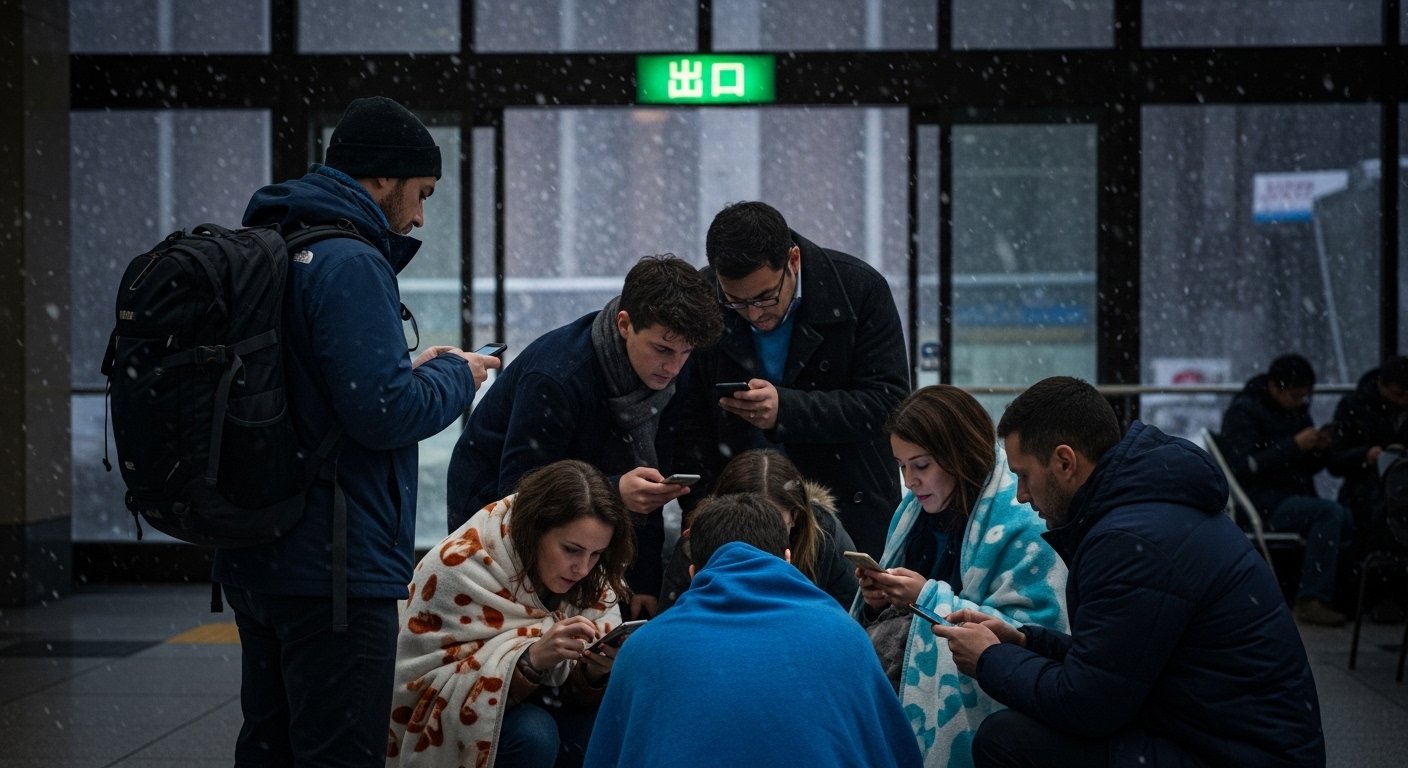
Table of Contents
The Real Struggle: Why is this Hard for Visitors?
You’re here for vacation, maybe a business trip. Natural disasters are probably the furthest thing from your mind. And that’s precisely why it’s so difficult. Most visitors arrive totally unprepared for anything beyond a mild delay or a lost passport. But when an earthquake hits, especially in winter with a subsequent power outage, the challenges multiply:
- “What do I do?!” Paralysis: The ground starts shaking, and your first instinct might be to panic. Without clear, actionable steps, you’re left guessing, which can be dangerous. I’ve seen people bolt outside when they should have stayed inside, and vice versa, simply because they didn’t know the protocol.
- The Language Barrier Isn’t Just Annoying; It’s Life-Threatening: “I don’t understand Japanese” is a common phrase, but in an emergency, it can isolate you entirely. Reliable information, evacuation instructions, or even asking for help becomes a monumental task. I once tried to ask a bewildered konbini worker if their payment system was working after a small outage, and we just stared blankly at each other for a solid minute.
- The Cold is Brutal Without Power: If you’re staying in a modern hotel or apartment, you probably rely on air conditioning for heating. No power means no heat. In the depths of winter, temperatures can drop rapidly, turning a comfortable room into an icebox within hours. I remember shivering under three thin hotel blankets, thinking about how I should have packed that extra sweater.
- Information Blackout: Where do you get reliable updates? Your phone battery is dying. You don’t understand the TV news. Official Japanese government alerts are in Japanese. It’s a scramble to find out what’s happening and what to do next.
These aren’t hypothetical problems; these are the very real, very stressful concerns that international visitors face. Let’s fix that.
Step-by-Step Solution: When the Earth Shakes and the Lights Go Out
Okay, deep breaths. This isn’t about scaring you, but empowering you. Think of this as your personal emergency playbook, forged from a decade of living through this stuff. The key survival aspects are personal safety, maintaining warmth, and communication.
Step 1: Drop, Cover, and Get Warm – FAST.
The moment the shaking starts, your first priority is immediate safety. But in winter, your next thought needs to be warmth. Trust me on this; I once underestimated how quickly a room could get cold.
- Drop, Cover, and Hold On: This is the universal earthquake mantra.
- Indoors: Get under a sturdy table or desk. If nothing’s available, get low, cover your head and neck with your arms, and brace against an interior wall. Stay away from windows, shelves, and heavy furniture that could fall.
- Outdoors: Move to an open area away from buildings, utility poles, and streetlights. Drop to the ground.
- In a train/bus: Hold onto handrails. Do NOT panic and rush for the exit. Wait for instructions.
- Assess Your Surroundings: Once the primary shaking stops, look around. Is anything damaged? Are there gas leaks (you’ll smell it, a rotten egg smell)? Are there immediate fire risks? Prioritize getting out of immediate danger if necessary, but remember the cold.
- Secure Immediate Warmth: This is where winter preparedness comes in. Even if you think the power will be back on soon, grab what you can.
- **Extra layers:** Pull on that extra sweater, jacket, or even rain gear.
- **Blankets:** Grab any available blankets, duvets, or even curtains. Wrap yourself in them.
- **Head covering:** A significant amount of body heat escapes from your head. Use a hat, scarf, or even a towel.
Step 2: What to Do During the Shaking (and Right After)
My first big quake in Japan had me frozen, staring at a shaking light fixture. Don’t be me. Here’s a clearer guide:
- Stay Calm (as much as possible): Panicking makes bad decisions. Focus on the Drop, Cover, Hold On.
- If near the coast, think Tsunami: If you’re in a coastal area and a strong earthquake hits, or if you receive a tsunami warning, move to higher ground immediately. Do NOT wait for official confirmation if you feel prolonged, strong shaking.
- Check for Injuries: Quickly assess yourself and anyone with you. Administer basic first aid if needed.
- Don’t Rush Out: The most dangerous time is often immediately after the main quake due to aftershocks and falling debris. Wait for at least a few minutes for the initial chaos to subside and for official instructions.
- Turn Off Utilities (if safe): If you’re in an apartment or hotel room and it’s safe to do so, turn off gas valves and electrical breakers to prevent fires or further damage. However, if you are unsure or it’s dangerous, don’t risk it.
Step 3: Battling the Winter Chill Without Power
This is where things get genuinely uncomfortable if you’re unprepared. A power outage in winter in Japan isn’t just dark; it’s *cold*. My first winter power outage left me thinking I could just “tough it out.” I was wrong. Hypothermia is a real risk.
- Layer Up, Layer Up, Layer Up: This is your best defense. Start with thin, moisture-wicking layers, then add insulating layers (fleece, wool), and finish with a windproof/waterproof outer layer. Even indoors, treat it like you’re going for a hike.
- Utilize Kairo (Heat Packs): These are your best friends. You can buy them at any convenience store (konbini) or drugstore. They’re cheap (around ¥100-¥300 each) and provide hours of localized warmth. Stick them to your inner clothing layers, especially on your lower back, stomach, and feet. Do NOT put them directly on skin.
- Conserve Body Heat:
- Huddle: If you’re with others, huddle together under blankets.
- Small spaces: If possible, gather everyone in one small room and close doors to keep what little heat there is from escaping.
- Insulate: Use blankets or towels to block drafts from windows and doors.
- Stay Hydrated and Eat: Your body needs energy to generate heat. Drink water (if safe to do so) and eat easily digestible, high-energy foods.
- Consider Sleeping Bag/Emergency Blanket: If you happen to have a sleeping bag, use it! If not, a Mylar emergency blanket (often found in emergency kits) can trap significant body heat. They’re crinkly and weird, but they work.
Step 4: Your Lifeline – Communication & Information
This is where the language barrier usually hits hard. Knowing what’s happening and letting people know you’re okay is crucial.
- Essential Apps (Download NOW):
- Yurekuru Call (ゆれくるコール): This app provides early earthquake warnings, giving you a few precious seconds before the shaking starts. It’s available in English.
- Safety Tips (by JNTO): This official app from the Japan National Tourism Organization offers earthquake, tsunami, and other disaster alerts in multiple languages, along with emergency contact info and a phrasebook. It’s a must-have.
- NHK World Japan: This is the international branch of Japan’s public broadcaster. Their app (and website) provides news and emergency information in English.
- Conserve Phone Battery: If the power is out, your phone is your lifeline.
- Switch to airplane mode unless actively trying to get information or contact someone.
- Lower screen brightness.
- Close unnecessary apps.
- Consider carrying a portable power bank.
- Emergency Communication:
- 171 Disaster Emergency Message Dial: This is a public service provided by NTT (Japan’s main telephone company). You can record a message or retrieve messages left by family members. It’s accessible from landlines and mobile phones. Details on how to use it are on the NTT website.
- Social Media: Twitter (or X) is often the fastest source of information during a disaster. Follow official accounts like @JPN_PMO (Prime Minister’s Office) or local government accounts. Use hashtags like #地震 (jishin – earthquake) or #停電 (teiden – power outage).
- Wi-Fi: During major disasters, some public Wi-Fi networks (like “00000JAPAN”) may become available for free.
🇯🇵 Point & Speak
If you need to communicate quickly and don’t speak Japanese, show these phrases to staff or other locals:
English: Is everyone okay?
みんな大丈夫ですか?
(Minna daijōbu desu ka?)
English: I need help.
助けてください。
(Tasukete kudasai.)
English: Where is the evacuation center?
避難所はどこですか?
(Hinanjō wa doko desu ka?)
English: I don’t understand Japanese.
日本語がわかりません。
(Nihongo ga wakarimasen.)
English: Is there a power outage?
停電ですか?
(Teiden desu ka?)
English: I’m cold.
寒いです。
(Samui desu.)
What to Keep Handy: The Emergency Kit Essentials (Even for Tourists)
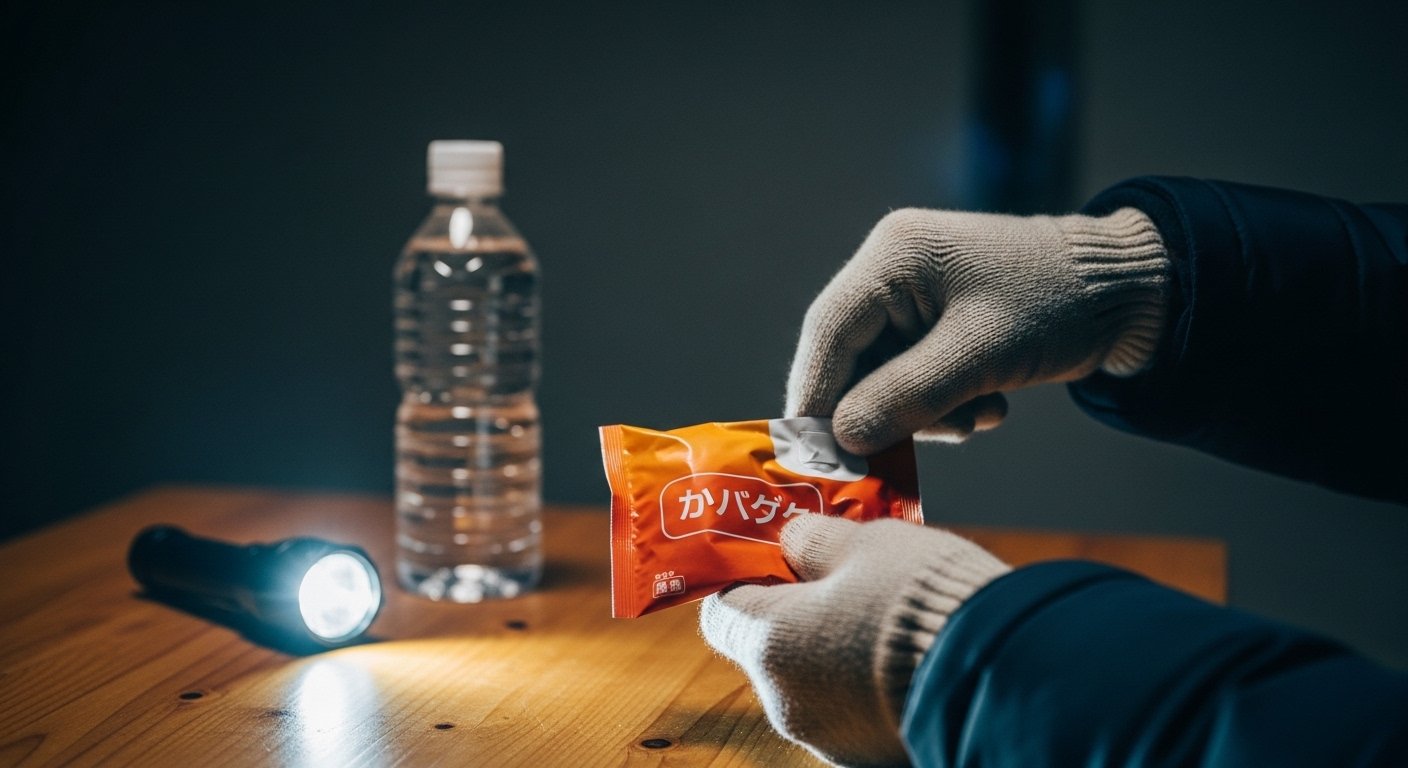
You’re not going to pack a full earthquake survival kit in your carry-on, I get it. But even a few ¥100 items can make a huge difference. Think about what you can grab easily when you arrive. I always have a mini-kit ready, even just for little power flickers.
Here’s a quick list of essentials and what they might cost in Japan (prices approximate, in Yen):
| Item | Purpose | Typical Cost (¥) | Where to Buy |
| Emergency Whistle | Signal for help if trapped or lost. | 100-300 | 100-yen shops, outdoor stores |
| Small Flashlight & Batteries | Light during power outages. Crucial! | 500-1500 | Konbini, 100-yen shops, electronics stores |
| Portable Power Bank | Charge your phone. Absolute must-have. | 2000-5000 | Electronics stores (Yodobashi, Bic Camera), konbini |
| Disposable Heat Packs (Kairo) | Localized warmth in cold. Get several! | 100-300 (for a pack of 10) | Konbini, drugstores (yakkyoku), supermarkets |
| Emergency Blanket (Mylar) | Retains body heat. Small & light. | 300-700 | Outdoor stores, 100-yen shops, drugstores |
| Water (500ml bottle) | Hydration. Crucial for survival. | 100-150 | Konbini, vending machines, supermarkets |
| Energy Bars/Non-Perishable Snacks | Quick energy, sustenance. | 150-300 per bar | Konbini, supermarkets |
| Thick Socks & Gloves/Beanie | Key for retaining warmth. | 300-1000 | Uniqlo, 100-yen shops, clothing stores |
| Small First-Aid Kit | Basic wound care. | 500-1500 | Drugstores, supermarkets |
🎯 Insider Tip: If you’re staying in a hotel, especially one geared towards international guests, ask at the front desk about their emergency procedures and where the nearest evacuation point (避難所 – hinanjō) is located. They often have multilingual staff and can provide you with specific guidance for their building. Don’t be shy; it’s literally their job to keep you safe! Also, always scope out the emergency exits on your floor as soon as you check in.
Common Pitfalls & What I Learned the Hard Way
Even with good intentions, it’s easy to make mistakes in an emergency. I’ve made a few myself:
- Underestimating the Cold: “It’s just for a few hours,” I thought during that first winter power outage. Three hours later, I was chattering my teeth and convinced I was going to turn into a popsicle. Modern Japanese buildings are well-insulated against heat, but without active heating, they become refrigerators fast. Always assume it will be colder than you think.
- Relying Solely on Your Phone: My phone died quickly, and suddenly all those apps and online guides were useless. Always have a physical map if you plan to move around, and consider a small, battery-operated radio for news.
- Not Knowing the Basics in Japanese: Even if you download the apps, what if your phone dies? What if you need to ask a specific question? Those “Point & Speak” phrases are golden. I once got separated from a friend during a minor incident, and trying to explain in broken English to a passing local where I needed to go was incredibly frustrating.
- Panicking and Making Rash Decisions: My first instinct during that initial quake was to run outside. Thankfully, I didn’t, as falling debris from buildings is a real risk. Always prioritize “Drop, Cover, Hold On” first, and then calmly assess.
- Assuming Everyone Else Will Help You: While Japanese people are generally incredibly helpful and polite, in a widespread disaster, everyone is dealing with their own families and safety. You need to be prepared to take care of yourself.
Frequently Asked Questions
What should I do if I’m on a train or bus during an earthquake in Japan?
If you’re on a train or bus, remain calm and hold onto handrails or straps. Do not attempt to exit the vehicle until instructed by staff. Trains and buses are designed to stop safely during an earthquake. Follow the crew’s directions closely, as they will guide you on the next steps, which may include waiting for the all-clear or evacuating in an orderly manner.
How can I find reliable information in English during an emergency in Japan?
For reliable English information, download the “Safety Tips” app from JNTO and the NHK World Japan app. NHK World Japan broadcasts news in English. During major disasters, look for official government announcements on their English websites (e.g., Prime Minister’s Office of Japan, Japan Meteorological Agency) and follow trusted English-language news sources. Social media, particularly X (formerly Twitter), can also be very fast, but always cross-reference information with official channels.
What are the best ways to stay warm without power during a winter power outage in Japan?
Layering clothing is your primary defense: start with thin, moisture-wicking layers, add insulating layers like fleece or wool, and finish with a windproof outer layer. Disposable heat packs (kairo) are incredibly effective; place them on your core, back, or feet. Huddle with others if possible, and gather in the smallest room to conserve heat. Block drafts from windows and doors with blankets or towels. Stay hydrated and eat high-energy snacks to help your body generate heat.
Look, I’m not here to tell you to cancel your trip to Japan. Quite the opposite. This country is incredible, and its resilience in the face of natural challenges is something to behold. But coming here, especially in winter, means understanding the potential risks and equipping yourself with a little knowledge. A few apps, some cheap emergency items, and knowing a couple of phrases can literally save your bacon.
My hope is that you’ll never have to use any of this information. But if the ground ever starts to shake while you’re here, or the lights go out on a freezing winter night, you’ll be one of the few who actually knows what to do. And that, my friend, is the best kind of preparedness. Travel safe, and enjoy Japan!


