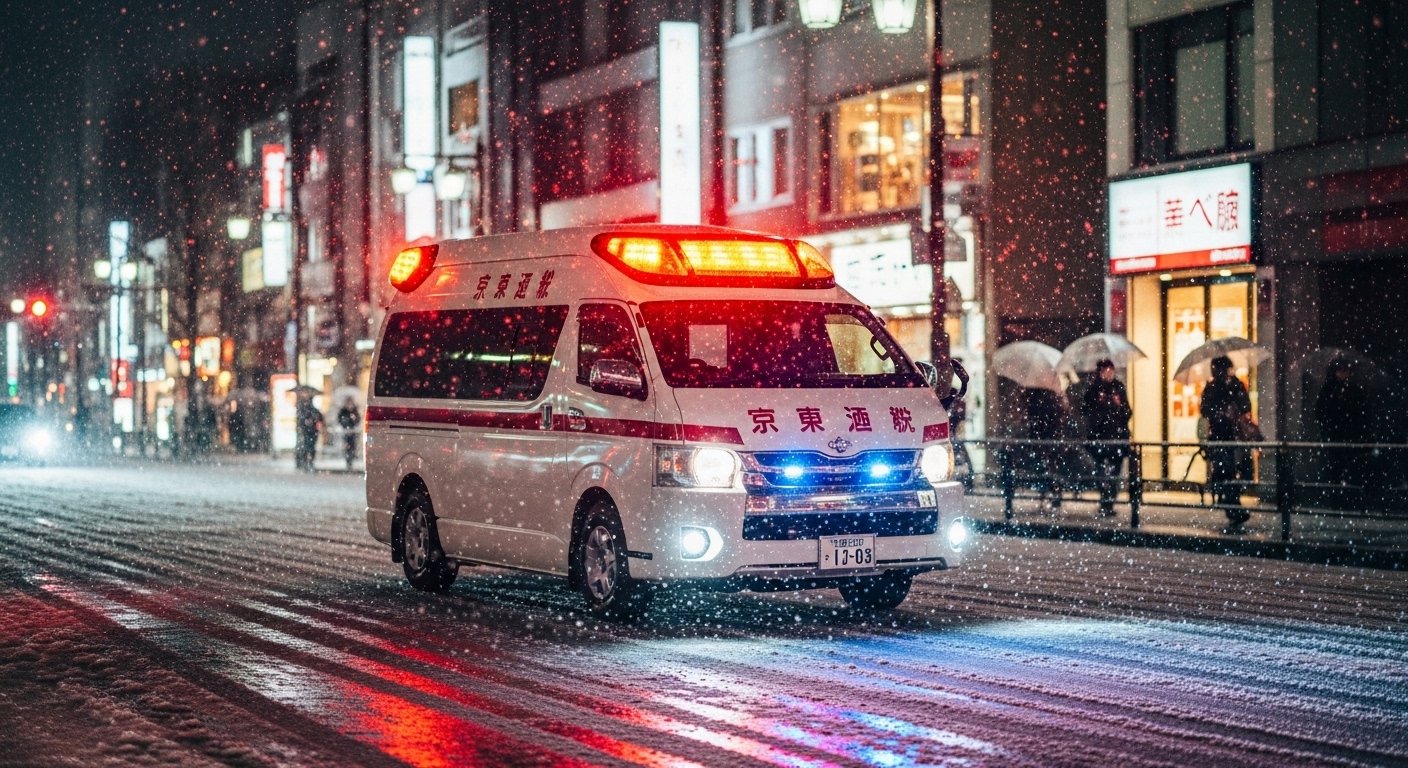
*Images used in this article are for illustration only. They may not be directly related to the content.
Winter Emergencies in Japan: Your Essential Guide to Medical Access, Travel Setbacks & Lost Items
Japan in winter offers stunning landscapes and unique cultural experiences, from snowy Hokkaido to festive city lights. However, the season also introduces specific challenges for international visitors, from icy conditions and heavy snowfall to increased cold and flu risks. Facing a medical emergency, a lost passport, or travel disruption alone, especially with a language barrier, can be a significant source of stress.
This comprehensive guide is designed to remove that friction. We provide clear, practical, step-by-step instructions on how to navigate common winter emergencies in Japan. You’ll learn how to access medical care, deal with lost essential items, manage travel disruptions, and leverage vital apps and resources. Our goal is to equip you with the knowledge to handle unforeseen events confidently, ensuring your winter journey remains safe and enjoyable.
Table of Contents
Navigating Medical Emergencies in Winter Japan
Winter brings increased risks of slips on ice, hypothermia, and widespread colds or influenza. Knowing how to access medical care is paramount. The primary challenges for visitors include language barriers, finding open facilities after hours, and understanding the healthcare system.
Calling for Help: 119 for Medical Emergencies
For immediate, life-threatening medical emergencies or fire, dial 119. This number connects you directly to emergency services nationwide. Operators may have limited English, so be prepared to speak slowly and clearly. State “Kyūkyū desu” (It’s an emergency) or “Kyūkyūsha o onegai shimasu” (Please send an ambulance).
🎯 Local Pro-Tip: If you are unsure of your exact address, look for street numbers on buildings, or give landmarks nearby (e.g., “near [station name]”, “in front of [store name]”). Stay calm and repeat the information if necessary. Keep a paper with your accommodation details on you.
Finding English-Speaking Medical Facilities
Many major hospitals in larger cities, particularly in tourist-heavy areas like Tokyo, Kyoto, and Osaka, have some English-speaking staff or access to interpretation services, especially in their emergency rooms. However, this varies significantly. Do not assume all staff will speak English.
Steps to find an English-speaking facility:
- Use JNTO’s Medical Information Guide: The Japan National Tourism Organization (JNTO) provides a list of hospitals with foreign language support. Check the official JNTO website.
- Contact AMDA International Medical Information Center: AMDA offers telephone interpretation services and can help locate medical facilities with language support. This is a critical resource. Visit AMDA-IMIC online.
- Ask Hotel Staff: Hotel concierges are often knowledgeable about local clinics and hospitals that cater to international guests.
After-Hours and Holiday Clinics (休日夜間急患センター)
For minor emergencies or non-critical conditions outside of regular clinic hours (late nights, weekends, national holidays), look for a 休日夜間急患センター (Kyūjitsu Yakan Kyūkan Sentā). These centers are common in most municipalities and can save you a costly and time-consuming ER visit for conditions like a severe cold, minor cuts, or sprains.
How to find one: Search Google Maps for “[City Name] 休日夜間急患センター” (e.g., “Tokyo 休日夜間急患センター”). Always check their operating hours before heading there.
Understanding Healthcare Costs & Travel Insurance
Japan’s healthcare system requires payment. For tourists without Japanese health insurance, you will likely need to pay upfront for all services. Costs can escalate quickly. An ER visit for basic care could range from ¥10,000 to ¥50,000 or more, with complex treatments being significantly higher.
💰 Price Breakdown (Estimated without insurance)
| Service | Estimated Cost |
| Emergency Room Visit (basic) | ¥10,000 – ¥50,000 |
| After-Hours Clinic Visit | ¥5,000 – ¥15,000 |
| Ambulance Service | ¥0 (free, but only for emergencies) |
| Basic Prescription Medication | ¥1,000 – ¥5,000+ |
Prices verified as of December 2025. Costs can vary significantly based on facility, services, and time of day.
🎯 Local Pro-Tip: Comprehensive travel insurance is not optional for a trip to Japan, especially in winter. Ensure your policy covers medical emergencies, hospitalization, and emergency evacuation. Carry your insurance details (policy number, emergency contact) separately from your wallet.
🇯🇵 Point & Speak: Medical Situations
Show this section to staff if you’re stuck. They can read the Japanese.
English: Emergency! I need an ambulance!
緊急です!救急車をお願いします!
(Kinkyū desu! Kyūkyūsha o onegai shimasu!)
English: I’m sick/injured.
病気です / 怪我をしました。
(Byōki desu / Kega o shimashita.)
English: My chest hurts.
胸が痛いです。
(Mune ga itai desu.)
English: I can’t breathe well.
息が苦しいです。
(Iki ga kurushii desu.)
English: Where is the nearest hospital/clinic?
一番近い病院/診療所はどこですか?
(Ichiban chikai byōin / shinryōjo wa doko desu ka?)
English: Do you have an English speaker?
英語を話せる人はいますか?
(Eigo o hanaseru hito wa imasu ka?)
What to Do When You Lose Essentials: Passport, Wallet, Money
Losing your passport, wallet, or money is a significant setback anywhere, but in a foreign country, it can feel overwhelming. Japan has an excellent lost and found system, but knowing the correct procedure is key.
Immediate Steps: Contacting the Police (Koban)
If you lose an essential item, your first step is to report it to the local police (交番 – Koban). These small police boxes are found frequently near stations and intersections. Even if you don’t speak Japanese, they are equipped to help.
Step 1: Locate a Koban (Police Box)
Visual cue: Look for a small, standalone building, often with a green or blue roof, a red light (sometimes flashing), and the kanji ‘交番’ (Kōban) sign. They are typically near train stations or busy intersections.
What to do: Go inside and explain your situation. You can use the “Point & Speak” phrases below.

Step 2: Report the Loss & Get a Report
Visual cue: Police officers will typically wear a uniform. They will ask for details about what you lost, where, and when.
What to do: You need to obtain a Lost Property Report (遺失物届出証明書 – Ishitsubutsu Todokede Shōmeisho). This document is crucial for replacing passports or making insurance claims. Ensure you get a copy or the reference number.

Replacing Lost Passports & Funds
Once you have a police report:
- Contact Your Embassy/Consulate: This is your next critical step. They will guide you through applying for an emergency travel document or a new passport. You will likely need your police report, proof of identity (if you have copies), and passport-sized photos. Find your country’s embassy or consulate in Japan and their emergency contact details before you travel.
- Replacing Money/Cards: If your wallet was lost, immediately contact your bank and credit card companies to cancel cards. Your embassy may be able to assist with emergency funds transfer services. Money transfer services like Western Union or MoneyGram can also be utilized if someone can send you funds from your home country.
- Insurance Claim: With your police report and embassy documents, you can start the process for any travel insurance claims related to lost items.
🇯🇵 Point & Speak: Lost Items
Show this section to police or staff if you’re stuck. They can read the Japanese.
English: I lost my passport/wallet/money.
パスポート/財布/お金をなくしました。
(Pasupōto / Saifu / Okane o nakushimashita.)
English: I want to report a lost item.
遺失物届出をしたいです。
(Ishitsubutsu todokede o shitai desu.)
📋 Quick Reference Card: Lost Essentials
Screenshot or print this section for easy access:
- ✅ Dial 110 (Police) for immediate non-injury accidents or serious issues.
- ✅ Locate a Koban (交番) for lost items.
- ✅ Obtain a Lost Property Report (遺失物届出証明書).
- ✅ Contact your Embassy/Consulate immediately.
- ✅ Cancel cards with your bank/credit card companies.
- ✅ Keep physical/digital copies of passport/insurance separate.
Dealing with Winter Travel Disruptions
Heavy snow, especially in regions like Hokkaido, Tohoku, and the Sea of Japan coast, can cause significant travel disruptions. Road closures, train delays or cancellations, and airport disruptions are common.
Staying Informed: Weather & Transport Advisories
Proactive checking is your best defense against winter travel disruptions:
- Japan Meteorological Agency (JMA): This is the official source for weather warnings, heavy snow forecasts, and real-time conditions. Check their English site regularly. Visit JMA’s English site.
- Transportation Company Announcements:
- Trains (JR, private lines): Major railway companies (e.g., JR East, JR West) have English sections on their websites with real-time service updates. Yahoo! Japan Transit is excellent for checking nationwide train/bus status (though primarily in Japanese, visual cues are helpful).
- Airports: Check the websites of your specific airport (e.g., Narita, Haneda, Sapporo New Chitose) and airline for flight status.
- Roads: For rental car users, look for local road information or ask your rental company.
- News & Social Media: Follow reputable English-language news outlets in Japan or official tourism accounts for broader updates.
Handling Delays and Cancellations
If your travel plans are disrupted:
- Stay Calm: Crowding at stations and airports can be intense. Patience is essential.
- Seek Information: Look for digital display boards for updates (often have English). Approach station or airport staff if needed. Use translation apps for specific queries.
- Re-booking: Head to the ticket counter for assistance. If you have flexible tickets (e.g., Japan Rail Pass), re-booking might be straightforward. Be prepared for long queues.
- Accommodation: If stranded overnight, seek nearby accommodation quickly, as hotels around disrupted hubs fill up fast.
- Communicate: Inform your next hotel or destination of your delay.
🎯 Local Pro-Tip: Build flexibility into your winter travel itinerary, especially if visiting heavy snow regions. Don’t book tight connections. Have a backup plan and funds for an unexpected overnight stay. Winter tires or 4WD are highly recommended if driving in snowy areas.
Essential Apps & Resources for Emergencies
Having the right tools on your smartphone can significantly reduce friction during an emergency.
Crucial Apps for Communication & Navigation
- Google Translate / DeepL: Essential for real-time translation, especially in medical situations. Download Japanese language packs for offline use.
- VoiceTra: An official Japanese government translation app offering voice-to-voice translation in multiple languages.
- Google Maps: Crucial for navigation, locating hospitals, police boxes, and understanding public transport routes. Download offline maps for areas you’ll visit.
- Emergency Call (Japan): An app provided by JNTO that helps foreigners make emergency calls by providing key Japanese phrases and location information.
Official Websites & Hotlines
- JNTO Japan Safe Travel Guide: https://www.jnto.go.jp/emergency/eng/safety.html (Comprehensive safety information)
- AMDA International Medical Information Center: https://www.amda-imic.com/ (Medical interpretation & facility locator)
- Japan Meteorological Agency (JMA): https://www.jma.go.jp/jma/indexe.html (Weather warnings and forecasts)
- Your Embassy/Consulate in Japan: Bookmark their emergency contact page.
🎯 Local Pro-Tip: Ensure your phone has a reliable data connection. A local SIM card or eSIM (convenient for tourists) is highly recommended over relying solely on public Wi-Fi, which can be unreliable or unavailable in remote areas or during power outages. Always carry a portable power bank.
Common Mistakes to Avoid During a Winter Emergency
Being prepared is about more than just knowing what to do; it’s also about avoiding pitfalls that can escalate a situation.
- Underestimating Winter Conditions: Japanese winters, especially in the north and mountainous areas, can be severe. Failing to pack appropriate warm, waterproof clothing and non-slip footwear is a common error leading to discomfort, cold-related illnesses, or slips.
- Ignoring Travel Insurance: Skipping travel insurance for medical coverage or lost items can lead to significant financial strain. Assume you will pay out-of-pocket without it.
- Relying Solely on English: While many Japanese are helpful, assuming everyone speaks English in an emergency is impractical. Have translation tools ready and key phrases written down.
- Not Charging Devices: A dead phone means no maps, no translation, and no way to call for help. Keep your phone charged and carry a power bank.
- Panicking: While natural, panic can hinder effective communication and decision-making. Japanese emergency services and public transport staff are generally efficient and organized. Follow their instructions calmly.
- Not Carrying ID/Copies: Always have your passport (or a copy) and insurance details on your person, separate from your wallet if possible.
🚨 Emergency Contacts
These numbers are free and work from any phone in Japan.
| Police (for lost items, accidents, general security) | 110 |
| Ambulance/Fire (for medical emergencies & fires only) | 119 |
| AMDA International Medical Information Center (English/other languages) | 03-5285-8088 |
| JNTO Japan Visitor Hotline (Tourist information, 24/7, English) | 050-3816-2787 |
When calling emergency numbers, speak slowly and clearly. State your location, what happened, and if you need an English speaker (Eigo o hanaseru hito wa imasu ka?).
Frequently Asked Questions (FAQ)
Can I call 119 or 110 from a foreign phone?
Yes, both 119 (Ambulance/Fire) and 110 (Police) are free calls and can be dialed from any mobile or landline phone in Japan, regardless of whether it’s a foreign SIM or a local one. Ensure you have a working phone with service.
What should I do if I can’t describe my symptoms in Japanese at a hospital?
Use translation apps like Google Translate or VoiceTra. Have key phrases pre-saved. Contact AMDA International Medical Information Center (03-5285-8088) for phone interpretation. Many major hospitals in big cities might have English-speaking staff or a translation service available, but it’s not guaranteed.
Is travel insurance truly necessary for a winter trip to Japan?
Absolutely. Winter introduces higher risks of slips, falls, and cold-related illnesses. Healthcare costs for tourists without insurance can be substantial, often requiring upfront payment. Travel insurance provides crucial coverage for medical emergencies, potential travel disruptions due to snow, and lost essential items, protecting your budget and peace of mind.
How can I check if trains or flights are delayed due to snow?
Check the official websites of the transportation companies (e.g., JR for trains, specific airline for flights). The Japan Meteorological Agency (JMA) provides weather warnings. Yahoo! Japan Transit can show real-time train status (though primarily in Japanese, visual cues are helpful). Hotel staff can also assist in checking local conditions.
Conclusion
While Japan is renowned for its safety and efficiency, unforeseen winter emergencies can happen. By understanding the local protocols, having essential contacts at hand, and leveraging the recommended apps and resources, you significantly reduce potential stress and friction. Preparedness empowers you to navigate any challenge with confidence.
Your journey through Japan, even in winter, should be an experience of wonder, not worry. Stay informed, stay prepared, and allow these practical steps to be your guide to a safer, more enjoyable trip.
Disclaimer
This information is provided for general guidance only and is accurate as of December 2025. Emergency procedures, contact details, and service availability may change. Always refer to official government sources and your embassy/consulate for the most current and specific advice. In an actual emergency, prioritize your safety and seek immediate assistance.