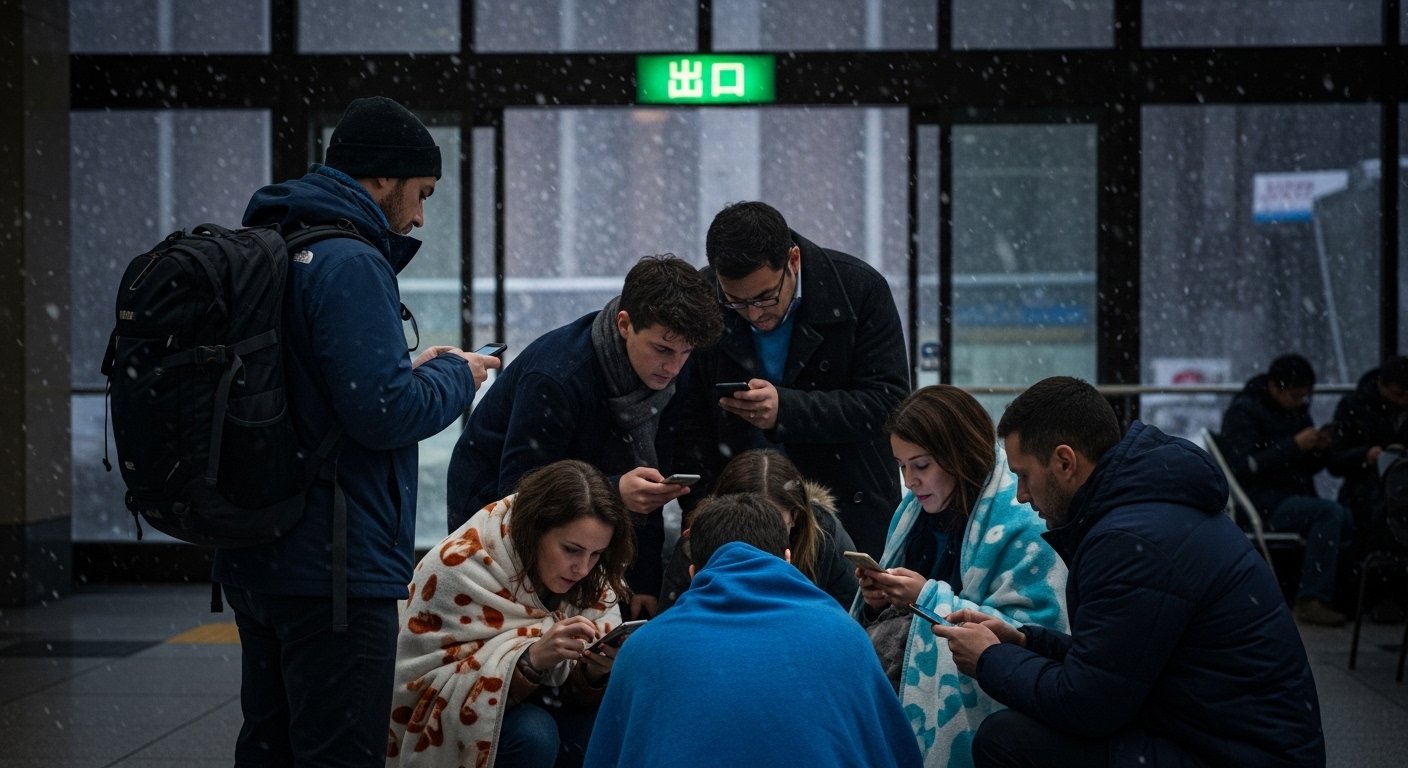
*Images used in this article are for illustration only. They may not be directly related to the content.
Japan Winter Emergency: Surviving Earthquakes & Heavy Snow as a Tourist
Planning a winter trip to Japan brings visions of pristine snowscapes and vibrant city lights. Yet, for many international visitors, the underlying concern of natural disasters—specifically earthquakes and heavy snow—can create apprehension. This guide is designed to remove that friction, providing you with practical, actionable steps to navigate potential winter emergencies, find warm shelter, and communicate effectively, even with limited Japanese language skills. You will learn how to prepare and respond to ensure a safe and secure experience, no matter the weather or seismic activity.
Table of Contents
- Understanding Japan’s Winter Risks: Earthquakes & Heavy Snow
- Your Essential Winter Emergency Kit for Japan Travel
- Immediate Actions & Finding Safety During a Disaster
- Overcoming the Language Barrier: Crucial Phrases & Resources
- Staying Informed: Key Communication Channels
- Essential Safety Tools & Resources
- Pro-Tips for Winter Safety in Japan
- Frequently Asked Questions
Understanding Japan’s Winter Risks: Earthquakes & Heavy Snow
Japan is a country with robust disaster preparedness, but awareness of specific regional and seasonal risks is key for visitors. Winter brings its own set of challenges, particularly the intersection of seismic activity and heavy snowfall. Understanding these dynamics is the first step in effective preparation for any Japan winter emergency.
Earthquake Preparedness in Winter
Japan is located on the Pacific Ring of Fire, making earthquakes a common occurrence. The country has developed one of the world’s most advanced earthquake warning and response systems. While earthquakes can happen any time of year, a winter earthquake introduces additional risks like power outages in freezing temperatures and hazardous snow-covered debris.
The core principle for earthquakes is “Drop, Cover, and Hold On.” This universally applies whether you’re indoors or outdoors. Japan’s infrastructure is built to withstand significant seismic activity, and its population is drilled from a young age, indicating a nationwide system for emergency response.
Navigating Heavy Snow Disasters
Heavy snowfall patterns frequently occur during winter, particularly from late December to late January. Regions most prone to significant snow include Western Japan, the Hokuriku region (e.g., Ishikawa, Toyama, Fukui prefectures), and prefectures along the Sea of Japan coast. These areas can experience extreme snowfall, leading to transportation disruptions and isolation.
Snow disasters can involve significant risks. This includes people falling off roofs due to snow accumulation, icy pathways, and even structural damage from heavy snow loads. During periods of heavy snow, public transportation, including trains and flights, may be delayed or cancelled, leading to unexpected overnight stays or changes in itinerary. Being aware of these regional risks is crucial for your winter travel planning.

Your Essential Winter Emergency Kit for Japan Travel
Preparation is your strongest ally against any unexpected Japan winter emergency. As a tourist, assembling a compact, yet comprehensive, emergency kit specifically tailored for winter conditions can make a significant difference in your comfort and safety.
- Portable Charger (Power Bank): Communication is vital. Keep your phone charged to access information, emergency apps, and connect with others. Ensure it has enough capacity for multiple charges.
- Warm Layers: Pack thermal underwear, fleece jackets, and sweaters. Layering is key for trapping warmth. During a power outage, these will be your primary defense against cold.
- Heat Packs (カイロ – Kairo): These disposable, air-activated heat patches are inexpensive and provide localized warmth for hours. Essential for staying warm if heating systems fail or you are in an unheated shelter.
- Thermal Blanket: A compact, lightweight foil or Mylar emergency blanket can reflect up to 90% of your body heat. It’s a small item with significant warming potential.
- Waterproof Outerwear: A waterproof and windproof jacket and pants are crucial. They protect against snow, rain, and cold winds, especially if you need to move outdoors to an evacuation shelter.
- Small First-Aid Kit: Include pain relievers, bandages, antiseptic wipes, any personal prescription medications, and blister treatment. Basic medical supplies can be hard to access quickly in a widespread emergency.
- Whistle: For signaling your location if you are trapped or need help, especially in noisy or low-visibility conditions.
- Flashlight (with extra batteries) or Headlamp: Power outages are common during disasters. A reliable light source is essential for navigation and safety.
- Cash: ATMs and credit card machines may be inoperable during power outages. Always carry enough Japanese Yen cash for a few days’ worth of food, water, and immediate needs.
- Essential Medications: Carry at least a 3-day supply of any prescription medicines in their original packaging, along with a copy of your prescription.
🎯 Local Pro-Tip: Purchase kairo (heat packs) from any convenience store (konbini) or drugstore upon arrival. They are ubiquitous and inexpensive, providing immediate warmth when needed most.

Immediate Actions & Finding Safety During a Disaster
Knowing what to do in the immediate moments of a crisis is paramount. Japan’s robust disaster response systems rely on individuals taking quick, appropriate actions. Here’s a breakdown of what to prioritize if a disaster strikes during your winter trip.
When an Earthquake Strikes
- Indoors: Drop, Cover, Hold On.
- Drop: Get down on your hands and knees.
- Cover: Protect your head and neck under a sturdy table or desk. If no shelter is nearby, cover your head and neck with your arms. Stay away from windows, heavy furniture, and falling objects.
- Hold On: Stay put until the shaking stops.
- After the Shaking: Look for stable ground. If you are near the coast and a tsunami warning is issued, move to higher ground immediately.
- Outdoors: Move to Open Areas.
- Get away from buildings, utility poles, and streetlights that could fall.
- If in a busy area, find an open park or square.
- Protect your head with your arms or a bag.
- On Public Transportation:
- Trains will typically stop. Stay calm and remain seated. Follow staff instructions.
- Buses will pull over. Remain seated until the driver gives instructions.
After an earthquake, assess your immediate surroundings. Japan’s emergency services will activate quickly. Your priority is to ensure your personal safety and then seek information.
When Heavy Snow Isolates You
Heavy snow can lead to power outages, road closures, and disruptions to essential services. If you find yourself in such a situation, particularly in snowy regions like Hokuriku or along the Sea of Japan coast:
- Stay Warm: Utilize your emergency kit’s warm layers and heat packs. Huddle together if in a group. Conserve body heat.
- Conserve Energy: Limit phone usage to essential communication. Avoid unnecessary movement to conserve energy and reduce risk of injury on slippery surfaces.
- Monitor Information: Use your phone or radio to get updates from official sources like the Japan Meteorological Agency (JMA) or NHK WORLD-JAPAN.
- Prioritize Communication: Inform your family or friends of your status once you are safe and have a connection.
- Avoid Venturing Out: Unless absolutely necessary, stay indoors. Icy conditions, deep snow, and falling snow from roofs (a known risk) pose significant dangers.
Locating Evacuation Shelters (避難所 – Hinanjo)
Designated evacuation shelters (避難所 – hinanjo) are typically public facilities like schools or community centers. They are equipped to provide basic necessities and warmth during emergencies.
Visual cues: Look for green signs with white figures of a person in a shelter or an open hand symbol. You may also see green signs with white figures (running human, arrow) indicating evacuation routes (避難経路 – hinan keiro) leading to these shelters.
How to find them:
- Safety tips app: The official JNTO “Safety tips” app (available in multiple languages) provides a map function to locate nearest shelters.
- Local municipal websites: Many city/town hall websites have disaster maps.
- Ask locals/police: Use the Japanese phrases provided below to ask for directions. Local residents and police officers are trained to guide people to shelters.
- Public announcements: In a major disaster, information will be broadcast via loudspeakers and public screens.

Overcoming the Language Barrier: Crucial Phrases & Resources
One of the significant pain points for international visitors during a Japan winter emergency is the language barrier. While many Japanese are helpful, direct communication during a crisis can be challenging. Pre-installing translation apps and learning a few key Japanese phrases can bridge this gap and allow you to convey essential information and seek help.
🇯🇵 Point & Speak
Show this section to staff if you’re stuck. They can read the Japanese.
English: Help!
助けて!
(Tasukete!)
English: Where is the evacuation shelter?
避難所はどこですか?
(Hinanjo wa doko desu ka?)
English: I don’t understand Japanese.
日本語がわかりません。
(Nihongo ga wakarimasen.)
English: Is there anyone who can speak English?
英語が話せる人はいませんか?
(Eigo ga hanaseru hito wa imasen ka?)
English: I’m cold.
寒いです。
(Samui desu.)
English: Emergency.
緊急です。
(Kinkyū desu.)
Beyond these phrases, consider downloading offline translation apps before your trip. Google Translate or DeepL can be invaluable tools, especially with their camera translation features for reading signs or documents.
Staying Informed: Key Communication Channels
Access to accurate and timely information is critical during any emergency. Japan has multiple official channels that provide disaster information in English and other languages.
- JNTO Safety tips app: This indispensable, multilingual app provides early warning alerts for earthquakes, tsunami, and other emergencies. It also includes disaster preparedness information, evacuation guidance, and a list of useful communication phrases. Download it here.
- Japan Meteorological Agency (JMA) English Website: For real-time weather forecasts, earthquake information, and warnings (tsunami, heavy snow, etc.), the JMA website is the official source. Visit the JMA website.
- NHK WORLD-JAPAN: As Japan’s international public broadcaster, NHK WORLD-JAPAN provides English news and emergency broadcasts. It’s accessible via TV, radio, and its website/app. Access NHK WORLD-JAPAN.
- Emergency Wi-Fi (00000Japan): In a major disaster, emergency Wi-Fi services may become available at designated hotspots. Look for stickers or posters indicating ‘00000Japan’ (five zeros and “Japan”) at public facilities or convenience stores. While potentially congested, it can provide vital internet access.
Make sure your devices are charged and capable of receiving notifications. Turn on emergency alerts on your smartphone for Japan when you arrive.

Essential Safety Tools & Resources
Beyond apps and phrases, some key contacts and a quick reference guide can be lifesaving during a Japan winter emergency.
📋 Quick Reference Card
Screenshot or print this section for easy access:
- ✅ JNTO Safety tips App: Download for alerts & shelter maps.
- ✅ Emergency Numbers: Police 110, Ambulance/Fire 119.
- ✅ Key Japanese Phrases: “Tasukete!” (Help!), “Hinanjo wa doko desu ka?” (Shelter location?).
- ✅ Winter Kit Essentials: Portable charger, warm layers, heat packs, cash.
- ✅ Earthquake Action: Drop, Cover, Hold On.
- ✅ Snow Action: Stay warm, conserve energy, avoid unnecessary outdoor travel.
- ✅ Emergency Wi-Fi: Look for “00000Japan”.
🚨 Emergency Contacts
| Police | 110 |
| Ambulance/Fire | 119 |
| Emergency Translation (JNTO) | 050-3816-2787 |
All numbers are free and work from any phone. The JNTO number provides multi-lingual assistance for tourists in distress.
Pro-Tips for Winter Safety in Japan
Beyond the basics, these insider tips can enhance your preparedness and reduce anxiety when facing a Japan winter emergency.
🎯 Local Pro-Tip: Carry Cash. Always.
During power outages, credit card machines and ATMs may be non-functional. Having sufficient Japanese Yen cash is crucial for purchasing food, water, or transportation in an emergency. Don’t rely solely on digital payments.
🎯 Local Pro-Tip: Inform Someone of Your Itinerary.
Before venturing out for the day, especially if traveling to snowy or remote areas, let someone (family, friend, hotel staff) know your general plans and expected return time. This provides a crucial point of contact if you cannot be reached.
🎯 Local Pro-Tip: Travel Insurance is Not a Luxury.
Ensure your travel insurance covers natural disasters, trip interruptions, and emergency medical assistance. Review the policy details carefully to understand what is covered regarding delays, evacuations, or medical needs arising from an earthquake or heavy snow event. It’s a small investment for peace of mind.
🎯 Local Pro-Tip: Charge Everything. Every Night.
Make a habit of fully charging your phone, portable charger, and any other essential electronic devices every night. In a sudden power outage, you’ll be glad you have maximum battery life.
Frequently Asked Questions
What if I’m on a train during an earthquake?
Japanese trains are equipped with early warning systems. If an earthquake occurs, the train will automatically apply emergency brakes and stop. Stay calm, remain seated, and follow instructions from the train staff. Do not attempt to open doors or exit the train unless specifically instructed to do so by uniformed personnel.
How do I know if an evacuation order is in English?
Official evacuation orders or alerts are increasingly issued in multiple languages, especially in major tourist areas. The “Safety tips” app will provide alerts in your selected language. Public screens in stations and tourist hubs often display multilingual emergency information. Additionally, NHK WORLD-JAPAN will broadcast information in English. If you hear sirens or see large groups of people moving in a specific direction, it’s wise to follow them and seek clarification from emergency personnel using key phrases or a translation app.
Is my travel insurance sufficient for natural disasters in Japan?
It depends on your policy. Many standard travel insurance policies offer coverage for trip interruptions, medical emergencies, or evacuations due to natural disasters. However, some policies may have exclusions or specific clauses for certain events or regions. It is crucial to read your policy’s fine print or contact your insurance provider directly before your trip to confirm coverage for events like earthquakes and heavy snow in Japan.
What if I get stuck in my hotel during heavy snow or an earthquake?
Hotels in Japan typically have their own disaster plans and will guide guests. Your room should have an emergency guide (often multilingual). During heavy snow, stay in your room, conserve warmth, and await updates from hotel staff. In an earthquake, follow the Drop, Cover, Hold On protocol, and then follow staff instructions. Hotels are designated as temporary safe places. If power is out, use your emergency kit items like flashlights and heat packs. Hotel staff are often your first and best resource in these situations.
Conclusion
Experiencing Japan in winter is an unparalleled joy, and while natural disasters are a reality, they do not have to be a source of constant worry. By taking proactive steps—preparing a tailored emergency kit, familiarizing yourself with crucial Japanese phrases, and understanding how to access information—you empower yourself to respond effectively to any Japan winter emergency. Your safety is paramount, and with these practical guidelines, you are better equipped to enjoy your journey with confidence and peace of mind.
Stay informed, stay prepared, and have a safe trip to Japan.
Disclaimer
This guide provides general information and recommendations for tourist safety during winter emergencies in Japan. Natural disaster situations are dynamic and unpredictable. Always prioritize official instructions from local authorities (police, fire, local government) and emergency services. This information does not substitute for professional advice, travel insurance, or personal discretion. While every effort has been made to ensure accuracy, conditions can change rapidly.