*Images used in this article are for illustration only. They may not be directly related to the content.
Japan Winter Quake: Your Lifeline Travel Guide for Earthquakes & Staying Warm
I remember my first real earthquake in Japan like it was yesterday. It wasn’t the biggest, but it hit during a nasty February cold snap, and I was utterly clueless. The building started swaying, objects rattled, and my immediate, very helpful reaction was to stand frozen in the middle of my tiny apartment, muttering, “Uh… what now?” I’d read the guidebooks, sure, but in that moment, all that theoretical knowledge vanished. I didn’t know if I should run outside into the biting wind or crawl under my flimsy coffee table. It was a wake-up call, a cold, shaking reminder that being prepared isn’t just about reading a pamphlet; it’s about *knowing* what to do when your world starts to wobble.
You’re probably thinking about visiting Japan in winter, maybe for the snow festivals, the cozy onsen, or just to see Tokyo sparkling under crisp skies. It’s an incredible experience, but let’s be honest: the thought of a major earthquake in an unfamiliar country, especially when it’s freezing outside, is a legitimate concern. I’ve lived here for a decade, been through my fair share of tremors, and watched countless tourists (and expats, myself included!) stumble through situations that could have been less stressful with a little prep. So, let’s cut through the fluff. This isn’t your typical dry safety manual; it’s the honest, actionable guide I wish I’d had.
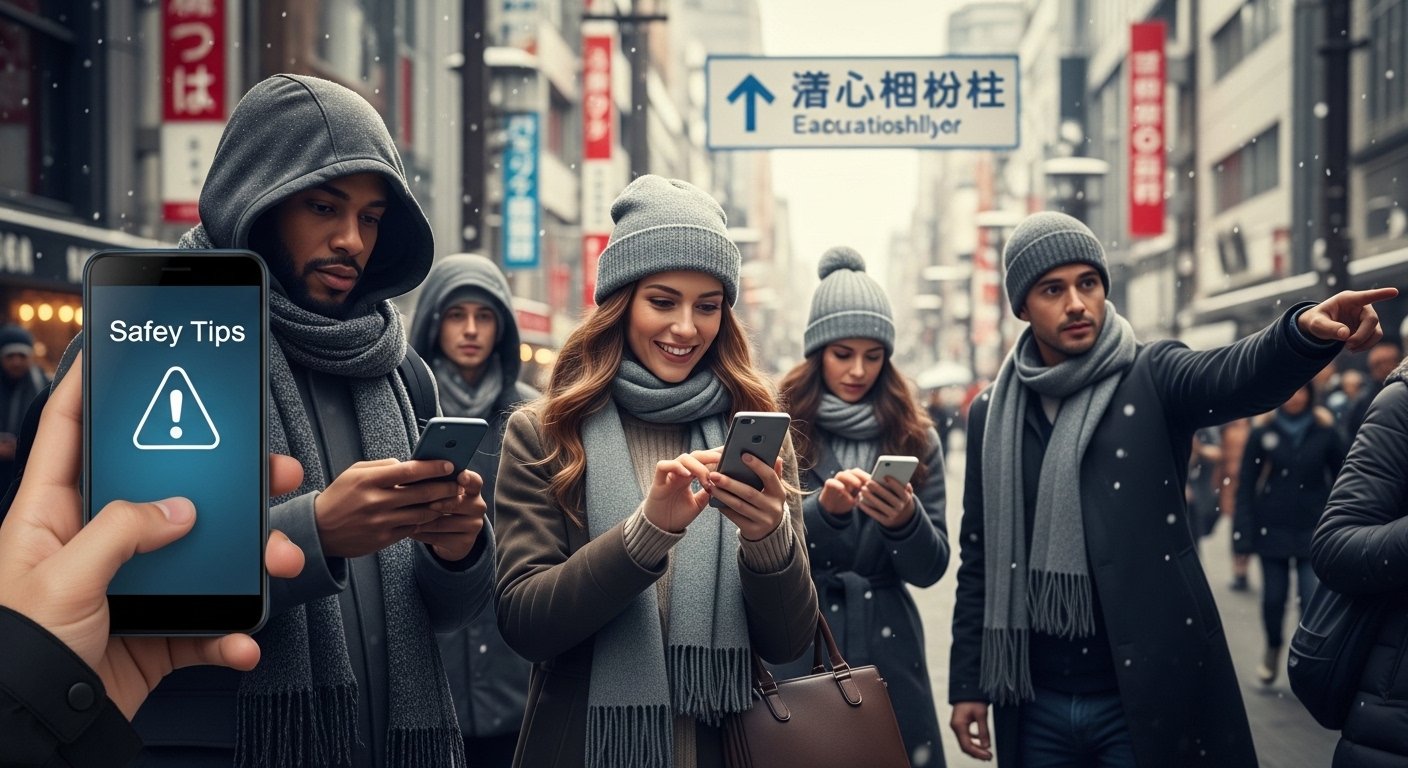
Table of Contents
- The Real Struggle: Why Earthquakes Feel So Scary for Travelers
- Step-by-Step Solution: Your Pre-Trip, During, and Post-Quake Playbook
- 🎯 Insider Tip: Don’t Just Download It, Set It Up!
- Your Essential Winter Earthquake Emergency Kit (and what it costs)
- Common Pitfalls: Mistakes I’ve Seen Travelers Make
- 🇯🇵 Point & Speak: Crucial Phrases for Crisis
- FAQ: Your Burning Questions Answered
The Real Struggle: Why Earthquakes Feel So Scary for Travelers
Here’s the deal: Japan is earthquake-prone. It’s a fact of life here. But for a traveler, especially one from a less seismically active region, that fact can loom large and terrifying. I’ve seen the panic in people’s eyes when a minor tremor hits, or the confusion when an emergency siren blares over the city. It’s not just the shaking; it’s the cocktail of unknowns:
- “What do I actually *do*?” Most people have a vague idea of “drop, cover, hold on,” but what about *after*? Where do you go? Is it safe to stay where you are? This lack of specific, actionable steps is a massive anxiety trigger.
- The Language Barrier Wall: Imagine an alert blares, people start moving, but all you hear is rapid-fire Japanese. Or you see instructions on a screen, but you can’t read them. This happened to me during a typhoon evacuation; I was frantically trying to translate signs on my phone while everyone else was already headed to the shelter. It’s isolating and genuinely scary.
- Winter’s Icy Grip: If an earthquake forces you outside or into a temporary shelter in January, you’re not just dealing with the quake’s aftermath; you’re fighting hypothermia. Many travelers simply don’t pack enough heavy-duty warm layers, assuming they’ll mostly be indoors. Evacuation in winter is a whole different ball game.
The good news is that Japan is incredibly well-prepared. The infrastructure is robust, and there are systems in place designed to protect you. You just need to know how to tap into them.
Step-by-Step Solution: Your Pre-Trip, During, and Post-Quake Playbook
Think of this as your personal emergency action plan. I’ve broken it down into three stages, just like how I now prepare myself.
Phase 1: Pre-Trip Preparation – Don’t Skip This!
This is where 80% of your safety net is woven. Trust me, I learned this the hard way after fumbling with my phone settings *during* an actual alert.
- Download the “Safety tips” App (NOW!): This is non-negotiable. The Japan Tourism Agency provides this app, and it’s a godsend. It gives multi-language emergency alerts for earthquakes, tsunamis, and other disasters. Don’t wait until you land; download it at home, set it up, and make sure notifications are ON. This is how you’ll get real-time info, often before local news catches up, and in *your language*.
- Assemble a Basic Emergency Kit: You don’t need to be a doomsday prepper, but a small, accessible kit is vital, especially for winter. Think about what you’d need for 24-48 hours if you were without power or trapped somewhere cold. More on this, including specific items and estimated costs, below.
- Forge a Communication Plan with Your Travel Buddies: This is a massive oversight for many groups. Discuss how you’ll contact each other if phones are down, or if you get separated during an evacuation. I recommend a designated meeting point outside your accommodation and perhaps an international family contact that everyone can check in with. “We’ll meet at the McDonald’s across from the hotel if we get separated,” or “text Mom, she’ll know we’re okay.” Simple, but effective.
🎯 Insider Tip: Don’t Just Download It, Set It Up! I see countless tourists with the “Safety tips” app downloaded, but they haven’t set their region, activated push notifications, or chosen their preferred language. Go into the settings *immediately* after downloading and configure it fully. Test a notification if you can (some apps have a test feature). An app is only useful if it’s set up to actually deliver alerts to you.
Phase 2: During an Earthquake – Stay Calm, Act Fast
The ground starts shaking. My heart still jumps every time, but now I know what to do.
- Prioritize Staying Calm: Easier said than done, I know. But a clear head is your best tool. Take a deep breath. Assess your immediate surroundings.
- Location, Location, Location – Your Actions Depend:
- Inside a Building (Hotel Room, Restaurant, Shop): “Drop, Cover, Hold On.” Get under a sturdy table or desk. Protect your head and neck. Stay away from windows, heavy shelves, or anything that could fall. If there’s no sturdy furniture, crouch against an interior wall. Do NOT rush for the exits during the shaking; you’re more likely to be injured by falling debris.
- Outside: Move immediately to an open area, away from buildings, power lines, and anything that could collapse or fall (billboards, vending machines, glass). If you’re on a street lined with buildings, quickly try to get to a wider street or park. This is crucial as debris from buildings is a major hazard.
- Inside a Vehicle (Train, Bus, Taxi): Stay put. The driver will likely pull over and stop. Follow their instructions. Do not attempt to exit until the shaking has stopped and it is deemed safe. If you’re on a train, it will stop automatically.
The Japan National Tourism Organization (JNTO) has excellent, detailed safety tips segmented by location. I highly recommend checking their page: JNTO Earthquake Safety Tips.
- Wait for the All-Clear (or an alert): Once the shaking stops, don’t just spring up. Aftershocks are common. Listen for alerts on your Safety tips app. Look for guidance from staff (if in a hotel/store) or emergency services.
Phase 3: Post-Earthquake Response – Safety, Warmth, & Communication
The shaking has stopped, but the emergency isn’t over, especially in winter.
- Check Yourself and Others: Are you injured? Are your companions okay? Offer help if you can, but prioritize your own safety first.
- Seek Information: Check your “Safety tips” app. Look for information boards (often with “避難所” – hinanjo, meaning evacuation shelter). Follow instructions from emergency personnel.
- Stay Warm, Stay Dry: This is paramount in winter. If you’re outdoors or in a shelter without heating, put on every layer you have. Use emergency blankets from your kit. Stay as dry as possible. Huddle with others if it’s safe and appropriate. Cold is a silent killer.
- Communicate (When Possible): Use your established communication plan. Text messages are often more reliable than calls immediately after a disaster. If mobile networks are overwhelmed, look for designated public phones or WiFi hotspots (many cities offer emergency Wi-Fi).
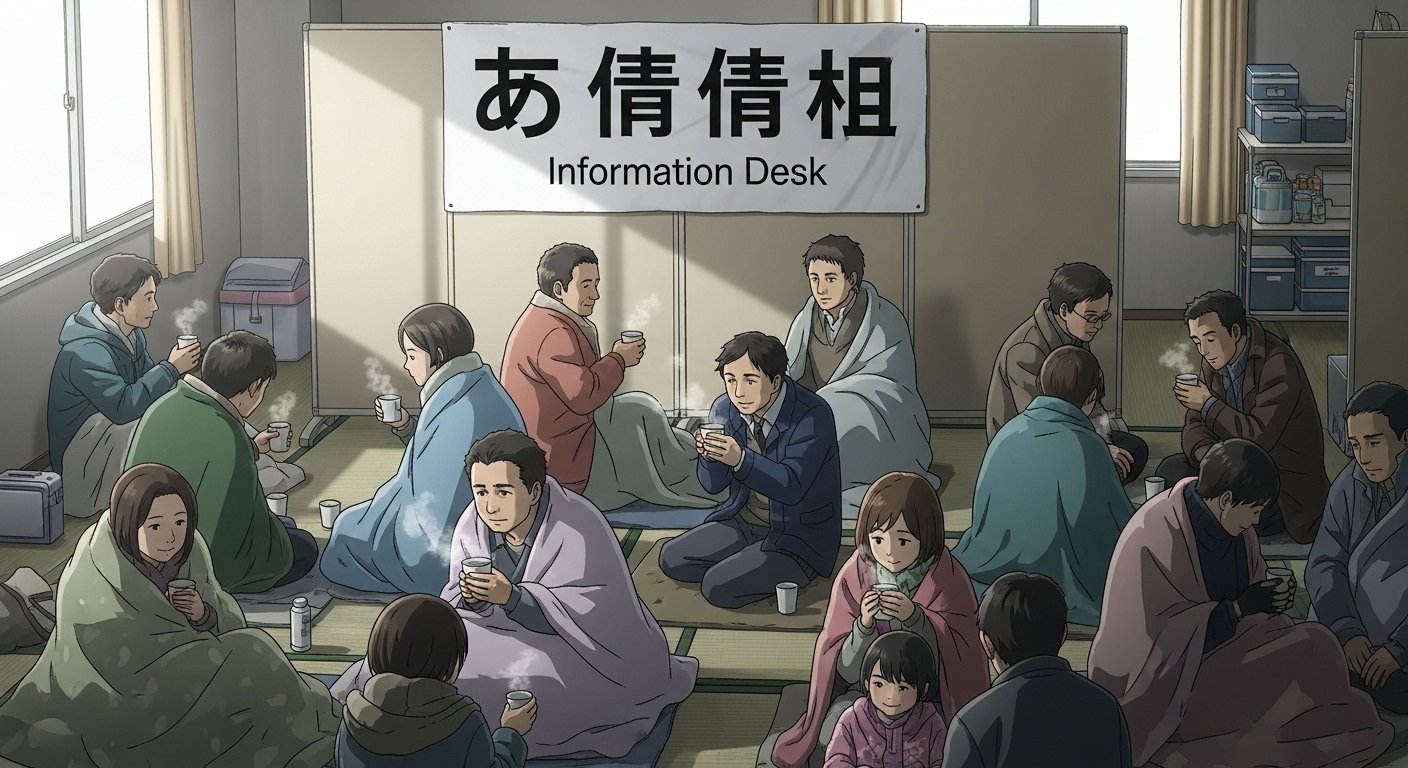
- Move to a Designated Evacuation Shelter (If Instructed): Don’t try to “tough it out” alone if an evacuation is ordered. Shelters (“避難所” – hinanjo) are equipped with supplies, medical aid, and information. They are safe havens. Follow the signs and the crowds; people will usually be heading to the nearest designated spot.
Your Essential Winter Earthquake Emergency Kit (and what it costs)
I learned this from my Japanese neighbors, who always have a small backpack ready. You don’t need to buy a fancy pre-made kit; you can assemble one easily. Here are the essentials for winter travel, with estimated costs in JPY (prices are approximate and can vary wildly depending on brand and where you buy them).
| Item | Why It’s Essential | Estimated Cost (JPY) |
|---|---|---|
| **Emergency Blanket (Foil)** | Lightweight, retains body heat. A lifesaver in cold evacuation scenarios. | ¥300 – ¥800 |
| **Portable Power Bank & Cables** | Keep your phone charged for alerts, communication, and flashlight use. | ¥2,000 – ¥5,000 |
| **Water (500ml-1L)** | Stay hydrated. You might be without access to clean water for a while. | ¥100 – ¥200 |
| **High-Energy Snacks (e.g., Calorie Mate, energy bars)** | Non-perishable, quick energy. Essential for warmth and morale. | ¥300 – ¥800 |
| **Small First-Aid Kit** | Band-Aids, antiseptic wipes, pain relievers, any personal meds. | ¥1,000 – ¥2,500 |
| **Whistle** | To signal for help if trapped. Much louder than your voice. | ¥100 – ¥300 |
| **Headlamp or Small Flashlight** | Power outages are common. Keep your hands free with a headlamp. | ¥500 – ¥1,500 |
| **Pocket Warmer (カイロ – Kairo)** | Disposable heat packs. Fantastic for cold hands/feet in winter. | ¥100 – ¥500 (for a pack) |
| **Comfortable Walking Shoes (Worn by you!)** | If you need to evacuate, you might be walking for miles over debris. | N/A (already wearing) |
| **Cash (small denominations)** | ATMs might be down, card readers might not work. ¥5,000-¥10,000 is a good start. | ¥5,000 – ¥10,000 |
You can buy most of these items cheaply at 100-yen shops, drugstores, or convenience stores once you arrive. Just make sure they’re packed somewhere easily accessible, like a small daypack.
Common Pitfalls: Mistakes I’ve Seen Travelers Make
You’re not alone if you’ve made these; I’ve been there!
- Forgetting to Download the “Safety tips” App *Before* Arriving: This is probably the most common one. People think they’ll do it at the airport WiFi, but then they get distracted by the excitement. The problem? You might not have reliable data or Wi-Fi when you *really* need it. Get it done beforehand.
- No Communication Plan: “We’ll just find each other.” Famous last words. When the ground is shaking, cell towers are overloaded, and confusion reigns, having a pre-agreed meeting spot or contact person is invaluable. I once lost sight of my friend in a crowd during a busy festival, and it was mildly stressful; imagine that during a quake.
- Underestimating Winter’s Chill During Evacuation: I’ve seen people evacuated in light jackets, shivering. If you’re forced outdoors for an extended period, especially after dark, those stylish layers won’t cut it. Pack thermal underwear, a good hat, gloves, and a scarf. It’s better to overpack for warmth and not need it, than to be dangerously cold.
- Panicking and Rushing Out Immediately: While escaping falling debris is important *if you are already outside*, if you’re inside a building, rushing for the door can be more dangerous than finding cover. Falling objects near exits are a huge risk. Wait for the shaking to stop, then calmly assess.
🇯🇵 Point & Speak: Crucial Phrases for Crisis
The language barrier can feel like an impenetrable wall during an emergency. While the “Safety tips” app helps, knowing a few key phrases can make all the difference when communicating with locals or emergency personnel. Print these out or save them on your phone for quick reference.
🇯🇵 Point & Speak
Show this to staff:
English: Are you okay?
大丈夫ですか?
(Daijoubu desu ka?)
English: Where is the evacuation shelter?
避難所はどこですか?
(Hinanjo wa doko desu ka?)
English: I need help.
助けてください。
(Tasukete kudasai.)
English: Is there a doctor/hospital nearby?
医者/病院は近くにありますか?
(Isha / Byouin wa chikaku ni arimasu ka?)
English: My phone is dead.
携帯の充電がありません。
(Keitai no juuden ga arimasen.)
FAQ: Your Burning Questions Answered
I hear these questions all the time from nervous friends and family visiting Japan. Let’s clear them up.
How do I receive emergency alerts in Japan, especially if I don’t speak Japanese?
The most reliable way is by downloading the official “Safety tips” app provided by the Japan Tourism Agency *before* your trip. It offers multi-language alerts for earthquakes, tsunamis, and other disasters directly to your smartphone. Make sure to configure it properly for your language and region, and enable push notifications. Your phone will also receive earthquake early warnings (EEW) automatically if your carrier supports it, but the “Safety tips” app provides more detailed, translated information.
What’s the absolute first thing I should do if I’m outdoors when an earthquake strikes in winter?
If you’re outdoors, your immediate priority is to get to an open area, far away from buildings, power lines, vending machines, and anything that could fall on you. This is even more crucial in winter, as you don’t want to be trapped or injured in the cold. Look for a park, a wide street, or an open plaza. Crouch down to protect your head and neck from any falling debris as you move. Don’t rush into a building for shelter unless instructed by emergency services; buildings can still be dangerous during and immediately after a quake.
How can I ensure I stay warm and safe during a winter earthquake emergency, especially if I’m evacuated?
Staying warm is critical. Firstly, dress in layers even when you’re indoors. Always carry a small backpack with your emergency kit, which should include an emergency foil blanket and disposable pocket warmers (kairo). If you’re evacuated to an official shelter (避難所 – hinanjo), they will often provide blankets and hot food/drinks, but it’s always best to be self-sufficient for the first few hours. Huddle with others for warmth if safe, and try to stay dry. Remember, hypothermia is a serious risk in cold conditions.
Look, I get it. The idea of an earthquake in Japan can be daunting. But honestly, this country is one of the safest places to be during a seismic event, largely because of its meticulous preparation. By taking these few simple steps – downloading an app, packing smart, and having a quick chat with your travel companions – you’re not just hoping for the best; you’re actively preparing for it. And that, my friend, is the best way to ensure your winter trip to Japan is memorable for all the right reasons, not the shaky ones.


