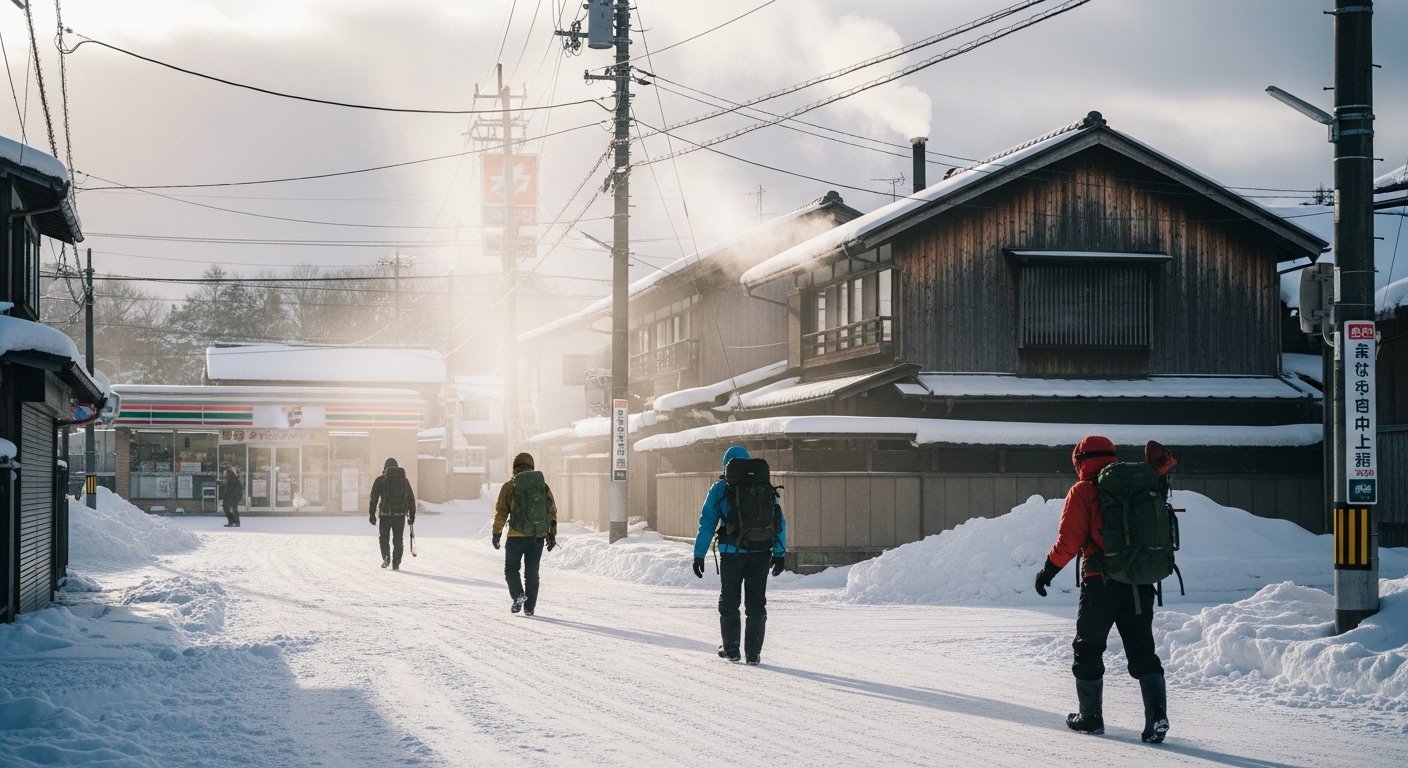
*Images used in this article are for illustration only. They may not be directly related to the content.
Stranded in Japan’s Winter? Your Guide to Transport Disruption Safety & Solutions
Japan’s winter landscapes are captivating, but heavy snow, ice, and strong winds can abruptly halt your travel plans. Getting stranded due to unexpected transport disruptions is a legitimate concern, especially with language barriers complicating critical information. Whether it’s a Shinkansen delay, a bus cancellation, or an unexpected overnight stay, understanding your options is essential for a safe and smooth trip.
This guide equips you with practical strategies, essential apps, and vital Japanese phrases to navigate winter transport disruptions. We’ll show you how to find real-time updates, secure alternative routes, locate temporary shelter, and keep warm, ensuring you’re prepared for any unexpected turn in your Japan winter adventure.
Table of Contents
Understanding Japan’s Winter Transport Risks
Japan’s efficient transport system is world-renowned, but winter weather presents unique challenges. Heavy snow, strong winds, and freezing rain are primary culprits for Japan winter transport disruption. These conditions can quickly lead to widespread delays and cancellations, affecting everything from local trains to the high-speed Shinkansen.
Such disruptions typically occur from December to March, with January and February often seeing the peak severity. Regions most susceptible include Hokkaido, Tohoku, Hokuriku, Shin’etsu, and mountainous areas across Honshu. For international visitors, the additional hurdles of a language barrier and unfamiliar systems can transform a delay into a stressful ordeal.
The core pain points experienced by travelers often include:
- Getting stranded in unfamiliar locations due to snow, ice, or wind.
- A language barrier preventing understanding of announcements and obtaining help.
- Difficulty finding and booking alternative routes or transportation.
- Risk of cold exposure if stuck outdoors or in unheated areas.
- Missing onward connections (flights, trains, tours) due to delays or cancellations.
Understanding these risks is the first step in effective preparation for Japan winter transport disruption.
Your Digital Lifelines: Essential Apps & Websites
In a crisis, your smartphone is your most powerful tool. Reliable internet access and the right apps can bridge language gaps, provide real-time updates, and help you find solutions. Here are the must-have resources for navigating Japan winter transport disruption:
1. JNTO Safety Tips App
The ‘Safety tips’ app, provided by the Japan National Tourism Organization (JNTO), is indispensable. This free, push-enabled information alert app delivers alerts for various disasters, including heavy snow, directly to your phone based on your current location. It also includes:
- An evacuation flowchart to guide your actions.
- Helpful phrases in multiple languages.
- Links to relevant information.
Download this app immediately upon arrival. It is your primary source for understanding immediate dangers and basic guidance.
Download the JNTO Safety tips app

2. Official Railway & Bus Company Websites
For real-time operational status, go directly to the source. Major railway companies provide official English websites. These are the most reliable sources for information on Shinkansen and intercity train delays (遅延 – chien) or cancellations (運休 – unkyu).
- JR East Service Status (English): traininfo.jreast.co.jp/en/
- JR West Service Status (English): trafficinfo.westjr.co.jp/en/kinki.html
- JR Hokkaido Service Status (English): jrhokkaido.co.jp/global/traffic/index.html
Bookmark these before your trip. For bus services, check the specific company websites (e.g., Willer Express, highway bus operators) for their English information pages.
3. Japan Meteorological Agency (JMA) English
Stay informed about current and forecast weather conditions. The JMA website provides essential weather warnings and advisories in English, allowing you to anticipate potential disruptions.
Japan Meteorological Agency (JMA) English
4. Navigation & Transit Planning Apps
These apps are crucial for finding alternative routes when your primary plan is disrupted:
- NAVITIME Japan Transit Planner: Excellent for planning routes across various modes of transport, including trains, buses, and even ferries. It often suggests alternative lines or modes when one is disrupted.
- Google Maps: Provides real-time transit updates, walking directions, and local information, including nearby hotels, convenience stores, and restaurants. Its integration with taxi services can also be useful.
🎯 Local Pro-Tip: Always ensure your phone is fully charged and you have reliable internet access (e.g., portable Wi-Fi, eSIM). A power bank is not optional – it’s essential for sustained communication and information access during Japan winter transport disruption.
5. Alternative Transport Booking Sites
When trains are cancelled, buses or taxis might be your only options:
- Kousoku Bus.com: A comprehensive booking site for highway buses across Japan. This is often the most viable alternative for intercity travel when trains are out of service, though bus routes can also be affected by weather.
- JapanTaxi / GoTaxi App: While expensive for long distances, these apps can be invaluable for finding a taxi for shorter essential trips or to reach a nearby hotel when public transport is unavailable. Demand will be high during disruptions.
Having these digital tools ready before you travel significantly reduces friction if you face a Japan winter transport disruption.

Navigating Disruptions: Step-by-Step Solutions
When a Japan winter transport disruption hits, a clear, calm approach is best. Follow these steps to navigate the situation effectively and prioritize your safety:
Step 1: Assess the Situation Immediately
The moment you suspect a disruption, look for information:
- Visual Cues: Scan digital display boards in stations. They often cycle through Japanese and English information. Look for specific kanji like 遅延 (chien – delayed), 運休 (unkyu – cancelled), or 運行見合わせ (unko-miawase – temporarily suspended operation). Red emergency signs or banners are also common indicators.
- Listen: While Japanese announcements are primary, major stations may have English announcements during significant events. Use your translation app’s audio function if possible.
- Observe: See what other passengers are doing. Are they calmly waiting, or are they seeking assistance or leaving the station?

Step 2: Gather Official Information
Do not rely on rumors. Go directly to official sources:
- Check Your Apps: Open the JNTO ‘Safety tips’ app for general alerts and the official railway company apps/websites (JR East, JR West, etc.) for specific line statuses.
- Approach Staff: Look for staff in official railway or bus company uniforms. Many larger stations have information counters with English-speaking staff or staff equipped with translation devices. At smaller, rural stations, English proficiency is less likely, but they will still be able to point you to relevant information or assist using simple phrases.
- Use Point & Speak: Have your essential Japanese phrases ready (see section below) or use a translation app to communicate your needs. Showing written Japanese can be more effective than speaking if communication is difficult.
Understanding the cause and expected duration of the disruption is key to making your next decision.
Step 3: Explore Alternative Transport & Routes
If your current route is severely disrupted, you’ll need to find an alternative. Prioritize official options first:
- Consult Navigation Apps: Use NAVITIME or Google Maps to search for alternative routes. They can suggest different train lines, local buses, or highway buses that might still be operating.
- Inquire with Staff: Ask station staff if there are recommended alternative routes (代替ルートはありますか? – Daitai rūto wa arimasu ka?). They may direct you to specific bus stops or alternative train platforms.
- Consider Highway Buses: For longer intercity travel, highway buses are often the next best option if trains are cancelled. Check Kousoku Bus.com for availability. Be aware that bus routes can also be impacted by severe weather, so confirm operational status.
- Taxis (Last Resort): Taxis will be in high demand and significantly more expensive, especially for long distances. Use JapanTaxi/GoTaxi if necessary for short transfers or to a nearby hotel.
Remember that during widespread disruptions, alternative transport will also be under strain. Patience is vital.

Step 4: Secure Shelter and Stay Warm
If you face an extended delay or cancellation requiring an overnight stay, your safety and warmth are paramount, especially if you’re stuck in a region affected by heavy snow.
- Within the Station: Larger train stations may offer temporary shelter in designated waiting areas or public facilities. These are often heated. Look for signs for ‘Evacuation Shelter’ (避難所 – Hinanjyo) or staff directing people.
- Convenience Stores (Konbini): Japan’s ubiquitous 24/7 convenience stores are a safe haven. They offer warmth, restrooms, and basic necessities (food, drinks, often hot items). They can be a short-term refuge.
- Find Accommodation: If an overnight stay is required, book a hotel as soon as possible. Use booking apps like Booking.com or Agoda, or Google Maps to find nearby options. During major disruptions, rooms will be in high demand. Be aware that you are generally responsible for your own accommodation and food costs unless specific travel insurance covers such incidents.
- Emergency Evacuation Shelters: In extreme cases, local authorities may open public facilities (community centers, schools) as Hinanjyo (evacuation shelters). The ‘Safety tips’ app will provide information on these. Look for green and white pictogram signs.
Proper winter attire (warm, waterproof layers, sturdy shoes) is crucial. If you are cold, inform staff (寒いです – Samui desu.).

Step 5: Maintain Communication
Keep your loved ones informed and your onward connections updated:
- Contact Family/Friends: Let them know your status and location.
- Notify Accommodation/Tour Operators: If you have pre-booked hotels, tours, or flights, inform them of your delay or cancellation as soon as possible. They may have specific policies for late arrivals or no-shows.
- Translation Tools: Utilize apps like Google Translate or DeepL to assist with communication if staff don’t speak English.
🇯🇵 Point & Speak: Essential Phrases
Show this section to staff if you’re stuck. They can read the Japanese.
English: Excuse me, what happened?
すみません、何がありましたか?
(Sumimasen, nani ga arimashita ka?)
English: Is the train/bus delayed/cancelled?
電車/バスは遅れていますか?/運休ですか?
(Densha/Basu wa okurete imasu ka? / Unkyū desu ka?)
English: Is there an alternative route?
代替ルートはありますか?
(Daitai rūto wa arimasu ka?)
English: Where can I find shelter/a place to stay warm?
避難場所はどこですか?/暖かい場所はどこですか?
(Hinanjyo wa doko desu ka? / Atatakai basho wa doko desu ka?)
English: I don’t understand Japanese. / Can you write it down, please?
日本語がわかりません。/書いていただけますか?
(Nihongo ga wakarimasen. / Kaite itadakemasu ka?)
Staying Prepared: Beyond Transport
Successful navigation of a Japan winter transport disruption involves more than just checking train schedules. It requires comprehensive personal preparedness.
1. Travel Insurance: Your Financial Safety Net
Unexpected delays and cancellations can incur significant unplanned costs for accommodation, food, and rebooking flights or tours. Comprehensive travel insurance covering trip delays, cancellations, and emergency medical situations is highly recommended. Review your policy details carefully to understand what is covered in such events. Standard policies often require delays of a certain duration (e.g., 6-12 hours) to trigger coverage.
💰 Potential Costs of Disruption
| Item | Estimated Cost (per person) |
| Unexpected Overnight Hotel Stay | ¥5,000 – ¥15,000+ |
| Taxi (short distance, high demand) | ¥1,000 – ¥5,000+ |
| Emergency Food/Drinks (1 day) | ¥1,500 – ¥3,000 |
| Re-booking fee (flight/Shinkansen) | Varies (potentially full new ticket) |
Prices verified as of January 2026. Costs are illustrative and can vary widely.
2. Essential Winter Clothing and Gear
Proper winter attire is not just for enjoying ski slopes; it’s a safety measure. If you’re forced to wait outdoors, transfer between stations in cold weather, or stay in a less-than-ideally heated temporary shelter, adequate clothing prevents cold exposure. Pack warm, waterproof layers, sturdy, insulated shoes, a hat, gloves, and a scarf. Consider a compact emergency blanket for extreme situations.
3. Carry Cash
While Japan is moving towards cashless payments, having some cash (yen) is always wise. In emergency situations or smaller, temporary shelters, credit card acceptance may be limited. Cash ensures you can purchase immediate necessities like food, drinks, or small supplies from vending machines or local shops.
4. Cultural Nuances and Mental Preparedness
Being stranded is stressful. While Japan is highly efficient, large-scale disruptions can overwhelm systems. Staff will do their best, but they may struggle with individual route planning for foreign tourists, especially during peak chaos. Maintain politeness and patience. Focus on understanding the general situation and available official alternatives. A calm demeanor helps you think clearly and makes interactions with staff more productive.
Common Mistakes to Avoid
Knowing what to do is crucial, but knowing what *not* to do is equally important during a Japan winter transport disruption:
- Ignoring Warnings: Don’t underestimate weather advisories. If heavy snow or high winds are forecast, reconsider non-essential travel or be ready for delays.
- Lack of Connectivity: Relying solely on free public Wi-Fi can leave you stranded without information. Ensure you have a portable Wi-Fi device, an eSIM, or an international roaming plan with sufficient data.
- Underestimating Cold Exposure: Even inside stations, temperatures can drop. If you have to wait for hours, or venture outside for an alternative, insufficient warm clothing can be dangerous.
- Assuming Costs Are Covered: Without specific travel insurance, unplanned hotel stays and alternative transport costs are typically your responsibility. Don’t assume the railway company will cover these.
- Panicking and Acting Impulsively: While frustrating, panicking won’t solve the problem. Take a moment, consult your apps, and then approach staff or consider alternatives calmly. Impulsive decisions (like taking an unverified taxi) can lead to higher costs or less safe situations.
- Not Informing Connections: Failing to notify your onward accommodation, tour, or flight about delays can lead to cancellation fees or lost reservations.
📋 Quick Reference Card: Japan Winter Disruption Essentials
Screenshot or print this section for easy access:
- ✅ Download JNTO Safety tips app.
- ✅ Bookmark JR English service status pages.
- ✅ Ensure reliable portable Wi-Fi / eSIM & power bank.
- ✅ Carry emergency cash.
- ✅ Pack warm, waterproof clothing.
- ✅ Have travel insurance details accessible.
- ✅ Learn basic Japanese phrases (Point & Speak).
- ✅ Know emergency numbers: Police 110, Ambulance/Fire 119.
Frequently Asked Questions
Will my travel insurance cover costs if I’m stranded due to a Japan winter transport disruption?
It depends on your specific policy. Many comprehensive travel insurance plans offer coverage for trip delays or cancellations due to unforeseen events like severe weather. However, there are often minimum delay durations (e.g., 6 or 12 hours) before coverage kicks in, and limits on what expenses are reimbursed (e.g., accommodation, meals). Always read your policy’s terms and conditions carefully before traveling.
Who pays for an overnight stay if my Shinkansen is cancelled due to snow?
In most cases, travelers are responsible for their own accommodation and food costs if an overnight stay is required due to transport cancellations. Japanese railway companies typically do not cover these expenses. This is where travel insurance becomes critical. If you have insurance, keep all receipts for potential reimbursement.
Can I use my JR Pass on alternative transport if trains are cancelled?
Generally, no. The Japan Rail Pass is valid only on JR lines. If JR trains are cancelled and you opt for alternative transport like highway buses, private railways, or taxis, your JR Pass will not cover those costs. You would need to purchase separate tickets for these alternatives.
How do I know if station staff speak English during a disruption?
At major stations and tourist hubs, information counters often have English-speaking staff, or staff are equipped with translation devices. Look for “English spoken” badges. In smaller, rural stations, English proficiency is less common. In these cases, use translation apps, the ‘Safety tips’ app’s phrases, or the “Point & Speak” section above. Written communication can often be more effective than spoken when there’s a language barrier.
What if I get stuck in a rural area with limited options during heavy snow?
Rural disruptions can be more challenging. Your priorities should be shelter and warmth. Seek out the nearest public building (train station, local government office, community center) or convenience store. Use the JNTO ‘Safety tips’ app for local alerts and potential evacuation shelter information. If you cannot find official assistance, contact your embassy or consulate for guidance. Always have emergency cash and warm clothing.
🚨 Emergency Contacts in Japan
| Police | 110 |
| Ambulance/Fire | 119 |
| Emergency Consultation (English) | #9110 (Police, non-emergency) or 0570-099-282 (AMDA International Medical Information Center for medical concerns) |
All numbers are free and work from any phone in Japan. For medical emergencies, always dial 119 first.
Conclusion
While a Japan winter transport disruption can be daunting, preparedness is your best defense. By equipping yourself with essential apps, understanding official information sources, learning key Japanese phrases, and knowing your options for alternative transport and shelter, you can mitigate stress and prioritize your safety. Japan’s commitment to efficiency and visitor well-being means help is available, but proactive planning from your end is key.
Download the ‘Safety tips’ app, ensure your devices are charged, and pack appropriate winter gear. With these practical steps, you’re not just ready for Japan’s beautiful winter; you’re ready for its challenges too. Travel smart, stay safe, and enjoy your journey.
Disclaimer
This guide provides general information for international visitors during Japan winter transport disruptions. While compiled with care, specific situations may vary. Always refer to official government and transport operator announcements for the most current information. This information does not constitute legal or medical advice. Travel insurance policies and their coverage vary; consult your provider for details.