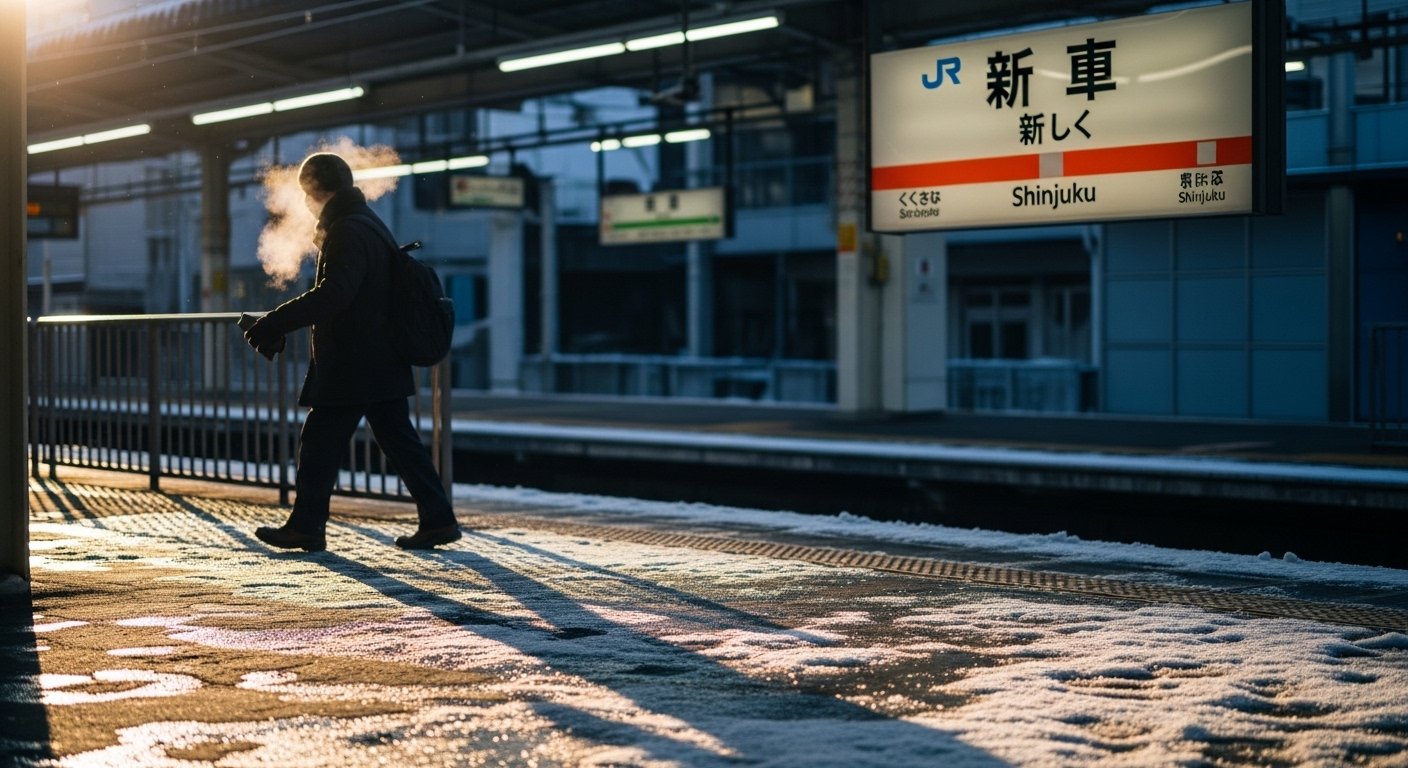
*Images used in this article are for illustration only. They may not be directly related to the content.
Navigating January’s Winter Transport: Overcoming Snowy Delays & Crowded Stations in Japan
Planning a trip to Japan in January promises unique winter experiences, but it also brings specific challenges: unexpected transport delays due to snow and the enduring rush of post-holiday crowds. Feeling overwhelmed or unsafe in dense stations, struggling to find real-time information, or worrying about your belongings in tight spaces are valid concerns for any international visitor.
As your Japan Local Fixer, my goal is to remove this friction. This guide provides practical strategies, essential phrases, and reliable resources to help you confidently navigate Japan’s transport system during its busiest and most weather-affected winter month. You will learn how to anticipate issues, access crucial information, maintain personal safety, and ensure a smoother journey despite potential disruptions.
Table of Contents
- January in Japan: Understanding the Winter Transport Landscape
- Real-Time Information & Alternative Routes: Your Digital Toolkit
- Navigating Crowded Stations and Trains Safely
- What to Do When Your Journey is Interrupted
- 🇯🇵 Point & Speak: Essential Japanese Phrases
- Essential Safety and Preparedness Checks
- Frequently Asked Questions
January in Japan: Understanding the Winter Transport Landscape
January in Japan is a peak period for travel. The first week is dominated by the “U-turn rush,” as people return from New Year’s holidays. This is swiftly followed by the onset of winter sports tourism. Both factors contribute to significantly crowded stations in Japan and full trains across the country.
Compounding this is the winter weather. Heavy snowfall, ice, and strong winds are common, particularly in regions like Hokkaido, northern Honshu (Tohoku), Hokuriku, and other mountainous areas. These conditions directly impact major railway lines, including the Shinkansen and local JR lines, as well as airport operations. Japan train delays in January are often a consequence of these climatic factors.
🎯 Local Pro-Tip: Always assume potential delays when planning critical connections during January, especially if your route passes through snow-prone areas. Build buffer time into your itinerary.
Real-Time Information & Alternative Routes: Your Digital Toolkit
When unexpected japan snow delays occur, timely information is crucial. Overcoming language barriers to access this information is often the first hurdle for international visitors. Here’s how to stay informed and explore alternative routes for your japan winter transport:
Step 1: Check Official Railway Websites for Status Updates
Most major railway companies provide real-time service status updates, often with English options. This is the most reliable source of information for current real-time train status Japan.
- JR East Service Status (English): traininfo.jreast.co.jp/train_info/e/index.aspx
- JR West Service Status (English): trafficinfo.westjr.co.jp/en/
Visual cue: Look for sections labeled “Service Status” or “Operation Information.” Red or yellow indicators typically denote delays or cancellations.
Step 2: Utilize Station Information Boards and Announcements
Digital display boards at station entrances and platforms provide immediate updates. Look for characters like 運行状況 (unkō jōkyō – service status), 遅延 (chien – delay), and 運休 (unkyū – cancellation). During significant disruptions, these boards and announcements may switch to English.
Visual cue: These boards are usually large, backlit, and visible throughout major station areas. Flashing text or specific color changes often indicate issues.

Step 3: Leverage General Navigation Apps for Live Transit
Apps like Google Maps and Japan Transit Planner (formerly Jorudan) offer live transit updates, though they may sometimes lag slightly behind official railway websites. They are excellent for identifying alternative routes using different lines or modes of transport.
- Google Maps: google.com/maps
- HyperDia: hyperdia.com/en/ (Note: While useful, HyperDia can be slow to update in real-time during severe disruptions.)
What to do: Ensure your phone has a stable data connection (via a local SIM or pocket Wi-Fi) for real-time updates.

Step 4: Check Weather Forecasts Proactively
The Japan Meteorological Agency (JMA) provides reliable weather information, including warnings for heavy snow or strong winds, which are direct precursors to transport issues.
- Japan Meteorological Agency (JMA) Weather Warnings (English): jma.go.jp/jma/indexe.html
🎯 Local Pro-Tip: Before you leave your accommodation, check both the weather forecast for your destination and any official railway service announcements for your route. This pre-emptive check can save you significant time and stress.
Navigating Crowded Stations and Trains Safely
Crowded stations in Japan, especially during January’s U-turn rush and winter sports season, can be daunting. Ensuring your safety in Japan crowds and protecting your belongings requires awareness and preparation.
Personal Safety in Dense Spaces
- Maintain Awareness: Keep your head up and be aware of people moving around you. Avoid distractions like constantly looking at your phone when navigating through station concourses.
- Platform Edge: Never stand directly at the platform edge. Follow the yellow tactile paving or designated lines. During peak times, sudden pushes can occur.
- Boarding/Alighting: Allow passengers to alight first before attempting to board. Designated queuing lines are often marked with yellow lines or footstep icons on the platform; follow these as much as possible, even if they become less organized during severe delays.
- Escalators and Stairs: Stand on the left (in most of Japan; Osaka stands on the right) on escalators to allow others to pass. Take your time on stairs, especially if you have luggage.

Protecting Your Personal Belongings
When you’re in a packed train or station, concerns about lost belongings crowded train Japan are valid. While Japan is remarkably safe, common sense precautions are always advisable:
- Keep Bags in Front: Wear backpacks on your front or carry shoulder bags across your body. This makes them less accessible to others.
- Secure Valuables: Keep wallets, passports, and phones in secure, inner pockets. Avoid outer pockets where items can be easily pickpocketed.
- Anti-Theft Bags: Consider using anti-theft bags with slash-resistant materials and lockable zippers for peace of mind.
- Don’t Leave Bags Unattended: Even for a moment. This is a common mistake that can lead to theft or accidental loss in a busy environment.

🎯 Local Pro-Tip: If you have large luggage, consider using a luggage forwarding service (e.g., Yamato Transport, Sagawa Express) rather than struggling with it through crowded stations during peak hours. This reduces both your burden and the obstruction to others.
What to Do When Your Journey is Interrupted
Despite all preparations, japan train delays in January or cancellations can occur. Knowing how to react calmly and efficiently can make a significant difference. This is how to deal with japan train delays winter edition.
Step 1: Confirm the Delay/Cancellation and Reason
Use the methods outlined in the “Real-Time Information” section. Understand if the delay is minor, significant, or if your service is outright canceled. The reason (e.g., heavy snow, strong wind, accident) can indicate the likely duration of the disruption.
Step 2: Approach Station Staff for Guidance
Look for station staff (駅員 – ekiin), typically identifiable by their uniforms (dark suits and hats) at ticket gates, information counters, or patrolling platforms. They are the primary source for the most accurate, real-time advice specific to your location and destination.
Visual cue: Look for the green ‘Midori no Madoguchi’ sign for JR ticket offices, where staff are always present.

Step 3: Inquire About Alternative Routes or Ticket Changes
Once you understand the situation, ask about alternative routes. This might involve switching to a different train line (e.g., a private railway instead of JR), taking a local bus, or even a taxi for shorter distances. During severe weather, however, these alternatives may also be affected.
For tickets, especially Shinkansen or limited express tickets, specific policies exist for refunds or re-routing during major disruptions. Generally, if a train is canceled or significantly delayed (e.g., over 2 hours for Shinkansen), you can get a refund or change your ticket at no extra charge. This can vary by ticket type and railway company, so inquire with staff.
Step 4: Consider Budget and Accommodation Impacts
Unexpected delays might lead to unplanned overnight stays or increased taxi fares. This impacts your travel budget. This is where travel insurance covering trip delays or interruptions becomes crucial. Check your policy details before you travel.
If a long delay or overnight stay becomes necessary, prioritize finding accommodation promptly, as options may diminish quickly in affected areas. Having flexible accommodation bookings can be beneficial.
🎯 Local Pro-Tip: During widespread disruptions, taxi queues can be extremely long. If considering a taxi, evaluate the cost and potential wait time against other alternatives. Always have cash on hand for taxis, as not all accept cards.
🇯🇵 Point & Speak: Essential Japanese Phrases
Language barriers can exacerbate stress during transport issues. Use these polite phrases to communicate with station staff. Simply show them this section on your phone.
🇯🇵 Point & Speak
Show this section to staff if you’re stuck. They can read the Japanese.
English: Is this train delayed?
この電車は遅れていますか?
(Kono densha wa okurete imasu ka?)
English: What is the reason for the delay?
遅延の理由は何ですか?
(Chien no riyū wa nan desu ka?)
English: Are there any alternative routes?
他に代替ルートはありますか?
(Hoka ni daitai rūto wa arimasu ka?)
English: Where can I find real-time information?
リアルタイムの情報はどこで確認できますか?
(Riarutaimu no jōhō wa doko de kakunin dekimasu ka?)
English: Excuse me, I need to pass through.
すみません、通してください。
(Sumimasen, tōshite kudasai.)
English: My luggage is lost/stolen.
荷物がなくなりました/盗まれました。
(Nimotsu ga nakunarimashita / Nusumaremashita.)
Essential Safety and Preparedness Checks
Proactive measures are your best defense against the “Winter Transport Woes” of January Japan travel tips transport. Beyond addressing delays and crowds, consider these safety and preparedness aspects:
Layer Up: Dress for the Cold
Winter in Japan is cold, especially in snowy regions. If you face a delay and have to wait outdoors or in a non-heated area, warm clothing is essential. Layers are key, including thermal underwear, sweaters, a good winter coat, hat, gloves, and waterproof footwear.

Power Up: Keep Devices Charged
Your smartphone is your primary tool for real-time information, translation, and communication. A portable power bank is indispensable, especially during delays when you might be relying on your device more heavily.
Travel Insurance: Your Financial Safety Net
As discussed, unexpected delays or cancellations can incur additional costs (accommodation, alternative transport). Comprehensive travel insurance that covers trip interruptions, delays, and medical emergencies is highly recommended for japan winter transport. Review your policy thoroughly to understand its coverage.
📋 Quick Reference Card: January Japan Transport Preparedness
Screenshot or print this section for easy access:
- ✅ Check weather & official railway sites BEFORE leaving.
- ✅ Keep phone charged & have power bank.
- ✅ Dress warmly in layers.
- ✅ Keep bags in front in crowds; secure valuables.
- ✅ Have key Japanese phrases ready.
- ✅ Know emergency contacts.
- ✅ Understand your travel insurance coverage.
🚨 Emergency Contacts
While extremely rare, knowing these numbers is vital for your safety in Japan crowds or any emergency.
🚨 Emergency Contacts
| Police | 110 |
| Ambulance/Fire | 119 |
All numbers are free and work from any phone, including foreign mobiles.
Frequently Asked Questions
What if I don’t speak Japanese and need help with a delay?
Most major stations have staff who can communicate in basic English, especially at information counters. Utilize the “Point & Speak” section in this guide, or use a translation app on your smartphone to show staff your question or destination. Patience and clear gestures also go a long way.
Can I get a refund for a train ticket if my journey is significantly delayed or canceled due to weather?
Generally, yes. If a train is canceled or experiences a significant delay (often over 2 hours for Shinkansen), you are usually entitled to a full refund or can change your ticket to another service at no extra charge. This applies to most JR lines and private railways. Present your ticket at a ticket office (Midori no Madoguchi for JR) and explain the situation to staff. Policies can vary slightly by ticket type and company, so always inquire directly.
How do I best protect my belongings in very crowded Japanese trains and stations?
To mitigate concerns about lost belongings crowded train Japan, wear backpacks on your front, keep shoulder bags across your body, and secure valuables in inner pockets. Avoid leaving bags unattended, even momentarily. While theft rates are low, these precautions increase your comfort and security. Consider luggage forwarding services for large bags during peak times.
What if all transport is shut down in an area due to extreme weather?
In extreme cases where all transport is suspended, station staff will guide passengers to safe waiting areas or provide information on emergency measures. Your priority should be safety and shelter. Follow staff instructions, monitor official weather warnings, and be prepared for an unplanned overnight stay. Have your travel insurance details accessible and inform your travel companions or family of your situation.
Are there any specific cultural norms to be aware of during transport disruptions?
Japanese society values order and patience, even during disruptions. Staff will work diligently to resolve issues. Maintain polite queuing, avoid pushing, and practice understanding. While frustrations are normal, remember that staff are also doing their best under pressure. A polite demeanor will be reciprocated with helpfulness.
Conclusion
Navigating Japan’s transport system in January, with its mix of winter weather and bustling crowds, requires practical preparation and a calm approach. By utilizing real-time information, understanding safety protocols in dense spaces, and knowing how to respond to delays, you can mitigate potential issues effectively.
This guide equips you with the tools to handle the unexpected, ensuring your focus remains on enjoying Japan’s winter charm. Stay informed, stay aware, and travel with confidence. Your journey through Japan will be smoother with these strategies in hand.
Disclaimer
This information is provided for general guidance and practical assistance. While current as of the last verification, transport schedules, policies, and operational statuses can change rapidly, especially during adverse weather. Always verify information with official sources and local authorities. Travel insurance terms and conditions vary; consult your provider for specific coverage details. Your safety is paramount.