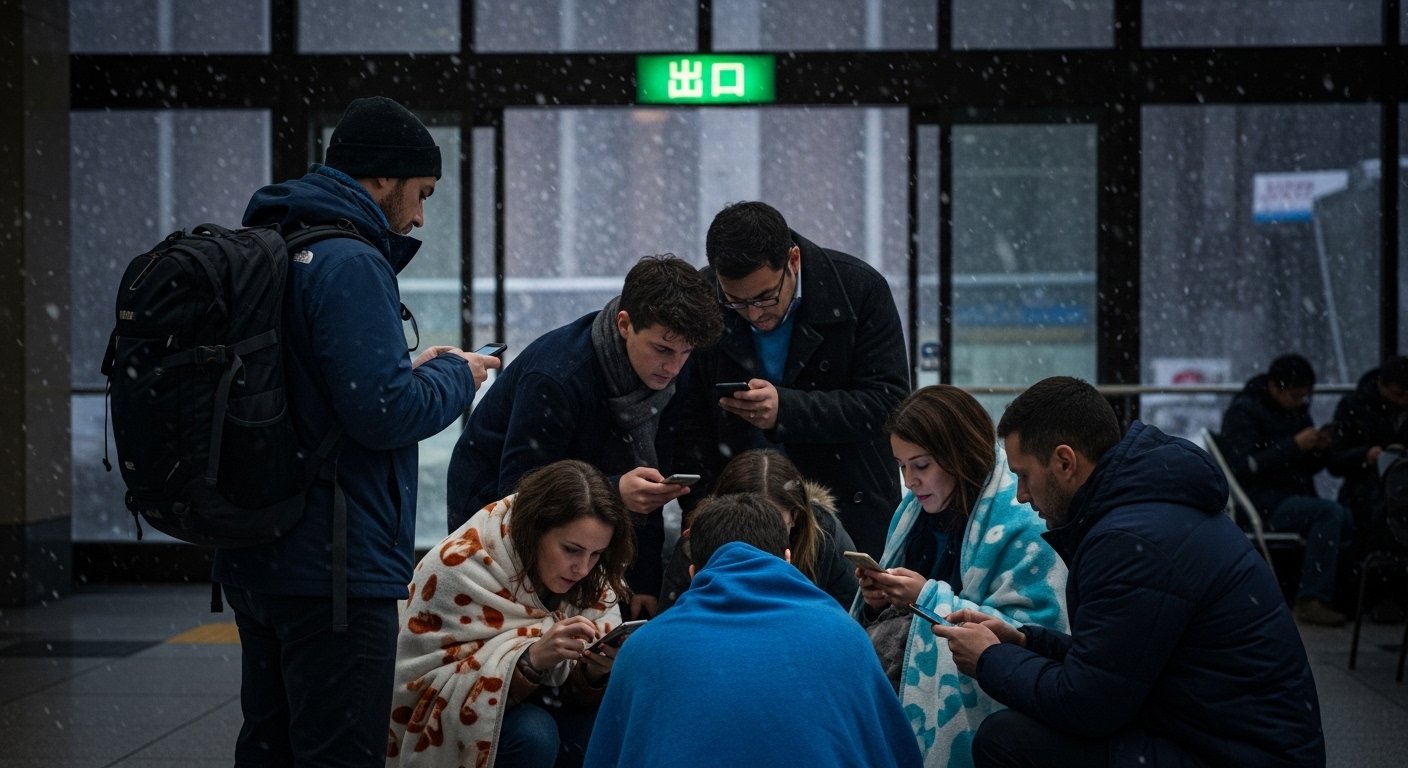
*Images used in this article are for illustration only. They may not be directly related to the content.
Japan Winter Transport Safety: Beat Icy Hazards, Snow Delays & Decode Alerts
Traveling Japan in winter promises unique experiences, from powdery ski slopes to serene snowy landscapes. However, the season also brings specific challenges, particularly concerning transport. Slipping on an icy platform, facing unexpected train delays, or struggling to understand urgent announcements in Japanese can quickly turn a memorable trip into a stressful one. This guide is designed to remove that friction. We’ll equip you with proactive strategies and reactive solutions for navigating Japan’s winter transport, helping you stay safe, minimize disruptions, and understand critical information, even when snow and ice become factors.
Table of Contents
- Understanding Japan’s Winter Transport Challenges
- Proactive Preparation for Winter Travel
- Navigating Real-Time Disruptions and Icy Hazards
- Decoding Japanese Emergency and Delay Alerts
- 🇯🇵 Point & Speak: Essential Japanese Phrases
- 🚨 Emergency Contacts in Japan
- Common Mistakes to Avoid in Winter Transport
- 🎯 Pro-Tips for a Smoother Winter Journey
- Frequently Asked Questions About Winter Travel in Japan
Understanding Japan’s Winter Transport Challenges
Japan’s winter weather, especially from December to March, can significantly impact transport. While bullet trains (Shinkansen) are highly resilient, extreme conditions can still lead to speed restrictions or cancellations, particularly on northern lines (Tohoku, Hokuriku) and coastal areas. Heavy snow and freezing rain pose risks for all modes of transport.
Major cities like Tokyo, Osaka, and Kyoto often experience less severe snowfall. However, even light snow can cause notable disruptions due to less extensive snow removal infrastructure compared to heavier snow regions like Hokkaido or the Japan Sea coast. This means platforms, roads, and bus stops can become unexpectedly slippery, creating a safety hazard.
Station staff are diligent in clearing platforms and entrances. Despite their efforts, black ice remains a risk. Recognizing visual cues for slippery surfaces and understanding basic Japanese safety announcements is crucial for your well-being. The primary challenges for international visitors often revolve around physical safety on icy surfaces and communication barriers during delays.
Proactive Preparation for Winter Travel
The best way to manage winter transport in Japan is to prepare thoroughly. This involves more than just packing warm clothes; it means planning for potential disruptions before they occur.
1. Check Weather Forecasts Reliably
- Use Official Sources: Before and during your trip, monitor the Japan Meteorological Agency (JMA) for weather warnings. Their English website provides detailed forecasts, including heavy snow warnings (大雪警報 – Ōyuki keihō) and freezing alerts.
- Understand Regional Differences: Winter severity varies. Hokkaido and regions along the Sea of Japan coast (Tohoku, Hokuriku) experience significant snowfall. Pacific coast cities like Tokyo or Osaka see less, but can still be affected by cold snaps and occasional heavy snow.

2. Equip Yourself for Icy Conditions
- Footwear is Key: Invest in waterproof boots with excellent grip. Smooth-soled shoes are a significant hazard on icy pavements, station platforms, and stairs.
- Wear Layers: Japan’s indoor heating can be strong. Dress in layers you can easily add or remove to adapt to changing temperatures and avoid overheating on crowded trains.
- Consider Winter Accessories: Gloves, hats, and scarves are essential. Small, foldable umbrellas can be useful for sudden snow flurries or freezing rain.

3. Plan with Buffer Time
- Allow Extra Time: Winter conditions, especially during peak travel periods like New Year’s or ski season, can lead to unexpected delays. Schedule buffer time between connections, particularly if you have flights or critical appointments.
- Flexible Tickets: If your travel dates coincide with forecasted heavy snow, consider purchasing flexible train tickets or travel insurance that covers delays and cancellations.
- Backup Accommodation: For extensive travel or remote areas, have a contingency plan for an overnight stay if you get stranded.
🎯 Local Pro-Tip: Before heading out, especially on heavy snow days, check local news or transport apps even if you’ve already checked the national forecast. Localized warnings are often the first indicator of immediate disruptions.
Navigating Real-Time Disruptions and Icy Hazards
Even with preparation, disruptions can occur. Knowing how to react safely and efficiently is crucial.
1. Staying Safe on Icy Surfaces
- Watch Your Step: Be acutely aware of your footing on station platforms, stairs, and pedestrian areas. Look for visual cues like floor signs indicating ‘slippery surface’ (滑りやすい / Suberiyasui) or ‘caution, ice’ (凍結注意 / Tōketsu chūi), sometimes accompanied by a falling person icon.
- Use Handrails: Always use handrails on stairs and escalators. Take smaller, deliberate steps.
- Mind the Gap: When boarding trains, be extra cautious of the gap between the platform and the train, as it can be icy and more difficult to judge your footing.
- Request Assistance: If you have mobility issues or are struggling, don’t hesitate to ask station staff for assistance. They are usually helpful and can guide you on safer paths or provide alternatives.

2. Monitoring Transport Status in Real-Time
- Essential Apps: Download and utilize English-language transit apps like Japan Transit Planner (Jorudan) or NAVITIME Transit. These apps often provide real-time delay (遅延 – chien) and suspension (運休 – unkyū) information.
- Official Railway Websites: For major disruptions, check official railway company websites.
These are the most reliable sources for long-distance train status.
- Station Digital Displays: Look at the large digital display boards at stations. While often primarily in Japanese, many have an English toggle button (English / 英語) or will show key terms like 遅延 (delay) or 運休 (suspension) in red or yellow.
- Announcements: Pay attention to PA announcements. While often in Japanese first, major stations and tourist routes may have English announcements during significant disruptions. Listen for keywords like ‘遅延’ (chien – delay), ‘運休’ (unkyū – suspension), ‘運転見合わせ’ (unten miawase – service temporarily suspended), ‘雪’ (yuki – snow), ‘強風’ (kyōfū – strong winds).

3. What to Do During a Disruption
- Stay Calm: Japan’s transport system is efficient even during disruptions. Panic will not help.
- Seek Information: Refer to your apps or station display boards first. If unclear, approach station staff. Look for staff wearing badges indicating English proficiency if available.
- Ask for Alternatives: Use the Point & Speak phrases below to ask about delays, cancellations, or alternative routes.
- Consider Your Options: Depending on the severity and length of the delay, you might need to:
- Wait it out if it’s a short delay.
- Find an alternative route (e.g., different train line, bus, taxi). Note that taxis can be very expensive, especially for longer distances or during peak demand.
- Seek accommodation if stranded overnight.
- Keep Your Phone Charged: A charged phone is essential for accessing information and communicating. Carry a portable power bank.
Decoding Japanese Emergency and Delay Alerts
Understanding key Japanese terms, even if you don’t speak the language, can be crucial for your safety and travel planning during winter.
Visual Cues to Recognize:
- Red or Yellow Text on Displays: Often signifies a problem. Look for 遅延 (chien – delay) or 運休 (unkyū – suspension).
- Slippery Surface Signs: Floor signs or tape reading 滑りやすい (Suberiyasui) or 凍結注意 (Tōketsu chūi), sometimes with a falling person icon.
- Staff Directing Passengers: During disruptions, staff will direct passengers, often near ticket gates or platform entrances, sometimes with signs.
Audio Cues (PA Announcements):
Listen for these keywords in announcements:
- 遅延 (Chien): Delay
- 運休 (Unkyū): Service suspension/cancellation
- 運転見合わせ (Unten miawase): Service temporarily suspended
- 雪 (Yuki): Snow
- 大雪 (Ōyuki): Heavy snow
- 強風 (Kyōfū): Strong winds
- 足元にお気をつけください (Ashimoto ni o-ki wo tsukete kudasai): Please watch your step. (Very common during winter, indicates slippery conditions).
🎯 Local Pro-Tip: Even if you don’t understand the full announcement, hearing these keywords repeated can signal a problem. Combine this with visual cues and app information to piece together the situation.

🇯🇵 Point & Speak: Essential Japanese Phrases
Knowing a few key phrases can significantly help when communicating with station staff during winter disruptions. You can show this section to staff; they will understand the Japanese.
🇯🇵 Point & Speak
Show this section to staff if you’re stuck. They can read the Japanese.
English: Is this train/bus delayed?
この電車/バスは遅れていますか?
(Kono densha/basu wa okurete imasu ka?)
English: Is this train/bus cancelled?
この電車/バスは運休ですか?
(Kono densha/basu wa unkyū desu ka?)
English: What is the reason for the delay/suspension?
遅延/運休の理由はなんですか?
(Chien/unkyū no riyū wa nan desu ka?)
English: Is there an alternative route?
代替ルートはありますか?
(Daitai rūto wa arimasu ka?)
English: Please be careful, the ground is slippery. (Common announcement)
足元にお気をつけください、滑りやすいです。
(Ashimoto ni o-ki wo tsukete kudasai, suberiyasui desu.)
English: Heavy snow warning (weather alert)
大雪警報
(Ōyuki keihō)
🚨 Emergency Contacts in Japan
In case of an accident due to icy conditions, or any other emergency, these numbers are vital:
🚨 Emergency Contacts
| Police | 110 |
| Ambulance/Fire | 119 |
All numbers are free and work from any phone. English support may be limited, but operators will try to connect you to someone who can assist.

Common Mistakes to Avoid in Winter Transport
Minimizing risk involves recognizing and avoiding common pitfalls many international visitors experience.
- Underestimating Ice: Even a thin layer of black ice can be extremely dangerous. Don’t assume less visible ice means less risk.
- Relying Solely on English Information: While major stations provide English, localized warnings or small station updates might only be in Japanese. Cross-reference with apps and visual cues.
- Ignoring Weather Alerts: Dismissing JMA warnings for “heavy snow” or “freezing rain” can lead to being stranded or facing dangerous conditions.
- Not Having a Charged Phone/Power Bank: During disruptions, your phone is your lifeline for information, maps, and communication. A dead battery can exacerbate a stressful situation.
- Assuming All Transport is Equally Resilient: Shinkansen are robust, but local trains, buses, and especially flights (due to de-icing needs) are more susceptible to delays or cancellations.
- Tight Schedules: Planning back-to-back activities or connections during winter increases the likelihood of missing them. Build in buffer time.

🎯 Pro-Tips for a Smoother Winter Journey
These insider tips can make a difference in your winter travel experience in Japan.
🎯 Local Pro-Tip: Consider purchasing a Japan Rail Pass only if you have a confirmed itinerary with frequent long-distance travel. For shorter, regional trips, individual tickets or regional passes might offer more flexibility. If using a JR Pass during heavy snow, remember that it doesn’t guarantee a seat on the next available Shinkansen if one is cancelled; seat reservations must be re-booked.
🎯 Local Pro-Tip: Download offline maps of your destinations and surrounding areas. This can be a lifesaver if you lose signal or your phone battery dies while trying to find an alternative route or accommodation. Google Maps allows for offline downloads.
🎯 Local Pro-Tip: For accessibility, if you have mobility issues, contact the railway company in advance if possible, or inform station staff upon arrival. Japanese railway staff are generally very helpful and can assist with alternative routes, platform access, or carrying luggage on stairs, especially during disruptions when lifts might be overwhelmed or out of service.
🎯 Local Pro-Tip: Travel insurance is highly recommended. Look for policies that specifically cover travel delays, cancellations, and medical emergencies (e.g., if you slip and fall). Document any expenses incurred due to delays for potential claims.
Frequently Asked Questions About Winter Travel in Japan
Are Japanese trains typically delayed by snow?
While Japan’s railway system is highly efficient and prepared for winter, heavy snowfall or freezing rain can cause delays or suspensions. Shinkansen (bullet trains) are quite resilient but can experience speed restrictions. Local lines and buses are more susceptible to disruption, especially in regions with significant snow.
What should I do if my train is cancelled due to snow?
First, check official railway apps/websites (JR East, JR West, Navitime, Jorudan) for real-time updates and potential alternative routes. Speak to station staff using translation apps or the provided “Point & Speak” phrases. They can often provide information on rebooking, alternative transport, or accommodation options. Be prepared for potential delays in finding alternatives.
How can I tell if a platform or road is icy?
Look for visible ice, but also be aware of “black ice,” which is nearly invisible. Pay attention to specific warning signs (滑りやすい – Suberiyasui or 凍結注意 – Tōketsu chūi) and listen for PA announcements warning of slippery conditions (足元にお気をつけください – Ashimoto ni o-ki wo tsukete kudasai). Always test your footing cautiously, wear appropriate non-slip footwear, and use handrails.
Are there English resources for Japan winter travel advisories?
Yes. The Japan Meteorological Agency (JMA) provides English weather forecasts. Major railway companies (JR East, JR West) have English sections on their websites for service alerts. Travel apps like Navitime and Jorudan also offer real-time transport information in English. However, some localized or immediate announcements might only be in Japanese.
Should I buy travel insurance for a winter trip to Japan?
Highly recommended. Winter travel carries increased risks of delays, cancellations, and potential accidents (e.g., slipping on ice). Good travel insurance can cover unexpected accommodation costs due to delays, alternative transport expenses, and medical emergencies, offering financial protection and peace of mind.
Conclusion
Navigating Japan’s winter transport system, while generally efficient, requires foresight and adaptability. By equipping yourself with the right gear, utilizing real-time information sources, understanding key Japanese phrases, and planning for potential delays, you can significantly mitigate risks. Stay vigilant for icy hazards, be prepared for communication challenges, and leverage the available resources to ensure your winter journey through Japan is safe and enjoyable. Embrace the beauty of a Japanese winter, but do so with preparedness.
We are here to help remove friction from your travels. Stay safe.
Disclaimer
This information is provided for general guidance and planning purposes only. Weather conditions and transport statuses can change rapidly. Always defer to official local authority advisories, railway company announcements, and your travel insurance provider for the most current and specific instructions. Travel insurance terms and conditions vary; confirm coverage details with your insurer before your trip. The “Local Fixer” holds no liability for actions taken based on this information.