*Images used in this article are for illustration only. They may not be directly related to the content.
Japan Winter Travel: My Honest Stories & How to Conquer Snow, Ice & Delays Like a Local Fixer
Alright, listen up. I’m not some faceless AI telling you how perfect everything is. I’m a human being who’s been living in Japan for a decade, seen it all, slipped on it all, and swore at more than my fair share of delayed Shinkansen. Winter in Japan? It’s magical, yes. The crisp air, the snow-dusted temples, the hearty regional dishes that warm your soul from the inside out. But it also has a dark, icy underbelly that can absolutely derail your meticulously planned itinerary if you’re not prepared. And trust me, I learned this the hard way.
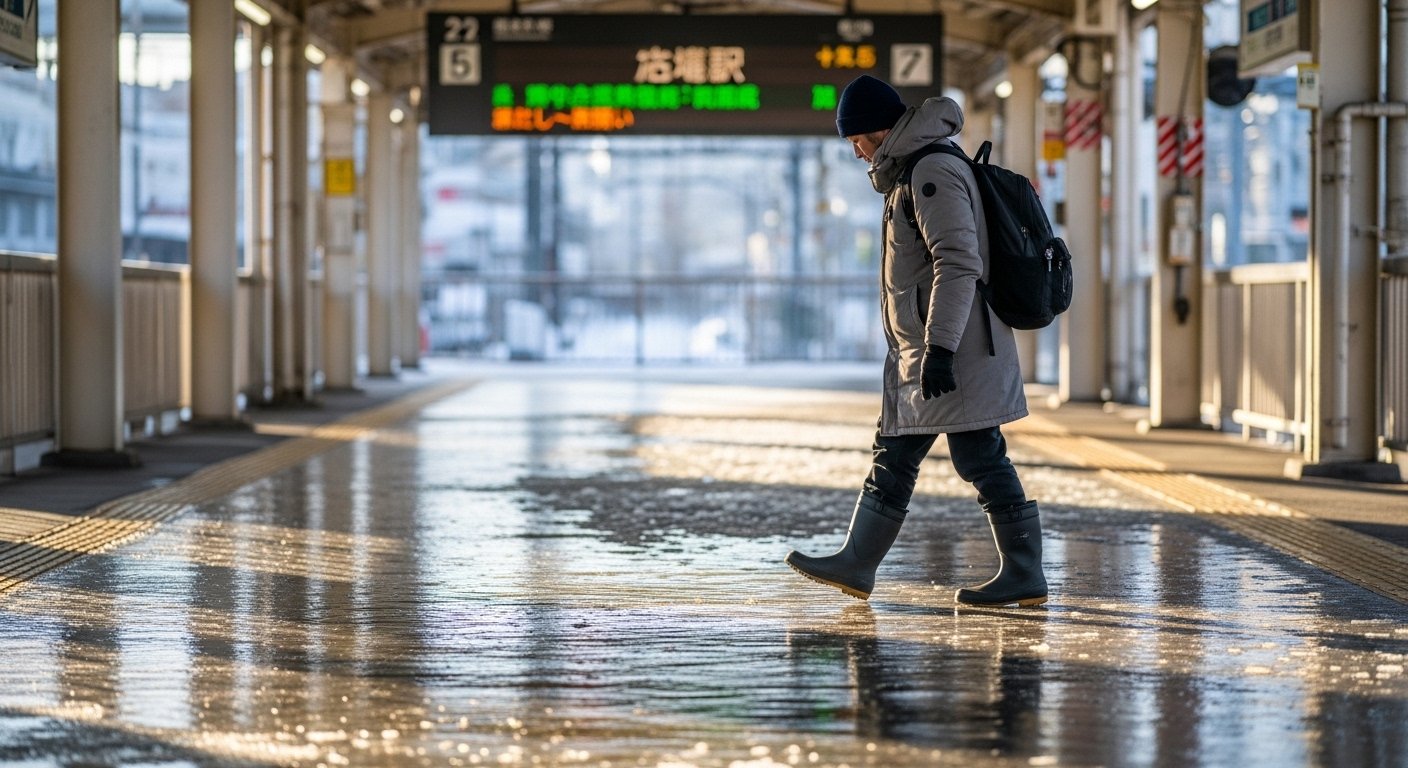
I still remember my first proper Tokyo snow. A mere dusting, really. Coming from a warmer climate, I thought, “Oh, how quaint!” I hopped on the Yamanote line, excited for a day of exploration. Then the train stopped. And stopped again. And again. What should have been a 20-minute ride turned into an hour-long, anxiety-inducing crawl. I finally got off, only to find the station platform a treacherous sheet of black ice, glistening malevolently under the fluorescent lights. I saw an elderly Japanese lady gracefully glide across it, but me? I looked like a newborn fawn on roller skates, clutching my bag and shuffling along, praying I wouldn’t end up in an embarrassing heap. My pride was bruised, my schedule was shot, and I was freezing, despite thinking my light jacket was ‘good enough’.
That day was a rude awakening. Japan is incredibly efficient, but Mother Nature doesn’t care about timetables. And those “slippery surfaces” and “icy platforms” they warn you about in guidebooks? They’re not joking. They are *actively trying to trip you*. This isn’t just about packing a warm coat; it’s about a complete mindset shift and knowing the local tricks. I’m here to give you the honest truth and arm you with the knowledge I wish someone had given me years ago.
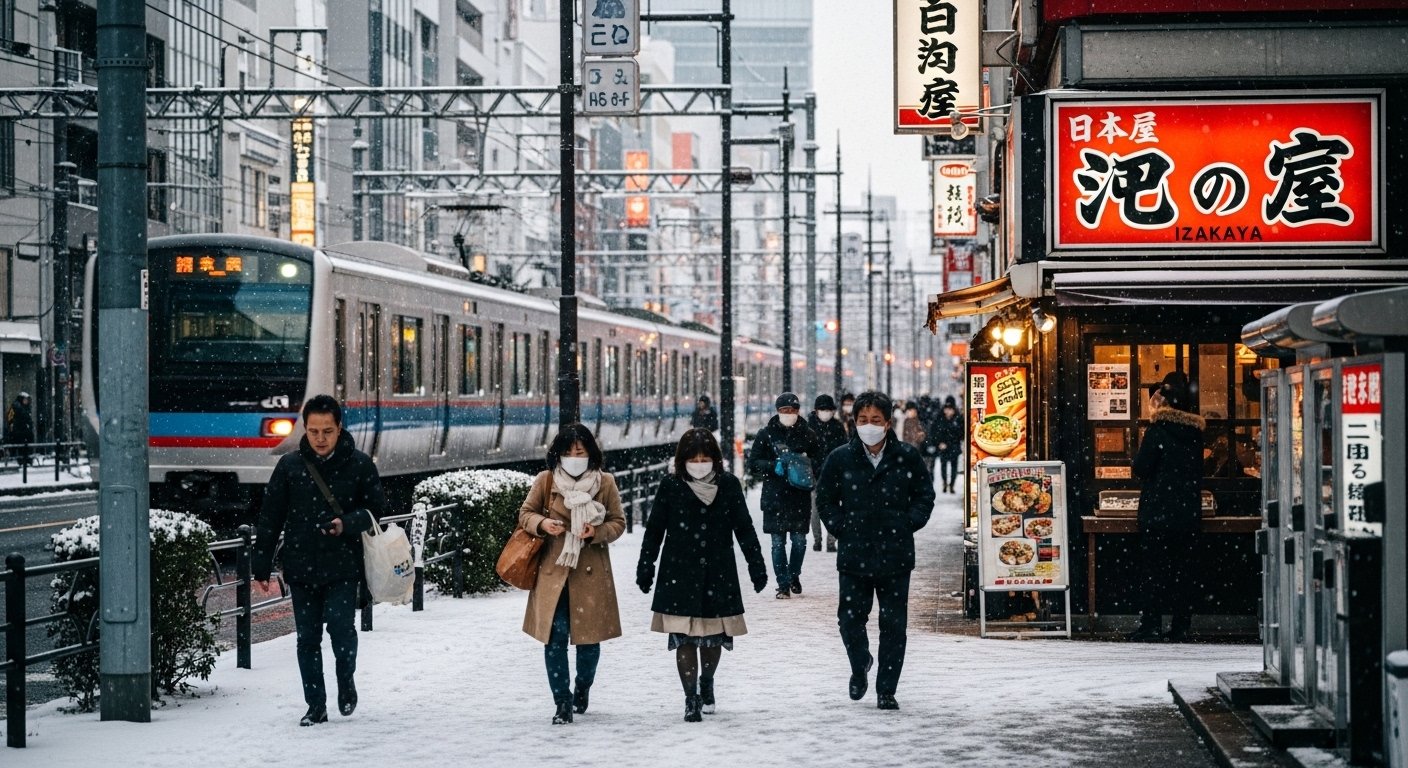
Table of Contents
- The Real Struggle: Why Japan’s Winter Transport Can Be a Headache
- My No-BS, Step-by-Step Survival Guide to Japan’s Winter Transport
- Price Breakdown: What Does Winter Preparation REALLY Cost?
- Common Pitfalls I’ve Seen (And Personally Experienced)
- 🇯🇵 Point & Speak
- FAQ: Your Burning Winter Japan Questions Answered
The Real Struggle: Why Japan’s Winter Transport Can Be a Headache
You’ve seen the gorgeous photos of snow-covered temples and Hokkaido powder. You’ve probably heard about Japan’s incredible punctuality. What they don’t always tell you is how those two things sometimes violently clash. Here’s why winter travel in Japan can feel like a boss battle:
The Ghost of Delays Past (and Present)
I’ve lived through enough unexpected transport disruptions to write a novel. A mere inch of snow in Tokyo can send the entire train network into a tailspin. We’re talking local trains, buses, and even the mighty Shinkansen. It’s not just the amount of snow; it’s the type. Wet, heavy snow can gum up switches and overhead lines faster than you can say “onsen.” One time, I was trying to get from Tokyo to Kyoto, and a freak snowstorm hit a region hours away. My Shinkansen, which I’d meticulously reserved, was delayed by two hours. Two hours! My perfectly timed hotel check-in and dinner reservation evaporated. And because it was an “unexpected” delay, information was scarce and often only in rapid-fire Japanese.
The Silent Killer: Icy Paths and Platforms
This is where I almost broke a hip. Twice. Japanese station platforms, especially during early mornings or after a thaw-and-refreeze cycle, become ice rinks. The sleek, polished surfaces designed for rapid movement become death traps. I’ve seen countless tourists, confident in their sneakers, take spectacular spills. It’s not just platforms; sidewalks, steps to temples, and even pedestrian crossings can be deceptively slick. My advice? Assume *everything* is slippery. Seriously.
“What Did That Announcer Just Say?” – The Language Barrier
When things are running smoothly, understanding train announcements is tough enough for a non-Japanese speaker. When there’s a disruption, the announcements become a frantic, garbled mess, often devoid of English translations until much later, if at all. My language skills are pretty good, and even I’ve stood there, staring blankly, trying to parse through “Yukigai… Chien… Unkyu…” (snow, delay, suspension). The panic starts to set in when you realize everyone else is making a beeline for a different platform or an alternative bus, and you have no idea why.
The Biting Cold: Early Mornings Are No Joke
You pack a jacket, maybe a scarf. You think you’re ready. Then you step out at 5:30 AM to catch an early train to a day trip destination, and the air hits you like a frozen sledgehammer. Japan’s cold climate requires specific preparation. I’ve seen people shivering uncontrollably, their ears red, their fingers numb. It’s not just the temperature; it’s the dampness, the wind tunnels in big cities, and the exposed wait on platforms. That “comforting taste of hearty regional dishes” won’t do much good if you’re already hypothermic.
Where Does Winter *Really* Hit? The Regional Roulette
This is a big one. I get asked all the time, “What’s winter like in Tokyo? Will it snow in Kyoto?” The truth is, it’s a huge country, and conditions vary wildly. A friend of mine in Tokyo recently told me that travelers “really shouldn’t encounter snow/ice roads” if going “late enough” in the winter in major city centers. And that’s often true! Tokyo and the Kansai region (Osaka, Kyoto) get snow, but it’s usually not as severe or as frequent as, say, Sapporo, Niseko, or Hakuba. But “less severe” doesn’t mean “no snow” or “no ice.” I’ve had first-time visitors planning a February trip to Kansai explicitly tell me, “I have never been to Japan in winter before, so I don’t know what is best.” That uncertainty is real. From major cities to popular snowy destinations and even hot spring towns like Kusatsu, the experience of “what winter truly feels like” is completely different. You need to research your specific destinations.
My No-BS, Step-by-Step Survival Guide to Japan’s Winter Transport
Okay, enough with the doom and gloom. Let’s get you sorted. Here’s what I’ve learned after a decade of freezing my butt off and navigating these winter gauntlets.
Step 1: Know Your Snow – Region by Region
Before you even book your flights, do your homework. This is crucial for managing expectations and packing correctly.
- Major Cities (Tokyo, Osaka, Kyoto): Yes, it gets cold. Yes, it can snow. But usually, it’s light and melts quickly. The *real* danger here is often black ice on sidewalks and station platforms, especially in shaded areas or during early mornings. Think crisp, cold air, occasional flurries, and very cold wind.
- Snowy Destinations (Sapporo, Niseko, Hakuba): This is where you go for *serious* snow. Expect heavy snowfall, constant cold, and roads designed for winter conditions. Transport here is generally better equipped to handle snow, but delays are still possible, especially for long-distance travel or flights. This is where your ski gear shines.
- Mountain/Hot Spring Towns (Kusatsu, Takayama, Shirakawago, Gokayama Aikura): These places are stunning in winter, often blanketed in thick, picturesque snow. Public buses (like those to Gassho Village) are common, and while they are good, they can be impacted by heavy snowfall. The roads can be winding and icy. Expect genuine winter conditions – thick snow, freezing temperatures, and potent hot spring steam.
Don’t just assume “Japan in winter” means the same thing everywhere. It definitely doesn’t.
Step 2: Dress Like a Human Onion (Layers, People!)
This is non-negotiable for Japan’s cold climate. My first winter, I thought my thickest jacket from home would suffice. Boy, was I wrong. You need layers you can add or shed as you move between heated trains, brisk outdoor walks, and warm indoor spaces. Here’s my personal packing list:
- Thermal Base Layers: Uniqlo’s HEATTECH is a lifesaver. Get the ‘Extra Warm’ or ‘Ultra Warm’ versions. Wear these under everything.
- Mid-Layers: Fleece jackets, wool sweaters, or even down vests. Something that adds warmth without too much bulk.
- Outer Shell: A good quality, waterproof and windproof winter coat. Hood is a bonus. Mine saved me countless times.
- Waterproof, Non-Slip Boots: This is probably the single most important item after your coat. Forget your fashionable sneakers. You need grip. Look for boots with good traction. I once wore boots that looked sturdy but had terrible grip, and I slid across an entire crosswalk. Never again.
- Warm Socks: Wool or thermal socks. My toes used to freeze on early morning commutes.
- Hat, Scarf, Gloves: Essential for protecting extremities. The wind in some cities, especially around train stations, will cut right through you.
- Optional but Recommended: Hand warmers (kairo – 懐炉). You can buy these at any convenience store (konbini) or drugstore. Stick-on ones for your back are pure genius.
Step 3: Walk Like a Penguin, Not a Tourist
This is my secret weapon against slips and falls on icy paths, roads, and those particularly treacherous station platforms. It’s not graceful, but it works:
- Short, Shuffling Steps: Reduce your stride length. Imagine you’re trying to keep your center of gravity directly over your feet.
- Keep Your Knees Slightly Bent: This gives you more flexibility and stability.
- Waddle: Yes, like a penguin. Point your feet slightly outwards and keep your weight evenly distributed.
- Watch Your Step: Scan ahead for darker, glossy patches (black ice!) or uneven snow. Don’t be looking at your phone!
- Use Handrails: Any handrail available on steps or ramps is your best friend. Grip it like your life depends on it (because on ice, it might!).
- Boots, Boots, Boots: I cannot stress this enough. Your footwear is your first line of defense. My friend who visited last year swore by his Vibram-soled hiking boots, even for city walking.
Step 4: Decoding the Delays (It’s Not Always What You Think)
When delays hit, the initial feeling is panic. Don’t. Take a deep breath. Here’s how I handle it:
- Check Station Boards: These usually have English. Look for 遅延 (chien – delay) or 運休 (unkyu – service suspension).
- Use Google Maps/Japan Transit Planner (Navitime): These apps are usually excellent, but during major disruptions, they can take a few minutes to update. Check them frequently.
- JR East/West/Central Official Apps/Websites: For Shinkansen or major JR lines, go straight to the source. Their websites usually have an English option for real-time updates.
- JR East Train Status (for Tokyo and Eastern Japan)
- JR West Train Status (for Kansai and Western Japan)
- JR Central Train Status (for Tokaido Shinkansen)
- Ask a Staff Member: Politely approach a station attendant (eki-in – 駅員). Show them your destination or ask in simple English/Japanese (see Point & Speak section). They are usually very helpful, even if English isn’t their strongest suit.
- Listen to Other Passengers: Sometimes, the local chatter will give you clues. If everyone suddenly rushes to a different platform, something’s up!
Step 5: Have a Backup (Or Two)
My biggest travel screw-up in winter involved not having a Plan B. Now, I always do.
- Alternative Routes: If a train line is down, is there a different line that can get you close? Can you take a different form of transport (e.g., bus, taxi for short distances)?
- Accommodation Strategy: If you’re traveling long distances on a snowy day, consider strategically choosing accommodation near major transport hubs. If you’re stuck, at least you won’t be far from your hotel. Or, conversely, if you’re planning on staying in a remote area, ensure your accommodation is either walkable from a station or offers a reliable shuttle service.
- Buffer Time: Always, always, ALWAYS build extra time into your winter travel itinerary, especially if you have connecting flights or critical appointments. That “extra 30 minutes” might save your whole day.
- Emergency Cash: While Japan is increasingly cashless, having some physical yen is vital for unexpected taxi rides, small local bus fares, or buying snacks/drinks if you’re stranded somewhere without card facilities. It’s saved my bacon more than once when my IC card was empty and the train was delayed.
Step 6: Embrace the Warmth (Food & Hot Springs)
After navigating icy platforms and battling the cold, you deserve to indulge. Japan’s winter cuisine is designed to combat the chill.
- Nabe (Hot Pot): A communal dish, simmering with vegetables, meat, and delicious broth. Absolute perfection.
- Oden: A hot pot with various ingredients (fishcakes, daikon radish, eggs) stewed in a light, savory broth. You’ll find this at convenience stores. My go-to cheap warmth.
- Ramen: Obvious, but a steaming bowl of rich, salty ramen is incomparable on a cold day.
- Onsen (Hot Springs): If your itinerary allows, a visit to a hot spring town like Kusatsu is the ultimate antidote to winter travel fatigue. There’s nothing like soaking in scalding hot water while snow falls gently around you. Pure bliss and a fantastic way to recover after a day of dealing with slippery surfaces.
Price Breakdown: What Does Winter Preparation REALLY Cost?
Being prepared isn’t free, but it’s an investment in your comfort and safety. Here’s a rough idea of what you might shell out, based on my own expenses:
| Item/Service | Estimated Cost (JPY) | Notes |
| Good Quality Thermal Base Layer (HEATTECH Ultra Warm) | ¥2,000 – ¥3,000 per item | Uniqlo is excellent value. You’ll want at least 2-3 sets. |
| Waterproof, Non-Slip Boots | ¥10,000 – ¥25,000 | Crucial investment. Don’t skimp here. Buy before you arrive if possible. |
| Warm Winter Coat (Water/Windproof) | ¥15,000 – ¥40,000+ | Again, an essential. You’ll wear this daily. |
| Gloves, Hat, Scarf Set | ¥3,000 – ¥8,000 | Protect those extremities! |
| Hand Warmers (Kairo, 10-pack) | ¥300 – ¥600 | Available at konbini and drugstores. Pure magic on freezing days. |
| Emergency Taxi Ride (short) | ¥1,000 – ¥3,000 | If local transport is totally stuck. Carry cash! |
| Hot Drink/Snack during delay | ¥150 – ¥500 | Vending machines are everywhere, thank goodness. |
Common Pitfalls I’ve Seen (And Personally Experienced)
Learn from my blunders, so you don’t repeat them!
- Underestimating “A Little Snow”: Just because Tokyo isn’t Sapporo doesn’t mean a light snowfall won’t cause havoc. Japanese infrastructure is designed for efficiency, and even minor deviations from perfect conditions can ripple through the system.
- Over-reliance on Google Maps Alone: While usually amazing, during real-time disruptions, Google Maps can lag. Always cross-reference with official railway websites or apps, and station boards. I once missed a connection because Google hadn’t updated yet.
- Thinking Your Fashionable Boots Will Cut It: Nope. Absolutely not. Unless they have serious tread and are waterproof, leave them for spring. The risk of injury is too high, and frankly, looking cool while sliding on your backside isn’t actually cool.
- Not Carrying Any Cash: Japan is still very much a cash-friendly society, especially for smaller, local businesses or in emergency situations where you might need to grab a quick bus that only accepts coins, or a taxi where their card reader is down. Don’t get stuck!
- Ignoring Early Morning Temperatures: I’ve mentioned it, but it bears repeating. Those picturesque early morning photo ops? They come with bone-chilling cold. Be prepared.
- Only Packing One Pair of Shoes: If your boots get soaked (and they might, walking through slush), you’ll want a dry pair to change into. Nothing worse than cold, wet feet.
🇯🇵 Point & Speak
Show this to staff:
English: Is the train/bus delayed?
電車/バスは遅れていますか?
(Densha/Basu wa okurete imasu ka?)
English: How long is the delay?
どれくらい遅れますか?
(Dore kurai okuremasu ka?)
English: Is this train/bus going to [destination]?
この電車/バスは[目的地]へ行きますか?
(Kono densha/basu wa [mokutekichi] e ikimasu ka?)
English: Are there any alternative routes?
他のルートはありますか?
(Hoka no rūto wa arimasu ka?)
English: Where is the information counter?
案内所はどこですか?
(Annaijo wa doko desu ka?)
🎯 Insider Tip: If you’re at a major station (like Tokyo, Shinjuku, Osaka) during a snow-related disruption, don’t just stand on the platform. Head to the main concourse or the nearest cafe. Platforms can be exposed to fierce winds and become unbearably cold. Also, remember that major department stores often have underground connections to stations – a lifesaver for avoiding icy outdoor walks! And for the Tokaido Shinkansen (Tokyo-Kyoto/Osaka), if there’s a delay, always check the JR Central website directly; it’s often the fastest source of accurate information.
FAQ: Your Burning Winter Japan Questions Answered
How much snow does Tokyo or the Kansai region (Osaka, Kyoto) actually get in winter? Is it enough to cause major disruptions?
Alright, this is one of the most common questions I get. While Tokyo and Kansai definitely experience winter, heavy snowfall like you’d see in Hokkaido is rare. My friend in Tokyo even mentioned that travelers “really shouldn’t encounter snow/ice roads” if they’re traveling “late enough” in winter in major cities. However, don’t let that fool you! Even a few centimeters of wet snow can cause significant transport disruptions, especially for trains and buses that aren’t designed for constant heavy snow. The biggest issue isn’t always the snow itself, but the ice it leaves behind, particularly on walkways and those deceptively smooth station platforms. So, yes, it can snow, and yes, even a small amount can throw a wrench in your travel plans, despite the general efficiency of Japanese transport.
What’s the best way to get real-time transport updates in English during snow or ice delays?
During disruptions, getting real-time info can be tough. My go-to strategy is a multi-pronged attack: First, check the digital display boards at the station – they often have English translations. Second, immediately open your Japan Transit Planner app (Navitime or Japan Official Travel App work well) and Google Maps, but be aware they might have a slight delay in updating. Third, and this is crucial for Shinkansen, check the official railway company websites directly (e.g., JR East, JR West, JR Central). They usually have an English section for service status and are often the fastest to update. Finally, don’t be afraid to politely ask station staff; a simple “Excuse me, delay?” or showing your destination on a map can often get you the help you need, even with a language barrier.
What specific clothing should I pack for winter in Japan as a first-time visitor?
Okay, this is where my personal experience kicks in. You absolutely need layers for Japan’s cold climate. Forget fashion, think function! Pack thermal base layers (Uniqlo HEATTECH ‘Extra Warm’ or ‘Ultra Warm’ are fantastic), a good mid-layer like a fleece or wool sweater, and a waterproof, windproof outer winter coat with a hood. This is your core. Beyond that, the most important items are waterproof boots with excellent grip – I cannot stress the non-slip aspect enough for icy platforms and sidewalks. Don’t rely on sneakers or fashion boots. Add warm wool socks, a hat, gloves, and a scarf. Also, grab some kairo (hand warmers) from any convenience store once you arrive; they are a game-changer for staying comfortable on chilly mornings or exposed platforms.


