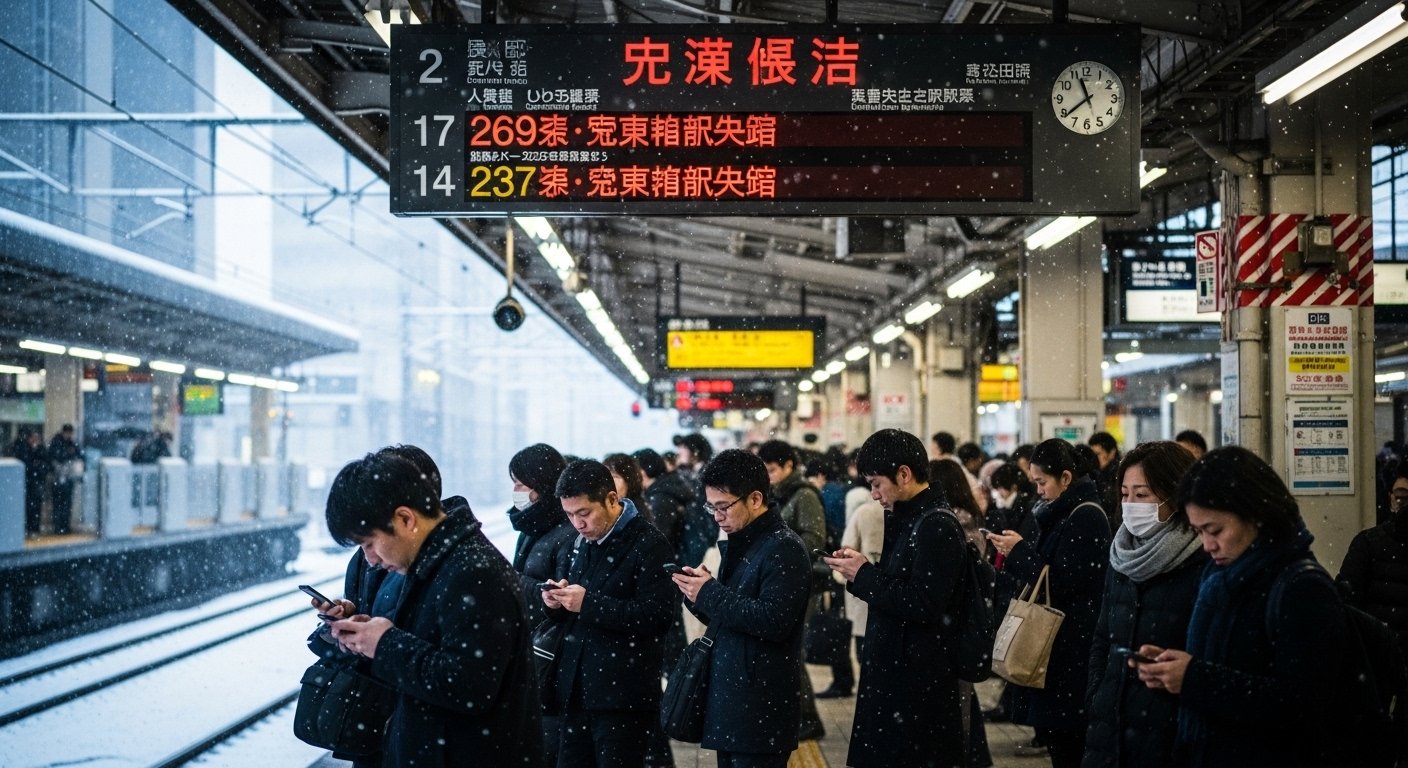
*Images used in this article are for illustration only. They may not be directly related to the content.
Japan Winter Travel Safety: Navigating Snow Delays & Transport Disruptions
Winter in Japan offers stunning landscapes, from snow-capped mountains to cozy onsen towns. However, unexpected snow can quickly turn your travel plans sideways, leading to frustrating delays and cancellations across trains, buses, and flights. The thought of being stranded, especially with a language barrier, is a valid concern for many international visitors.
This comprehensive guide is designed to remove that friction. We’ll equip you with the practical knowledge, essential resources, and critical Japanese phrases needed to proactively prepare for, effectively manage, and find alternative solutions during snow-related transport disruptions in Japan. Our goal is to ensure your winter journey remains safe and manageable, even when the flakes start to fall.
Table of Contents
- Understanding Japan’s Winter Transport Vulnerabilities
- Proactive Preparation: Before You Travel
- Real-Time Management: During a Disruption
- Navigating Alternatives & Next Steps
- 🇯🇵 Point & Speak: Essential Japanese Phrases for Delays
- 🎯 Local Pro-Tips for Winter Travel Resilience
- Common Mistakes to Avoid in Japan’s Winter
- 📋 Quick Reference Card: Your Snow Delay Checklist
- 🚨 Emergency Contacts
- Frequently Asked Questions
- Conclusion
- Disclaimer
Understanding Japan’s Winter Transport Vulnerabilities
Japan’s transport network is renowned for its efficiency, but even the best systems can be challenged by heavy winter weather. Understanding when and where disruptions are most likely is your first step in Highway buses (高速バス – kōsoku basu) are highly vulnerable to road closures, especially on mountain passes. This can lead to long delays or outright cancellations.
Why Japan’s Winter Disruptions are Challenging for Visitors
Beyond the simple inconvenience, several factors amplify the difficulty for international travelers:
- Language Barrier: Real-time announcements, local news, and many paper notices are often exclusively in Japanese, making it difficult to understand the situation or your options.
- Information Overload: Even when English information is available, finding the right source amidst multiple operators (JR, private lines, various bus companies, airlines) can be overwhelming.
- Logistical Hurdles: Without local knowledge, finding alternative routes, booking last-minute accommodation, or understanding refund policies can be a significant stressor.
- Financial Impact: Transport providers typically do not cover additional costs like hotels or alternative transport due to natural phenomena, leaving you to bear unexpected expenses.
Proactive Preparation: Before You Travel
The best way to manage winter travel disruptions is to prepare for them before you even step on a plane. A little foresight can save significant stress and expense.
1. Monitor Weather Forecasts Diligently
- Check the Japan Meteorological Agency (JMA): The JMA provides reliable forecasts in English. Check it daily, especially the day before and the day of your travel through snow-prone areas.
- Look for Snow Warnings: Pay attention to alerts for heavy snow (大雪 – ōyuki) or blizzards (吹雪 – fubuki).
2. Secure Reliable Connectivity
3. Consider Comprehensive Travel Insurance
🎯 Local Pro-Tip: Review your travel insurance policy carefully. Many standard policies do NOT cover delays or cancellations due to natural disasters. Look for specific clauses that cover “travel delays and cancellations due to weather” to mitigate unexpected accommodation or rebooking costs.
4. Build Buffer Time into Your Itinerary
If you have tight connections, critical appointments, or flights home, add an extra day or half-day to your schedule. This flexibility can be invaluable if a major snowfall occurs.
5. Pack Appropriately for Cold and Delays
Even if you’re traveling south, heavy snow can mean long waits in cold stations. Pack warm layers, waterproof outerwear, appropriate footwear, and consider bringing snacks and a power bank for your devices.
Real-Time Management: During a Disruption
You’ve arrived, and now snow is causing issues. Here’s how to stay informed and get help.
1. Check Official Transport Operator Websites
These are your primary sources for real-time operation information (運行情報 – unkō jōhō).
- JR Railways:
- JR East (English)
- JR Central (English)
- JR West (English)
- JR Hokkaido (English)
- (Note: Other JR regional sites may only be in Japanese or have limited English.)
- Airlines:
- Highway Buses: Bus company websites are your best bet. For broader road conditions, NEXCO (Japan Expressway Company) traffic information is official but often Japanese-only.
2. Understand Visual Cues and Announcements
Even without English, Japanese stations and airports offer visual information:
- Electronic Display Boards (電光掲示板 – denkō keijiban): Look for red text, which often indicates delays (遅延 – chien) or cancellations (運休 – unkyū). Yellow text might be a warning.
- Paper Notices (お知らせ – oshirase): These are posted near ticket gates, platforms, or information counters. Major disruptions often have English summaries.
- Staff: Look for staff in uniforms or yellow/orange safety vests. Some may hold signs or be making announcements. Staff at Midori no Madoguchi (みどりの窓口 – green ticket counters) or Tourist Information Centers (観光案内所 – kankō annaijo, often with an ‘i’ symbol) are your best bet for English assistance.
- Red Alarm Lights: Flashing red lights at ticket gates or on platform signs can indicate an issue on the line.

Navigating Alternatives & Next Steps
Once you understand the situation, it’s time to explore your options.
1. Rebooking and Refunds
- Trains (JR): For Shinkansen delays exceeding 2 hours, you may be eligible for a refund or rebooking without charge. Keep your original ticket; it’s essential for this process. Refunds for unused tickets due to operational issues are typically processed at any JR ticket counter (Midori no Madoguchi) within a specified period (e.g., 1 year). JR Pass holders have specific rules; generally, individual disrupted journeys are not refunded, but an entire pass can be refunded if unused before activation.
- Flights: Airlines typically offer free rebooking or refunds for weather-related cancellations. Monitor your flight status directly via airline apps/websites and contact them as soon as possible.
- Important Note: Accommodation or alternative transport costs are generally NOT covered by JR or airlines in case of delays/cancellations due to natural phenomena.
2. Exploring Alternative Transport
Depending on the extent of the disruption, consider alternatives:
- Other Train Lines: If a specific JR line is affected, check if private railway lines cover a similar route. Use transit planner apps like Navitime Transit Planner (English) or Jorudan Transit Planner (English) to explore options.
- Local Buses/Taxis: For shorter distances, local buses or taxis might be an option, but in heavy snow, they will also face challenges. Taxi queues can be long.
- Highway Buses: If trains are down, buses might be an alternative, but remember they are also highly susceptible to snow. Verify road conditions.
3. Finding Accommodation if Stranded
If you’re stuck overnight, especially in a major hub, finding a hotel can be competitive. Ask staff at tourist information centers or major station information desks for nearby options. Be prepared for higher prices during peak disruption.
🇯🇵 Point & Speak: Essential Japanese Phrases for Delays
Show this section to staff if you’re stuck. They can read the Japanese. Point to the relevant phrase.
English: Is this train/bus/flight delayed?
この電車/バス/飛行機は遅れていますか?
(Kono densha/basu/hikōki wa okurete imasu ka?)
English: Is it cancelled?
運休ですか? / キャンセルですか?
(Unkyū desu ka? / Kyanseru desu ka?)
English: Are there any alternative routes/options?
他のルート/交通手段はありますか?
(Hoka no rūto/kōtsū shudan wa arimasu ka?)
English: Where can I find information in English?
英語で情報がどこで手に入りますか?
(Eigo de jōhō ga doko de te ni hairimasu ka?)
English: Can I get a refund?
払い戻しできますか?
(Haraimodoshi dekimasu ka?)
English: Is it possible to change my ticket?
切符を変更できますか?
(Kippu o henkō dekimasu ka?)
English: I am stranded.
立ち往生しています。
(Tachiōjō shite imasu.)
English: Hotel nearby?
近くにホテルはありますか?
(Chikaku ni hoteru wa arimasu ka?)
🎯 Local Pro-Tips for Winter Travel Resilience
🎯 Local Pro-Tip: Major hubs like Tokyo Station, Shin-Osaka Station, Nagoya Station, and Fukuoka’s Hakata Station have English-speaking staff at information counters (Midori no Madoguchi) or dedicated Tourist Information Centers (Kankō Annaijo). These are your crucial points for assistance during disruptions. Don’t hesitate to seek them out.
🎯 Local Pro-Tip: Download offline maps and translation apps (like Google Translate with Japanese language pack) before you travel. Your internet connection might be spotty during an emergency, or your battery might die.
🎯 Local Pro-Tip: While Japanese customer service is polite, they adhere strictly to rules regarding compensation. Understanding that natural phenomena are typically ‘force majeure’ (beyond their control) helps manage expectations about additional costs. Budgeting for potential unplanned accommodation (e.g., an extra ¥5,000-15,000 per person) offers peace of mind.
Common Mistakes to Avoid in Japan’s Winter
- Underestimating Snow Impact: Don’t assume Japan’s infrastructure is entirely immune. Heavy snowfall can bring even Shinkansen to a halt.
- Ignoring Weather Alerts: Dismissing a snow forecast, especially for regions you’re passing through, is a recipe for trouble.
- Booking Tight Connections: Scheduling a flight immediately after a long train journey in winter significantly increases risk.
- Lack of Connectivity: Relying solely on free Wi-Fi spots can leave you disconnected precisely when you need information most.
- Not Knowing Key Phrases: Even a few basic Japanese phrases can make a difference when seeking help from staff who don’t speak English.
- Discarding Tickets: Always keep your original tickets. They are necessary for refunds or rebooking.

📋 Quick Reference Card: Your Snow Delay Checklist
📋 Quick Reference Card
Screenshot or print this section for easy access:
- ✅ Check JMA Weather: Day before & morning of travel.
- ✅ Official Operator Websites: Check JR/airline/bus status online.
- ✅ Look for Visual Cues: Red text on boards, paper notices, staff.
- ✅ Locate English-Speaking Staff: Midori no Madoguchi, Tourist Info Centers.
- ✅ Use Point & Speak Phrases: Show staff key Japanese questions.
- ✅ Keep Tickets: Essential for refunds/rebooking.
- ✅ Explore Alternatives: Use Navitime/Jorudan apps.
- ✅ Consider Insurance: Confirm weather delay coverage.
- ✅ Stay Connected: Ensure phone/Wi-Fi has power.
🚨 Emergency Contacts
🚨 Emergency Contacts
| Police | 110 |
| Ambulance/Fire | 119 |
All numbers are free and work from any phone, including public phones, without coins or cards. Tell the operator “English, please” if you need language support.
Frequently Asked Questions
Are Shinkansen trains often cancelled due to snow?
While Shinkansen lines are highly resilient, heavy snowfall, strong winds, or track issues caused by snow can lead to delays or suspensions. This is more common in northern Japan (Tohoku, Hokkaido) and the Hokuriku region, but can occasionally affect Tokaido/Sanyo Shinkansen sections.
Will my JR Pass cover alternative transport if my train is cancelled?
Generally, the Japan Rail Pass rules state that no refunds or extensions are given for individual disrupted journeys due to weather or natural disasters. You are responsible for any alternative transport costs or accommodation. If the entire pass is returned unused before activation, a refund for the pass itself may be possible, subject to specific conditions.
What should I do if I’m stranded in a remote area without English-speaking staff?
Firstly, utilize your phone for translation apps and online resources. If you have data, try checking official websites. If you need to speak to staff, use the “Point & Speak” phrases provided in this guide. Don’t hesitate to show them the Japanese text. If possible, make your way to a larger station or Tourist Information Center, as they are more likely to have English support. Emergency services (110, 119) can provide language support if necessary.
Are highway buses a good alternative if trains are disrupted by snow?
Highway buses are highly susceptible to road closures and delays due to snow, especially on mountain passes. While they might be an option if train lines are completely shut down, always verify road conditions via NEXCO (if you can translate) or directly with the bus company before booking. They often face similar, if not greater, challenges than trains during heavy snowfall.
Conclusion
While Japan’s winter can bring challenges, being prepared is your best defense against unexpected snow delays and transport disruptions. By proactively monitoring weather, understanding official channels, utilizing key Japanese phrases, and knowing your options for rebooking or alternatives, you can navigate even the heaviest snowfalls with confidence.
Your journey through Japan’s winter wonderland should be memorable for its beauty, not its logistical headaches. Stay informed, stay flexible, and embrace the practical strategies outlined here to ensure a safe and smooth trip.
Disclaimer
The information provided in this guide is for general informational purposes only and is based on typical conditions and policies as of January 2026. Transport operator rules, weather patterns, and specific disruption impacts can vary. Always refer to official, real-time information from transport providers and weather agencies for the most accurate and up-to-date guidance during your travel.