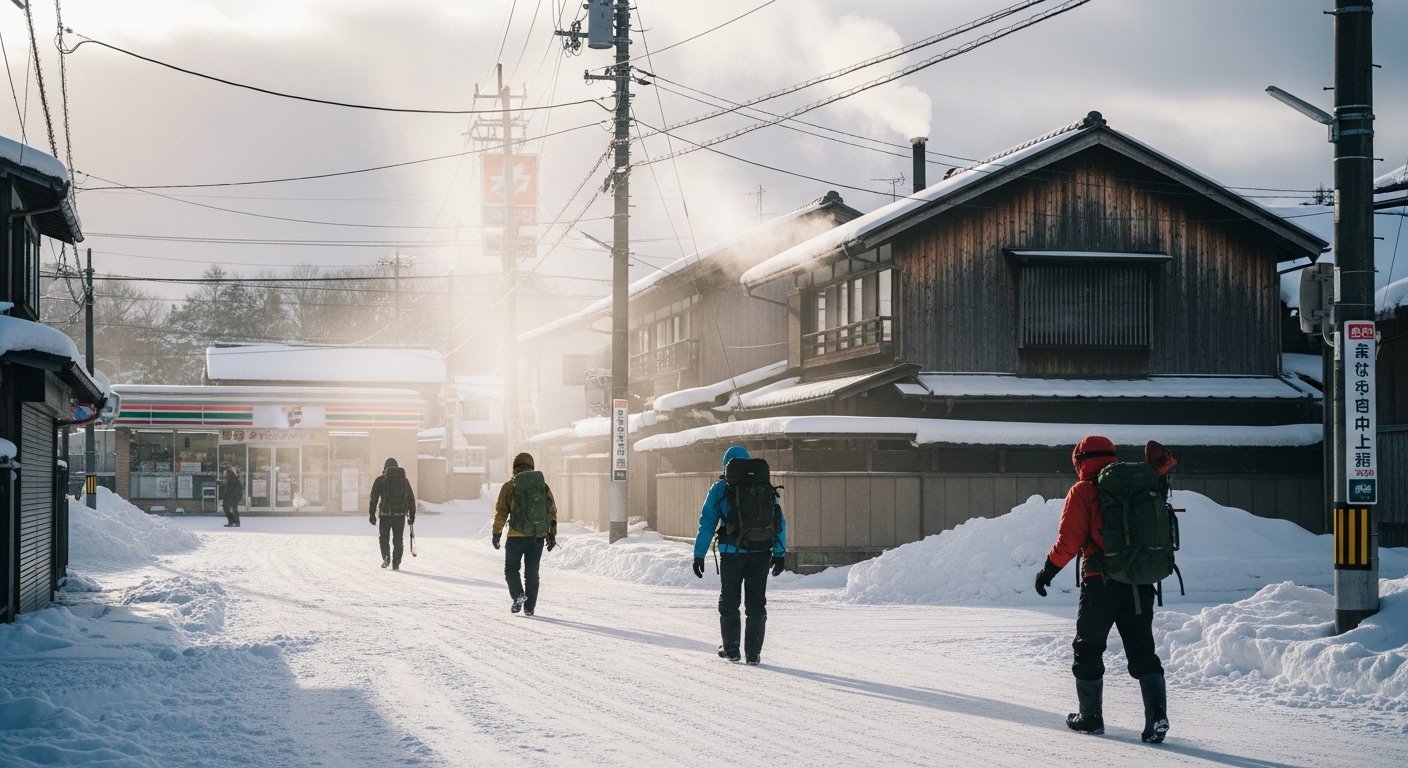
*Images used in this article are for illustration only. They may not be directly related to the content.
Japan Winter Travel: Stay Safe & Beat Early Morning Snow Delays
Planning to navigate Japan’s stunning winter landscape, especially in regions like Hokkaido? The crisp air and snow-covered scenery are enchanting. However, early morning winter travel, particularly in areas prone to heavy snowfall, presents unique challenges. Unexpected train or bus delays due to snow and ice can derail your meticulously planned itinerary, causing missed connections, unnecessary stress, and even safety concerns on slippery platforms.
You might be wondering: How do I get real-time updates when everything is in Japanese? What if I get stranded in the cold? This guide is designed to remove that friction. We’ll equip you with practical strategies, essential safety advice, and key Japanese phrases to help you stay ahead of snow-related transport disruptions, ensure your safety, and make your Japan winter travel smooth and stress-free.
Table of Contents
- Navigating Japan’s Winter Mornings: Why Delays Happen
- Your Winter Travel Toolkit: Staying Ahead of Delays
- Essential Safety for Icy Conditions
- When Plans Go Sideways: What to Do During Delays
- 🇯🇵 Point & Speak: Essential Japanese Phrases
- 📋 Quick Reference Card: Winter Travel Safety
- Common Mistakes to Avoid in Japan’s Winter
- 🚨 Emergency Contacts
- Frequently Asked Questions
Navigating Japan’s Winter Mornings: Why Delays Happen
Japan’s public transportation system is renowned for its efficiency. However, even the best systems face challenges from heavy snowfall and ice, particularly during early morning hours. Surface trains and buses, which cover most routes outside major city centers, are highly susceptible to delays or cancellations. This is especially true in snow-heavy regions like Hokkaido, the Tohoku region, and along the Sea of Japan coast.
Snow accumulation on tracks, freezing rain, and icy roads create hazardous conditions that necessitate slower speeds or temporary suspensions for safety. While city subways, such as the Sapporo Subway, generally run reliably underground, connections to surface lines can still be affected. The primary pain point for international visitors is the difficulty in accessing real-time transport status and understanding alternative options when information is predominantly in Japanese. This linguistic barrier, combined with the urgency of early morning travel, can quickly lead to frustration and missed connections.
Your Winter Travel Toolkit: Staying Ahead of Delays
Preparation is your strongest defense against winter travel disruptions. Here’s a step-by-step guide to keeping your early morning journeys on track:
Step 1: Forecast First, Always.
Make checking the weather forecast a ritual. Always consult reliable sources the night before and early morning of your travel day. This is crucial for regions known for heavy snowfall. The Japan Meteorological Agency (JMA) provides accurate English forecasts.
🎯 Local Pro-Tip: Pay close attention to snowfall predictions not just for your current location, but for your entire route. A clear sky where you are doesn’t mean clear tracks further along the line.
Step 2: Master Real-Time Transport Apps.
Dedicated Japan transit apps are indispensable for real-time delay information. Download and familiarize yourself with ‘Japan Transit Planner’ (by Jorudan) and ‘NAVITIME for Japan Travel’. Both offer English interfaces, allow route searches, and often display delay notifications (遅延情報 – chien jōhō) directly on route results. You can also set up push notifications. While Google Maps is useful for general navigation, it may not always reflect the most up-to-the-minute local railway or bus delays as accurately as these specialized apps.
Step 3: Bookmark Official Railway Websites.
Major railway operators have English sections on their official websites that provide ‘Operation Status’ (運行情報 – unkō jōhō) for significant delays or service suspensions. If you’re traveling through Hokkaido, bookmark the JR Hokkaido English website. Do the same for JR East or other regional operators relevant to your itinerary. These are often the first official sources to confirm widespread issues.

Step 4: Build in Buffer Time.
This is non-negotiable for early morning winter travel in Japan. For critical connections like flights or Shinkansen, aim for trains or buses significantly earlier than you typically would. A 30 to 60-minute buffer can be invaluable, allowing you to absorb minor delays without consequence. If you arrive early, you can enjoy a warm coffee at the station or simply relax, knowing you’re not rushing.
Essential Safety for Icy Conditions
Your physical safety during winter travel is paramount. Icy conditions are not just inconvenient; they pose genuine hazards, especially on platforms and walkways.
Dress for the Cold: Layers & Footwear.
Layering is key. Start with thermal underwear, add fleece or wool mid-layers, and top it with a waterproof and windproof outer jacket. Don’t forget gloves, a hat, and a scarf to protect exposed skin. Crucially, invest in non-slip, waterproof footwear with good traction. Icy sidewalks, station platforms, and stairs are common. You can find inexpensive anti-slip shoe covers, called ‘yuki-gutsu suberi-dome’ (雪靴滑り止め), at Japanese department stores, drugstores, or even Bic Camera and Don Quijote in winter.

Navigating Stations: Watch Your Step.
On platforms and throughout stations, remain vigilant. Look for ‘Caution: Slippery’ signs (注意:滑りやすい – Chūi: Suberiyasui) or yellow cones, which indicate wet or icy spots. Always maintain a safe distance from the platform edge, especially when trains are approaching. Use handrails on stairs, and walk slowly and deliberately, taking smaller steps. Rushing dramatically increases your risk of a fall.

When Plans Go Sideways: What to Do During Delays
Despite all precautions, sometimes delays are unavoidable. Knowing how to react can minimize stress and help you find a solution.
Communicate with Station Staff (Eki-in).
Station staff (駅員 – eki-in) are your primary source of information during severe delays or cancellations. While English proficiency varies, they are trained to assist. Look for them near ticket gates, information counters, or on platforms. Point to digital display boards (電光掲示板 – denkō keijiban) which show delay information; red text or flashing lights typically indicate issues. Use translation apps if necessary, or refer to our “Point & Speak” section below.

Consider Taxis as a Backup.
For shorter distances or when public transport is completely halted, a taxi can be an alternative. Be aware, however, that taxis can be expensive, especially in Japan, and may be scarce during heavy snow. They are also subject to road delays. Have taxi apps like GO or S.RIDE installed, and always have some cash on hand, as not all taxis accept credit cards. Confirm the fare estimate before departing if possible.
🇯🇵 Point & Speak: Essential Japanese Phrases
🇯🇵 Point & Speak
Show this section to staff if you’re stuck. They can read the Japanese and assist you.
English: Is the train/bus delayed?
電車/バスは遅れていますか?
(Densha/Basu wa okurete imasu ka?)
English: How long will it be delayed?
どれくらい遅れますか?
(Dore kurai okuremasu ka?)
English: Are there alternative routes?
他に道がありますか? / 代替ルートはありますか?
(Hoka ni michi ga arimasu ka? / Daitai rūto wa arimasu ka?)
English: Where is the nearest taxi stand?
一番近いタクシー乗り場はどこですか?
(Ichiban chikai takushī noriba wa doko desu ka?)
English: Service suspension / Line closure
運転見合わせ / 運休
(Unten miawase / Unkyū)
📋 Quick Reference Card: Winter Travel Safety
📋 Quick Reference Card: Japan Winter Travel
Screenshot or print this section for easy access:
- ✅ Check JMA Weather: Night before & early morning.
- ✅ Use Transit Apps: Jorudan & NAVITIME for real-time updates.
- ✅ Bookmark JR Sites: e.g., JR Hokkaido for operation status.
- ✅ Buffer Time: Add 30-60 mins for critical connections.
- ✅ Dress Warm: Layers, waterproof outer, non-slip footwear.
- ✅ Watch for Ice: Slippery signs (注意:滑りやすい) & cones.
- ✅ Talk to Staff: Use ‘Point & Speak’ or translation.
- ✅ Charge Devices: Phone & power bank for updates.
- ✅ Carry Cash: For unexpected taxi fares.
Common Mistakes to Avoid in Japan’s Winter
Understanding potential pitfalls can save you time, money, and discomfort during your winter travels.
- Underestimating the Cold and Ice: While Japanese cities are efficient, the cold is real. In Hokkaido, temperatures can drop significantly. Inadequate clothing and footwear are common oversights, leading to discomfort and increased risk of slips.
- Relying Solely on Google Maps: Google Maps is excellent for general navigation, but for hyper-local, real-time transport delays in Japan due to weather, dedicated apps like Jorudan or NAVITIME are often more accurate and faster to update.
- No Buffer Time: Sticking to tight schedules in winter is a gamble. Assume delays are possible and build in extra time, especially for early morning connections. This prevents the cascade effect of missed flights or Shinkansen.
- Ignoring Weather Forecasts: Skipping the daily weather check, particularly for snowfall warnings (大雪 – Ōyuki), is a critical error. Advance knowledge allows for adjustments to your travel plans.
- Lack of Internet Access: Real-time information relies on an internet connection. Do not rely solely on public Wi-Fi. Ensure you have a reliable pocket WiFi or eSIM.
- Not Having Cash: While Japan is becoming more cashless, taxis (especially outside major cities) and some smaller establishments might still prefer cash. For emergency transport, cash can be essential.
🚨 Emergency Contacts
🚨 Emergency Contacts in Japan
These numbers are free and work from any phone in Japan. For non-emergencies, consider checking with your embassy.
| Police | 110 |
| Ambulance/Fire | 119 |
| Emergency Translation | 0570-000-911 (JNTO Tourist Hotline) |
For general safety information, refer to the JNTO Safety Tips page.
Frequently Asked Questions
What is the best way to check for JR Hokkaido delays in English?
The most reliable method is to use dedicated transit apps like Jorudan’s “Japan Transit Planner” or “NAVITIME for Japan Travel,” as they often show delay notifications. Additionally, regularly check the official JR Hokkaido English website’s Operation Status section for major service alerts.
What should I do if my train is severely delayed due to snow in Japan?
First, check your transit apps and official railway websites for the latest information. Speak to station staff (駅員 – eki-in) at the information counter or ticket gates. Use our “Point & Speak” phrases if you’re struggling with the language. They can advise on alternative routes, estimated recovery times, or if refunds/transfer tickets are available. Consider a taxi for shorter distances if the delay is critical and local transport is affected.
Are there specific safety tips for slippery station platforms in Japan during winter?
Yes. Always wear non-slip, waterproof footwear. Watch for “Caution: Slippery” signs (注意:滑りやすい) and yellow cones. Walk slowly, take small steps, and use handrails on stairs. Maintain a safe distance from the platform edge, especially when a train is arriving. Japanese department stores often sell inexpensive anti-slip shoe covers called ‘yuki-gutsu suberi-dome’ (雪靴滑り止め) which can be useful.
Does travel insurance cover snow-related transport delays in Japan?
Many comprehensive travel insurance policies do cover disruptions caused by severe weather, including transport delays or cancellations. This can include expenses for unplanned overnight stays, rebooking flights/trains, or lost tour deposits. It is crucial to read your policy’s terms and conditions carefully before traveling to understand what is covered and what documentation you might need to claim (e.g., delay certificates from the transport provider).
Conclusion
Japan’s winter can offer truly unforgettable experiences, provided you are prepared for its unique travel considerations. By integrating smart planning, real-time information access, and essential safety measures into your routine, you can confidently navigate early morning snow-related transport delays and ensure a safe, smooth journey.
Stay informed, stay safe, and enjoy the pristine beauty of Japan’s winter wonderland without unnecessary friction.
Disclaimer
This information is provided for general guidance and practical advice. While every effort has been made to ensure accuracy as of the last verification date (January 15, 2026), transport conditions, app features, and emergency procedures can change. Always verify current information with official sources and exercise personal judgment for your safety. Travel insurance is highly recommended for unforeseen circumstances.