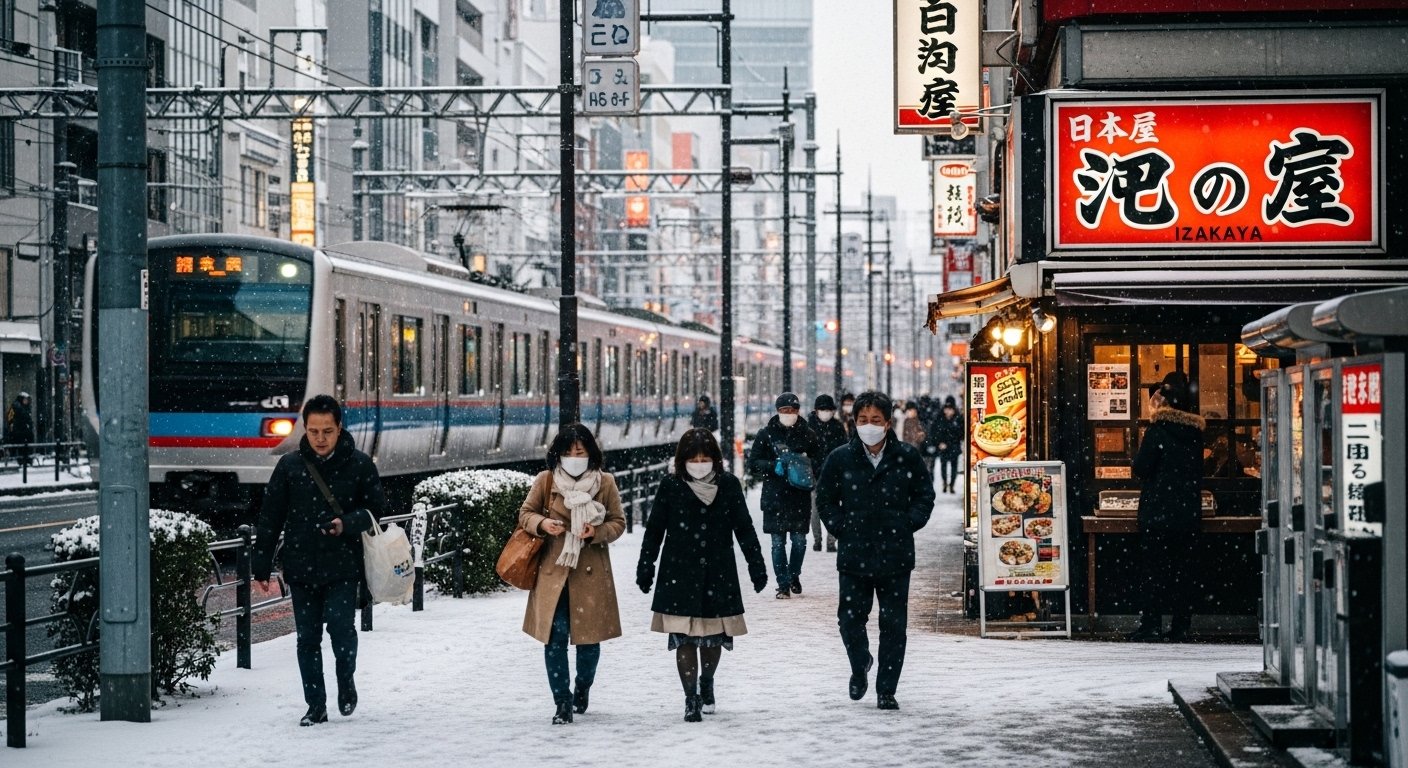
*Images used in this article are for illustration only. They may not be directly related to the content.
Japan Winter Travel: Your Real-Time Fix for Unexpected Delays & Icy Platforms
The year was 2014, my second winter in Japan, and I still thought I had it all figured out. I was heading from Tokyo to a small mountain town for a weekend snowboarding trip, excited for fresh powder. My Japanese was… okay. Enough to order ramen, maybe ask for directions if someone spoke slowly. But then, a classic Japanese winter storm rolled in overnight. Not just a sprinkle, but a proper, ‘let’s dump a meter of snow on everything’ kind of storm.
I woke up to a hushed, stark white world, and a sinking feeling in my gut. My early Shinkansen (bullet train) was, naturally, delayed. Severely. I got to the station, and the usually clear, efficient information boards were a chaotic mess of scrolling Japanese text, peppered with the dreaded 遅延 (chien – delay). Panic started to bubble. My rudimentary Japanese wasn’t cutting it. I couldn’t understand if it was a 30-minute delay or a 3-hour one, or if my train was even running at all. I stood there, a very cold, very confused gaijin (foreigner), feeling completely stranded, a knot of fear tightening in my stomach. What if I missed my connecting local train? What if I couldn’t get a refund? What if I was stuck in Tokyo for the entire weekend?
That day, I learned a hard truth: Japan’s transport system is a marvel, until winter throws a wrench in it. And when it does, if you’re not prepared, it can feel like the entire country suddenly switched to an alien language designed specifically to keep you guessing.
Over the past decade living here, I’ve had more than my fair share of close calls, missed connections, and cold waits on icy platforms. I’ve learned to navigate these unexpected winter snags not just with patience, but with a strategy. And that’s exactly what I’m going to share with you today. Consider me your Japan Local Fixer, ready to arm you with the real-time knowledge and practical steps to ensure your winter trip remains safe and smooth, even when the snow decides to play havoc with your plans.
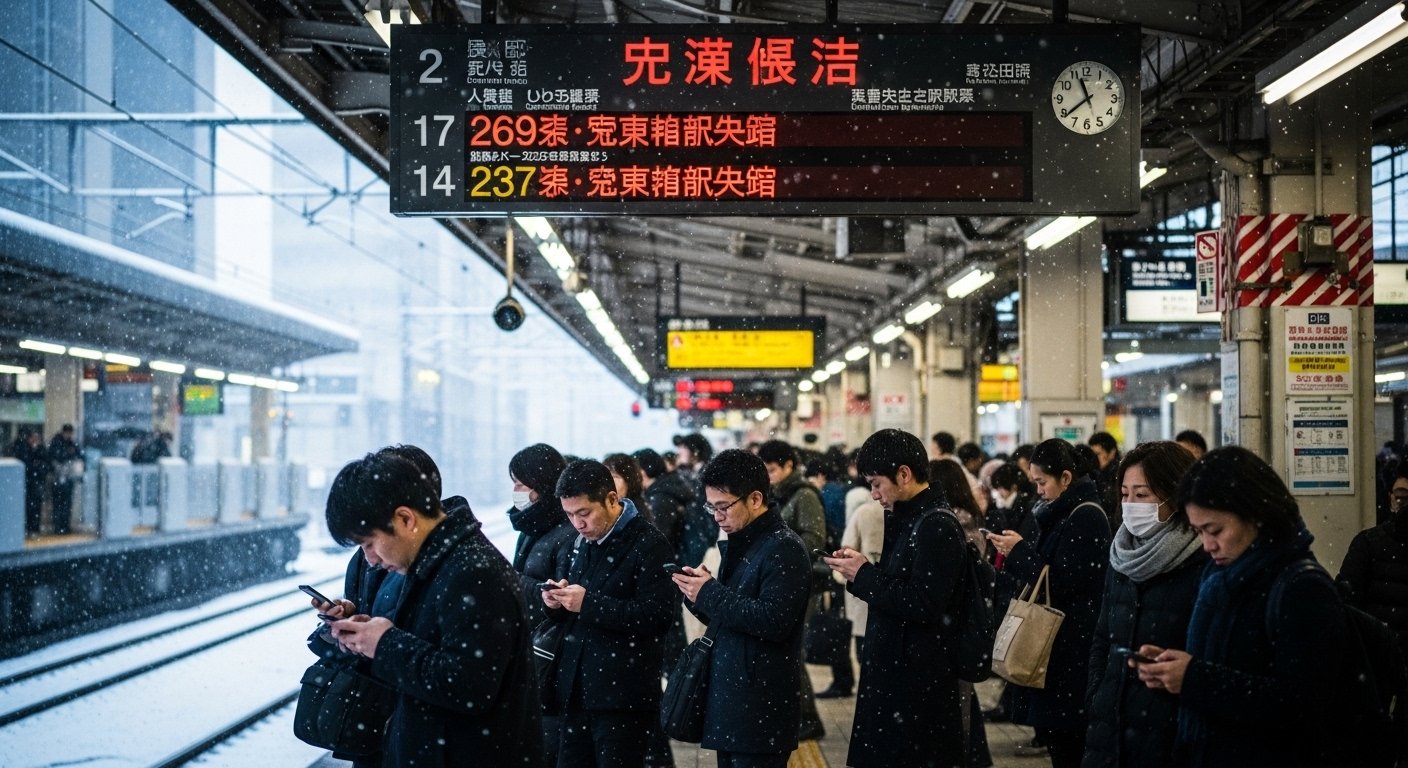
Table of Contents
- The Real Struggle: Why Winter Delays in Japan Hit Different
- Your Real-Time Safety Guide: A Step-by-Step Fixer’s Plan
- Step 1: Proactive Preparation is Your Best Friend (Before Disaster Strikes)
- Step 2: Master the Art of Slippery Situations (Literally)
- Step 3: Your English Info Lifeline: How to Get Real-Time Updates
- Step 4: The Backup Plan Blueprint: Don’t Get Stranded
- Step 5: Gear Up: Practical Solutions for Early Morning Winter Travel
- Common Pitfalls & How to Dodge Them
- The Price of Panic (And How to Avoid It)
- FAQ: Your Burning Questions Answered
The Real Struggle: Why Winter Delays in Japan Hit Different
Let’s be honest, travel delays anywhere suck. But in Japan during winter, there are a few unique pain points that can turn a minor inconvenience into a full-blown travel nightmare:
- The Language Barrier for Real-Time Updates: This is, without a doubt, the number one hurdle. Japan’s public transport is incredibly efficient, but when there’s an issue – especially a weather-related one – updates come fast and furious, almost exclusively in Japanese. Those digital boards, the station announcements, even conversations with staff often default to the local tongue. Trying to decipher complex kanji about track closures or alternative routes while stressed out? Forget about it. I’ve been there, staring blankly at a screen, utterly dependent on a kind stranger (who might not even know English themselves) to explain the situation. This struggle to access accurate, real-time information in English during a delay is a very common challenge for travelers.
- The Fear of Getting Stranded: Japan’s train network is extensive. If your Shinkansen gets cancelled in the middle of nowhere, or the last bus to your ryokan (traditional inn) leaves without you because of an unexpected snow squall, that fear of being completely stuck is very real. Especially if you’re in a less touristy area where English-speaking assistance is scarce.
- Uncertainty About Alternative Routes or Backup Plans: When your main route is busted, what do you do? Is there another train line? A bus? A taxi stand? How much will it cost? Without the language skills or local knowledge, figuring out “what specific actions to take if your travel plans are significantly disrupted” becomes a monumental task. The system is so integrated that a single delay can have a domino effect across your entire journey.
- Misunderstanding Japanese Weather Advisories and Their Impact: The news might mention
大雪警報(ōyuki keihō – heavy snow warning) or強風注意報(kyōfū chūihō – strong wind advisory), but what does that really mean for your bullet train from Tokyo to Nagano? Is it just a warning, or does it mean cancellations are imminent? It’s not always clear how these advisories translate into practical travel implications for tourists.
I’ve learned the hard way that anticipating and managing these unexpected delays isn’t just about packing an extra sweater; it’s about having a proactive strategy to avoid getting blindsided.
Your Real-Time Safety Guide: A Step-by-Step Fixer’s Plan
Alright, let’s get down to brass tacks. Based on my years of navigating Japan’s winter chaos, here’s your battle plan:
Step 1: Proactive Preparation is Your Best Friend (Before Disaster Strikes)
This is where you earn your ‘Japan Local Fixer’ stripes. You need to understand how to anticipate and manage delays before they even occur.
- Check the Forecast, Religiously: Don’t just look at Tokyo. If you’re traveling from Tokyo to Hokkaido, check the weather along your entire route – especially in mountainous regions or coastal areas. I use services like the Japan Meteorological Agency (JMA) website, though it’s mostly in Japanese, many weather apps (like Yahoo! Weather Japan or AccuWeather) offer English interfaces with specific city forecasts. Look for heavy snow warnings (
大雪警報), strong winds (強風), or anything indicating ‘disruptive weather.’ - Know Your Operator: Identify which railway companies operate your routes. For example, if you’re taking the Shinkansen, it’s likely JR (Japan Railways). If you’re in Tokyo, you’ll use JR, Tokyo Metro, Toei, etc. Each company has its own delay information.
- Understand the System’s Resilience (and Limits): While the Japan Transport Safety Board (JTSB) rigorously investigates accidents and maintains safety standards, ensuring that Japan’s transport modes are incredibly safe, even the best systems have their limits against Mother Nature. Maritime traffic, for instance, is governed by strict laws like the Maritime Traffic Safety Law, showing how seriously Japan takes transport regulation. This means they’ll prioritize safety, and if that means delays or cancellations, so be it.
Step 2: Master the Art of Slippery Situations (Literally)
I once watched a tourist slip on an icy platform at Shinjuku Station, taking out a display of bento boxes with their flailing arm. It was both hilarious and a stark warning. You need to take proactive steps to ensure personal safety on slippery surfaces, especially on icy platforms and during snowy conditions.
- Footwear is King: This isn’t just for comfort; it’s for survival. Leave the fashion boots for later. Bring waterproof, non-slip shoes or boots with good traction. I prefer hiking boots or winter specific boots with deep treads.
- The Penguin Walk: Seriously, adopt it. Short, shuffling steps, knees slightly bent, center of gravity over your feet. Avoid sudden movements. Especially when getting off a train onto a potentially icy platform, or navigating station stairs.
- Hold Onto Handrails: Every handrail is your friend. On stairs, escalators, and even just walking along the platform edge.
- Watch for Black Ice: Sometimes the most dangerous ice is the one you can’t see. Look for shiny patches, or where snow has been recently cleared. That’s usually where the clear, treacherous ice lies. Station staff often salt or sand platforms, but don’t count on it being everywhere.
Step 3: Your English Info Lifeline: How to Get Real-Time Updates
This is critical for informed decision-making. You need to actively seek and prioritize access to accurate, real-time transport information in English when a delay is encountered.
- Google Maps & Japan Transit Planner: These are your daily drivers. Google Maps often pulls real-time delay info, sometimes even in English. Japan Transit Planner (Jorudan) is another excellent app; while its primary interface is Japanese, it’s incredibly accurate and often has an English option or is intuitive enough to understand departure/arrival times.
- Train Company Websites (English Sections): Most major train companies (like JR East, JR West, Tokyo Metro) have English versions of their websites. In times of severe delays, they usually post bulletins there. Bookmark them!
- JR East English: https://traininfo.jreast.co.jp/en/
- JR West English: https://trafficinfo.westjr.co.jp/en/
- Tokyo Metro English: https://www.tokyometro.jp/en/index.html (Look for ‘Service Status’)
- Station Staff (with a caveat): Many major stations have English-speaking staff, especially in tourist hubs. However, during a major delay, they will be overwhelmed. Don’t expect a full conversation. Be patient and polite. This is where your
Point & Speakphrases come in handy!
🇯🇵 Point & Speak
Show this to staff:
English: Is this train delayed?
この電車は遅れていますか?
(Kono densha wa okurete imasu ka?)
English: Is there an alternative route?
他にルートはありますか?
(Hoka ni rūto wa arimasu ka?)
English: I have a reservation at [time].
[時間]に予約があります。
([Jikan] ni yoyaku ga arimasu.)
English: Where is the information counter?
案内所はどこですか?
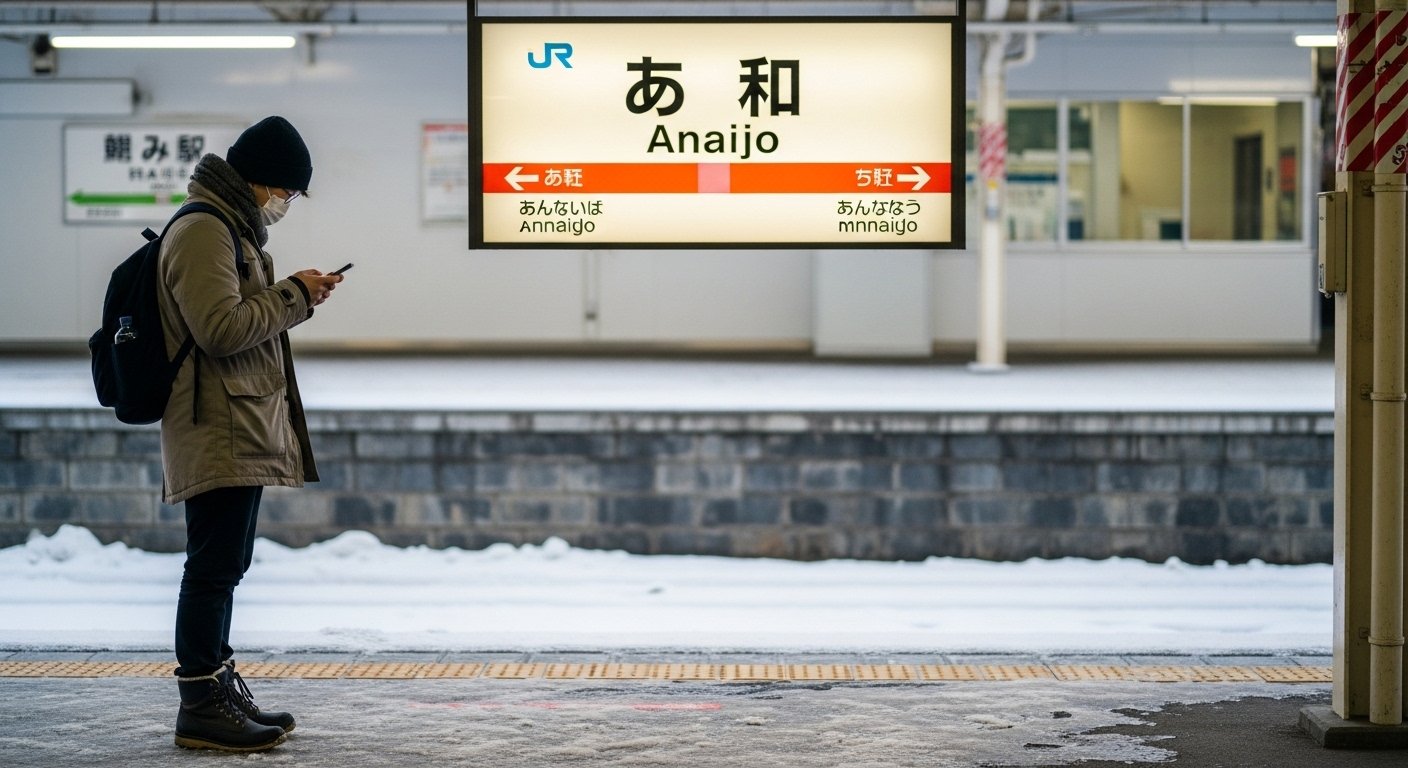
(Annaijo wa doko desu ka?)
Step 4: The Backup Plan Blueprint: Don’t Get Stranded
The key here is to formulate or identify alternative routes and backup plans, and understand the specific actions to take if your primary travel plans are significantly disrupted.
- Identify Alternate Routes (Mentally or Physically): Before you even leave, glance at your map. If your Shinkansen line is down, is there a slower, local line that goes in the same direction? Is there an express bus service that could be an option? Even if it takes longer, having any alternative is better than none. I always check bus routes as a backup for regional travel.
- Know Your ‘Escape Hatch’: For major city-to-city routes, especially during winter, always have a rough idea of where the nearest major hub or city is where you could spend an unplanned night. Know if there are hotels near the station, or a taxi stand.
- Cash is King (Still): While cards are more accepted these days, Japan still runs on cash for many things, especially smaller vendors, rural buses, or emergency taxi rides. Always carry at least ¥10,000 to ¥20,000 in physical yen. If the power goes out, or systems are down, your card is useless.
- Stay Connected: Make sure your phone is charged. Bring a power bank. You’ll need it for maps, translation apps, emergency contact, and checking updates.
Step 5: Gear Up: Practical Solutions for Early Morning Winter Travel
You need to equip yourself with practical, on-the-ground solutions to navigate early morning winter travel safely and efficiently. My infamous snowboarding trip taught me this.
- Layer Up, Seriously: Japan’s winters can be deceptively cold, especially if you’re standing still on a platform for an hour. Thermals, a good fleece, a waterproof and windproof outer shell, hat, gloves, and a scarf are non-negotiable.
- Snacks and Hydration: Delays mean hunger and thirst. Pack some high-energy snacks (protein bars, nuts) and a bottle of water. While vending machines are ubiquitous, if you’re stranded somewhere or a station is particularly busy, having your own supplies is a lifesaver.
- Entertainment: A book, fully charged e-reader, or downloaded movies/podcasts can make a long wait much more bearable. Wi-Fi isn’t always reliable, especially in a crowded station during a delay.
Common Pitfalls & How to Dodge Them
My first few years were a minefield of these:
- Assuming Everyone Speaks English: This is the biggest trap. While staff at major international airports and tourist centers might, don’t rely on it. Especially in rural areas or during stressful situations like delays, English speakers might be scarce. Dodge: Prepare your basic Japanese phrases, use translation apps, and have a good offline map.
- Underestimating the Cold: I once thought “Tokyo winter can’t be that bad.” It can. Especially with wind chill and humidity. Dodge: Overpack layers rather than underpack. It’s easier to remove a layer than to conjure one.
- Not Having a Charged Phone/Power Bank: This isn’t just an inconvenience; it can be a safety issue. Dodge: Always leave your accommodation with a fully charged phone and a power bank.
- Panicking and Making Rash Decisions: My initial reaction to that Shinkansen delay was pure, unadulterated panic. I almost booked a ridiculously expensive taxi. Dodge: Take a deep breath. Use your prepared tools. Consult your apps. Ask for help if you can. Japan is safe; you won’t be in immediate danger.
🎯 Insider Tip: If your Shinkansen is severely delayed or cancelled, and you have a reserved seat ticket, you can usually get a full refund for that leg of the journey, or at least a partial one if you decide to ride a later train. Go to the ticket counter (`みどりの窓口` – Midori no Madoguchi) with your ticket. Don’t just toss it!
The Price of Panic (And How to Avoid It)
Making hasty decisions in a panic often leads to unnecessary expenses. Here’s a breakdown of what a winter delay could cost you if you’re not prepared, versus the reasonable costs of being smart.
| **Scenario** | **Cost of Panic (Estimated ¥)** | **Cost of Preparedness (Estimated ¥)** | **Notes** |
| Emergency Taxi (long distance) | ¥15,000 – ¥30,000+ | ¥5,000 – ¥8,000 (shorter, planned detour) | Panicked decision to take a taxi for a route that could have been a bus. |
| Emergency Hotel Night | ¥15,000 – ¥30,000+ (last-minute booking) | ¥8,000 – ¥12,000 (pre-researched backup hotel) | Booking on the fly in an unfamiliar area. |
| Missed Flight/Rebooking Fees | ¥10,000 – ¥50,000+ | ¥0 (if buffer time was built in) | The absolute worst-case scenario. Always add buffer time before flights. |
| Unnecessary Food/Drink Purchases | ¥2,000 – ¥4,000 (stress eating, buying overpriced items) | ¥500 – ¥1,000 (planned snacks/water) | Buying from convenience stores and vending machines adds up. |
| Lost Opportunity Cost | Priceless (missed experiences, wasted vacation time) | Minimal (if managed efficiently) | The stress and disappointment of a ruined day. |
As you can see, a little planning goes a very long way in saving your wallet (and your sanity!).
FAQ: Your Burning Questions Answered
Q1: How do I get real-time English updates for train delays in Japan?
A1: The best way to get real-time English updates is through a combination of resources. Start with apps like Google Maps or Japan Transit Planner (Jorudan), which often integrate live delay information. Many major railway companies (like JR East and Tokyo Metro) also have English sections on their official websites where they post service status updates during disruptions. For critical situations, station staff at larger stations might be able to provide basic information in English, but it’s best to have some key Japanese phrases ready.
Q2: What should I do if my train is significantly delayed or cancelled by snow in Japan?
A2: First, don’t panic. Check your mobile apps and the train company’s official English website for details on the delay or cancellation. Look for information on alternative routes (bus or other train lines) or if a substitute service is being offered. If you have a reserved seat, head to the nearest ticket counter (みどりの窓口 – Midori no Madoguchi) to inquire about refunds or rebooking. If stranded for a long period, consider finding accommodation near the station, and always have cash for unforeseen expenses like a taxi or a quick bite.
Q3: How can I stay safe on icy platforms and slippery surfaces during winter travel in Japan?
A3: Safety on icy surfaces is paramount. Always wear sturdy, waterproof, non-slip footwear with good traction. When walking on potentially icy platforms, adopt a “penguin walk” – taking short, shuffling steps, keeping your center of gravity low, and avoiding sudden movements. Utilize handrails on stairs and escalators, and be extra cautious when stepping on and off trains, as the gap can sometimes be slippery. Be aware of “black ice” – clear, invisible ice – which can be extremely treacherous.
Navigating unexpected winter transport delays in Japan can feel daunting, especially when you’re far from home and facing a language barrier. But with a bit of foresight, the right tools, and a “Fixer’s” mindset, you can turn potential disasters into manageable inconveniences. I’ve been there, done that, and learned the hard way so you don’t have to. Stay safe, stay warm, and enjoy the magic of a Japanese winter – even if it throws a little snow your way!