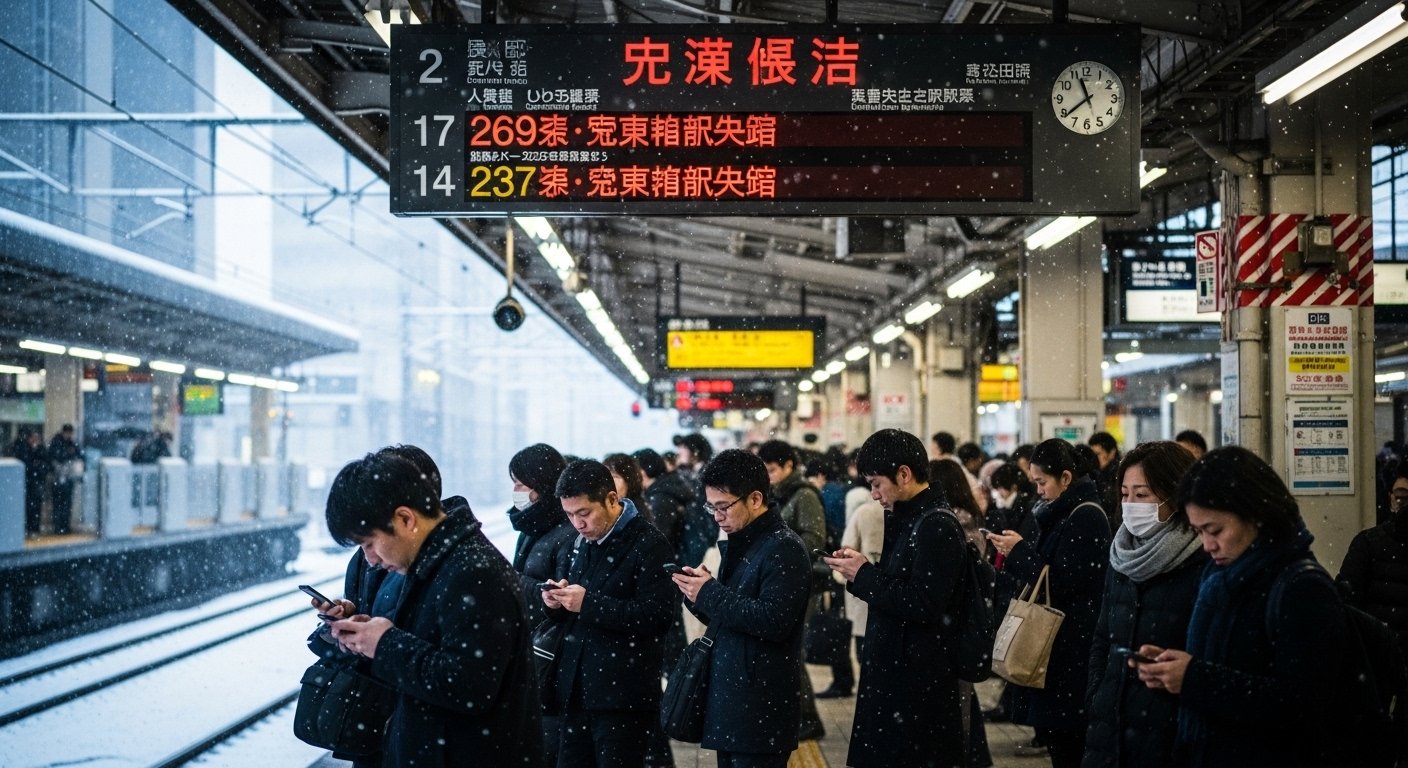
*Images used in this article are for illustration only. They may not be directly related to the content.
Safe Japan Winter Travel: Navigating Icy Transport & Early Morning Delays
Japan’s winter landscapes offer unique beauty, drawing visitors to snow festivals, ski resorts, and illuminated cities. However, the season also presents specific challenges for international travelers. Icy conditions on station platforms and pathways, unexpected train delays due to weather, and dealing with long waits in the cold can disrupt your plans and impact your comfort. Understanding how to mitigate these risks is key to a smooth winter journey.
This guide provides practical strategies to help you navigate Japan’s winter transport network safely and efficiently. We will cover how to prevent slips, understand real-time delay information despite language barriers, and manage unexpected cold waits. By equipping yourself with this knowledge and a few key Japanese phrases, you can minimize friction and ensure your winter travel in Japan remains both safe and enjoyable.
Table of Contents
Navigating Icy Platforms: Staying Upright in Winter Japan
The beauty of a snow-dusted Japanese landscape can often conceal a hidden hazard: icy surfaces. While major cities like Tokyo might only see occasional freezing rain, northern regions like Hokkaido, Tohoku, and mountainous areas frequently experience heavy snowfall and black ice from December to March. Station platforms and pathways, especially during early morning or late evening, can become treacherous. The risk of slipping is a primary concern for travelers unfamiliar with these conditions.
The Solution: Grip, Gait, and Awareness
Preventing slips is about preparation and cautious movement. Proactive steps can significantly reduce your risk of injury.
1. Prioritize Proper Winter Footwear
- Invest in Grip: Your choice of footwear is crucial. Select boots with dedicated non-slip soles. Look for materials like Vibram Arctic Grip or designs incorporating rubber studs. These provide enhanced traction on ice and packed snow.
- Consider Attachable Ice Grips: If your current shoes lack sufficient grip, attachable ice grips (滑り止め – suberidome) are a practical solution. These small, strap-on devices have metal studs or rubber treads that fit over your existing shoes.
- Where to Buy: Attachable grips are commonly found at convenience stores (konbini), drugstores, 100-yen shops, and hardware stores across Japan.
💰 Price Breakdown: Attachable Shoe Grips
| Item | Cost (Approx.) |
| Simple attachable ice grips (pair) | ¥500-1,500 |
Prices verified as of January 2026. May vary by store and quality.
2. Adopt a Winter Walking Technique
- Small, Deliberate Steps: On potentially icy surfaces, shorten your stride. Take small, shuffling steps, keeping your feet directly beneath you.
- Distribute Weight Evenly: Walk flat-footed, keeping your center of gravity low. Avoid leaning forward or backward.
- Keep Hands Free: Ensure your hands are free for balance. Avoid walking with hands in pockets or holding numerous bags.
- Look Ahead, Not Down at Your Phone: Distraction significantly increases fall risk. Scan the path ahead for slippery spots and avoid using your phone while walking on ice or snow.

3. Recognize Visual Cues
Japanese stations and public areas often employ clear warnings for slippery conditions:
- Warning Tape: Look for yellow and black striped tape or cones.
- Signs: Text like ‘注意’ (Chūi – Caution) or ‘滑りやすい’ (Suberiyasui – Slippery) are common. Sometimes, a simple graphic of a person slipping is used.
- Salt/Grit: The presence of salt or sand spread on surfaces indicates that icy conditions have been anticipated or are being treated.
🎯 Local Pro-Tip: Even if snow has melted, moisture can refreeze as black ice, which is nearly invisible. Assume any wet-looking paved surface in cold weather could be slick.
🇯🇵 Point & Speak: Slippery Conditions
If you’re unsure about a path, ask a station attendant or local. Show them this section.
English: Is this area slippery?
ここ、滑りやすいですか?
(Koko, suberi yasui desu ka?)
English: Where can I buy shoe grips?
靴の滑り止めはどこで買えますか?
(Kutsu no suberidome wa doko de kaemasu ka?)
Decoding Delays: Real-Time Transport Information in Winter
Winter weather, particularly heavy snowfall or freezing rain, can impact Japan’s otherwise punctual public transport. Train delays and cancellations are common during severe conditions, especially on regional lines and early morning services. While the Shinkansen (bullet trains) are remarkably resilient, even they can face delays. The primary challenge for international visitors is understanding real-time information, which is predominantly in Japanese.
The Solution: Proactive Information Access & Language Tools
Staying informed requires a multi-pronged approach, combining pre-departure checks with on-the-spot translation.
1. Before You Depart: Check Official Sources
Make checking transport status part of your morning routine, especially on travel days:
- Japan Meteorological Agency (JMA): Check for weather warnings and forecasts. The JMA website offers English information on severe weather that could impact travel.
JMA Weather Warnings (English) - Train Operator Websites: Major operators like JR East and JR West provide English-language service status updates. While these may lag behind Japanese versions, they are crucial starting points.
JR East Service Status (English)
JR West Service Status (English) - Google Maps: This application often integrates real-time transit data and can be more current than some operator sites for general delays. Input your destination and check the transit option.

2. At the Station: Utilizing Visuals and Technology
Once at the station, look for visual cues and be ready with translation tools:
- Digital Information Boards: Look for large blue or white digital screens. While primarily in Japanese, you can often spot key terms:
- ‘遅延’ (Chien – Delay)
- ‘運休’ (Unkyuu – Cancelled)
- ‘運転見合わせ’ (Unten Miawase – Service suspended)
- Look for changed departure times or alternative platform numbers.
- Google Translate Camera: Use the camera function of Google Translate (or similar apps like DeepL). Point your phone at physical signs or digital boards, and it will attempt to translate the text in real-time. This is invaluable for quickly grasping the situation.
- Station Staff (駅員 – Ekīin): Uniformed staff, often wearing caps, are the best source of immediate, accurate information. Approach them calmly with your question, ideally using one of the Japanese phrases below.

🎯 Local Pro-Tip: For critical early morning journeys (e.g., to the airport), build in extra buffer time. An unexpected 30-minute delay can derail tight schedules.
🇯🇵 Point & Speak: Understanding Delays & Cancellations
Show this section to station staff if you’re stuck. They can read the Japanese.
English: The train is delayed. When will it depart?
電車が遅れています。いつ出発しますか?
(Densha ga okurete imasu. Itsu shuppatsu shimasu ka?)
English: My train has been cancelled.
私の電車が運休になりました。
(Watashi no densha ga unkyuu ni narimashita.)
English: How can I get to [Destination]? (If your route is cancelled)
[目的地]へはどう行けますか?
([Mokutekichi] e wa dou ikemasu ka?)
📋 Quick Reference Card: Real-Time Transport Info
Screenshot or print this section for easy access:
- ✅ JMA (Weather): jma.go.jp/jma/indexe.html
- ✅ JR East Status: traininfo.jreast.co.jp/train_info/e/
- ✅ JR West Status: westjr.co.jp/global/en/train/traffic_info/
- ✅ Google Maps: Check transit layer for real-time updates.
- ✅ Google Translate: Camera function for signs.
Managing Cold Waits: Staying Comfortable During Unexpected Stops
An unexpected delay in winter can mean long waits in cold conditions, especially during early morning travel when temperatures are lowest. While major train stations often feature heated waiting rooms, smaller, regional stations might only offer outdoor platforms or unheated shelters. Being prepared for these colder-than-expected waits is essential for your comfort and health.
The Solution: Strategic Waiting & Layered Preparation
Knowing where to find warmth and how to dress can make a significant difference during a delay.
1. Locate Heated Waiting Rooms (待合室 – Machiaishitsu)
Many larger stations are equipped with designated indoor waiting areas. These often have heating, vending machines, and sometimes restrooms.
- Look for Signs: Keep an eye out for signs reading ‘待合室’ (Machiaishitsu). These may also include a heater symbol.
- Ask Staff: If you cannot locate one, ask station staff.

🇯🇵 Point & Speak: Finding Warmth
Show this section to station staff if you’re feeling cold and need a warm place.
English: Are there any heated waiting rooms?
暖房のきいた待合室はありますか?
(Danbou no kiita machiaishitsu wa arimasu ka?)
2. Dress for the Cold, Always
Layered clothing is your best defense against Japan’s winter chill, especially during unexpected outdoor waits.
- Base Layers: Start with thermal underwear.
- Mid-Layers: Add fleece or sweaters for insulation.
- Outer Layer: A waterproof and windproof jacket is essential.
- Accessories: Don’t forget a warm hat, gloves or mittens, and a scarf. These prevent significant heat loss.
- Portable Heat Packs (カイロ – Kairo): These disposable, self-heating packets are a local favorite. Place them inside your jacket pockets or stick them to your clothing (not directly on skin) for hours of warmth. They are readily available at convenience stores and drugstores.

📋 Quick Reference Card: Essentials for Cold Waits
Screenshot or print this section for easy access:
- ✅ Layered Clothing: Thermal base, warm mid-layers, windproof outer.
- ✅ Accessories: Hat, gloves, scarf.
- ✅ Portable Heat Packs (Kairo): Buy at konbini/drugstores.
- ✅ Hot Drink: Vending machines/konbini often have hot beverages.
- ✅ Snacks: Energy bars or quick bites for sustained warmth.
Essential Resources & Broader Considerations
Beyond immediate actions, consider these overarching aspects for a safer, more resilient winter trip.
Travel Insurance: Your Winter Back-up
Unexpected delays or cancellations can lead to unforeseen costs, such as last-minute accommodation changes, missed connections, or expensive taxi fares. Travel insurance that specifically covers travel disruptions due to severe weather is a wise investment for winter journeys in Japan. Review policy details carefully to understand what is covered.
Local Cultural Nuances: Patience and Communication
Japanese staff are generally helpful and polite. However, during major disruptions, they will be managing significant crowds and may have limited English proficiency. Your patience and clear, simple communication, supported by a few key Japanese phrases, will yield better results. Avoid confrontation; it is not culturally appropriate and will not expedite a resolution.
🚨 Emergency Contacts
| Police | 110 |
| Ambulance/Fire | 119 |
| Emergency Medical Translation | 03-5285-8181 (Tokyo HIMC) |
110 and 119 are free and work from any phone. For non-emergency medical advice/translation, other numbers exist per region.
Frequently Asked Questions
What if my Shinkansen is severely delayed or cancelled due to snow?
If your Shinkansen is severely delayed (typically over 2 hours) or cancelled, approach JR staff at the ticket gate or information counter. They can guide you on rebooking, alternative routes, or compensation. Depending on the ticket type and delay length, you may be eligible for a full refund or rebooking to the next available service without extra charge. Keep your ticket as proof.
Can I get a refund if my train is cancelled due to weather?
Generally, yes. If your train is cancelled due to weather conditions, you are usually entitled to a full refund for the unused portion of your ticket. Speak to station staff at the ticket counter (みどりの窓口 – Midori no Madoguchi) or gate. For passes like the Japan Rail Pass, consult JR staff for options as specific refund rules apply.
Are taxis a reliable alternative during heavy snow or train disruptions?
Taxis can be an alternative, but reliability varies. During heavy snow, roads may also be affected, leading to slow travel times. Moreover, taxis can be significantly more expensive than trains, especially for long distances, and may be difficult to find during widespread transport disruptions as demand surges. Use them for short distances or as a last resort if public transport is entirely halted.
What’s the best app for real-time weather and train information in Japan?
For weather, the official Japan Meteorological Agency (JMA) website is the most reliable, though their app is primarily in Japanese. For transit, Google Maps is excellent for integrating real-time train data. Many major train operators also have their own apps (e.g., JR West’s “JR Odekake Net” or JR East’s “JR East App”), which can be helpful if you understand some Japanese or can use translation tools. Always cross-reference information if possible.
Conclusion
Japan’s winter travel offers distinct experiences, but navigating its transport network requires foresight and practical preparation. By prioritizing appropriate footwear, actively monitoring for delays, understanding key Japanese phrases, and dressing strategically for the cold, you can mitigate the common challenges of icy platforms and unexpected waits. Embrace these proactive measures to ensure your journey through Japan’s winter wonderland is safe, comfortable, and memorable.
Stay warm, stay safe, and enjoy the unique beauty of Japan in winter.
Disclaimer
The information provided in this guide is for general informational purposes only and is subject to change. While every effort has been made to ensure accuracy, conditions can vary significantly based on specific location, weather severity, and time of year. Always prioritize official warnings, exercise personal caution, and consult local authorities or staff for the most current information. Travel insurance is highly recommended for unexpected events.