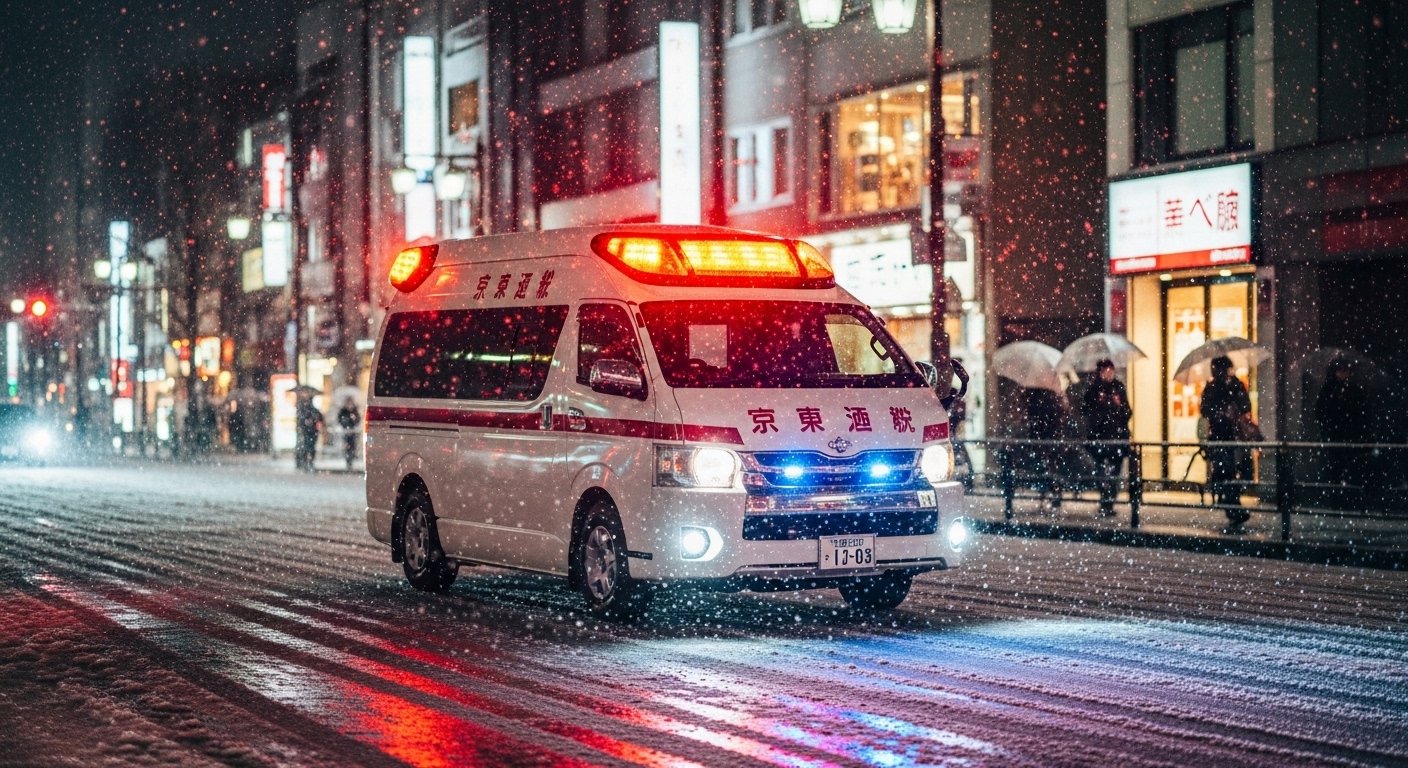
*Images used in this article are for illustration only. They may not be directly related to the content.
Beat Japan Winter Delays: Navigating Early Morning New Year’s Travel & Crowds
Anticipating early morning winter travel in Japan during the New Year’s holiday season? You’re right to prepare. While Japan’s transport network is renowned for its efficiency, the combination of heavy snow, icy conditions, and the immense New Year’s crowds Japan presents unique challenges. Unexpected transport delays or cancellations, intensely crowded stations, and the struggle to find reliable, real-time information can quickly turn an exciting journey into a stressful ordeal.
This guide is engineered to remove that friction. We provide practical, actionable strategies to manage luggage, navigate congestion, access critical information, and ensure your personal safety on potentially icy platforms Japan. From understanding altered holiday train schedules Japan to leveraging technology, you’ll learn how to approach Japan early morning train travel with confidence, even amidst winter’s unpredictability.
Table of Contents
- The Challenge: Why Early Morning Winter Travel in Japan Demands Preparation
- Your Strategy: Beating Delays and Navigating Crowds
- Essential Japanese Phrases for Winter Travel & Emergencies
- Pro-Tips for a Smoother Journey
- Common Mistakes to Avoid
- Emergency Contacts in Japan
- Frequently Asked Questions (FAQ)
The Challenge: Why Early Morning Winter Travel in Japan Demands Preparation
Your journey through Japan during winter, particularly around New Year’s, involves navigating specific hurdles. Understanding these challenges is the first step toward overcoming them.
Unpredictable Winter Weather and Its Impact
Japan’s winter weather can shift rapidly. Heavy snowfall and freezing temperatures are common in regions like Hokkaido, Tohoku, Hokuriku, and along the Japan Sea coast (Niigata, Toyama, Ishikawa, Fukui). Mountainous areas like Nagano and Gifu are also frequently affected. Even major urban centers like Tokyo and Osaka, while less prone to significant snowfall, can experience widespread disruption from unseasonable heavy snow or freezing rain, as infrastructure is less accustomed to it.
Snow and ice lead to snow delays Japan transport, causing trains to run at reduced speeds, or face complete cancellations due to track blockages, frozen overhead lines, or reduced visibility. In severe cases, train services may be replaced by bus services. However, these alternative buses are themselves subject to delays and cancellations, and importantly, your Japan Rail Pass typically does not cover these alternative bus services unless explicitly stated as an official substitute by JR.
New Year’s Travel Rush and Altered Schedules
The period from approximately December 28th/29th to January 3rd/4th marks the peak for New Year’s holidays in Japan. This time sees a massive internal migration as people return home or travel for Hatsumōde, the first shrine or temple visit of the year. Early morning travel during this window, especially to/from major transport hubs or popular Hatsumōde destinations, will experience extreme congestion.
Complicating matters, public transport schedules are often altered. Many major lines, particularly JR and private railways in urban areas, offer extended or 24-hour services on New Year’s Eve (Omisoka, Dec 31st) into New Year’s Day (Ganjitsu, Jan 1st). While this allows for Hatsumōde, these services typically run less frequently than regular daytime services. Furthermore, most regional bus services and some local train lines will operate on reduced ‘holiday schedules’ (休日ダイヤ – kyūjitsu daiya) from around December 29th/30th to January 3rd/4th. Failure to verify these specific routes on their respective official websites can lead to long waits or missed connections.
Navigating Crowds, Real-Time Information Gaps, and Safety Risks
Intense crowds during the holiday rush mean navigating stations and trains becomes a physical challenge. Platforms will be packed, and boarding trains can feel like a coordinated effort in resilience. This environment significantly increases personal safety risks, such as slipping on icy platforms or managing luggage in dense throngs.
Finding reliable, real-time information for early morning disruptions is crucial. While Japan excels at providing information, understanding live announcements, especially in a foreign language, can be difficult. Display boards (電光掲示板 – denko keijiban) at stations provide critical updates, often showing ‘遅延’ (chien – delay) or changes in status. Relying solely on static schedules or outdated apps will leave you vulnerable to unexpected changes.
Your Strategy: Beating Delays and Navigating Crowds
Proactive planning and smart execution are key to a smooth Japan winter travel experience. Implement these steps to minimize friction.
1. Plan Aggressively & Diversify Your Options
Do not assume normal operating conditions. Research is paramount.
- Verify Schedules Extensively: Check the official websites of specific railway companies for your routes. Pay close attention to dates between December 29th and January 4th for ‘休日ダイヤ’ (holiday schedule). Don’t just look at one source.
- Identify Backup Routes: For critical journeys (e.g., to the airport, a connecting Shinkansen), have a Plan B. This might involve a local bus, a different train line, or even a taxi for shorter distances.
- Consider Travel Insurance: Unexpected snow delays Japan transport or cancellations can lead to unforeseen expenses like last-minute hotel stays or rebooking flights. Quality travel insurance that covers delays and cancellations is an essential part of your Japan rail disruption information strategy.
- Book Accommodation Strategically: If you have a crucial early morning departure or arrival, consider staying closer to the station or airport the night before to reduce early morning stress.
2. Stay Informed in Real-Time
Access to current information is your best defense against disruptions.
- Leverage Official Railway Websites:
- JR East Service Status (Kanto region)
- JR West Service Status (Kansai, Chugoku, etc.)
- JR Central Service Status (Tokaido Shinkansen, Japanese only – use browser translate)
These sites are updated frequently and offer the most accurate data. Many have English versions or are compatible with browser translation tools.
- Utilize Transit Apps:
- Google Maps (Transit Feature): Often provides real-time delay notifications and alternative routes.
- Japan Transit Planner (Jorudan): A comprehensive route planner with delay information.
- HyperDia: Another powerful tool, though free searches are now limited.
Enable push notifications on these apps for critical alerts regarding your planned routes.
- Monitor Weather Warnings: Check the Japan Meteorological Agency (JMA) website for snow and ice warnings, especially if traveling to prone regions.
- Observe Visual Cues: At the station, look for large electronic display boards (電光掲示板 – denko keijiban). They show train times, destinations, and crucial delay information (遅延 – chien). Delayed trains may show a ‘遅’ symbol or change status color. Station staff in uniforms (often with yellow safety vests during disruptions) are also a key visual cue; they often carry white flags or megaphones to direct passengers.
3. Master Luggage Management
Navigating intensely crowded stations and trains with large suitcases is a significant source of friction and a personal safety risk.
- Use Luggage Forwarding Services (Takkyubin): This is arguably the most impactful strategy for managing luggage crowded Japan stations. Services like Yamato Transport (Takkyubin) and Sagawa Express are highly efficient. They pick up your luggage from your hotel/airport and deliver it to your next destination, typically within 1-2 days. Plan accordingly for delivery times. The cost is reasonable and far outweighs the hassle and potential danger of lugging heavy bags through New Year’s crowds.
- Pack Light for Day Trips: If you’re staying at one base but taking a short trip, use a smaller backpack or carry-on. Leave your main luggage at your hotel or forward it.
- Coin Lockers (Use with Caution): While stations have coin lockers, they fill up quickly during peak seasons. Do not rely on them for critical storage during New Year’s.
4. Prioritize Personal Safety
Your well-being is paramount, especially in winter conditions and dense crowds.
- Wear Appropriate Footwear: Platforms and station entrances in snowy or cold regions can become extremely icy. Invest in waterproof, non-slip boots with good traction. This is critical for preventing slips and falls on icy platforms Japan.
- Maintain Situational Awareness: Look for ‘足元注意’ (ashimoto chūi – caution your step) signs. These are common warnings for slippery surfaces and uneven ground. Walk slowly, take small steps, and watch where you place your feet. Be aware that handrails may also be cold or icy.
- Mind the Gap and Yellow Lines: Bright yellow or white lines on platforms mark the safe standing distance from the tracks. Never cross them, especially with crowds pushing.
- Secure Valuables: In dense crowds, keep your valuables in front of you or in secure internal pockets.
- Dress in Layers: Unexpected delays can mean standing on a cold, exposed platform for extended periods. Layered clothing, including a waterproof outer shell, gloves, and a hat, will ensure you remain comfortable and safe from the cold.
5. Understand New Year’s Specifics
Cultural nuances contribute significantly to the travel landscape during this time.
- Anticipate Hatsumōde Crowds: Popular shrines and temples like Meiji Jingu (Tokyo) or Fushimi Inari Taisha (Kyoto) will see millions of visitors. Routes leading to these sites will be exceptionally busy, even with extended train services. Factor in extra time and patience.
- Extended vs. Regular Service: Remember, “extended service” on New Year’s Eve/Day does not mean frequent service. Expect longer wait times between trains, even if they run all night.
- Local Service Changes: Reconfirm that local buses and smaller train lines are operating. Many will be on holiday schedules or may not run at all on certain days.
Essential Japanese Phrases for Winter Travel & Emergencies
While many staff in major stations may have some English, having key phrases ready can be invaluable during disruptions or emergencies. Show this section to staff if you need assistance.
🇯🇵 Point & Speak
Show this section to staff if you’re stuck. They can read the Japanese.
English: Is the train delayed?
電車は遅れていますか?
(Densha wa okurete imasu ka?)
English: Is it cancelled?
運休ですか?
(Unkyū desu ka?)
English: When is the next train?
次の電車は何時ですか?
(Tsugi no densha wa nanji desu ka?)
English: Where is the information counter?
案内所はどこですか?
(Annaijo wa doko desu ka?)
English: I slipped.
滑ってしまいました。
(Subette shimaimashita.)
English: Please help me.
助けてください。
(Tasukete kudasai.)
English: Holiday schedule
休日ダイヤ
(Kyūjitsu daiya)
English: Snow/Ice disruption
雪/凍結の影響 (ゆき/とうけつのえいきょう)
(Yuki/tōketsu no eikyō)
Pro-Tips for a Smoother Journey
🎯 Local Pro-Tip: Always purchase flexible or refundable tickets if your schedule is tight and you’re traveling during peak winter. This small upfront cost can save significant money and stress if plans change due to weather or crowds.
- Charge All Devices: Your smartphone is your primary tool for real-time train status Japan winter, maps, and translation. Carry a fully charged power bank, especially during early morning excursions when shops might not be open.
- Pack Essential Snacks and Water: During severe delays or in incredibly crowded stations, kiosks and convenience stores might be overwhelmed, have long lines, or even close. Having basic provisions on hand can make a long wait tolerable.
- Consider Taxis for Short Distances (Last Resort): For short, critical connections when public transport is severely disrupted, a taxi can be an option. Be aware that during heavy snow or peak holidays, availability will be low, and prices may surge. Always have a taxi app (like JapanTaxi or Go) installed.
- Buffer Time for Airport Connections: If you have an international flight, add several hours (3-4+) of buffer to your journey, even if it seems excessive. An early morning Japan early morning train delay could easily make you miss a flight.
- Utilize IC Cards: Have your Suica, Pasmo, or ICOCA card fully charged. This eliminates the need to buy paper tickets, streamlining your journey through crowded gates.
Common Mistakes to Avoid
Learning from others’ missteps can save you significant trouble.
- Assuming Regular Schedules: This is the most critical mistake during the New Year’s period. Always confirm the ‘休日ダイヤ’ (holiday schedule) for all legs of your journey.
- Ignoring Weather Forecasts: Not checking the Japan Meteorological Agency’s warnings, especially if traveling to snow-prone areas, leaves you unprepared for potential disruptions.
- Underestimating Crowd Density: Japanese stations are efficient, but the sheer volume of people during New Year’s can be overwhelming. Don’t plan tight connections during peak times.
- Skipping Luggage Forwarding: Attempting to haul large suitcases through densely packed stations is inefficient, uncomfortable, and potentially dangerous, contributing to slipping on ice Japan train station safety risks.
- Wearing Inappropriate Footwear: Fashionable boots with smooth soles are a hazard on icy or wet surfaces. Prioritize functionality and grip.
- Relying Solely on English Information: While efforts are made, critical, minute-by-minute updates, especially for local lines, may only be in Japanese. Use translation apps and the ‘Point & Speak’ phrases.
🚨 Emergency Contacts in Japan
Keep these numbers accessible, even if you hope not to use them.
🚨 Emergency Contacts
| Police | 110 |
| Ambulance/Fire | 119 |
All numbers are free and work from any phone. State your location clearly.
Frequently Asked Questions (FAQ)
What’s the best way to check for real-time train delays in Japan during winter?
For the most accurate real-time train status Japan winter, check official railway company websites (e.g., JR East, JR West) and transit apps like Google Maps or Jorudan. Many official sites offer English versions or are easily translated. Enable push notifications on your apps for immediate alerts.
Can I use my Japan Rail Pass on alternative bus services during disruptions?
The Japan Rail Pass typically does not cover alternative bus services during train disruptions unless explicitly announced by JR as an official substitute route due to a specific issue. Always confirm with station staff. In most cases, you would need to purchase a separate ticket for the bus.
How early should I arrive at the station during New Year’s peak travel?
During the New Year’s peak, especially for Japan early morning train travel, arrive at least 45-60 minutes before your scheduled departure. For major Shinkansen lines or airport connections, allow 90 minutes to two hours. This provides a buffer for navigating crowds, finding platforms, and managing any unexpected minor delays.
What should I do if my train is cancelled due to snow or ice?
If your train is cancelled, first check official railway apps/websites for information on the Japan rail disruption information. Then, proceed to the nearest information counter (案内所 – annaijo) or speak to uniformed staff. Use the “Point & Speak” phrases to inquire about alternative routes, rescheduling, or refunds. Maintain patience, as staff will be managing many affected travelers.
Conclusion
Early morning winter travel in Japan during the New Year’s holiday presents unique hurdles, but they are manageable with the right approach. By prioritizing meticulous planning, actively monitoring real-time information, utilizing smart luggage solutions, and maintaining awareness of your surroundings and personal safety, you can significantly reduce friction.
Embrace the practical steps outlined here. Your proactive preparation is the foundation for an efficient and enjoyable journey, allowing you to focus on the unique experiences Japan offers, even during its busiest and most challenging season. Stay safe, stay informed, and travel well.
Disclaimer
This guide provides practical advice based on general travel conditions and current information as of December 2025. Weather conditions, crowd levels, and public transport schedules can change without prior notice, especially during severe weather events or holiday periods. Always verify information with official sources. Travel insurance is highly recommended for unexpected changes or emergencies. This information is for guidance purposes only and does not constitute legal, medical, or professional travel advice.