*Images used in this article are for illustration only. They may not be directly related to the content.
Beat the Chill: Your Late-Night Guide to Authentic Nabe & Oden in Japan (After 9 PM, Budget-Friendly!)
I still remember my first winter in Japan, almost ten years ago now. The air was crisp, the city lights sparkled, and I was absolutely freezing. After a long day of sightseeing in Tokyo, exploring some lesser-known backstreets, my stomach was rumbling. It was past 9 PM, and I was ravenous for something warm, something comforting, something… Japanese. I walked for what felt like miles, peeking into brightly lit restaurants only to see “Last Order” signs or menus I couldn’t decipher. Every place seemed to be either closing, packed, or looked way too fancy for my travel budget. I felt utterly lost, hungry, and confused, walking around in circles while my teeth chattered. It was incredibly frustrating to be in a country famous for its food, yet unable to find a simple, warm, affordable meal when I needed it most.
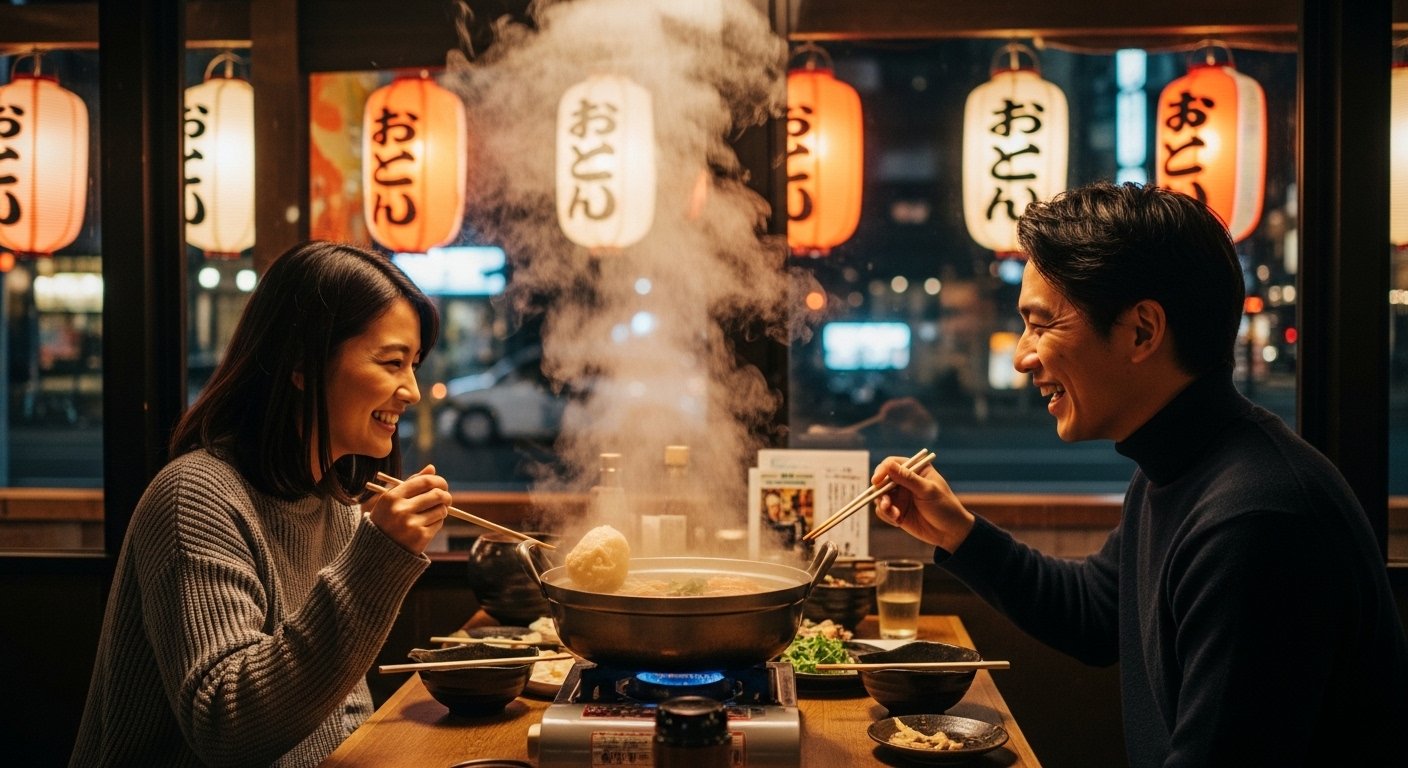
Table of Contents
The Real Struggle: Why Finding Late-Night Warmth is Harder Than It Looks
Let me tell you, that first winter night wasn’t an isolated incident. I’ve seen countless tourists, friends, and even seasoned expats (myself included, even recently!) fall into the same trap. You’d think in a major city like Tokyo, finding food after 9 PM would be a breeze. But outside of specific nightlife districts or major tourist hubs, many local eateries, especially the cozier, more authentic ones, start wrapping up. If you’re not in Shinjuku or Shibuya, or you’re a bit off the beaten path in, say, a quiet residential area of Kyoto or Osaka, your options can shrink dramatically.
The problem isn’t just about finding any food; it’s about finding the right food. When it’s genuinely cold, a konbini bento just doesn’t cut it. You crave something truly warming, something that seeps into your bones and makes you feel human again. And let’s be honest, after a day of spending yen on trains, temples, and souvenirs, the last thing you want is a ridiculously expensive dinner. We’re talking about finding affordable, comforting food that feels authentic, not a watered-down tourist trap.
Then there’s the dietary maze. Japan is getting better, but trying to explain “no meat” or “halal” to a busy chef in a tiny, bustling izakaya at 10 PM? That’s a whole new level of communication friction. I’ve had moments where I just pointed at things on a menu, hoped for the best, and ended up with a plate full of something I couldn’t eat. It’s frustrating, confusing, and frankly, a bit embarrassing. This confusion and friction are real, and they can really dampen your travel experience when all you want is a good meal.
Your Late-Night Winter Warmers: Nabe & Oden to the Rescue
This is where my ten years of navigating Japan’s culinary landscape comes in. I’m here to tell you that delicious, warming, and budget-friendly late-night food isn’t just a dream – it’s a reality, and its name is Nabe and Oden. These aren’t just meals; they’re experiences, little bowls of culinary salvation that embody the coziest time of the year to visit Japan.
Nabe (鍋) literally means “pot,” and it’s essentially a Japanese hot pot. Think of a steaming cauldron of broth, simmering right in front of you, filled with fresh vegetables, mushrooms, tofu, and various proteins like chicken, pork, or seafood. You cook it yourself at the table, dipping morsels into a tangy ponzu sauce or rich sesame sauce. It’s interactive, communal, and incredibly heartwarming. I’ve spent countless winter evenings hunched over a Nabe pot with friends, the steam warming my face and the savory broth chasing away the cold.
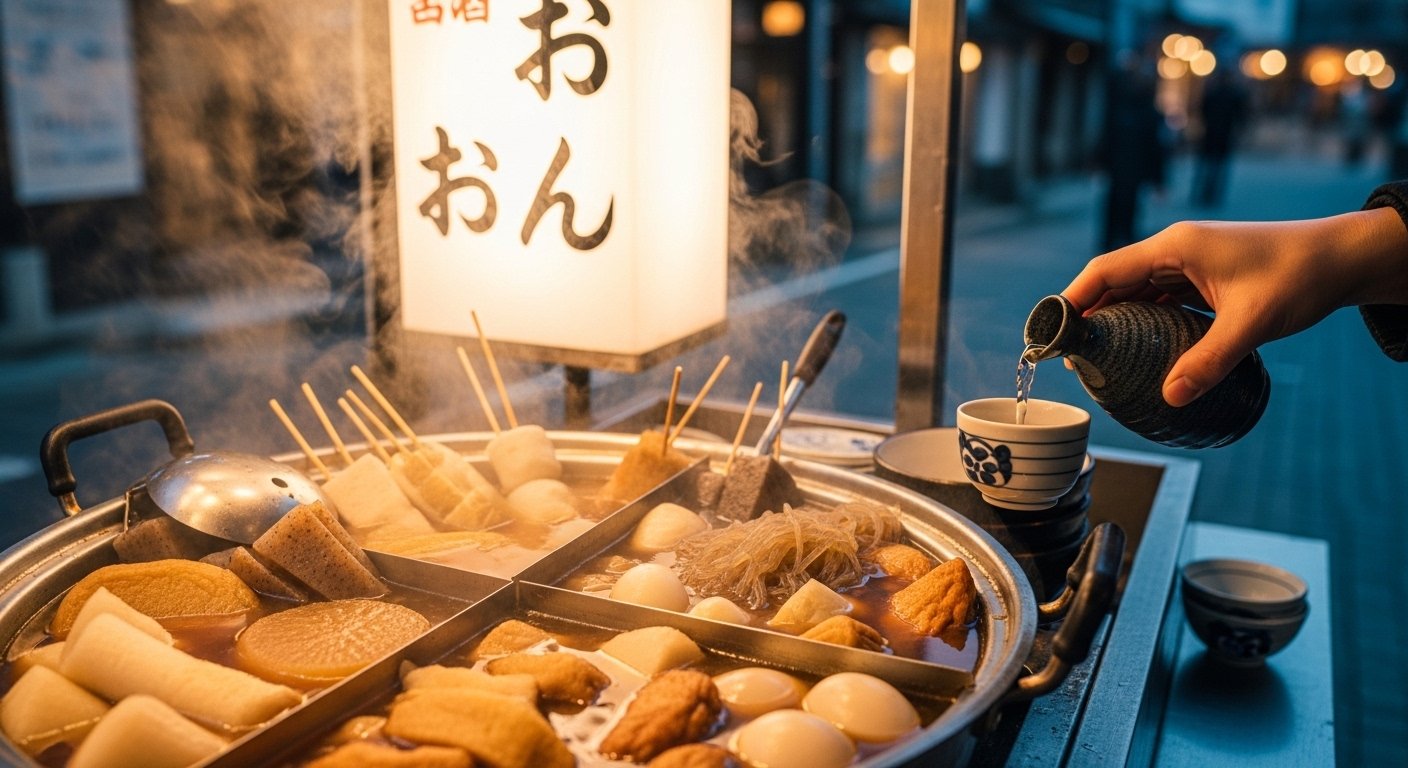
Oden (おでん) is Nabe’s more casual, street-food-esque cousin. Imagine an assortment of ingredients like daikon radish, konnyaku (devil’s tongue jelly), boiled eggs, fish cakes, and tofu pouches, all slow-simmered in a light, savory dashi broth. It’s typically served from a large, segmented pot, often found at izakaya, convenience stores (yes, even Lawsons and FamilyMart do a decent Oden in winter!), and small, traditional eateries. Each piece is infused with the delicate flavor of the broth, and it’s perfect for picking and choosing exactly what you want.
Both Nabe and Oden are authentic winter warmers, and crucially, they are widely available after 9 PM, especially in Tokyo and other major cities. They are the antidote to that late-night hunger and chill.
The Akachochin Hunt: Your Step-by-Step Guide to Finding Gold
So, how do you find these elusive late-night havens? Forget endlessly walking aimlessly or relying solely on Google Maps, which can sometimes be outdated for smaller, local spots. My secret weapon, and now yours, is the 赤提灯 (Akachochin) – the red lantern.
🇯🇵 Point & Speak
What to look for:
English: Red lantern
赤提灯
(Akachochin)
These aren’t just decorative; they’re a beacon, a traditional sign of an authentic, often budget-friendly, Japanese eatery – typically an izakaya or a small local restaurant – that serves food and drinks well into the evening. When you spot one glowing against the dark winter night, you’re usually in luck.
Here’s my step-by-step strategy for finding your late-night Nabe or Oden spot:
- Step 1: Embrace the Akachochin Quest: As soon as the sun dips and you feel that winter chill, start scanning the streets, especially the side alleys and smaller streets off the main thoroughfares. Actively look for those distinctive red lanterns hanging outside establishments. They’re a common indicator of places open late and serving traditional Japanese fare. Trust me, I’ve stumbled upon some of my favorite hole-in-the-wall spots this way.
- Step 2: Peek and Ponder: Once you spot an
Akachochin, take a moment to peek inside (if there’s a window or open door). Does it look inviting? Are there locals enjoying their food? You’ll often see steaming hot pots on tables, providing warmth and comfort that’s almost palpable from the outside. If it’s an Oden shop, you might even see the big segmented pot at the counter. - Step 3: Check for Nabe or Oden Signs: Many places, even if the main sign is in Japanese, will have smaller signs or pictures. Look for characters like 「鍋」 (Nabe) or 「おでん」 (Oden). Sometimes, they’ll just have a picture of a bubbling pot or an array of Oden ingredients. Don’t be afraid to poke your head in and ask (more on that below!).
- Step 4: Consider the Izakaya: Many izakaya (Japanese pubs) specialize in Nabe and Oden, especially during winter. They are designed for lingering, drinking, and eating small dishes, making them perfect for late-night meals. You’ll often find a menu featuring Atsukan (hot sake) being poured into cups, the perfect accompaniment to a savory winter dish. A Nabe or a selection of Oden items and a hot sake can be a truly wonderful, affordable late-night experience. Tokyo, in particular, is brimming with such spots.
- Step 5: Trust Your Gut (and the Locals): If a place looks busy with Japanese patrons, that’s usually a good sign. Locals know where the good, affordable food is. I’ve often just pointed to what someone else was eating and said “Onaji onegaishimasu” (Same, please). It almost always works!
Decoding the Menu: What to Look For (and How to Ask)
Navigating a Japanese menu can feel like deciphering an ancient scroll, especially late at night when your brain is tired.
- For Nabe: Look for 「鍋物」 (Nabemono) on the menu. Common types include 「鶏鍋」 (Tori Nabe – chicken hot pot), 「豚鍋」 (Buta Nabe – pork hot pot), or just 「寄せ鍋」 (Yose Nabe – mixed hot pot). If you’re vegetarian, look for ingredients like 「豆腐」 (Tofu), 「野菜」 (Yasai – vegetables), and 「きのこ」 (Kinoko – mushrooms). It’s always best to ask if there’s a vegetarian option.
- For Oden: The beauty of Oden is you usually pick individual items. Common items include 「大根」 (Daikon – radish), 「卵」 (Tamago – boiled egg), 「こんにゃく」 (Konnyaku – devil’s tongue jelly), and various 「練り物」 (Nerimono – fish cakes). You can often point to the items you want.
When it comes to dietary restrictions like vegetarian or halal, this is where it gets tricky, but not impossible. Many Nabe broths contain dashi made from bonito flakes (fish). Oden broth almost always does.
Here’s my honest take:
* Vegetarian: Finding a truly vegan Nabe or Oden can be very challenging in a typical local spot. Many broths contain fish stock (dashi). Your best bet is to try to find places that specifically advertise vegetarian options or focus on the ingredients you can eat, such as Tofu, vegetables, and mushrooms, and ask if they can be cooked in a separate, simple hot water base (though this is rare for Nabe and impossible for Oden). For Oden, you can pick out the non-meat items, but be aware the broth itself likely contains fish.
* Halal: This is even more difficult. Cross-contamination and the use of mirin (cooking sake) are prevalent. I’ve found it nearly impossible to guarantee halal at most traditional, small Japanese eateries. Your best bet for late-night halal is to seek out dedicated halal restaurants (often Indian, Pakistani, or Middle Eastern cuisine) which might also offer warming dishes, or larger chain restaurants in major hubs that have certified halal menus. Unfortunately, for traditional Nabe and Oden, it’s a significant challenge.
My advice for dietary needs? Manage expectations. For Nabe and Oden specifically, it’s hard. If you have strict requirements, you might need to broaden your search beyond these traditional dishes, or prepare some simple phrases and always be polite and understanding if they cannot accommodate.
Budget Breakdown: What to Expect (and How to Save)
One of the best things about Nabe and Oden is how affordable they can be, especially compared to other dinner options.
| Item | Typical Price Range (JPY) | Notes |
| Oden (per item) | ¥80 – ¥300 | Street stalls or convenience stores are cheapest. Izakaya will be slightly more. |
| Oden (small bowl/set) | ¥500 – ¥1,000 | A small curated selection, great for a light meal. |
| Nabe (per person) | ¥1,500 – ¥3,000 | Typically ordered for 2+ people. Costs vary based on ingredients (e.g., seafood Nabe can be more expensive). |
| Atsukan (Hot Sake) | ¥300 – ¥600 (per cup) | Essential for warming up. Pricier bottles also available. |
| Beer/Chuhai | ¥400 – ¥700 | Standard drink prices. |
| Amazake (Sweet fermented rice drink) | ¥300 – ¥500 | A non-alcoholic, sweet, comforting winter drink. Often found at temples or winter festivals, but some izakayas might have it. |
| Japanese Rice Soup (Zosui) | ¥700 – ¥1,200 | Often made with leftover Nabe broth. Incredibly comforting and filling. |
How to save a few yen:
* Convenience Store Oden: For a truly budget-friendly option, hit up a Lawson, FamilyMart, or 7-Eleven in winter. Their Oden counters are fantastic and incredibly cheap (¥80-¥150 per item). It’s not a sit-down meal, but it’s a reliable, warm, and comforting snack or light dinner after 9 PM. I’ve definitely done this more times than I care to admit!
* Look for Set Menus: Some izakaya might offer a “late-night set” that includes a small Nabe or Oden selection with a drink for a fixed, often discounted, price.
* Share a Nabe: If you’re with a group, sharing a Nabe is often more economical and fun.
Common Pitfalls & How to Dodge Them
Even with the Akachochin strategy, there are still a few things that can trip you up:
- “Last Order” Surprise: Just because a place is open until 11 PM doesn’t mean you can waltz in at 10:45 PM and expect a full meal. Many places have a “Last Order” for food about 30-60 minutes before closing. Try to arrive at least an hour before their stated closing time, or ideally, by 10 PM. I’ve been refused service so many times because I missed this cutoff; it’s super annoying.
- Language Barrier: While many Japanese are incredibly polite, English might not be spoken, especially in smaller, local spots. Don’t be shy about using pointing gestures, simple phrases (like those in the Point & Speak section), or a translation app. A little effort goes a long way.
- Smoking: Many traditional izakaya still allow smoking indoors. If you’re sensitive to smoke, look for signs saying 「禁煙」 (Kin-en – non-smoking) or be prepared to deal with it. Lately, more places are going non-smoking, but it’s not universal.
- Cover Charge (O-tōshi): Some izakaya, especially smaller ones, might automatically serve a small appetizer (O-tōshi or Tsuki-dashi) and add a small cover charge (usually ¥300-¥500) to your bill. This is standard practice and not a scam. Think of it as a table charge and a pre-meal snack. I always hated this when I first arrived, but now I just see it as part of the experience.
- Over-ordering at Oden: It’s easy to get carried away and point at everything in the Oden pot! Be mindful of your budget, as individual items add up. Start with a few favorites and then order more if you’re still hungry.
🎯 Insider Tip: For late-night Tokyo Nabe, specifically check out the areas around Shinjuku Golden Gai or the smaller streets near Shimbashi Station. While Golden Gai is famous for its tiny bars, the surrounding areas have numerous small izakaya that serve excellent Nabe late into the night. Many of these places are tried and true local haunts, perfectly aligned with the Akachochin vibe.
FAQ
What are the best types of Nabe to try for a beginner?
For beginners, I always recommend Yose Nabe (寄せ鍋) which means “gather-all Nabe” because it’s a mix of different ingredients like chicken, seafood, and vegetables, giving you a broad taste. Another great option is Chanko Nabe (ちゃんこ鍋), often associated with sumo wrestlers, which is hearty and packed with protein and vegetables, usually with a rich chicken or miso broth. Both are widely available and incredibly satisfying.
Can I find vegetarian Oden options?
Yes, you can certainly find vegetarian-friendly *ingredients* in Oden, such as daikon radish, konnyaku, boiled eggs, and some tofu items like *ganmodoki*. However, almost all Oden broth (dashi) is traditionally made with bonito flakes (fish), so it’s generally not suitable for strict vegetarians or vegans. While the ingredients themselves might be meat-free, the broth is not. Your best bet is to select plant-based items but be aware of the broth’s base.
Are there specific regions in Japan known for their Nabe or Oden?
Absolutely! While available everywhere, certain regions are famous for specific Nabe types. For example, Hokkaido is renowned for its Ishikari Nabe (salmon and miso), and Kyushu is known for Motsunabe (offal hot pot). For Oden, Shizuoka has its unique black broth Oden, and Nagoya is known for Miso Oden. Tokyo, as mentioned, offers a fantastic variety of both.


