*Images used in this article are for illustration only. They may not be directly related to the content.
Caught Off Guard: My Guide to Navigating Medical Emergencies in Winter Japan (119, English Hospitals & Costs)
I still remember the time I woke up in the dead of winter, throat burning, every muscle aching, feeling like I’d swallowed razor blades. My head was pounding, and I knew for sure this wasn’t just a regular cold. I was only a year into living here, and the thought of navigating the Japanese medical system, especially while barely able to speak, filled me with a cold dread worse than my fever. Where do I even go? Who speaks English? Would they even see me? It’s a terrifying feeling, I know, because I’ve been there. And if you’re traveling through Japan, especially during the colder months when sniffles turn into something serious, you need a plan.
This isn’t just about calling 119; it’s about what happens before and after that, about finding help when you’re vulnerable, and making sure you don’t get turned away.
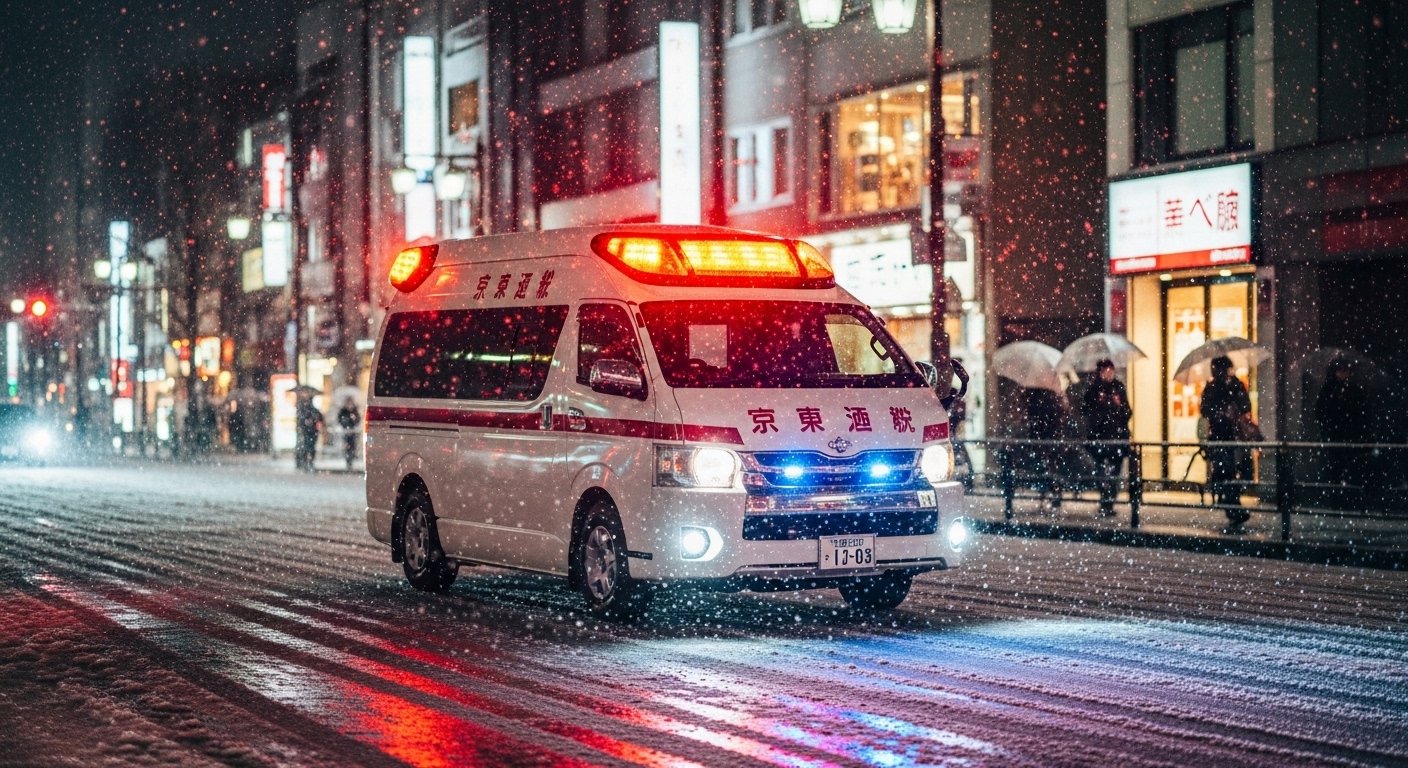
Table of Contents
- The Real Struggle: Why Getting Medical Help in Japan Can Be So Hard
- When to Call 119: True Emergencies Only
- Finding English-Speaking Care: Your Lifeline for Non-Emergencies
- Specific Recommendations: My English-Friendly Clinic & Hospital Picks
- Understanding Costs & Insurance: Don’t Get Blindsided
- The Uncomfortable Truth of Hospital Refusal
- Essential Japanese Phrases for Medical Situations
- My Final Thoughts: Don’t Get Caught Off Guard
The Real Struggle: Why Getting Medical Help in Japan Can Be So Hard
Look, Japan is an incredibly safe and efficient country, but its medical system, for all its excellence, wasn’t built with the non-Japanese speaker in mind. You might think, “I speak enough Japanese for a ramen order, I’ll be fine!” And usually, you would be. But when you’re feverish, nauseous, or in pain, even basic communication becomes a Herculean task.
Here’s where it often goes sideways for visitors:
- Calling 119 with a language barrier: The emergency number is 119, just like 911 in the US. But will the operator speak English? Sometimes. Relying on it in a true emergency is a huge gamble.
- Finding an English-speaking doctor: It’s not like in Western countries where you can just walk into any clinic and expect someone to help you in English. Many smaller clinics, especially in non-major cities, simply don’t have the staff.
- The fear of the unknown cost: Japan has a universal healthcare system, but that’s for residents. As a tourist, you’re paying out of pocket, and if you’re not prepared, the bill can hit you like a shinkansen.
- The shocking refusal: This is the worst. I’ve heard countless stories – and yes, experienced a variant myself – where a hospital simply says no. Not because they’re full, but because they’re not “confident” they can treat you due to the language barrier. Even if you speak some Japanese, if a doctor isn’t comfortable, they might just send you away, even with a serious condition. Imagine having a severe UTI, like a friend’s mother in Fussa, and being turned away from multiple ERs. It’s infuriating and terrifying.
- Translators are your responsibility: If a hospital does require a translator, they expect you to provide one. Good luck with that when you’re doubled over in pain in a foreign country.
When to Call 119: True Emergencies Only
First things first: 119 is for life-threatening emergencies. Think heart attack, stroke, severe trauma, unconsciousness, uncontrolled bleeding. It’s the equivalent of 911.
Do NOT call 119 for:
* A common cold or flu (unless you have severe difficulty breathing).
* A twisted ankle (unless it’s an open fracture or you can’t move at all).
* A mild fever.
* Questions about clinic hours.
Calling 119 unnecessarily clogs up the system and can delay help for someone in critical need. If you’re unsure, and it’s urgent but not life-threatening, your best bet is to find a clinic first.
🎯 Insider Tip: When you call 119, try to immediately say “Eigo o hanasemasu ka?” (Can you speak English?) or “English, please.” They often have English-speaking operators or a translation service available, but it might take a moment to connect you. Be patient, speak clearly, and state your location and situation immediately.
Finding English-Speaking Care: Your Lifeline for Non-Emergencies
For everything else – the nasty flu, a persistent cough, a bad stomach bug, or that sprained ankle – you need a clinic. This is where your preparedness comes in. Emergency care is technically available 24/7 at most general hospitals, but getting in and understood is the challenge.
My go-to strategy, honed over years of various ailments (including that terrible winter throat), involves:
- Check JNTO and local city guides: The Japan National Tourism Organization (JNTO) often has lists of medical facilities with English services. Many prefectural and city websites also offer similar resources.
- Google Maps with English keywords: “English speaking doctor Tokyo,” “clinic near me English,” “expat clinic Osaka.” Read the reviews carefully. People often mention their English experiences.
- Ask at your accommodation: Hotels, ryokans, and even tourist information centers often have lists of local English-friendly clinics. Don’t be shy; they want you to have a safe trip.
- Know your options before you need them: This is crucial. Having a few clinics bookmarked in your phone, especially in the cities you plan to visit, can save you immense stress.
Specific Recommendations: My English-Friendly Clinic & Hospital Picks
Based on my own experiences and well-vetted expat forums, here are a few places that consistently get good reviews for English support. Remember, staff rotation happens, but these institutions generally prioritize international patients.
| City | Name | Address | Phone | Website | Notes |
|---|---|---|---|---|---|
| Tokyo | Tokyo Medical and Surgical Clinic | 32 Shiba Koen Building, 3-4-30 Shiba-Koen, Minato-ku, Tokyo 105-0011 | 03-3436-3028 | tmsc.jp | A go-to for many expats. Comprehensive range of services with excellent English support. Appointment recommended. |
| Tokyo | National Medical Clinic | 5-16-11, Minami Azabu, Minato-ku, Tokyo 106-0047 | 03-3473-2057 | nmclinic.net/en | Well-regarded by the international community for general practice and specialist referrals. Friendly, professional staff. |
| Osaka | Yodogawa Christian Hospital (International Patient Service) | 2-9-26 Awaji, Higashiyodogawa-ku, Osaka 533-0032 | 06-6322-2250 | ych.org/en | Highly recommended for their dedicated International Patient Service department. They understand foreigner needs. |
| Kyoto | Rokkaku Tanaka Clinic | 569-1 Honnojimae-cho, Rokkaku-dori Higashino-toin Higashi-iru, Nakagyo-ku, Kyoto 604-8072 | 075-221-7277 | tanakaclinic.jp | Known for an English-speaking doctor and staff using translation devices. A Reddit user had a very positive experience here for a foreigner. |
Understanding Costs & Insurance: Don’t Get Blindsided
One of the biggest anxieties for visitors is the cost. Here’s the deal: as a tourist, you don’t have access to Japan’s national health insurance. This means you’re paying 100% out of pocket.
However, the good news is that for basic consultations, it can be surprisingly affordable compared to, say, the US. I saw a Reddit user detail their experience at Rokkaku Tanaka Clinic for an illness, and the total cost was ¥4,500 (approx. $32 USD) for the consultation. This is incredibly reasonable!
Based on my own routine clinic visits for things like colds, skin issues, or minor injuries, a basic consultation at an English-friendly clinic usually falls into the range of ¥4,500 to ¥7,000. This generally doesn’t include medication or specific tests (like blood work or X-rays), which will add to the bill. Medication, even prescribed ones, is often quite cheap here. Expect to pay a few hundred to a couple of thousand yen for a basic prescription.
Your Lifeline: Travel Insurance
This isn’t a suggestion; it’s a requirement. Before you even step foot on a plane to Japan, secure comprehensive travel insurance that covers medical emergencies. Seriously. I’ve heard horror stories of people having to pay tens of thousands of dollars for unexpected surgeries or repatriations because they skipped this step. Read the fine print, understand your deductible, and keep all your medical receipts for reimbursement.
The Uncomfortable Truth of Hospital Refusal
This is a bitter pill to swallow, but it’s a reality. Despite Japan’s reputation for hospitality, some hospitals will flat-out refuse service to foreigners. The primary reason given is often a perceived language barrier. Even if you speak “enough Japanese for everyday life,” as one Reddit user found, if the medical staff aren’t confident they can communicate diagnosis and treatment effectively, they might turn you away.
I’ve seen it happen. A friend’s elderly parent, seriously ill, was refused at three different ERs in a smaller city. The reasoning? No translator was available, and the staff weren’t comfortable. It’s frustrating, it’s scary, and it feels deeply unfair.
What you can do:
- Be prepared: This goes back to knowing which hospitals are foreigner-friendly. The ones I listed above are a good start.
- Insist (politely but firmly): In a true emergency, don’t just accept a “no.” Try to convey the severity of the situation.
- Contact your embassy/consulate: In dire situations, they might be able to assist in finding a facility or providing translation services.
- Use translation apps: Have Google Translate or a similar app ready on your phone, with medical terms downloaded for offline use. It’s not perfect, but it’s better than nothing.
- Tourist Support: Japan has tourist hotlines, like the JNTO Visitor Hotline (050-3816-2787), which can offer assistance in finding medical facilities.
Essential Japanese Phrases for Medical Situations
Even if you have an English-speaking doctor, you’ll inevitably interact with receptionists or nurses who might not. These phrases can be a lifesaver. Print them out, screenshot them, or save them in your phone’s notes.
🇯🇵 Point & Speak
Show this to staff:
English: Emergency!
緊急です!
(Kinkyū desu!)
English: I need a doctor.
医者が必要です。
(Isha ga hitsuyō desu.)
English: I don’t speak Japanese.
日本語が話せません。
(Nihongo ga hanasemasen.)
English: Can you speak English?
英語を話せますか?
(Eigo o hanasemasu ka?)
English: Where is the hospital?
病院はどこですか?
(Byōin wa doko desu ka?)
English: I have pain here. (Point to the area)
ここが痛いです。
(Koko ga itai desu.)
English: I have a fever.
熱があります。
(Netsu ga arimasu.)
English: I feel nauseous.
吐き気がします。
(Hakike ga shimasu.)
My Final Thoughts: Don’t Get Caught Off Guard
Living in Japan for ten years, I’ve seen it all, from minor scrapes to serious illnesses. The worst feeling isn’t the physical pain; it’s the profound helplessness that comes with not knowing where to turn in a foreign land. My early struggle with that terrible winter flu taught me a harsh but invaluable lesson: preparedness isn’t optional; it’s absolutely critical.
Don’t let the beauty and wonder of Japan lull you into a false sense of security regarding medical care. While you absolutely should embrace every incredible moment of your trip, dedicate a small sliver of your planning to understanding how you’ll handle a medical hiccup. Buy that travel insurance. Jot down those clinic numbers. Save those phrases. Because when illness strikes unexpectedly, the ability to find help isn’t just about getting better; it’s about reclaiming your peace of mind in a situation where everything feels out of control. Go, explore, enjoy – but do it knowing you’ve got your back covered, just in case.
FAQ
Is emergency care available 24/7 in Japan?
Yes, emergency care is generally available 24/7 at most general hospitals in Japan. However, the challenge for visitors often lies in navigating the system with a language barrier and ensuring the hospital will accept them, as some may refuse service if they perceive a communication issue.
How much does it cost to see a doctor in Japan as a foreigner?
As a foreigner without Japanese national health insurance, you will pay 100% out of pocket. For a basic consultation at an English-friendly clinic, expect costs to be around ¥4,500 to ¥7,000, based on my experience. This doesn’t include medication or additional tests, which would be extra. Compared to some Western countries, basic care can often be surprisingly affordable.
What should I do if a Japanese hospital refuses to treat me due to a language barrier?
This is a difficult situation, but unfortunately, it can happen. First, try to politely but firmly convey the urgency of your situation, using translation apps if necessary. If possible, try calling a different English-friendly hospital or clinic (refer to the list in this guide). You can also contact your embassy/consulate or the JNTO Visitor Hotline (050-3816-2787) for assistance in finding an accepting facility or for translation support.


