*Images used in this article are for illustration only. They may not be directly related to the content.
Confused by Japanese Winter Bills? My Expat’s Guide to Payments & Saving Hefty Heating Costs
I remember my first winter in Japan. I was living in a drafty old apartment in Nagano, far from the temperate warmth of my home country. The cold bit right through me, and my instinct was to crank up the heater. “It’s just utilities,” I thought, “how bad could it be?” Then the first winter bill landed in my mailbox. It wasn’t just bad; it was an indecipherable scroll of kanji, katakana, and numbers that felt like a personal attack on my budget. My eyes glazed over, sweat beaded on my forehead, and I genuinely believed I’d accidentally signed up for a luxury spa membership instead of electricity. I mean, ¥25,000 for a month of shivering indoors? My landlord just shrugged and said, “Winter is cold.” Tell me about it, buddy!
This, my friends, is a universal expat experience in Japan. We come here, fall in love with the culture, and then get sucker-punched by the cost of simply staying warm when the mercury drops. But after ten years, countless frozen toes, and many bewildered stares at utility company staff, I’ve cracked the code. And I’m here to share it, so you don’t have to suffer through the same financial frostbite I did.
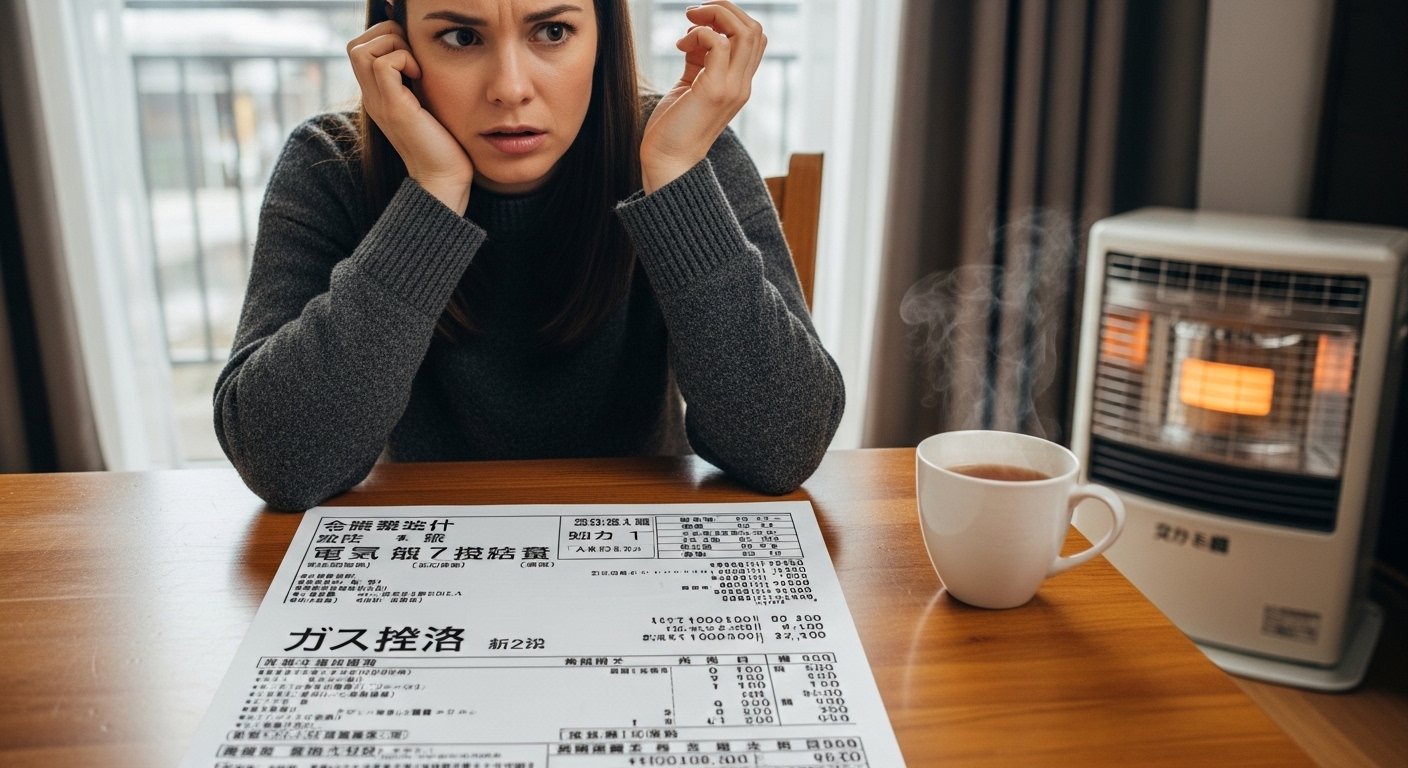
Table of Contents
The Real Struggle: Why Are Japanese Utility Bills So Confusing?
Let’s be honest, utility bills are boring and opaque in any language. But in Japan, it feels like they’re designed to be an extra level of bureaucracy, specifically crafted to confuse us foreigners. When you consider that utility and communication costs are classified as essential monthly expenses for residents, it’s pretty wild how difficult they make it to understand where your money is going.
My pain points, and probably yours too, boil down to a few things:
- Deciphering the Hieroglyphs: Japanese bills are packed with small print, technical terms, and complex calculations, all in kanji. Even if you speak some Japanese, the specific vocabulary used for “fuel cost adjustment charge” or “meter reading date” can be utterly baffling. I’ve wasted hours with Google Translate, only to come out more confused than when I started.
- Payment Method Mayhem: There are multiple ways to pay, and each comes with its own set of rules and deadlines. Miss a payment and suddenly you’re staring at a red notice, wondering if your power is about to be cut. Believe me, I’ve been there. That heart-stopping moment when you realize you accidentally ignored a critical bill, thinking it was just another piece of junk mail, is unforgettable.
- Winter Wallet Drain: This is the big one. The sheer cost of heating a Japanese home can be shocking. I remember a friend in Niigata, where winters are notoriously brutal, sharing their heating costs, and it sent shivers down my spine – and not from the cold! It’s a frequently asked question and a huge concern among residents, especially for those of us living alone who view these costs as a major, unavoidable monthly expense. The r/japanlife community on Reddit is practically an ongoing support group for this exact struggle.
It’s easy to feel isolated and helpless, but you’re not alone. We’ve all been there.
Breaking Down the Beast: What’s on That Bill?
Okay, let’s pull out those mysterious sheets of paper. While designs vary slightly by company and region, most utility bills (electricity, gas, water) follow a similar structure. Think of them as having a few core components:
- 基本料金 (Kihon Ryōkin – Basic Charge): This is your fixed monthly fee, regardless of how much you use. It’s like a subscription fee just to have the service connected. For electricity, this often depends on your contract amperage (e.g., 30A, 40A).
- 電力量料金 / ガス使用量料金 / 水道料金 (Denryokuryō Ryōkin / Gasu Shiyōryō Ryōkin / Suidō Ryōkin – Usage Charges): This is the bulk of your bill, based on how much you actually consumed. It’s usually tiered, meaning the more you use, the higher the per-unit price gets. This is where winter truly kicks you.
- 燃料費調整額 (Nenryōhi Chōsei Gaku – Fuel Cost Adjustment Charge): This is where it gets spicy. Utility companies adjust prices based on fluctuating fuel costs (oil, gas, coal). It can be a surcharge or a discount, but lately, it’s mostly been a surcharge, making those winter bills even heavier.
- 再生可能エネルギー発電促進賦課金 (Saisei Kanō Enerugī Hatsuden Sokushin Fukakin – Renewable Energy Power Promotion Surcharge): A mouthful, right? This is a national levy to promote renewable energy. It’s a small per-kWh charge that everyone pays.
- 消費税 (Shōhizei – Consumption Tax): The standard 10% Japanese sales tax.
- 口座振替割引 (Kōza Furikae Waribiki – Bank Transfer Discount): A small discount (usually around ¥50) if you pay by automatic bank transfer. Every yen counts!
- ご請求額 (Go Seikyūgaku – Total Amount Due): The grand total you need to pay.
- お支払期限 (O-shiharai Kigen – Payment Deadline): CRITICAL. Don’t miss this date.
- 使用期間 (Shiyō Kikan – Usage Period): The dates your bill covers. Note that water bills, especially, can be bi-monthly.
- ご使用量 (Go Shiyōryō – Usage Amount): Your consumption in kWh (electricity), m³ (gas), or m³ (water).
I remember staring at my first electricity bill and seeing the fuel cost adjustment charge. I had no idea what it was, and it was a significant chunk of the bill. It felt like they were just inventing charges! Now I know it’s standard, but it’s still annoying, especially when global prices go up.
Payment Procedures: Don’t Miss That Deadline!
So, you’ve deciphered the bill (or at least found the total amount and deadline). Now, how do you actually pay it? This is where the options can get a little overwhelming.
Common Payment Methods
-
Convenience Store (コンビニ支払い – konbini-barai):
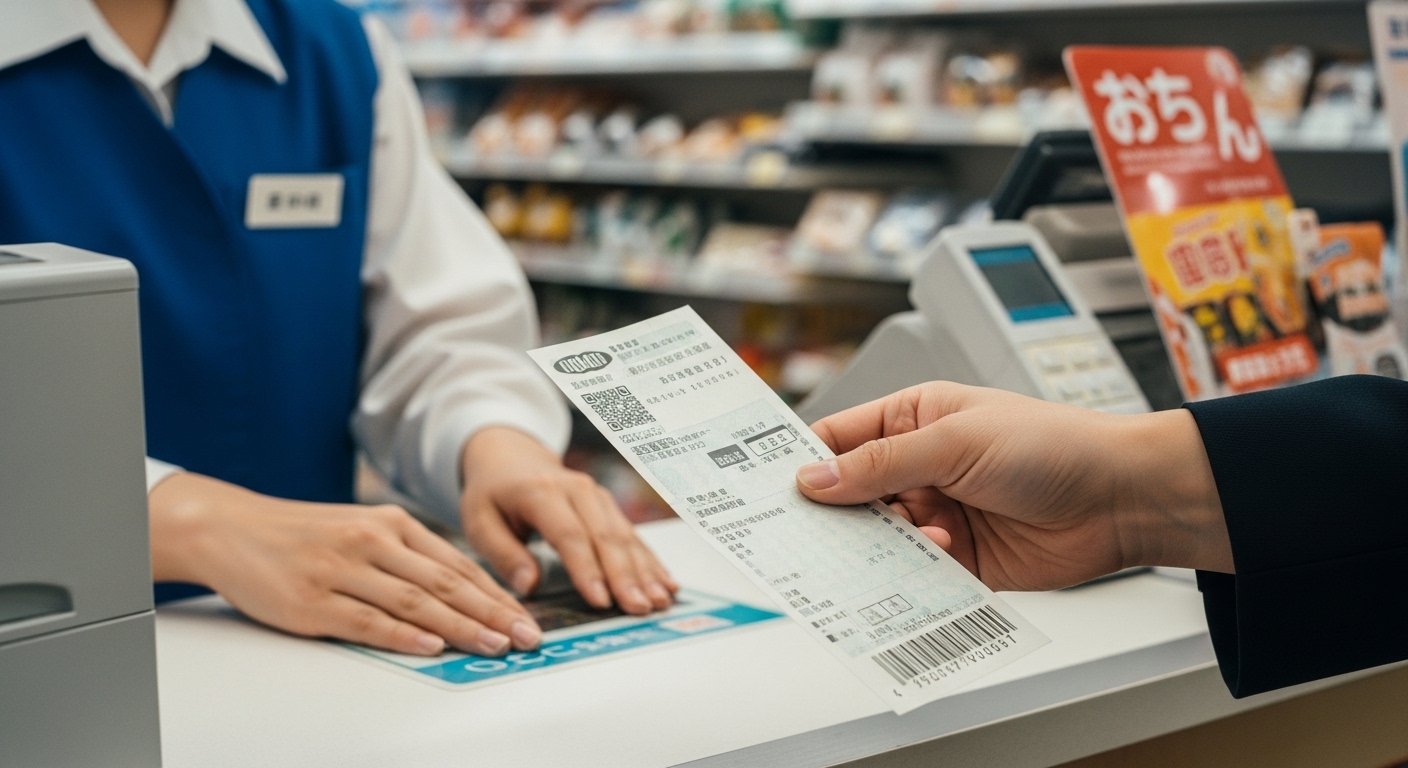
- How it works: This is probably the most common and easiest method for expats initially. Your bill will have a barcode (バーコード – bā kōdo) printed on it. Take the bill to any convenience store (7-Eleven, Lawson, FamilyMart, etc.), hand it to the cashier, and they’ll scan the barcode.
- My experience: This was my go-to for years. It’s quick, no-nonsense, and you get a receipt immediately. Just remember, it’s usually cash only. I once tried to pay with my credit card at a 7-Eleven, and the cashier just looked at me like I’d grown a second head. Don’t be that guy. Always carry enough cash for your bills.
- Pros: Easy, accessible, instant receipt.
- Cons: Cash only, requires you to physically go to the store, easy to forget.
-
Automatic Bank Transfer (口座振替 – kōza furikae):
- How it works: This is the most hassle-free method once set up. Your utility company will automatically deduct the bill amount from your Japanese bank account on the due date. You usually need to fill out an application form (口座振替依頼書 – kōza furikae irai-sho) that comes with your bill or can be requested from the utility company, stamp it with your bank hanko (if you have one, or sign it), and mail it back.
- My experience: I dragged my feet on this for ages because the form looked intimidating. But once I got a Japanese friend to help me fill it out, it was a game-changer. No more remembering deadlines, no more trips to the convenience store. Plus, that tiny ¥50 discount adds up!
- Pros: Convenient, never miss a payment, small discount.
- Cons: Requires a Japanese bank account, initial setup can be complex due to forms and language barrier.
-
Credit Card Payment (クレジットカード支払い – kurejitto kādo shiharai):
- How it works: Many utility companies now offer online credit card payment. You usually register your credit card details on their website or through a specific portal.
- My experience: This is great if you want to earn points on your credit card. However, not all companies support all cards, and the setup process can be less straightforward than bank transfers, often requiring navigating Japanese websites. It’s a good option if you prefer to consolidate payments and are comfortable with online Japanese forms.
- Pros: Earn credit card points, pay from home.
- Cons: Online setup can be tricky, not all cards/companies supported, might take a few billing cycles to start.
What Happens if You Miss a Payment?
Don’t panic! It happens to the best of us. I once missed a water bill because it only comes every two months, and I completely forgot it was due. I discovered it when a bright red notice appeared.
Here’s the usual sequence:
- Reminder Notice (催告書 – saikoku-sho): If you miss the first deadline, you’ll typically receive a reminder notice, often red or brightly colored, with a new, slightly later payment deadline. It might include a small late fee.
- Final Notice & Suspension Warning (供給停止予告 – kyōkyū teishi yokoku): If you miss the second deadline, you’ll get a more serious notice, explicitly stating the date your service will be suspended (e.g., electricity cut off). This is usually accompanied by a much heftier late fee.
- Service Suspension (供給停止 – kyōkyū teishi): If you still don’t pay, they will cut off your service. No power, no gas, no water. I’ve known people who had their electricity cut in the middle of winter, and it’s not a fun experience.
- Reconnection: To get your service back, you’ll have to pay all outstanding bills, plus a reconnection fee. This usually requires a call to the utility company and arranging immediate payment.
What to do: If you know you’re going to miss a payment, or if you’ve already missed one, call the utility company immediately. Explain your situation (use the “Point & Speak” phrases below!) and ask for an extension or advice on how to pay. They are generally understanding if you communicate. Don’t just ignore it!
Surviving the Winter Freeze: Saving Strategies
This is where the rubber meets the road. Knowing how to pay is one thing, but slashing those exorbitant winter costs is the real victory. Living costs, including utilities, vary significantly by location and lifestyle, but these strategies are universal.
Electricity (電気 – *Denki*) Saving
- AC Discipline (エアコン – eakon): Your air conditioner is the biggest energy hog.
- Set it to a reasonable temperature: 20°C (68°F) is often recommended. Don’t blast it at 28°C and then open a window because you’re too hot!
- Use the timer: Set it to turn on just before you get home or wake up.
- Clean filters regularly: Dirty filters make your AC work harder.
- Consider an inverter model: If you’re buying a new unit, inverter ACs are much more energy-efficient.
- The Magical Kotatsu (こたつ): This is my secret weapon. A low table with a heater underneath and a heavy blanket over it. You sit with your legs under it, and it keeps you toasty warm without heating the entire room.
- My experience: I bought a kotatsu in my second winter, and my electricity bill plummeted. You can bundle up with warm clothes, put on a thick blanket, and survive happily under the kotatsu while the rest of your apartment is chilly. It’s incredibly efficient.
- Dress for the Weather (重ね着 – kasanegi): Layers, layers, layers! Thermal underwear, sweaters, fleece. Japanese houses are often poorly insulated compared to Western standards, so wearing warm clothes indoors isn’t unusual.
- Seal the Drafts: Use draft stoppers for doors, put bubble wrap or special insulating film on windows (especially single-pane ones).
- Review Your Contract (アンペア変更 – anpea henkō): For electricity, your basic charge is tied to your amperage (e.g., 30A, 40A). If you live alone and don’t run many appliances at once, you might be able to lower your amperage and save on the basic charge. Be careful though, too low and your breaker will trip often! Consult your provider.
- Switch Providers: Japan deregulated its electricity and gas markets, meaning you can choose from various companies. Shop around for better rates, especially if you bundle electricity and gas. However, this can be complex if your Japanese isn’t strong.
Gas (ガス – *Gasu*) Saving
- Shower Smart: Long, hot baths are lovely, but gas water heaters consume a lot. Take shorter showers.
- Batch Cooking: If you use gas for cooking, try to cook larger batches at once rather than heating up the stove multiple times.
- Bath Time Rituals: If you do take a bath, reuse the water for washing clothes or flushing the toilet. Many Japanese apartments have systems for this. Cover the tub with a lid (風呂の蓋 – furo no futa) to keep the water warm longer.
Water (水道 – *Suidō*) Saving
- Basic Conservation: Turn off the tap while brushing your teeth, use a bucket for washing vegetables instead of running water.
- Check for Leaks: A dripping faucet can add up!
🎯 Insider Tip: For *kotatsu* warmth, don’t just use a thin blanket. Invest in a proper *kotatsu-futon* (こたつ布団) – it’s a thick, padded blanket specifically designed to trap heat. Combine that with some *room socks* (ルームソックス) and a warm *hanten* (はんてん – a traditional padded jacket), and you can keep your apartment thermostat much lower, saving a ton of cash. My winter electricity bill dropped by almost ¥8,000 a month when I embraced the *kotatsu* lifestyle. Seriously, it’s a game-changer.
A Sample Price Breakdown: What to Expect
Remember, the “overall cost of living for a single person in Japan, including utilities, is explicitly stated to vary depending on the specific location within Japan and individual lifestyle choices.” However, based on my decade of experience and general observations (like that Niigata resident’s concerns), here’s a general illustrative breakdown for a single person in a typical 1K/1DK apartment during winter. These numbers are highly variable but give you a ballpark.
| Utility | Typical Winter Cost (Approximate, per month) | Notes |
| Electricity (電気 – Denki) | ¥8,000 – ¥15,000+ | Heavily impacted by AC usage. Higher in colder regions or older, less insulated buildings. Includes basic charge, usage, fuel adjustment, renewables surcharge. |
| Gas (ガス – Gasu) | ¥4,000 – ¥8,000 | Used for cooking and hot water. Varies by usage duration (showers, baths) and type (city gas vs. propane). Propane (プロパンガス – Propane Gasu) is generally more expensive. |
| Water (水道 – Suidō) | ¥2,000 – ¥4,000 (bi-monthly) | Often billed every two months, so expect a single bill of ¥4,000 – ¥8,000. Less seasonal fluctuation unless you take significantly more baths. |
| **Total Estimated Winter Utility Bill** | **¥14,000 – ¥27,000+** | This is for a single person. Expect higher for couples/families or larger apartments. This doesn’t include internet/phone. |
My own winter electricity bill has ranged from ¥12,000 (when I was super frugal with the kotatsu) to a whopping ¥20,000+ in a particularly cold and poorly insulated apartment using my AC often. Gas usually hovered around ¥5,000-7,000, and water about ¥4,000 every two months. So these numbers align with my personal experience.
Common Pitfalls & How to Avoid Them
- Ignoring Mysterious Mail: Don’t assume an official-looking envelope is junk mail. It’s often a bill or an important notice. When in doubt, translate it!
- Assuming Monthly Billing: While electricity and gas are usually monthly, water is often bi-monthly. Mark your calendar for all bill types.
- Not Understanding Your Units: kWh for electricity, m³ for gas and water. Knowing these units helps you compare usage month-to-month and understand where your consumption spikes.
- Sticking with Default Contracts: Especially if you’re in an older building, you might be on a less favorable plan. Explore switching providers or adjusting your amperage.
- Underestimating Winter Costs: This is the biggest one. Winter bills are always higher, significantly so. Factor this into your monthly budget from September onwards. Start saving early if you can!
- Panicking in Silence: Don’t suffer alone. Use translation apps, ask a Japanese friend for help, or call the utility company. They are there to help, even if the language barrier feels immense.
🇯🇵 Point & Speak
Show this to staff:
English: I want to pay this bill.
この請求書を払いたいです。
(Kono seikyūsho o haraetai desu.)
English: I don’t understand this bill.
この請求書が分かりません。
(Kono seikyūsho ga wakarimasen.)
English: When is the deadline?
支払期限はいつですか?
(Shiharai kigen wa itsu desu ka?)
English: My bill is too high. (Asking for explanation/advice)
料金が高すぎます。
(Ryōkin ga takasugimasu.)
English: I want to set up automatic payment (bank transfer).
口座振替を設定したいです。
(Kōza furikae o settei shitai desu.)
FAQ
Why are my Japanese utility bills so much higher in winter?
Japanese homes, especially older ones, often have less insulation than homes in Western countries. This means a lot of heat escapes, requiring your heating appliances (mainly air conditioners) to work much harder and consume significantly more electricity or gas to maintain a comfortable temperature. This increased usage, combined with potential fuel cost adjustments, leads to a substantial jump in winter utility bills. I’ve seen my own electricity usage nearly double from summer to winter just to stay warm.
What should I do if I don’t understand the charges on my Japanese utility bill?
It’s a common struggle! Your best first step is to use a translation app like Google Translate to get a rough idea of the key sections (basic charge, usage, due date, etc.). If you’re still confused, don’t hesitate to call the utility company directly. Many larger providers have English-speaking support lines, or you can use the “Point & Speak” phrases provided in this article. Alternatively, ask a trusted Japanese friend or colleague for help. Remember, ignoring it can lead to bigger problems!
Can foreigners really save money on utilities in Japan, or is it just an unavoidable high cost?
Absolutely, you can save money! While utility costs are an unavoidable monthly expense, there are many strategies to keep them down. Embracing local heating methods like the *kotatsu*, dressing in layers indoors, being mindful of AC temperature settings, and actively sealing drafts can make a huge difference. Reviewing your electricity/gas provider and contract type (amperage) can also yield savings. I personally managed to cut my winter electricity bill significantly by adopting these habits. It requires effort and awareness, but it’s definitely possible to mitigate the financial impact.