*Images used in this article are for illustration only. They may not be directly related to the content.
Don’t Freeze Your Okinawas Off: A Nomad’s No-BS Guide to Japan’s Winter Warmth (and Free Workspaces!)
I still remember my first winter in Japan like it was yesterday. Fresh off the plane, buzzing with excitement, thinking I had everything figured out. I’d found a “great deal” on an apartment in Tokyo, had my laptop, my passport, and a vague plan to conquer the digital nomad dream. What I hadn’t factored in was the sheer, brutal, soul-sucking indoor cold that would soon become my personal nemesis.
I woke up that first December morning, teeth chattering, my breath fogging in front of me. The air conditioner (which, I later learned, was actually an all-in-one heater/cooler) was struggling heroically, but it felt like trying to heat a barn with a matchstick. My fingers were stiff on the keyboard, my toes felt like ice cubes, and by the end of the month, my electricity bill was so astronomical it looked like a phone number for the moon. I was miserable, unproductive, and seriously questioning my life choices.
Fast forward ten years, and I’m a seasoned Japan winter warrior. I’ve learned the hard way how to stay toasty, keep my utility bills from spiraling out of control, and find warm, inviting spots to work when my apartment feels like a freezer. If you’re a digital nomad eyeing Japan, especially with those new 2026 digital nomad visas making longer stays easier, then listen up. I’m going to save you a whole lot of frostbite and financial pain.
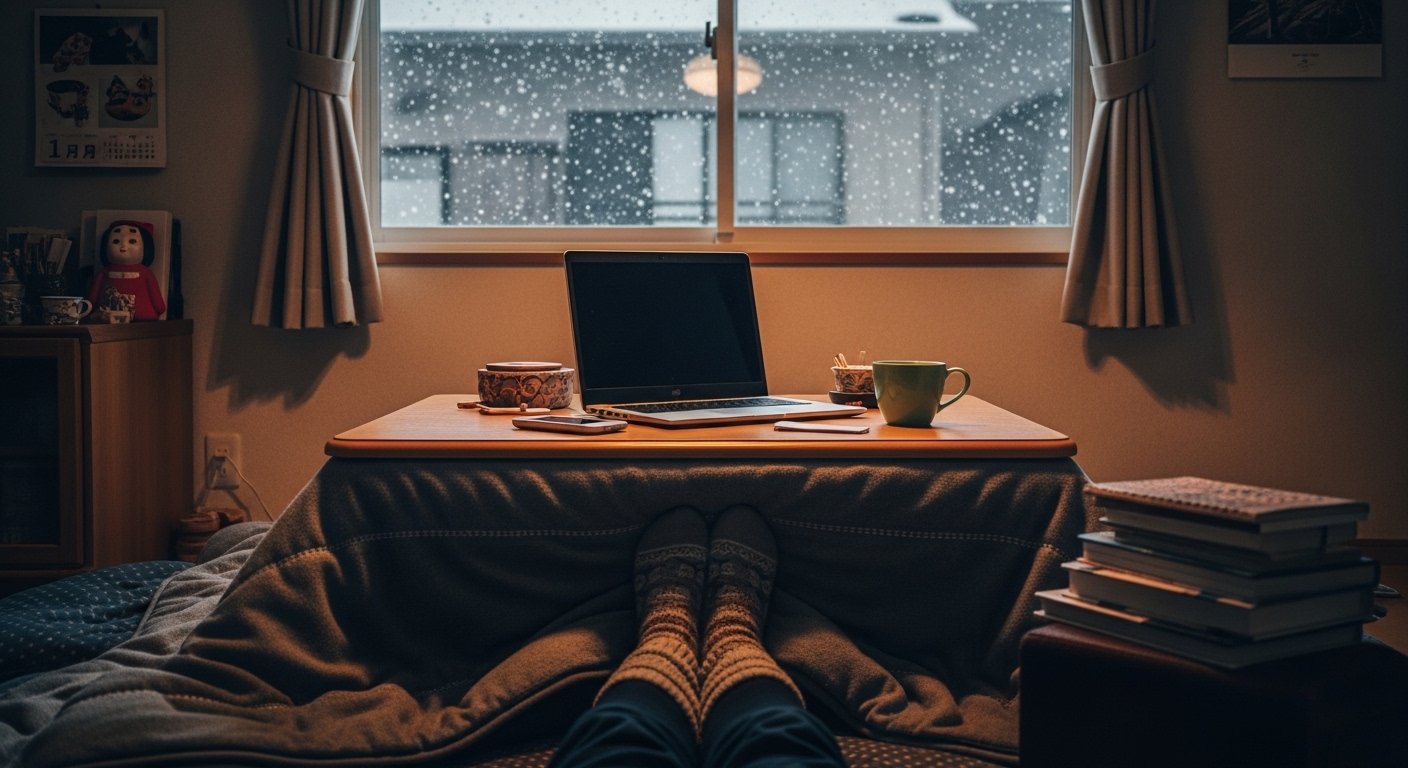
Table of Contents
The Real Struggle: Why Japan’s Winter Can Be a Digital Nomad’s Nightmare
You’re probably thinking, “Japan? Cold? But it snows there!” And yes, it snows. Beautifully. But the problem isn’t necessarily the outdoor temperature – it’s what happens *inside*. My first apartment was a prime example of why nomads frequently encounter challenges finding adequately insulated apartments in Japan. Many older Japanese buildings, particularly in urban areas like Tokyo and Osaka, were designed with summer heat and humidity in mind, not brutal winter cold.
Imagine this: single-pane windows that feel like they’re actively sucking the heat out of your room, paper-thin walls that let you hear your neighbor sneeze (and feel every draft), and doors that might as well be made of swiss cheese for all the cold air they let in. My first place, a cute little 1K, felt like sleeping in a refrigerator. I’d layer up in sweaters, socks, and even a scarf, only to shiver myself to sleep. This isn’t just about discomfort; it impacts your health, your mood, and your productivity.
Then there’s the money pit. That single air conditioner unit, which acts as your primary heating source, is an energy hog. Many nomads face unexpected high winter utility bills due to the need for constant heating in their accommodations, impacting their budget in a big way. I remember getting a ¥25,000 electricity bill one January for a tiny 20 square meter apartment. I nearly fainted. I was barely using any other appliances, but that heater was running constantly, trying to fight a losing battle against the outside.
And when your apartment is an icebox, where do you go to work? Remote workers often struggle to locate suitable, warm, and free (or budget-friendly) workspaces where they can be productive away from their cold living spaces. Spending all day cooped up, shivering, is a surefire way to feel isolated and unmotivated. Navigating Japan’s winter effectively requires specific knowledge regarding heating hacks and accommodation choices, which many newcomers, like I was, completely lack.
🎯 Insider Tip: Don’t assume. Just because an apartment is ‘newly built’ doesn’t automatically mean it’s well-insulated for winter. Always ask specifically about the type of windows (二重窓 – nijuu-mado, double-paned, is your friend) and if the building has specific insulation standards. If the rental agent hesitates, that’s your red flag.
My Hard-Won Hacks: Beating the Chill, Step-by-Step
After years of trial and error, a few massive utility bills, and countless cold mornings, I’ve developed a system. It’s not glamorous, but it works.
Step 1: The Foundation – Choosing Your Winter Fortress
This is the first critical step for a comfortable Japanese winter. If you’re planning a longer stay, securing the right long-term accommodation that is explicitly designed for warmth or has good insulation is foundational. This sounds obvious, but many short-term rentals and older apartments simply aren’t built for it.
- Look for Newer Builds: Apartments built after the early 2000s are generally better, as building codes for insulation have improved. If you’re browsing sites like GaijinPot Apartments or directly with real estate agents, don’t just look at the floor plan; ask about the construction year.
- Double-Paned Windows (二重窓 – nijuu-mado): This is non-negotiable if you can find it. These make an enormous difference in heat retention and noise reduction. If an apartment has them, it’s a huge plus.
- South-Facing (南向き – minamimuki): An apartment that faces south will get more natural sunlight throughout the day, warming your space considerably. It might sound minor, but it’s a game-changer.
- Check for Floor Heating (床暖房 – yukadanbou): Rare, but a luxurious godsend if you find it. This provides incredible, even warmth without the dry air of an AC.
- Understand the Heating System: Most apartments rely on the air conditioner unit. Ask if there are other options, like a gas heater outlet. Gas heaters (ガスファンヒーター – gasu fan hiitaa) can be more efficient for quick warmth, though they require specific outlets.
Prioritize this. Don’t cheap out on your accommodation if you plan to spend significant time there during winter. A slightly higher rent for a well-insulated place can easily offset massive utility bills and make your daily life so much more enjoyable.
Step 2: DIY Warmth – Budget Heating Hacks That Actually Work
Even in a decent apartment, you’ll need backup. These budget-friendly heating hacks for homes are a key strategy to manage Japan’s winter cold effectively and cut costs.
- The Mighty Kotatsu (こたつ): If there’s one piece of furniture that defines Japanese winter survival, it’s the kotatsu. This low table with a built-in heater and a thick blanket draped over it is pure genius. You tuck your legs under, and it creates a personal warm bubble. You can buy smaller, budget-friendly ones at stores like Nitori or recycle shops for ¥10,000-¥20,000. It’s surprisingly efficient because it only heats *you*, not the entire room.
- HeatTech (ヒートテック – Hiito Tekku): Uniqlo’s HeatTech thermal wear is a global phenomenon for a reason. Layers are crucial. Get the extra-warm varieties (極暖 – Gokudan or 超極暖 – Chou Gokudan) for serious chill. It’s affordable and makes a massive difference.
- Kairo (カイロ – Disposable Heat Packs): These little packets of magic can be stuck to your clothes (not directly on skin!) or held in your pockets. They come in hand-held or stick-on versions. A pack of 30 costs around ¥500-¥1,000 at any drugstore or convenience store. I always have a few on hand.
- Window Insulation Film (窓用断熱シート – Mado-you Dan’netsu Shiito): This is a cheap and effective hack. You can buy rolls of bubble wrap-like film or thicker foam insulation that you stick to your windows. It helps reduce heat loss significantly. A roll costs about ¥1,000-¥2,000 at a 100-yen shop or home center.
- Draft Stoppers (隙間テープ – Sukima Teepu): Put these under doors and around window frames that are particularly leaky. Even small gaps can let in a surprising amount of cold air.
- Humidifier (加湿器 – Kashitsuki): Dry air feels colder. Running a humidifier (even a cheap one) can make the air feel warmer and more comfortable, allowing you to set your heater to a lower temperature.
- Warm Slippers and Room Wear: Japanese homes have a custom of removing shoes indoors, but that doesn’t mean your feet have to freeze. Invest in thick, fluffy slippers and a good quality, warm room wear set.
These strategies help you use your AC heater less, keeping those terrifying utility bills manageable. Remember, a little upfront investment in these items can save you much more in monthly costs.
Step 3: Escape the Igloo – Finding Your Warm Work Haven
When your apartment just isn’t cutting it, you need to get out. Actively seek out and utilize insulated, cozy, and productive remote workspaces (which may include free options) to avoid working in a cold apartment and break potential isolation.
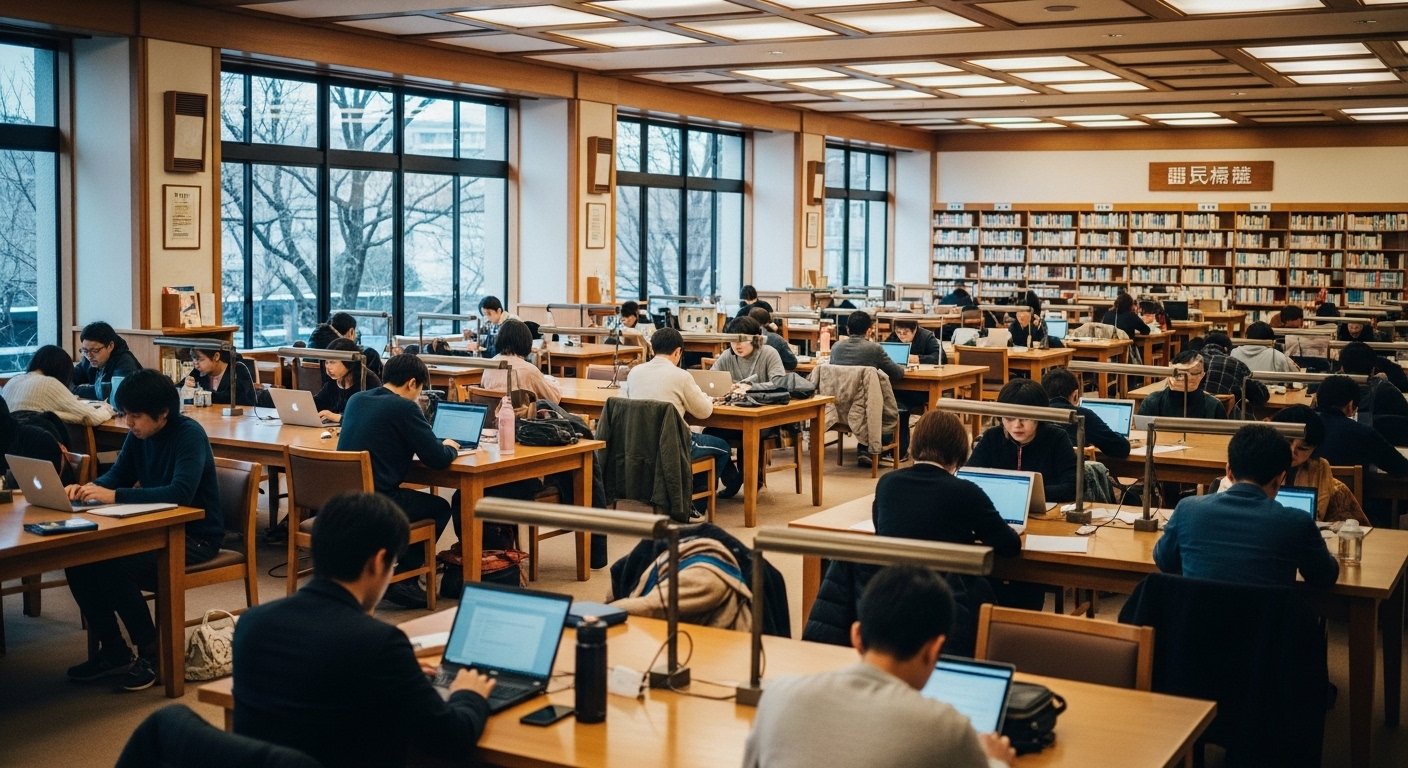
- Public Libraries (図書館 – Toshokan): Your absolute best friend. They are almost always warm, quiet, have free Wi-Fi, and often have power outlets. Find your local library (自治体 図書館 – Jichitai Toshokan) and get a membership card – it’s usually free for residents.
- Large Bookstores with Seating: Places like Tsutaya Electrics (especially in Futako-Tamagawa or Roppongi) often have cafes inside or dedicated seating areas where you can work for hours. Buying a coffee or a snack is polite, but generally, they don’t bother you.
- Department Store Food Courts/Lobbies: Major department stores (e.g., Isetan, Mitsukoshi, Takashimaya) are always warm and sometimes have comfortable seating areas in their food courts or on upper floors. Wi-Fi can be hit or miss, but it’s a good spot for focused, offline work or quick tasks.
- Manga Kissa (漫画喫茶 – Manga Cafes): These are not free, but they are incredibly affordable and offer private booths, internet, drinks, and sometimes even showers. For ¥500-¥1,000 for a few hours, it’s a fantastic option for warmth and privacy.
- Starbucks/Other Cafes: Obvious, but reliable. While not free, a single coffee can buy you a few hours of warmth and Wi-Fi. Look for larger branches with ample seating.
- Co-working Spaces: If your budget allows, a dedicated co-working space (コワーキングスペース – kowaakingu supeesu) offers the best environment, usually with excellent amenities and networking opportunities. Day passes can range from ¥1,500-¥3,000.
Getting out isn’t just about warmth; it’s about staying sane. Winter can be isolating, and seeing other people, even if you’re not directly interacting, makes a huge difference to mental well-being.
Step 4: The Long Game – Planning Ahead for Winter
This goes beyond immediate survival. Consult comprehensive guides (like those for 2026 digital nomad visas and living costs) to understand the broader context of living and working in Japan during winter, optimizing for both comfort and cost efficiency.
- Seasonal Planning: If you have flexibility, consider avoiding the absolute coldest months (January and February) for your initial arrival. Spring or autumn are much more forgiving.
- Research Cities: While Tokyo and Osaka can be cold, cities further south (like Fukuoka) or on the Pacific coast can experience milder winters. Hokkaido, on the other hand, is for serious winter enthusiasts only.
- Budget for Winter: Factor in higher utility costs for winter. Don’t be caught off guard like I was. Estimate an extra ¥5,000-¥15,000 per month for heating, depending on your apartment and habits.
- Visa Considerations: With the new digital nomad visas for 2026 becoming relevant for long stays, understanding the long-term cost implications, including seasonal variations, is critical. A comfortable winter contributes to a sustainable long-term stay.
🇯🇵 Point & Speak
Show this to staff/landlords:
English: Do you have a room with good insulation?
断熱性の良い部屋はありますか?
(Dan’netsusei no ii heya wa arimasu ka?)
English: Is there floor heating?
床暖房はありますか?
(Yukadanbou wa arimasu ka?)
English: Where is the nearest library / cafe with Wi-Fi?
一番近い図書館 / Wi-Fiのあるカフェはどこですか?
(Ichiban chikai toshokan / wai-fai no aru kafe wa doko desu ka?)
English: My utility bill is very high.
光熱費がとても高いです。
(Kouetsu-hi ga totemo takai desu.)
English: Is it cold in winter here?
冬は寒いですか?
(Fuyu wa samui desu ka?)
The Cold, Hard Cash: A Winter Price Breakdown
Let’s talk numbers. Here’s a rough idea of what you might be looking at for winter-related costs. These are specific, based on my experience, not just vague “cheap” or “expensive.”
| Item | Typical Cost (JPY) | Notes |
|---|---|---|
| Monthly Rent (standard, poor insulation) | ¥60,000 – ¥90,000 | For a 1K/studio outside central Tokyo. You’ll spend more on heating. |
| Monthly Rent (newer, better insulation) | ¥75,000 – ¥120,000+ | Initial cost higher, but potential savings on utilities. Worth it. |
| Monthly Utilities (Winter, high AC usage) | ¥15,000 – ¥25,000+ | Electricity (電気代 – Denki-dai) can be brutal. This is the big one. |
| Monthly Utilities (Winter, careful usage + hacks) | ¥8,000 – ¥15,000 | With kotatsu, layers, and judicious AC use. Goal range. |
| Portable Electric Heater (小型ヒーター – Kogata Hiitaa) | ¥5,000 – ¥15,000 | One-time purchase. Good for targeted heating, but still uses electricity. |
| Kotatsu (こたつ) | ¥10,000 – ¥30,000 | One-time purchase, often with blanket. Essential for coziness. |
| Kairo (カイロ, pack of 30 stick-on) | ¥500 – ¥1,000 | Monthly cost, depending on usage. Essential for outdoor excursions. |
| Thermal Underwear (Uniqlo HeatTech, set of top/bottom) | ¥2,000 – ¥5,000 | One-time purchase per set. Gokudan/Chou Gokudan are worth the extra yen. |
| Cafe/Co-working space (daily average, if not free) | ¥500 – ¥1,500 | Cost for a coffee or day pass. Can add up quickly. |
| Humidifier (加湿器 – Kashitsuki) | ¥3,000 – ¥10,000 | One-time purchase. Helps make heat feel more effective. |
Common Pitfalls I Fell Into (So You Don’t Have To)
I’ve made all the mistakes, so you don’t have to freeze your fingers off or cry over an electricity bill. Here are the common traps to avoid:
- Underestimating the Indoor Cold: This is number one. You might think, “I’m from Canada/Russia/Scandinavia, I can handle cold!” But Japanese houses are a different beast. The outdoor cold isn’t the problem; it’s the lack of warmth *inside* that gets you. I thought my outdoor winter gear would suffice indoors. It did not.
- Ignoring Insulation During Apartment Hunting: My biggest regret on my first go-around. I prioritized rent price and location over heating efficiency. Big mistake. What I saved in rent, I paid double in utility bills and misery. Always ask about insulation, window types, and building age.
- Blasting the AC Heater 24/7: It’s tempting, especially when you’re freezing. But your wallet will hate you. The AC units are often not very efficient in older buildings, and leaving them on constantly, especially while you’re out, is a waste. Use timers, focus on heating yourself rather than the entire room, and supplement with other methods.
- Not Having Backup Heating Methods: Relying solely on the AC unit is a gamble. What if it breaks? What if it’s not enough? A kotatsu or a small, efficient portable heater (like an oil-filled radiator for sustained warmth, or a ceramic fan heater for quick boosts) can save your skin.
- Thinking ‘I’ll Just Layer Up’ – It’s Not Enough for Work: Yes, layering helps. But when you’re sitting still for hours, typing at a desk, even multiple sweaters won’t keep your extremities warm if the ambient temperature is too low. Your fingers will ache, your concentration will waver, and you’ll be constantly distracted by the cold. That’s why those warm workspaces are so crucial.
- Forgetting About Humidity: As mentioned, dry air feels colder. I spent weeks wondering why my AC set to 25°C still felt chilly. A simple humidifier changed everything. It makes the air feel warmer, and it’s better for your skin and respiratory system too.
Learn from my failures. Plan ahead, invest smartly, and get creative with your warmth strategies. Japan’s winter can be beautiful and magical, especially with snow-covered temples or crisp, clear views of Fuji. Don’t let the indoor chill spoil your experience.
Frequently Asked Questions
Q: Why are Japanese apartments so cold in winter, even when it’s not freezing outside?
A: It’s a common struggle for nomads! Many older Japanese apartments, particularly outside of Hokkaido, were designed primarily to combat hot, humid summers. This often means they have poor insulation, single-pane windows, and less effective heating systems compared to Western standards. The focus was on ventilation, not heat retention. So, while it might be 5°C outside, it can feel just as cold (or colder) inside due to drafts and rapid heat loss, leading to discomfort.
Q: How can I significantly reduce my winter utility bills in Japan as a digital nomad?
A: The key is a multi-pronged strategy focusing on budget-friendly heating hacks and energy-saving habits. Instead of blasting your AC 24/7, invest in personal heating solutions like a kotatsu, wear thermal layers like Uniqlo’s HeatTech, and use disposable kairo heat packs. Insulate your windows with film, block drafts under doors, and use a humidifier to make the air feel warmer. Only heat the room you’re in, and turn off heaters when you leave. These methods combined can drastically cut down on high electricity bills, which are often the biggest winter expense.
Q: Where can digital nomads find warm, free, and productive remote workspaces in Japan during winter?
A: When your apartment is an igloo, you need to escape. Public libraries (図書館 – Toshokan) are your best bet: they’re consistently warm, quiet, and offer free Wi-Fi and power outlets. Large bookstores with seating areas, like some Tsutaya branches, also provide comfortable, warm environments. For quick tasks, department store food courts or lobbies can offer warmth, though Wi-Fi might be less reliable. While not free, manga cafes (漫画喫茶 – Manga Kissa) are incredibly budget-friendly for private, warm booths with internet access, perfect for focused work sessions.


