*Images used in this article are for illustration only. They may not be directly related to the content.
Don’t Freeze Your Toes (or Budget!): A Veteran’s Guide to Winter Nomad Life in Japan
I still remember my first winter in Japan, nearly a decade ago. I’d come from a country where ‘winter’ meant centrally heated homes, thick insulation, and generally just dealing with the cold when you stepped outside. I smugly thought, “Oh, I’ve got this. I’ve survived worse!”
Then I stepped into my first Japanese apartment. It was a perfectly lovely, modern-looking place in Tokyo, and it was cold. Not just ‘a bit nippy,’ but I could see my own breath inside the living room. I spent that entire first week wearing my outdoor jacket indoors, convinced I was doing something wrong, that there must be a secret heating system I hadn’t found yet. My heating bill for that month? Let’s just say it made my eyes water almost as much as the drafts coming through the window frames. I was a digital nomad, not a billionaire, and my budget was taking a beating.
That initial shock, the constant shivers, and the sheer frustration of trying to work productively when my fingers were numb—that’s the real Japan winter experience for many first-timers. You see the beautiful landscapes, the amazing food, the skiing, and the relaxing onsens in the brochures, and you think it’ll be charming. It is charming, sure. But it’s also distinctly winter, and your accommodation might just be a glorified icebox.
This isn’t just about comfort; it’s about staying healthy and productive. Trying to type with stiff fingers is no fun, and battling a persistent cold while on the road is a nightmare. So, after ten years of battling Japanese winters, figuring out the hacks, and yes, still occasionally making mistakes, I’m here to give you the honest, no-fluff guide to thriving, not just surviving, as a winter nomad in Japan.
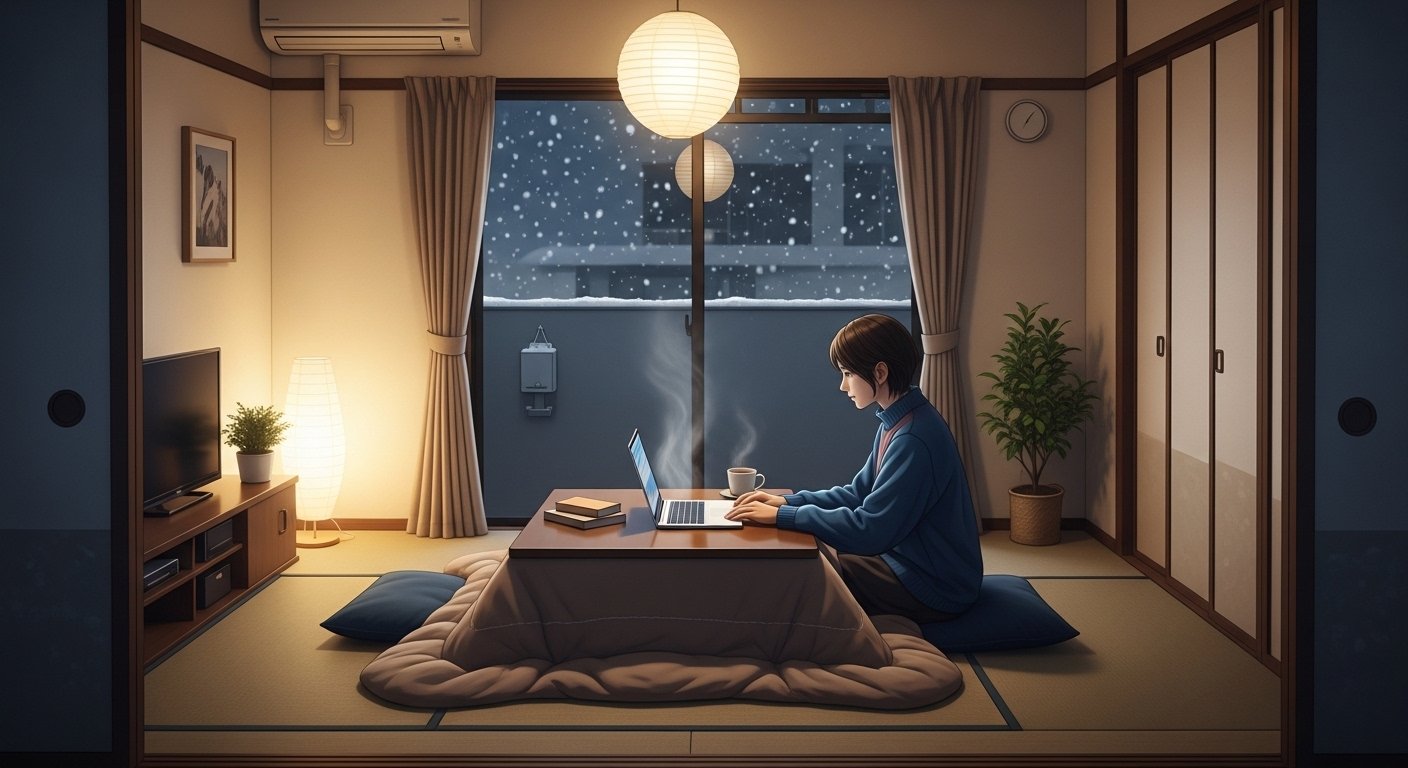
Table of Contents
The Real Struggle: Why Winter in Japan Isn’t Just “Charming”
Okay, let’s get real. You’ve probably seen those idyllic photos of snow-covered temples or Hokkaido ski slopes. And yes, Japan in winter is often lovely, definitely better than a drab UK winter, for example. But don’t let the picturesque scenery fool you into underestimating the cold. The biggest friction point for digital nomads here, especially if you’re seeking a more integrated, longer-term lifestyle rather than just ‘checking off a list,’ is the housing.
The harsh truth is: many, many Japanese homes, particularly older ones or those built before modern insulation standards became common, are just not designed for warmth. They’re built to survive earthquakes and to allow airflow during brutally humid summers. This means thin walls, single-pane windows, and gaps around doors where drafts sneak in like ninjas.
I remember one particular Airbnb in Kyoto. It looked beautiful online, traditional aesthetic, tatami mats, everything. But the bathroom literally felt like an outdoor shed, and the living room never got above 15°C (59°F) even with the air conditioner blasting. The warm air just seeped out everywhere. It wasn’t just uncomfortable; it genuinely impacted my mood and my ability to focus on my work. My fingers would get so stiff trying to type, and I’d be constantly distracted by the shivers.
The problem is two-fold:
1. Poor Insulation: Unlike many Western countries, central heating isn’t standard. Homes rely on individual room heaters (usually AC units) or portable kerosene/gas heaters. And without good insulation, heating one room is like trying to heat the entire outdoors.
2. High Heating Costs: Because of this inefficiency, running your AC all day can rack up astronomical electricity bills. For budget travelers or those planning multi-month trips, this is a serious concern. You’re constantly weighing warmth against your daily expenditure, and it’s a battle you don’t want to fight every single day.
It’s a stark contrast to the amazing public transport, the clean streets, and the kind people everyone raves about. The domestic reality can be a rude awakening.
Battle Plan: Staying Warm Without Draining Your Wallet
So, how do you fight back against the cold, keep your fingers nimble for typing, and your wallet from crying? It’s all about strategy.
Dress Like a Local Ninja (Layering is King)
This is your first, best, and cheapest line of defense. Forget trying to heat your entire apartment; heat yourself!
- Uniqlo Heattech: Seriously, this stuff is a godsend. Base layers (long-sleeve tops, leggings) from Uniqlo’s Heattech range come in various warmth levels (regular, Extra Warm, Ultra Warm). They’re lightweight, surprisingly effective, and affordable. I wear a Heattech top and leggings practically every day from November to March.
- Layer Up, Always: Think three layers minimum indoors: Heattech, a regular shirt/sweater, and a fleece or thick cardigan. For sleeping, thermal pajamas, thick socks, and even a beanie are not overkill. I’ve definitely slept in a beanie indoors on the coldest nights.
- Socks & Slippers: Your feet are crucial. Invest in thick, wool socks. Many Japanese homes require removing shoes at the entrance, so warm indoor slippers (sometimes heated!) are essential. I have a pair of fluffy, sheepskin-lined slippers that are my best friends.
- Body Warmers (Kairo): These small, disposable heat packs are magic. You can buy them at any convenience store (konbini) or 100-yen shop (hyakkin). Stick them to your inner layers (not directly on skin!) on your lower back or stomach for hours of localized warmth. They’re amazing when you’re out exploring too.
Master Your Mini-Zone Heating
Since you can’t heat the whole house efficiently, focus on heating you and your immediate workspace.
- The Glorious Kotatsu: If your accommodation has one, embrace it! A kotatsu is a low table with an electric heater underneath, covered by a heavy blanket. You sit on the floor, tuck your legs under the blanket, and bask in the warmth. It’s an absolute game-changer for working or relaxing. It heats you directly, rather than the room, saving tons of energy. My first experience with a kotatsu felt like I’d discovered a secret cheat code for winter. It’s cozy, makes you productive, and brings people together.
- Strategic AC Use: Your air conditioner (エアコン –
eakon) will likely be your primary heating source.- Zone Heating: Only heat the room you are currently in. Close doors to other rooms.
- Timer Function: Use the timer! Set it to turn on 30 minutes before you wake up and turn off an hour after you go to bed.
- Optimal Temperature: Don’t crank it up to tropical levels. Aim for 20-22°C (68-72°F). Anything higher is a waste.
- Humidifier: AC can dry out the air, which contributes to feeling colder and can irritate your throat. A small humidifier (available at electronics stores like Bic Camera or Yamada Denki) can make a big difference.
- Electric Blankets & Foot Warmers: A cheap electric blanket for your bed or even just an electric foot warmer under your desk can provide immense comfort without heating an entire space. I have an electric blanket on my futon and it makes getting into bed on a freezing night feel like a warm hug.
🎯 Insider Tip: If your apartment has a small, fan-powered heater in the bathroom (often located high on the wall), use it! Turn it on 10 minutes before you shower. It won’t heat the whole bathroom but will make that initial moment of stepping out of the shower a lot less agonizing.
The Onsen Oasis (Your Winter Escape)
Beyond practicalities, Japan offers a unique way to beat the cold: the onsen. There’s nothing quite like the sensory experience of sinking into a steaming hot natural spring bath, especially when there’s snow on the ground around you. The warmth penetrates your bones, melting away the chill and any travel stress. It’s not just a bath; it’s a cultural ritual and a reset button. A day trip to an onsen town can totally rejuvenate you, making the cold a lot more bearable. Plus, many onsens are beautiful, offering stunning views while you soak.
Finding Your Warm, Productive Hub
One of the biggest headaches for a winter digital nomad in Japan is finding a reliable, warm, and affordable workspace when your apartment feels like a freezer. Trust me, trying to concentrate when your feet are numb is a productivity killer.
Café Culture: Not Just for Coffee
Cafes are your friend, but choose wisely.
* Chain Cafes: Places like Doutor, Starbucks, Tully’s, and Komeda Coffee are generally reliable. They have decent Wi-Fi, power outlets (though sometimes limited), and are almost always warm. Grab a hotto kōhī (hot coffee) or kōcha (black tea) and settle in. Expect to pay around ¥300-¥600 for a drink. I often see other remote workers in these spots.
* Independent Cafes: Can be charming, but Wi-Fi and outlets are not guaranteed. Always check before committing. Some smaller ones might also be less diligent about heating.
* Stay Hydrated: Order refills or alternate with water. Don’t hog a table for hours on just one ¥300 drink, especially in busy periods. It’s polite to order something every 1-2 hours.
Co-working Spaces: The Dedicated Nomad Den
If you need consistent warmth, reliable high-speed internet, and a proper desk setup, co-working spaces are the way to go.
* Benefits: They are designed for productivity. Expect ergonomic chairs, quiet zones, meeting rooms, and professional environments. They are always well-heated.
* Pricing: Varies significantly.
* Hourly: ¥500-¥1000/hour. Good for short bursts.
* Daily Pass: ¥1500-¥3000/day. Great for a full workday.
* Monthly Membership: ¥15,000-¥40,000+/month. Best value if you’re staying for an extended period.
* Finding Them: Search on Google Maps for “コワーキングスペース” (coworking space) or “シェアオフィス” (share office). Many major cities have plenty. Check reviews for specific amenities like monitor availability or call booths.
Manga Kissa / Internet Cafes: Your Budget Bunker
This might sound odd, but internet cafes (manga kissa or netto kafe) are a fantastic, surprisingly cozy, and affordable option.
* What they are: These are places where you rent a private booth (often with a reclining chair, sometimes a flat futon area) by the hour. They provide computers, fast internet, free soft drinks, manga libraries, and often showers and laundry facilities.
* Warmth & Cost: They are invariably toasty warm, and you get complete privacy. Rates can be as low as ¥1000-¥2000 for a 3-hour pack or an overnight stay. It’s amazing value for warmth, internet, and a space to sprawl out. I’ve definitely spent a few cold mornings in one, just getting my head down and getting work done. Just be aware that some can be a bit smoky if they still have smoking sections, so check that beforehand.
Staying Healthy: Dodging the Winter Bugs
Getting sick abroad is a special kind of awful. In Japan, winter means flu season, and with poorly insulated homes, it’s easy to catch a chill. Knowing how to access basic remedies is crucial.
Pharmacy First Aid (When a Cough Hits)
Don’t wait until you’re feeling truly miserable.
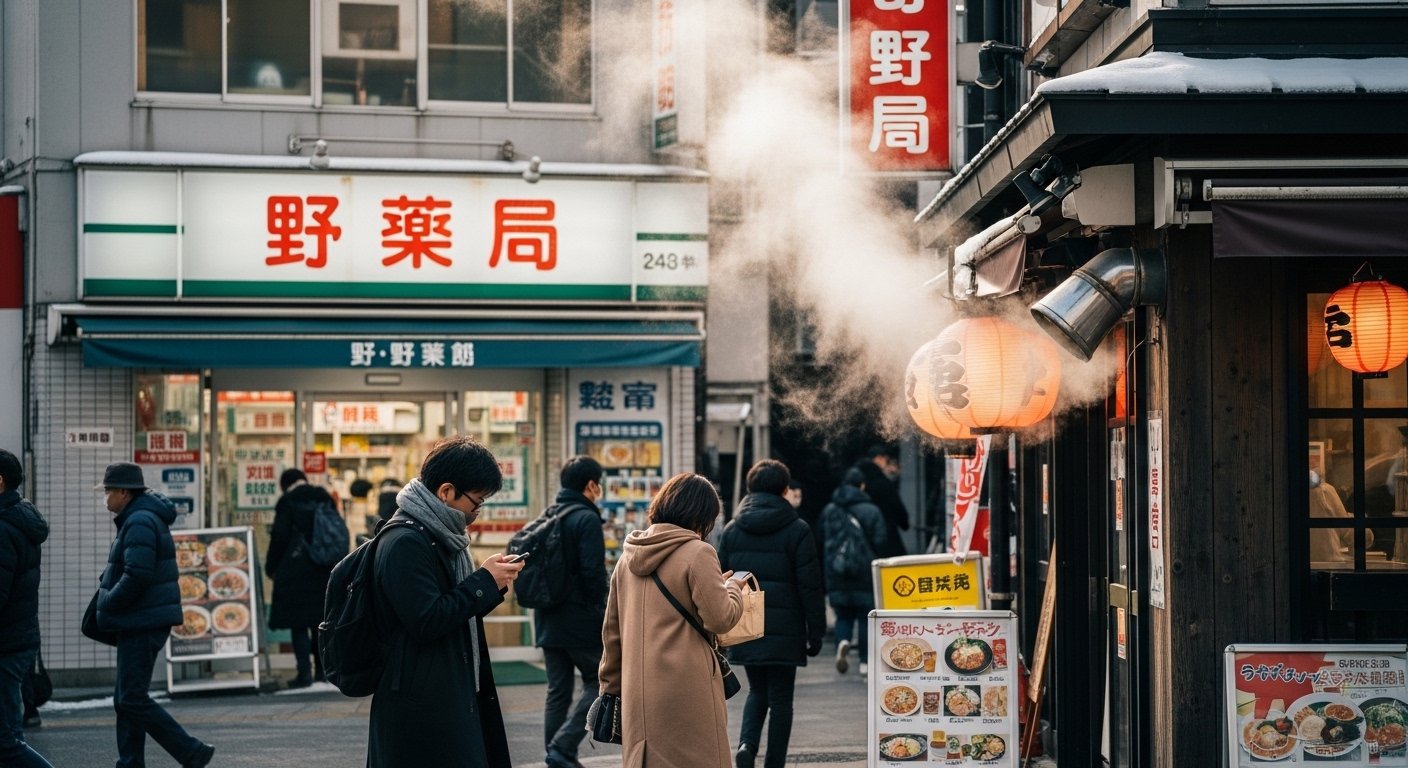
* Where to Go: Look for a 薬局 (yakkyoku – pharmacy) or a ドラッグストア (doraggu sutoa – drug store). Drug stores are more common and also sell cosmetics, snacks, and daily necessities. The staff might not speak much English, but they are usually very helpful.
* Common Remedies:
* Cold Medicine: 風邪薬 (kaze-gusuri) – there are many types; ask for something for general cold symptoms (sōgō kaze-yakkyoku).
* Throat Lozenges: のど飴 (nodo-ame) – essential for scratchy throats.
* Pain Relievers: 鎮痛剤 (chintsūzai) – for headaches or body aches. Brands like Bufferin or Eve are common.
* Masks: マスク (masuku) – always wear one if you have symptoms, it’s a social norm and shows respect.
* Communicating: Have a translation app ready or use the “Point & Speak” phrases below. Describe your symptoms clearly (e.g., kaze for cold, seki for cough, nodo ga itai for sore throat).
Hydration & Nutrition (Your Immune Boosters)
- Hot Drinks: Keep a thermos handy for hot tea (
ocha) or coffee. Convenience stores sell hot drinks from their fridges and vending machines. - Hearty Food: Embrace warming Japanese dishes.
Nabe(hot pot),ramen,udon, andodenare not just delicious; they’re perfect for warming you from the inside out. Don’t skip meals or rely solely on convenience store snacks. Good nutrition is your best defense.
Sleep & Stress (Don’t Burn Out)
The nomadic lifestyle, especially in a foreign country, can be demanding. Add winter discomfort to that, and it’s a recipe for burnout. Prioritize sleep, manage your work hours, and don’t underestimate the impact of constant low-level cold on your energy. Take those onsen breaks!
Price Breakdown: Heating & Workspace Costs (Estimated)
This table gives you a rough idea of what to expect for keeping warm and staying productive. Remember, energy costs can fluctuate (e.g., the recent restart of TEPCO’s Niigata nuclear plant’s No.6 reactor on Jan 21, 2026, could indirectly influence electricity supply and costs), so budgeting is always key. These are rough estimates based on my experiences.
| Category | Item/Service | Estimated Cost (JPY) | Notes & Savings Tips |
|---|---|---|---|
| **Personal Warmth** | Uniqlo Heattech (top/bottom) | ¥1,500 – ¥3,000 each | Initial investment, lasts entire season. Look for sales. |
| Kairo (heat packs) | ¥50 – ¥100 per pack | Buy in bulk at drugstores/100-yen shops for better value. | |
| Electric Blanket | ¥3,000 – ¥8,000 | One-time purchase, very low running cost. Lifesaver for sleeping. | |
| **Apartment Heating** | AC (1 room, 8 hours/day) | ¥5,000 – ¥15,000+/month | Highly variable based on insulation, AC efficiency, external temp. Use timers & layers! |
| Kotatsu (electricity for heater) | ¥1,000 – ¥3,000/month | Much more efficient than whole-room AC. Use if available. | |
| **Workspace** | Cafe drink (per visit) | ¥300 – ¥600 | Budget for 2-3 drinks if staying for several hours. |
| Coworking Space (daily pass) | ¥1,500 – ¥3,000 | Professional environment, guaranteed warmth & internet. | |
| Manga Kissa (3-hour pack) | ¥1,000 – ¥1,500 | Excellent budget option for warmth & privacy. Includes drinks. | |
| **Health** | Over-the-counter cold medicine | ¥1,000 – ¥2,500 | Stock up on essentials before symptoms worsen. |
| Onsen visit (day trip) | ¥500 – ¥2,500+ | Essential for relaxation & warming up. Price varies by location/amenities. |
Common Pitfalls & How to Avoid Them
Even with the best intentions, it’s easy to stumble. I’ve made all these mistakes, so learn from me!
- Underestimating the Cold: This is the big one. People think “Japan in winter” is just about snow sports. But even Tokyo gets chilly, and with the drafts, it feels colder than the thermometer reads.
- Fix: Pack more layers than you think you need. Buy Heattech immediately upon arrival. Assume your apartment will be cold.
- Blasting the AC: It feels logical, right? “I’m cold, turn it up!” But without insulation, you’re just paying to heat the neighborhood. My first month’s bill taught me this lesson harshly.
- Fix: Use targeted heating. Heat yourself first, then your immediate zone. Use timers.
- No Backup Workspace: Relying solely on your Airbnb/hotel room for work is risky if it’s freezing.
- Fix: Scout out cafes or coworking spaces on your first day. Know where your warm havens are. Have a few options for different budgets.
- Ignoring Early Symptoms: A sniffle in a heated office can become a full-blown cold in a drafty apartment.
- Fix: Carry basic cold remedies. Drink hot fluids constantly. Wear a mask. Get rest. Don’t push through it.
- Forgetting Humidifiers: The dry air from AC units, combined with the cold, can really dry out your skin, throat, and nose.
- Fix: If you’re staying long-term, consider buying a cheap humidifier from a second-hand store or electronics shop. Otherwise, simply keep hot water boiling (if possible) or even hang damp towels in your room.
🇯🇵 Point & Speak
Show this to staff:
English: I have a cold.
風邪をひきました
(Kaze o hikimashita)
English: Where is the pharmacy?
薬局はどこですか?
(Yakkyoku wa doko desu ka?)
English: Do you have cold medicine?
風邪薬はありますか?
(Kaze-gusuri wa arimasu ka?)
English: Hot water, please.
お湯ください
(Oyu kudasai)
English: Do you have an outlet / power socket?
コンセントはありますか?
(Konsento wa arimasu ka?)
FAQ
Is Japan really that cold in winter, especially indoors?
Yes, absolutely. While temperatures outside might not always plunge dramatically low, many traditional and even some modern Japanese apartments lack the robust insulation common in Western countries. This means drafts are prevalent, and the cold penetrates indoors, often making internal temperatures feel much colder than you’d expect, sometimes even cold enough to see your breath inside. It’s a common pain point for digital nomads, so always be prepared for colder indoor conditions than you might be used to.
How can I save money on heating if my Japanese apartment is always cold?
The trick is to heat yourself, not the entire house. Invest in good quality thermal layers like Uniqlo Heattech, thick socks, and warm slippers. Utilize personal heating devices like electric blankets for your bed or a kotatsu (if available) for your workspace – these are significantly more energy-efficient than trying to heat a whole room with an air conditioner. When using AC, focus on heating just the room you’re in, close doors, and use the timer function strategically. Supplemental heat packs (kairo) are also an inexpensive way to stay warm when out and about or just needing an extra boost indoors.
Where can I work remotely if my apartment is too cold and uncomfortable?
You have several excellent, warm options. Chain cafes like Starbucks, Doutor, or Tully’s offer consistent warmth, Wi-Fi, and often power outlets, though you’ll need to purchase drinks regularly. For a more dedicated setup, co-working spaces provide reliable internet, comfortable desks, and a professional environment for a daily or hourly fee (typically ¥1,500-¥3,000/day). A budget-friendly and surprisingly cozy alternative is a manga kissa (internet cafe), where you can rent a private, heated booth with free drinks and Wi-Fi for just ¥1,000-¥2,000 for a few hours. Always scout out a few options in your area upon arrival.
So, there you have it. My decade of trial, error, and shivering has led to this. Japan in winter is a truly magical experience, with beautiful landscapes, incredible food, kind people, and the serene joy of an onsen. Don’t let the cold housing or budget worries stop you from experiencing it. With a bit of preparation and these insider tips, you won’t just survive; you’ll thrive, stay healthy, and be productive, all while soaking up everything this amazing country has to offer.
Happy winter nomad-ing!


