*Images used in this article are for illustration only. They may not be directly related to the content.
Don’t Suffer a Cold Winter Breakfast: My Expat Hacks for Warm, Budget Japan Mornings
I still remember my first winter in Japan, about ten years ago now. It was a brutal January morning in Sapporo, the kind where your breath instantly freezes, and the wind feels like tiny knives slicing at your face. My hotel offered a fancy, sprawling buffet for a cool ¥2,500. Not in my backpacker budget, not even close. So, like many newbies, I stumbled into the nearest 7-Eleven, shivering, and grabbed a tuna mayo onigiri and a cold can of coffee.
Sounds fine, right? Except five minutes later, standing outside the train station, my fingers numb and my stomach feeling even colder, I bit into that chilled rice ball. It was… fine. But it was far from satisfying. It did nothing to warm me up. It was just fuel, an unfortunate necessity to get my day started. I spent the rest of the morning grumbling, wishing I’d known better. Wishing someone had told me how to navigate the glorious, affordable, *warm* breakfast landscape Japan actually offers.
That memory, and many others like it – fumbling with ticket machines, ordering the wrong thing, getting lost looking for a specific cafe – taught me a lot. And now, as your Japan Local Fixer, I’m here to make sure you don’t make the same mistakes I did. You deserve to start your winter day feeling toasty, well-fed, and without blowing your budget on mediocre hotel toast.
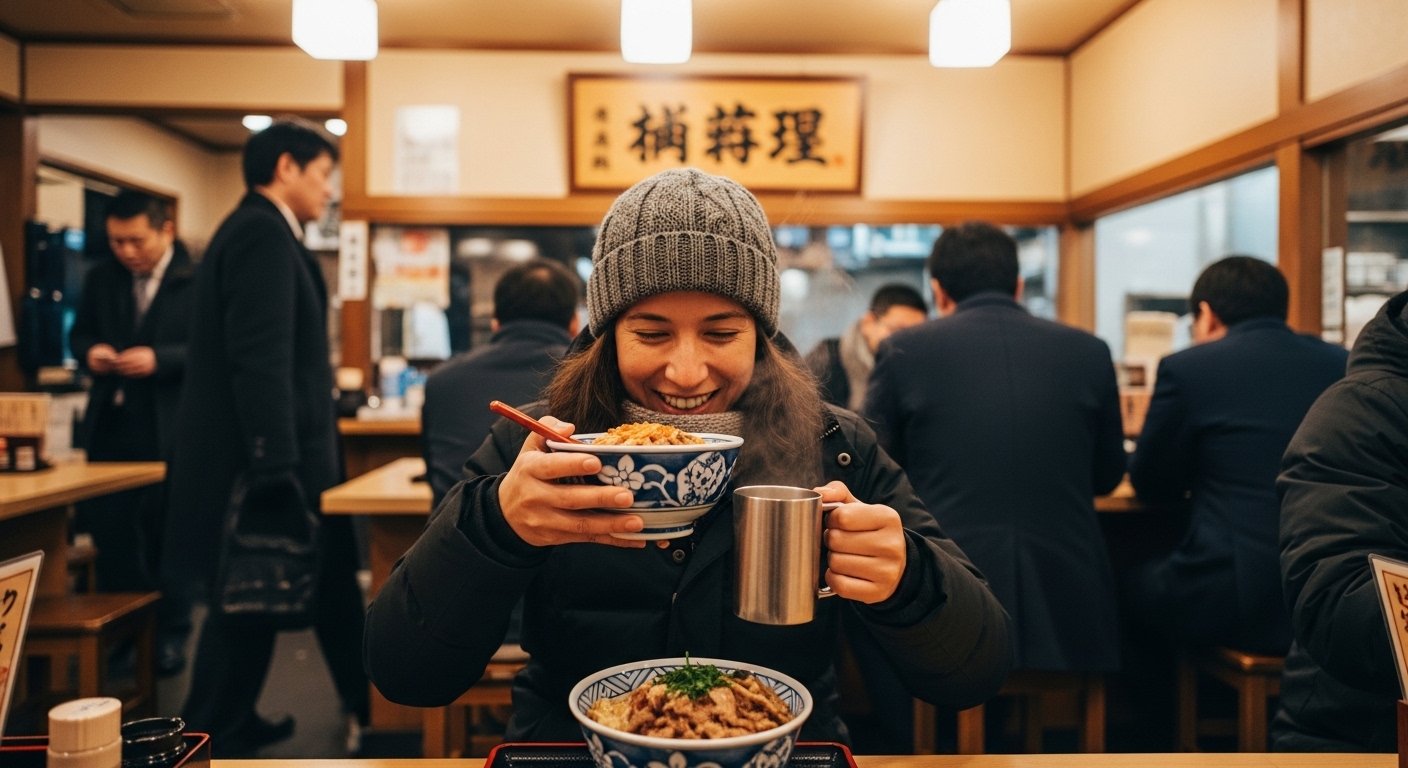
Table of Contents
The Real Struggle: Why Warm, Budget Breakfast in Japan Feels Impossible
You’ve seen it, or you’re about to. Japan’s winters are often crisp, sunny, but *cold*. Especially in the mornings. You wake up, excited to hit those temples or powder slopes, but your stomach is rumbling, and the idea of another cold sandwich just isn’t cutting it. This is where most travelers hit a wall:
- The “Cold Onigiri Conundrum”: My initial mistake. You see a convenience store, grab an onigiri, maybe a sandwich, and a cold drink. It’s cheap, it’s quick, but it does absolutely nothing for your core temperature. It’s a logistical solution, not a comforting one.
- Hotel Breakfast Sticker Shock: “Oh, only ¥3,000 for a buffet?” I’ve heard many travelers gasp. While often delicious, these breakfasts are rarely budget-friendly, eating a huge chunk out of your daily food allowance, especially if you’re traveling for weeks.
- The Time Crunch: Your itinerary is packed. You have a train to catch, a museum to open, or a mountain to climb. You need something fast, no 30-minute wait for a full breakfast plate.
- “Authentic” Feels Elusive: You want to experience local food, but beyond the obvious sushi or ramen, what does a *Japanese breakfast* even look like? And how do you get it quickly and cheaply without understanding all the Japanese signs? It’s a real friction point for many visitors.
It’s super annoying when you’re trying to immerse yourself but feel like you’re missing out on something basic, like a satisfying breakfast. I’ve been there, staring at vending machines, wondering if I’m even capable of ordering a simple cup of coffee in this land. But trust me, once you know the ropes, Japan’s breakfast scene is a goldmine.
Your Step-by-Step Guide to a Toasty Morning Meal
Forget the cold onigiri. Forget the ¥3,000 hotel buffet. These are my go-to spots for a quick, warm, and budget-friendly start to any winter day in Japan. These options are relevant for your winter morning meals in 2026 and beyond.
1. Beyond the Cold Onigiri: Konbini Hacks You Need
Yes, I started with a cold onigiri mistake, but convenience stores (konbini) like 7-Eleven, FamilyMart, and Lawson are actually treasure troves for warm food if you know what to look for. They’re everywhere, open 24/7, and incredibly efficient.
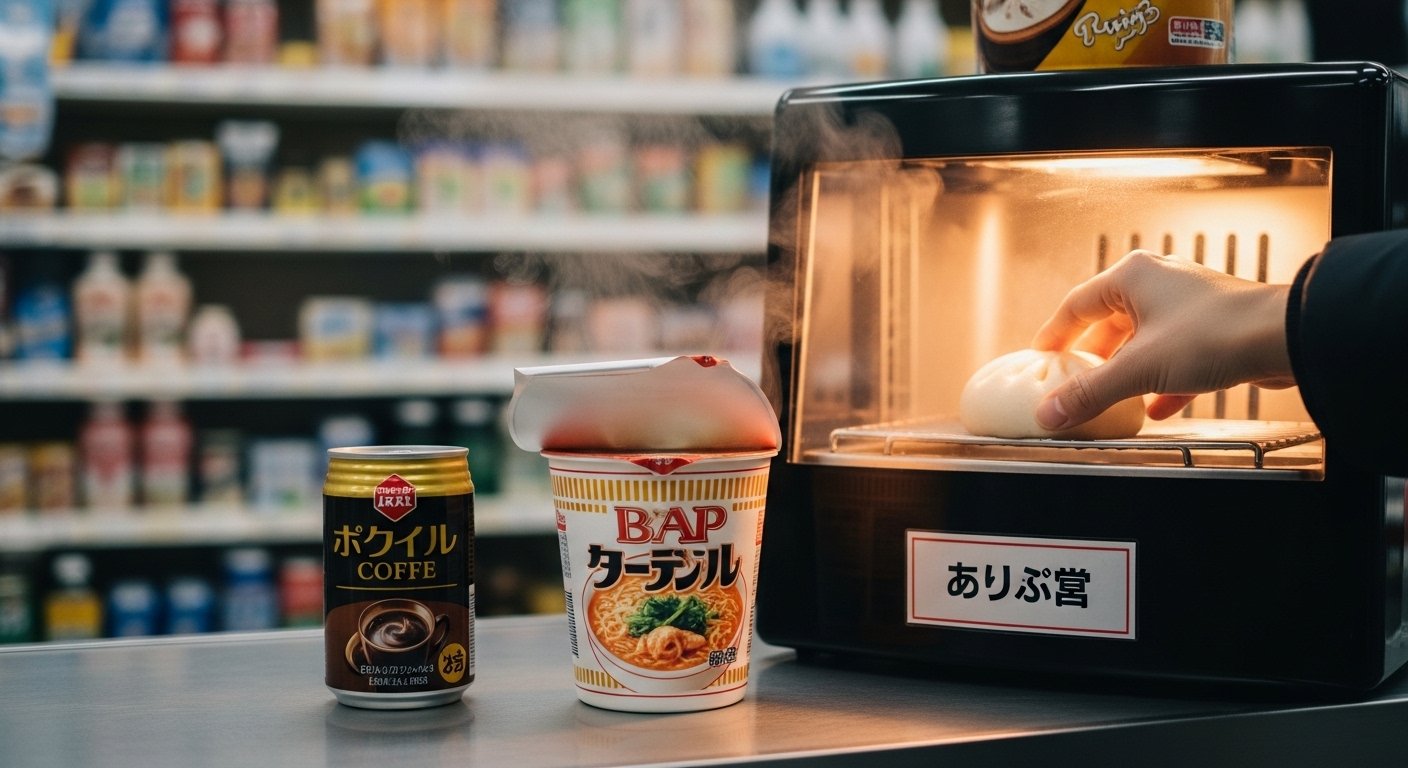
- Steamed Buns (Chūka Man): Look for the heated glass display near the cash register. In winter, these are a lifesaver. My personal favorite is the classic *Nikuman* (肉まん), a fluffy steamed bun filled with savory pork. But also try *Anman* (あんまん) with sweet red bean paste, or *Pizza-man* (ピザまん) for a cheesy twist. They’re usually around ¥150-¥200 and hot enough to warm your hands.
- Fried Chicken (Karaage & Nuggets): Often next to the steamed buns, you’ll find freshly fried goodies. FamilyMart’s “Famichiki” (ファミチキ) is legendary – crispy, juicy, and piping hot. A couple of these, maybe some nuggets, and you’ve got a warm, savory start for under ¥300.
- Hot Drinks: Don’t just grab a cold canned coffee! Head to the hot drink section. You’ll find a dizzying array of hot canned coffees, teas, hot chocolate, and even hot fruit drinks. My secret weapon for a truly cold morning is a hot ginger ale or a hot lemon drink. They’re incredibly soothing. Also, many konbini have self-serve coffee machines for fresh brews, typically ¥100-¥200.
- Microwaveable Bentos & Soups: Walk past the cold onigiri and into the prepared food section. You’ll find a fantastic selection of microwaveable meals. Look for simple rice bowls, pasta, or even small bentos. *Crucially*, the staff will heat these up for you. Just bring it to the counter, and they’ll zap it. Don’t be afraid to point and say “Atemasu ka?” (温めますか – “Will you heat it?”). You can get a small, hot meal for ¥300-¥600.
- Instant Ramen/Udon/Soba: This is a classic. Grab a cup of instant noodles – there are hundreds of varieties. Most konbini have a hot water dispenser. Fill it up right there, grab a plastic spoon or chopsticks, and you’ve got a steaming, hearty bowl of noodles for ¥150-¥300. This was my savior many times when I needed to catch an early train.
🎯 Insider Tip: Don’t just walk out with cold food from the konbini! Always ask the staff to heat up microwaveable items. It’s standard practice, and they’ll do it quickly and efficiently. Look for the phrase “温めますか?” (Atememasu ka?) on their lips, meaning “Shall I heat this for you?” Just nod if you want it heated.
2. The Undisputed Champions: Gyudon Chains for Breakfast
If you want a proper, hot, sit-down (but still lightning-fast) meal, the gyudon (beef bowl) chains are your best friends. Sukiya (すき家), Yoshinoya (吉野家), and Matsuya (松屋) are ubiquitous, cheap, and specifically designed for quick, satisfying meals, often opening from 5 AM. I’ve spent countless early mornings hunched over a steaming bowl of rice and beef, watching salarymen do the same.
- What is Gyudon? It’s a bowl of rice topped with thinly sliced beef and onions simmered in a savory-sweet sauce. It’s comfort food, pure and simple.
- Breakfast Sets: All three chains offer fantastic breakfast sets (*asa-teishoku* 朝定食). These usually include a mini gyudon or a small bowl of rice with grilled salmon, miso soup, a raw egg (for mixing into your rice!), and sometimes some pickles (*tsukemono*). Prices typically range from ¥350 to ¥600.
-
How to Order:
- Sukiya & Yoshinoya: Usually, you’ll sit down, and a staff member will come to take your order. They often have English menus or pictures. Just point!
- Matsuya: This one often uses a ticket machine near the entrance. It can be intimidating, but look for pictures. Select your item, pay with cash or IC card (Suica/Pasmo), take your ticket, and hand it to a staff member.
- Why I Love Them: They are incredibly efficient. Your food arrives almost instantly. The warmth of the rice, the miso soup, it’s exactly what you need on a cold morning. Plus, you’re eating alongside locals – it feels authentically Japanese.
3. Slurp Your Way Warm: Soba and Udon Stand-Up Eateries
You’ll find these small, no-frills shops, often near train stations or busy intersections. They’re typically stand-up (立ち食いそば – *tachigui soba*), designed for a quick slurp before work. It’s an incredibly authentic experience and a fantastic way to warm up.
- What to Expect: A small counter, a ticket machine at the entrance, and a flurry of activity. You choose your noodles (soba: buckwheat, udon: thick wheat), select toppings like tempura (天ぷら), *kakiage* (かき揚げ – mixed vegetable tempura patty), or a raw egg (卵).
- How to Order: Like Matsuya, it’s usually a ticket machine. Select your dish (often with pictures), pay, get your ticket, and hand it to the chef behind the counter. They’ll prepare your bowl lightning-fast.
- The Experience: You stand, slurp your hot noodles and savory broth, and you’re out in 5-10 minutes. It’s loud, it’s quick, and it’s wonderfully warming. Expect to pay ¥300-¥600 for a satisfying bowl. Don’t worry about being fancy – just slurp away!
4. The Cozier Option: Japanese Cafes (Doutor, Komeda’s & More)
If you’re craving a coffee and a slightly more relaxed (but still quick) start, Japanese cafe chains like Doutor Coffee (ドトールコーヒー) and Komeda’s Coffee (コメダ珈琲店) are excellent choices. They offer specific “morning sets” that are great value.
- Doutor Coffee: A bit like a Japanese Starbucks, but with better food options. Their morning sets (モーニングセット) typically include a coffee and a small sandwich or toast for around ¥400-¥500. It’s a solid, warm option, and you get a proper chair to sit in for a few minutes.
- Komeda’s Coffee: This chain has a more retro, Showa-era feel. They are famous for their generous portions and comfortable seating. Their morning service is legendary: with any drink purchase (e.g., a coffee for ¥450-¥600), you get a free piece of toast, a boiled egg, and often other spreads like red bean paste or egg salad. It’s an incredible deal and a very comfortable way to start your day, especially if you have a bit more time.
- Other Cafes: Look for other local cafes advertising “モーニング” (morning service). These can range from modern to charmingly old-school and often offer similar deals.
Price Breakdown: What to Expect for Your Warm Breakfast
Here’s a quick overview of typical prices for a warm, budget-friendly breakfast:
| Option | Typical Items | Estimated Price Range (JPY) | Warmth Factor | Speed Factor |
| Konbini (Convenience Store) | Steamed bun (Nikuman), hot fried chicken (Famichiki), cup instant ramen, hot coffee/tea | ¥150 – ¥600 | High | Super Fast |
| Gyudon Chains (Sukiya, Yoshinoya, Matsuya) | Breakfast set (Gyudon/rice, miso soup, egg), regular Gyudon bowl | ¥350 – ¥600 | Very High | Very Fast |
| Soba/Udon Stand-Up Eateries | Hot soba/udon with toppings (tempura, egg) | ¥300 – ¥600 | Very High | Fast |
| Japanese Cafes (Doutor, Komeda’s) | Morning set (coffee + toast/sandwich), coffee + free toast/egg | ¥400 – ¥800 | Medium-High | Fast-Medium |
Common Pitfalls & How to Avoid Them
Even with all this info, it’s easy to trip up. I’ve certainly done it!
- Forgetting to Ask for Heating at Konbini: This is a big one. Don’t be shy! If you buy anything microwaveable (bentos, onigiri NOT from the hot case), always take it to the register and let them heat it. A simple “Atemasu ka?” (温めますか?) from them, and a nod from you, is all it takes.
- Being Intimidated by Ticket Machines: Especially at Matsuya or soba stands. They often look complex. My advice? Look for the pictures! Most machines have clear images of the food. If you’re really stuck, you can usually ask staff, or wait for someone else to use it and observe.
- Not Knowing About “Morning Sets”: These are your best value! Look for signs that say “モーニングセット” (morning set) or “モーニングサービス” (morning service) at cafes and fast-food chains. These deals are usually only available until 10:30 or 11:00 AM.
- Expecting a Huge Western-Style Breakfast Everywhere: While some tourist-oriented cafes might offer it, a traditional Japanese breakfast is often smaller, focused on rice, fish, soup, and pickles. Don’t expect huge platters of bacon and eggs everywhere outside of hotel buffets. Adjust your expectations, and you’ll find wonderful alternatives.
- Assuming All Onigiri Are Cold: While most are, remember the steamed buns (Nikuman!) are hot. And microwaveable onigiri can be zapped too. Just be aware of the difference.
The biggest pitfall is just sticking to what’s familiar or easy. Japan rewards a little bit of adventurousness, especially when it comes to food!
🇯🇵 Point & Speak
Show this to staff:
English: Please heat this up.
温めてください。
(Atatamete kudasai.)
English: (Do you have an) English menu?
英語のメニューはありますか?
(Eigo no menyū wa arimasu ka?)
English: Takeout, please.
持ち帰りできますか?
(Mochikaeri dekimasu ka?)
FAQ: Your Burning Breakfast Questions Answered
Are there vegetarian warm breakfast options beyond just plain toast in Japan?
Absolutely, though they might require a bit more searching. At convenience stores, look for sweet steamed buns (Anman – あんまん), some instant soups (check ingredients carefully), or microwaveable plain rice bowls with vegetarian toppings if available. Japanese cafes like Komeda’s offer plain toast and boiled eggs. Soba/udon stands can be tricky as broths often contain fish dashi, but plain *kake soba/udon* (broth only) might sometimes be an option if you confirm no meat/fish in the broth, or try adding just *kakiage* (mixed vegetable tempura) if it’s purely vegetable based. Matsuya sometimes has a simple rice and miso soup set. Always double-check ingredients if you have strict dietary needs.
How early do these budget-friendly breakfast spots typically open in Japan?
Many of the best options open incredibly early, perfect for early risers! Convenience stores (konbini) are open 24/7. Gyudon chains like Sukiya, Yoshinoya, and Matsuya typically open from 5:00 AM or even earlier, some are 24 hours. Stand-up soba and udon shops, especially near train stations, often open between 6:00 AM and 7:00 AM to cater to commuters. Japanese cafes like Doutor usually open around 7:00 AM, and Komeda’s around 6:30 AM to 7:00 AM. You won’t be left hungry at dawn!
Will I find English menus or staff who speak English at these quick breakfast places?
It varies! At larger chains like Sukiya, Yoshinoya, Doutor, and Komeda’s, you will often find English menus, or at least menus with pictures, which are super helpful. Staff English proficiency is hit-or-miss; don’t expect fluent conversation. The point-and-speak phrases I provided above, coupled with pointing at menu pictures or the item itself, will get you 99% of the way there. At smaller, independent soba stands, English menus are less common, so relying on pictures on ticket machines is key. Don’t let language be a barrier – a smile and pointing work wonders!


