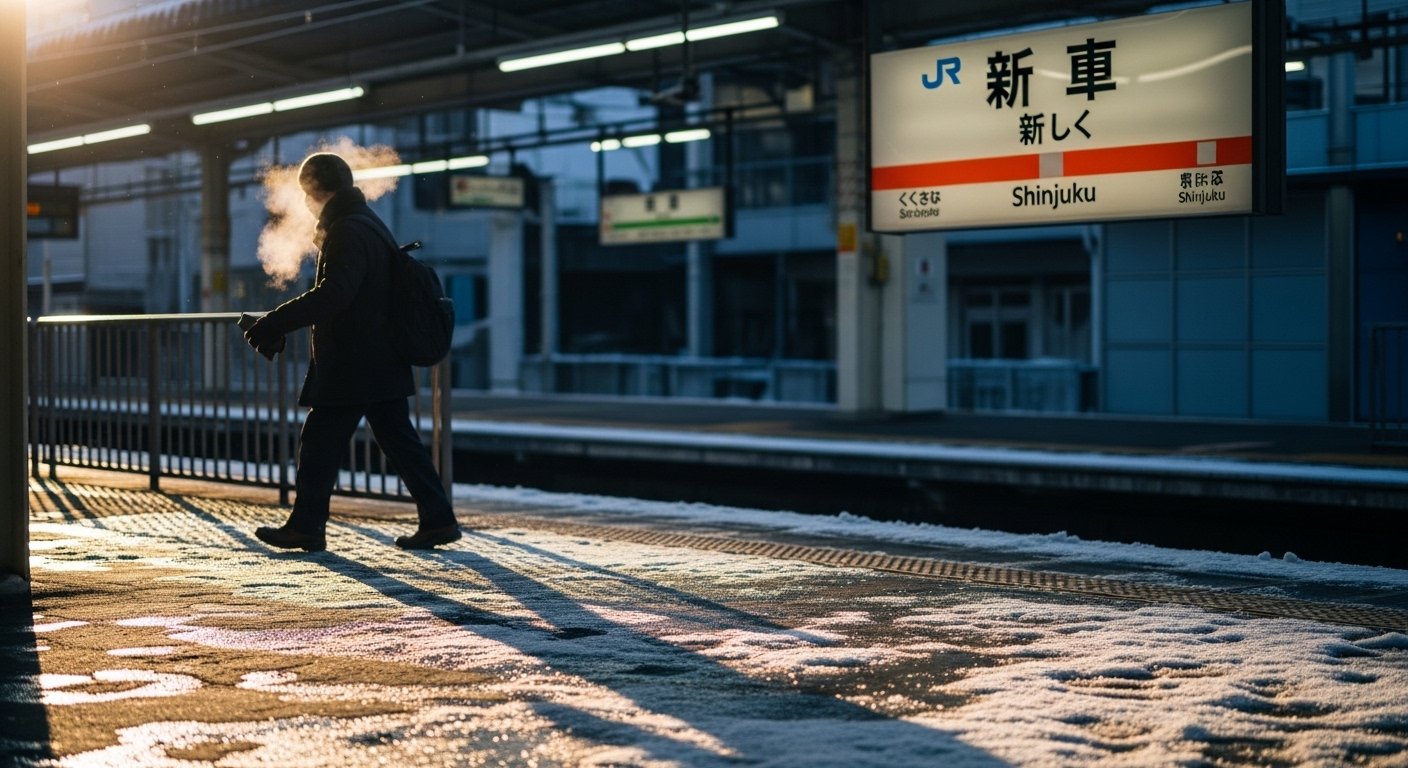
*Images used in this article are for illustration only. They may not be directly related to the content.
Japan’s New Year Emergency Guide: Medical, Lost Passport, and Finding Help During Closures
Planning a trip to Japan during the New Year holidays can be magical, but it also presents unique challenges. From December 29th to January 3rd or 4th, many services, including general clinics, government offices, and even some businesses, operate on reduced hours or close entirely. For international visitors, navigating an unexpected medical emergency, a lost passport, or simply needing urgent assistance can feel isolating, especially with potential language barriers.
This guide is designed to remove that friction. We provide immediate, actionable solutions for critical situations you might face during Japan’s New Year closures. You’ll learn how to access emergency medical care, what to do if your passport goes missing, and how to find reliable help when many doors are shut. Equip yourself with this practical knowledge, and ensure your holiday remains safe and stress-free.
Table of Contents
- Navigating Japan’s New Year Closures: The Challenge
- Medical Emergencies: When Every Second Counts
- Lost or Stolen Passport: Your Key to Getting Home
- General Help and Language Support: Beyond Direct Emergencies
- Be Prepared: Essential Steps Before an Emergency
- Frequently Asked Questions
- Conclusion
- Disclaimer
Navigating Japan’s New Year Closures: The Challenge
The New Year period, known as Oshogatsu (お正月), is one of Japan’s most important holidays. While many major attractions, shops, and restaurants remain open, essential services often close or operate with limited staff. This includes many clinics, pharmacies, and consular sections of foreign embassies, typically from December 29th or 30th until January 3rd or 4th. This can make finding immediate help, especially for a Japan New Year emergency, significantly more difficult than during regular operating hours.
Compounding this challenge is the language barrier. While Japan is accustomed to international visitors, English proficiency among emergency service operators or local staff may be limited. Feeling isolated or unable to communicate urgent needs is a primary concern for many travelers.
Medical Emergencies: When Every Second Counts
If you experience a serious injury or sudden illness during the New Year holidays, prompt action is critical. While general clinics may be closed, major hospitals maintain emergency services.
Calling for an Ambulance (119)
For any life-threatening medical emergency, call 119 immediately. This number connects you to both ambulance and fire services. It is free from any phone, including mobile phones. Operators will ask about your location and the nature of the emergency.
Visual cue: Japanese ambulances are white with a red cross, similar to many international ambulances. They typically have blue flashing lights and a siren.
- Dial 119: State “Kyūkyū desu! Kyūkyūsha o onegai shimasu.” (緊急です!救急車をお願いします。 – Emergency! I need an ambulance.)
- State Your Location Clearly: Provide your current address. If you don’t know the exact address, mention landmarks, the name of your hotel, or the nearest train station. Having your hotel’s name and address written in Japanese beforehand is highly recommended.
- Describe the Situation: Briefly explain what happened or the symptoms. If you struggle with Japanese, say “Eigo o hanaseru kata wa irasshaimasu ka?” (英語を話せる方はいらっしゃいますか? – Do you have someone who speaks English?). Operators often have access to interpretation services.
- Stay on the Line: Do not hang up until instructed.

Locating an Emergency Hospital
For less severe but urgent conditions, or if you can travel, identifying a major hospital with an emergency department (救急外来 – kyūkyū gairai) is key. Smaller clinics (診療所 – shinryōjo) are almost certainly closed during New Year.
Visual cue: Hospital signs often feature a stylized ‘H’ or a red cross. Emergency entrances (救急外来) will usually have specific signage, sometimes in red or a contrasting color, clearly visible at night.
🎯 Local Pro-Tip: Before your trip, or upon arrival, use Google Maps to search for “総合病院” (sōgō byōin – general hospital) or “救急病院” (kyūkyū byōin – emergency hospital) near your accommodation. Save their locations and contact numbers. This preparation can save crucial time.
Once at the hospital, present your travel insurance details and passport. Be prepared for potential waiting times, especially during holiday periods.
🇯🇵 Point & Speak: Medical Emergencies
Show this section to staff if you’re stuck. They can read the Japanese.
English: Emergency! I need an ambulance.
緊急です!救急車をお願いします。
(Kinkyū desu! Kyūkyūsha o onegai shimasu.)
English: I don’t speak Japanese. Do you have someone who speaks English?
日本語が話せません。英語を話せる方はいらっしゃいますか?
(Nihongo ga hanasemasen. Eigo o hanaseru kata wa irasshaimasu ka?)
English: I have chest pain.
胸が痛いです。
(Mune ga itai desu.)
English: I broke my leg.
足を骨折しました。
(Ashi o kossetsu shimashita.)
English: Where is the nearest emergency hospital?
最寄りの救急病院はどこですか?
(Moyori no kyūkyū byōin wa doko desu ka?)
Lost or Stolen Passport: Your Key to Getting Home
A lost or stolen passport is a major Japan New Year emergency for any traveler. Most embassy consular sections will be closed during the New Year holidays, but they typically have emergency procedures.
Contacting Your Embassy or Consulate
- Locate Emergency Contact: Visit your country’s embassy or consulate website in Japan. Look specifically for an “Emergency” or “After-Hours” contact number. This is often a separate line from their regular business hours and is crucial for urgent situations like lost passports requiring emergency travel documents.
- Explain Your Situation: Clearly state that your passport is lost or stolen and that you need assistance during the holiday period. They will advise you on the necessary steps, which may include making a police report.
For a comprehensive list of foreign embassies and consulates in Japan, refer to the official Ministry of Foreign Affairs of Japan website: List of Foreign Embassies and Consulates in Japan.
![Flag of [User's Country] flying outside an embassy building in Tokyo](https://images.unsplash.com/photo-1713635632084-f0dd34f5623e?crop=entropy&cs=tinysrgb&fit=max&fm=jpg&ixid=M3w4MzgzMTV8MHwxfHNlYXJjaHwxfHxGbGFnJTIwb2YlMjAlNUJVc2VyJTI3cyUyMENvdW50cnklNUQlMjBmbHlpbmclMjBvdXRzaWRlJTIwYW4lMjBlbWJhc3N5JTIwYnVpbGRpbmclMjBpbiUyMFRva3lvJTIwSmFwYW58ZW58MXwwfHx8MTc2NjkwOTc4NXww&ixlib=rb-4.1.0&q=80&w=1080)
Reporting to the Police (Kōban/Police Station)
Even if your embassy is closed, you must report a lost or stolen passport to the Japanese police. You will need a police report (遺失物届出証明書 – ishitsubutsu todokede shōmeisho) for your embassy to issue an emergency travel document.
- Find a Kōban or Police Station: Head to the nearest police box (交番 – kōban) or police station (警察署 – keisatsusho). Kōbans are small police outposts, common in urban areas.
- Report the Loss/Theft: State “Pasupōto o nakushimashita / nusumaremashita.” (パスポートをなくしました/盗まれました。 – My passport is lost / stolen.)
- Provide Details: Describe where and when you last had your passport, and any relevant circumstances. While some Kōbans may have limited English speakers, patience and a translation app will be beneficial.
- Obtain a Police Report: Ensure you receive a police report number or document. Your embassy will require this.
Visual cue: Police boxes (Kōban) are small, distinctive grey or blue buildings, often with a red light, prominently located at intersections or near train stations. Japanese police cars are black and white, often with a red light bar on the roof.

🎯 Local Pro-Tip: Always carry a photocopy or digital image of your passport’s main page. Have your hotel’s address written in Japanese. These details will expedite the reporting process with both the police and your embassy.
🇯🇵 Point & Speak: Lost Passport & Police
Show this section to staff if you’re stuck. They can read the Japanese.
English: Emergency! I need the police.
緊急です!警察をお願いします。
(Kinkyū desu! Keisatsu o onegai shimasu.)
English: My passport is lost/stolen.
パスポートをなくしました/盗まれました。
(Pasupōto o nakushimashita / nusumaremashita.)
General Help and Language Support: Beyond Direct Emergencies
Not every problem is a full-blown Japan New Year emergency. For non-life-threatening issues, language assistance, or reporting minor incidents, specific resources are available.
The JNTO Japan Visitor Hotline
The Japan National Tourism Organization (JNTO) operates a multi-lingual hotline specifically for tourists. This is an invaluable resource during the New Year period, as it operates 24/7, year-round.
JNTO Japan Visitor Hotline: 050-3816-2787
They provide assistance in English, Chinese, Korean, and Japanese for various issues, including:
- Directions and travel information
- Medical facility information
- Interpretation assistance for minor issues
- General tourist information
Save this number to your phone. It can be a lifeline for language support or navigating issues that aren’t severe enough for 119 or 110. You can find more details on their official page: JNTO Japan Visitor Hotline.

When to Approach a Kōban for Non-Passport Issues
For lost items (e.g., wallet, phone, bag) that are not your passport, or for minor incidents that require police awareness but aren’t urgent, a Kōban is the place to go. While some smaller Kōbans might be unstaffed during specific hours, major ones near stations or popular areas are generally accessible.
You can report a lost item (遺失物届 – ishitsubutsu todoke) or a minor incident. Again, have details ready, use a translation app, and be patient with potential language barriers.
🎯 Local Pro-Tip: Always have a reliable offline translation app (like Google Translate or DeepL) downloaded on your phone. These can bridge critical communication gaps with emergency services or local staff.
🇯🇵 Point & Speak: General Assistance
Show this section to staff if you’re stuck. They can read the Japanese.
English: I need help.
助けてください。
(Tasukete kudasai.)
English: I lost my wallet/phone/bag.
財布/携帯電話/鞄をなくしました。
(Saifu / Keitai denwa / Kaban o nakushimashita.)
🚨 Emergency Contacts
Save these critical numbers to your phone before you travel to Japan.
| Police | 110 |
| Ambulance/Fire | 119 |
| JNTO Visitor Hotline | 050-3816-2787 |
All emergency numbers (110, 119) are free and work from any phone in Japan. The JNTO hotline is also 24/7, year-round.
Be Prepared: Essential Steps Before an Emergency
Proactive preparation is your best defense against feeling helpless during a Japan New Year emergency.
Compile Your Emergency Information
📋 Quick Reference Card: Essential Emergency Info
Screenshot or print this section for easy access:
- ✅ Police: 110
- ✅ Ambulance/Fire: 119
- ✅ JNTO Hotline (24/7 Multi-lingual): 050-3816-2787
- ✅ Your Embassy/Consulate Emergency Number: [Insert Number Here]
- ✅ Your Hotel’s Name & Address (in Japanese): [Insert Details Here]
- ✅ Nearest Large Hospital Name (in Japanese): [Insert Details Here]
- ✅ Travel Insurance Provider & Policy Number: [Insert Details Here]
- ✅ Key Japanese Phrases: (See Point & Speak sections)
🎯 Local Pro-Tip: Invest in comprehensive travel insurance that covers emergency medical treatment, evacuation, and lost/stolen personal items. Healthcare costs in Japan, especially for non-residents, can be high without it. Ensure your policy has a 24/7 emergency assistance number.
Consider linking to an article on “Travel insurance considerations for Japan” for more detailed guidance.
Common Mistakes to Avoid
- Underestimating holiday closures: Do not assume regular business hours apply.
- Not saving emergency numbers: Having them pre-dialed or written down saves precious time.
- Relying solely on English: Prepare a few key Japanese phrases or a translation app.
- Not having travel insurance: Unexpected medical bills can be substantial.
- Forgetting copies of important documents: Digital or physical copies of passports, visas, and insurance details are vital.
Frequently Asked Questions
Can I call 119 or 110 if I don’t speak Japanese?
Yes, you can. While the initial operator may have limited English, emergency services in major cities often have access to interpretation services or bilingual staff. State “Eigo o hanaseru kata wa irasshaimasu ka?” (Do you have someone who speaks English?) immediately, and be patient.
Are all hospitals closed during Japan’s New Year holidays?
No. While most smaller clinics close, large general hospitals (総合病院 – sōgō byōin) will maintain 24/7 emergency departments (救急外来 – kyūkyū gairai). It is crucial to locate these larger hospitals in your area beforehand.
What do I do if my country’s embassy or consulate is closed for New Year?
Foreign embassies and consulates typically have a separate, dedicated emergency after-hours contact number for urgent situations like lost or stolen passports, even during holiday closures. Check their official website for this specific emergency line.
Where do I report a lost item (like a wallet or phone) during New Year?
You should report lost items to the nearest police box (交番 – kōban) or police station (警察署 – keisatsusho). While some may have reduced hours, major ones are generally accessible. You will receive a lost item report.
Can the JNTO Visitor Hotline help with a medical emergency?
The JNTO hotline (050-3816-2787) can provide assistance in locating medical facilities and offers interpretation services. However, for immediate, life-threatening emergencies, always dial 119 directly for an ambulance. Then, if needed, call JNTO for further support.
Conclusion
Facing a Japan New Year emergency can be daunting, but with the right information and preparation, you are not helpless. By understanding the operational landscape during holidays, knowing key contact numbers, and preparing a few essential Japanese phrases, you can navigate unexpected situations with confidence.
Take the time now to save these numbers and research nearby facilities. Your peace of mind is worth the effort. Have a safe and enjoyable New Year in Japan.
Disclaimer
This information is provided for general guidance only and is not a substitute for professional medical, legal, or consular advice. Emergency situations are unique, and procedures may vary. Always prioritize your safety and contact official emergency services (110, 119) or your country’s embassy for the most accurate and up-to-date assistance specific to your situation. Travel insurance is highly recommended.