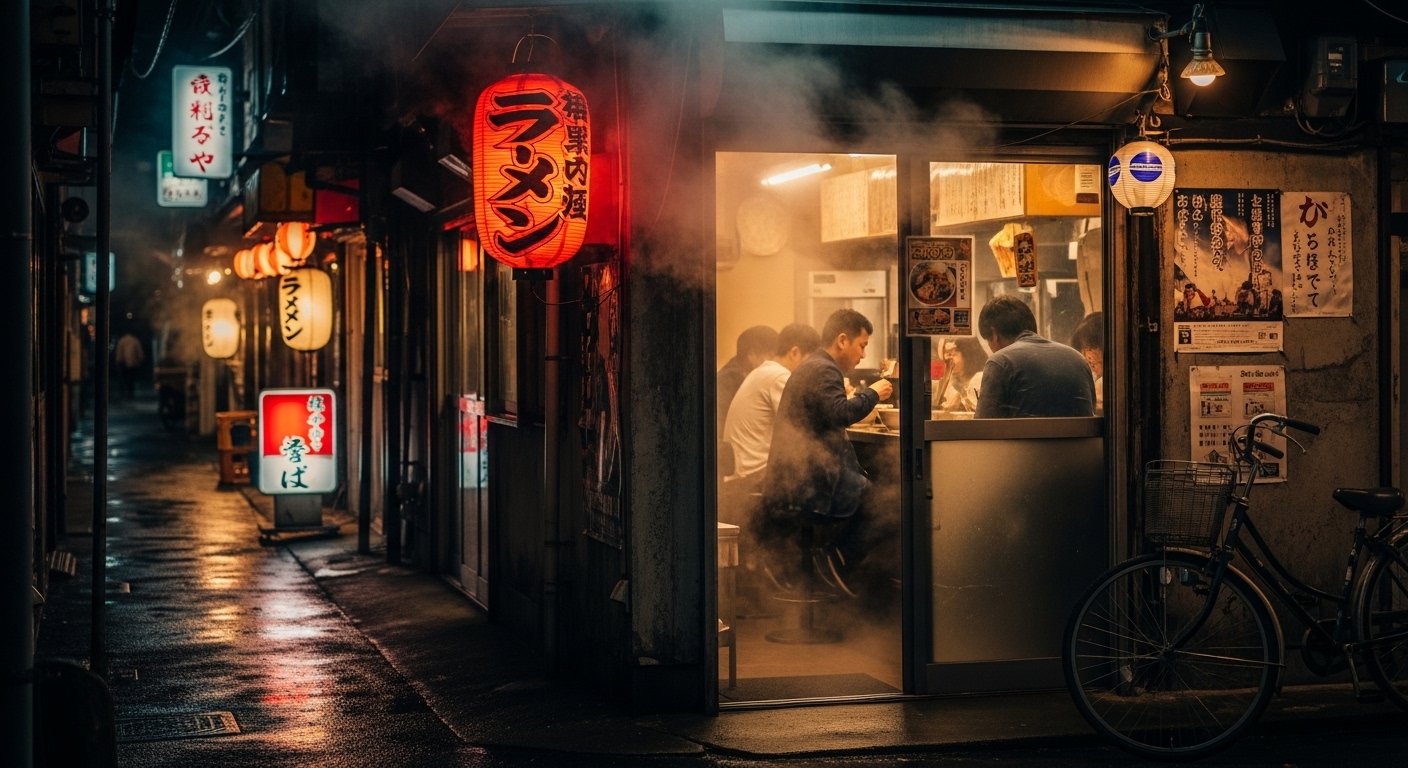
*Images used in this article are for illustration only. They may not be directly related to the content.
Japan New Year Late-Night Food: Open Restaurants & Konbini Survival
Planning your Japan trip over the New Year holiday, known as Nemmatsu Nenshi (年末年始), can present unexpected challenges, especially when hunger strikes after 9 PM. Many international visitors discover that what was once a vibrant street of eateries suddenly goes quiet, leaving them wondering where to find a meal.
You’re not alone in facing this specific hurdle. Japan’s New Year period, typically from December 31st to January 3rd or even 4th, is a time when many independent restaurants, small shops, and even some chain establishments close their doors for family celebrations. This article provides practical, actionable strategies to ensure you remain well-fed, even during the quietest hours of Japan’s most significant holiday.
We’ll cut through the confusion, offering clear guidance on what to expect, where to look, and how to navigate language barriers to secure your late-night sustenance. Prepare to master the art of dining during Japan’s New Year.
Table of Contents
- The New Year Dining Challenge in Japan
- Your Essential Survival Guide: Finding Food During New Year
- How to Confirm Operating Hours: Your Action Plan
- Budgeting Your Late-Night New Year Meals
- Common Mistakes to Avoid During New Year Dining
- Your Quick Reference Card for New Year’s Dining
- Frequently Asked Questions
The New Year Dining Challenge in Japan
Japan’s New Year period, known as Nemmatsu Nenshi (年末年始), is its most important holiday. For many, this means returning to their hometowns to spend time with family, leading to widespread business closures. This includes a significant number of restaurants, particularly smaller, independent eateries, which may close from December 31st (Omisoka) through January 3rd (San-ga-nichi), with some extending closures until January 4th or 5th.
This widespread closure can be a surprise for international visitors accustomed to more consistent operating hours. Compounding the issue are limited late-night dining options after 9 PM, a situation further exacerbated by the holiday closures. You might find yourself walking through what were previously bustling areas, only to discover most establishments are dark, with signs indicating “temporary closure” in Japanese.
The lack of English advertising for these special holiday schedules adds another layer of complexity. This can lead to frustration, and even a genuine fear of going hungry, especially if you’re not accustomed to Japanese holiday customs or face language barriers when trying to inquire about opening hours.
Your Essential Survival Guide: Finding Food During New Year
While many places close, certain types of establishments remain dependable. Understanding these options is your key to a well-fed New Year in Japan.
Konbini: Your 24/7 Lifeline
Convenience stores (konbini), such as 7-Eleven, FamilyMart, and Lawson, are your most reliable resource for food during the New Year holidays, operating 24/7 nationwide. They offer a diverse range of ready-to-eat meals, snacks, and drinks that go far beyond typical convenience store fare.
You can find high-quality bento boxes with rice, meat, and vegetables, freshly made onigiri (rice balls), sandwiches, salads, and pasta. Hot snacks like fried chicken (karaage) and steamed buns (nikuman) are often available at the counter. Instant ramen and udon cups are also plentiful, and stores provide hot water for preparation. Many konbini also have microwaves available for customer use, making it easy to heat your purchases.
🎯 Local Pro-Tip: Don’t underestimate the quality of konbini food. Many items are fresh, nutritious, and developed to high standards. Look for limited-time seasonal bentos or popular local snacks. Staff will offer to heat your food if you ask, or you can use the self-service microwave often found near the seating area.
Family Restaurants (Famiresu): Reliable, but Check Ahead
Family restaurants (ファミレス, ‘famiresu’) like Gusto, Denny’s, Saizeriya, Joyfull, or Royal Host can be a good option. Many maintain longer operating hours or even 24-hour service in some locations throughout the year. However, during New Year, holiday hours may still apply, meaning reduced hours or even a temporary closure for a specific day.
It is crucial to check individual store websites for their specific Nemmatsu Nenshi schedule. Most chains have English versions of their websites, or you can use a browser’s translate function. These restaurants offer a wide menu, from Japanese comfort food to Western dishes, often at reasonable prices, making them a comfortable sit-down option.

Fast Food & Chain Eateries: Location-Dependent Availability
Some fast-food chains might also be open, but their schedules are less consistent than konbini. Chains like McDonald’s, Yoshinoya, Sukiya, and Matsuya (known for their gyudon beef bowls) often have 24/7 locations. However, New Year schedules can be unpredictable and vary significantly by specific store. A location near a major station or in a busy entertainment district is more likely to maintain extended hours than one in a quieter residential area.
Similarly, certain 24-hour ramen shops might remain open. Look for these in major city centers. Always verify hours using online tools or by checking for signs at the physical location.

Targeted Locations: Stations & Tourist Hubs
Your best bet for finding open restaurants, aside from konbini, is in high-traffic areas. Major train stations, especially Shinkansen stations, often have food courts and restaurants within or adjacent to them that cater to travelers. Similarly, larger airport terminals (e.g., Narita, Haneda, Kansai) will have food options operating on special holiday schedules.
Specific tourist and entertainment districts in major cities are also more likely to have some businesses open. Think Tokyo’s Shinjuku, Shibuya, and Ginza, or Osaka’s Dotonbori and Namba. These areas are accustomed to serving a continuous flow of people, even during holidays, though you should still expect adjusted hours and potentially higher prices.

How to Confirm Operating Hours: Your Action Plan
Proactive checking is essential to avoid disappointment and hunger.
Step 1: Use Online Tools Effectively
Before heading out, leverage these digital resources:
- Google Maps: Search for “restaurant” or “food” in your current location. Google Maps often shows current operating hours, and many businesses update their holiday schedules here. Pay attention to reviews and photos for recent insights. Visit Google Maps
- Tabelog (食べログ) & Gurunavi (ぐるなび): These are Japan’s most popular restaurant review and booking sites. While primarily in Japanese, both offer English interfaces or can be translated via your browser. Crucially, they often list specific “年末年始” (New Year’s holiday) hours under the business information section. Filter by “open late” or “24 hours.”
- Official Websites: For specific chain restaurants or major establishments, check their official Japanese websites. Use your browser’s translate function for holiday schedules, often found under “お知らせ” (Announcements) or “営業時間” (Business Hours).

Step 2: Recognize Visual Cues on the Street
When you’re out and about, these signs can provide immediate information:
- “24時間営業” (Nijū-yon jikan eigyō): This prominent sign indicates 24-hour operation and is your best friend for convenience stores and some fast-food chains. Look for it in bright, illuminated letters.
- “営業時間” (Eigyō jikan – Business hours): Always check the business hours sign posted near the entrance. During New Year, look for smaller text or separate paper slips taped to the door that specifically mention “年末年始” (Nemmatsu nenshi – Year-end/New Year) for revised hours.
- “臨時休業” (Rinji kyūgyō – Temporary Closure) or “本日休業” (Honjitsu kyūgyō – Closed Today): These signs are usually simple paper notices taped to the doors or windows. If you see them, the store is closed, often for the holidays or unforeseen circumstances.

🇯🇵 Point & Speak: Essential Phrases for Dining
Show this section to staff if you need to ask about opening hours or availability. They can read the Japanese.
English: Is this store open now?
今、お店開いていますか?
(Ima, omise aite imasu ka?)
English: What time do you close today?
今日、何時に閉まりますか?
(Kyō, nanji ni shimarimasu ka?)
English: During the New Year’s holiday, are you open?
お正月休みも営業していますか?
(Oshōgatsu yasumi mo eigyō shite imasu ka?)
English: Do you have anything to eat late at night?
夜遅くに食べるものはありますか?
(Yoru osoku ni taberu mono wa arimasu ka?)
English: (Sign/Term) Temporary closure
臨時休業
(Rinji kyūgyō)
English: (Sign/Term) Year-end and New Year’s holiday
年末年始
(Nemmatsu nenshi)
Budgeting Your Late-Night New Year Meals
Your dining budget during New Year, especially for late-night meals, can vary significantly depending on your choice of establishment. Planning can save you money.
💰 Price Breakdown
| Item/Option | Estimated Cost |
| Konbini Bento Box | ¥400-¥800 |
| Konbini Instant Ramen/Udon | ¥150-¥300 |
| Konbini Onigiri (2-3 pcs) | ¥250-¥450 |
| Fast Food (e.g., Gyudon bowl) | ¥400-¥900 |
| Family Restaurant Meal (per person) | ¥800-¥2,000 |
| Restaurant in Tourist Area (per person) | ¥1,500+ |
Prices verified as of December 2024. Note that some restaurants may impose a ‘late-night charge’ (深夜料金, shinya ryōkin), typically an additional 10% after 10 PM.
Convenience stores are unequivocally the most budget-friendly option. If you opt for open restaurants, be aware that some may have special holiday menus or slightly increased prices. Pre-purchasing groceries from supermarkets before they close for the holidays (typically by December 30th or 31st) can also be a cost-effective strategy if you have access to cooking facilities.
Common Mistakes to Avoid During New Year Dining
To make your experience smoother, be aware of these common pitfalls:
- Assuming Normal Operation: Do not assume a restaurant or shop that is usually 24/7 or open late will maintain those hours during the New Year. Holiday closures are significant.
- Not Checking Hours in Advance: Waiting until you are hungry at 10 PM on January 1st to look for food is a recipe for frustration. Plan your meals, especially your dinner, by checking hours earlier in the day.
- Relying Solely on English Information: While many major sites offer English, localized holiday schedules are often only in Japanese. Use translation tools or the Point & Speak phrases to get accurate information.
- Underestimating Konbini: Dismissing convenience stores as a last resort. They are a primary, high-quality, and reliable food source during this specific period.
- Ignoring Public Transport Schedules: Remember that public transport schedules can also be reduced during New Year, impacting your ability to reach open areas. Plan your movements as well as your meals. (Consider linking to: Japan New Year Public Transport Schedules)
Your Quick Reference Card for New Year’s Dining
📋 Quick Reference Card: Late-Night New Year Food
Screenshot or print this section for easy access:
- ✅ Konbini First: 7-Eleven, FamilyMart, Lawson are 24/7 and reliable.
- ✅ Check Hours: Use Google Maps, Tabelog, Gurunavi (translate for “年末年始”).
- ✅ Look for Signs: “24時間営業” (24h) is good, “臨時休業” (closed) means no.
- ✅ Target Areas: Major stations, airports, tourist hubs (Shinjuku, Dotonbori) have more options.
- ✅ Carry Phrases: Use the “Point & Speak” section if needed.
- ✅ Plan Ahead: Don’t wait until late to look for dinner options.
Frequently Asked Questions
What exactly is Japan’s New Year holiday period (Nemmatsu Nenshi)?
Nemmatsu Nenshi (年末年始) refers to the year-end and New Year period in Japan. It typically spans from December 31st (Omisoka, New Year’s Eve) through January 3rd (San-ga-nichi, the first three days of the New Year). During this time, many businesses, including restaurants, banks, and post offices, close to allow staff to celebrate with family, akin to Western Christmas closures but often more extensive.
Are supermarkets open during the New Year holiday in Japan?
Generally, most major supermarkets will close for at least part of the New Year holiday, often from January 1st to 3rd. Many will operate with reduced hours on December 31st and January 4th. It’s advisable to stock up on groceries before December 31st if you plan to cook your own meals. Convenience stores remain your primary option for immediate grocery needs during the core holiday period.
Can I get food delivery services like Uber Eats during New Year in Japan?
Food delivery services like Uber Eats and Demae-can do operate during New Year, but with significant limitations. The number of available restaurants will be drastically reduced, and delivery times may be longer due to fewer drivers and higher demand. Surge pricing is also common. It’s an option, but not one to solely rely on for consistent late-night meals. Check the apps for real-time availability in your area.
What if I have dietary restrictions during the New Year holiday?
Navigating dietary restrictions (vegetarian, vegan, gluten-free, allergies) can be more challenging during New Year due to fewer open restaurants and potentially limited English-speaking staff. Konbini offer a variety of labeled items, but reading ingredients carefully (using a translation app if needed) is crucial. For restaurants, research specific places known for accommodating restrictions in advance. Having a written card in Japanese explaining your dietary needs is highly recommended. (Consider linking to: Japan Dietary Restrictions Guide)
Conclusion
Navigating Japan’s dining scene during the New Year holiday, especially for late-night meals, requires planning and an understanding of local customs. By leveraging the omnipresent convenience stores, knowing where to find open chain restaurants, and using simple Japanese phrases, you can ensure a comfortable and well-fed trip. Don’t let the closures catch you off guard; empower yourself with these practical strategies.
Stay prepared, stay flexible, and enjoy your time in Japan, knowing your next meal is always within reach.
Disclaimer
This information is provided for general guidance and is based on typical operating patterns in Japan. Business hours, closures, and specific offerings can change without notice, especially during holiday periods. Always verify current operating hours directly with establishments or through up-to-date online resources before making plans. Travel during holidays requires extra flexibility and preparedness. The author is not responsible for any inconveniences or financial losses incurred due to changes in business operations.