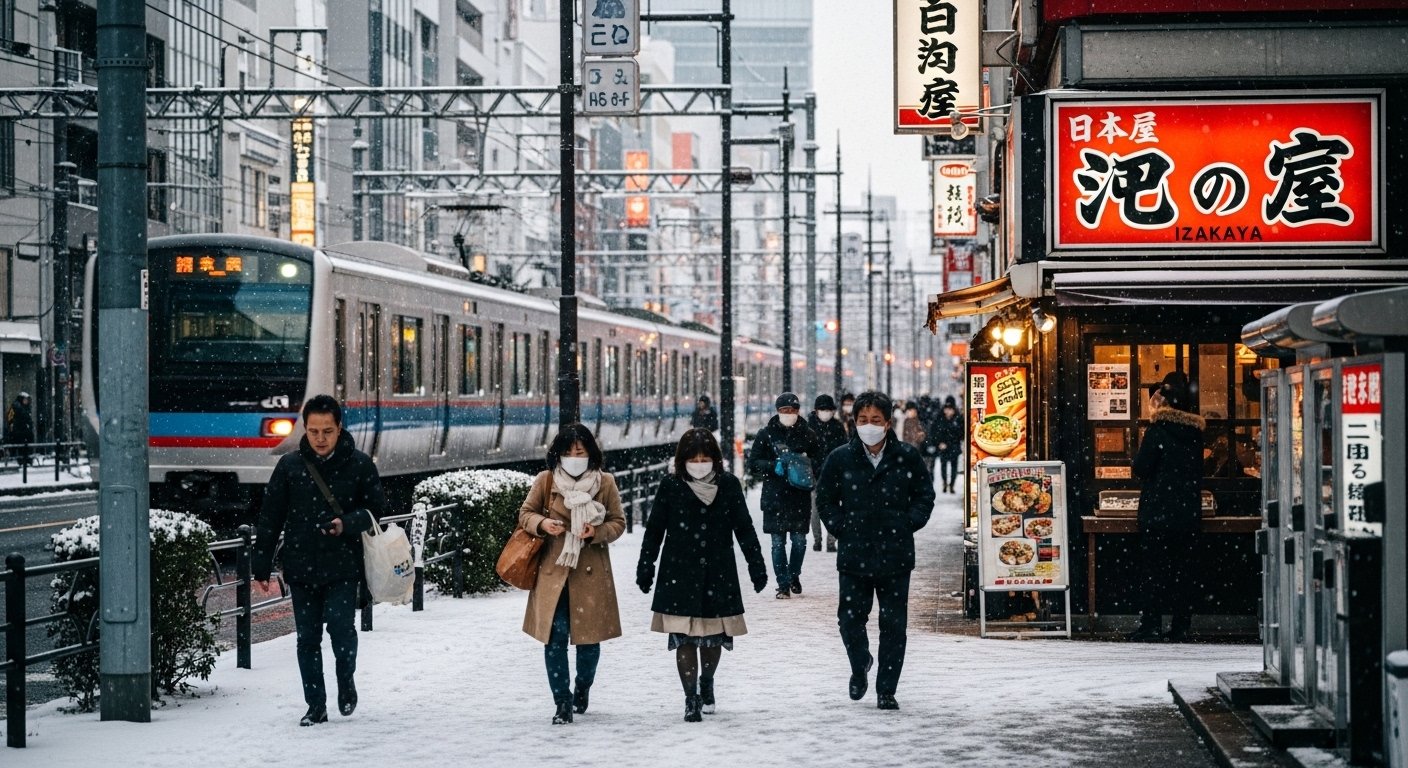
*Images used in this article are for illustration only. They may not be directly related to the content.
Japan New Year’s Transport: Navigate Hatsumode Crowds & Special Schedules Safely
Planning to experience Japan over the New Year’s holiday? The thought of navigating unfamiliar public transport, especially with complex special schedules, can be daunting. Add in the overwhelming crowds heading for Hatsumode (first shrine visit) and the unpredictable winter weather, and it’s easy to feel stressed.
This guide cuts through the confusion. We’ll provide practical, actionable advice to help you understand Japan’s New Year’s train schedules, manage intense crowds at major attractions, and mitigate potential risks from winter weather. Our goal is to ensure your holiday travel is smooth, safe, and free from unnecessary friction.
Table of Contents
- Understanding New Year’s Special Train Schedules
- Navigating Japan’s Hatsumode Crowds Safely
- Winter Weather & Train Travel: Be Prepared
- Essential Preparations for New Year’s Travel
- 🇯🇵 Point & Speak: Essential Phrases for New Year’s Travel
- 🚨 Emergency Contacts in Japan
- Frequently Asked Questions (FAQ)
Understanding New Year’s Special Train Schedules
During the New Year’s holiday period, Japan’s public transport system operates on a unique schedule. This is a primary source of confusion for international visitors.
The Challenge of Special Schedules
Unlike regular holidays, the period from December 31st to January 3rd (and sometimes longer) sees many train lines implement special timetables. The most notable is the “all-night service” (終夜運転 – shūya unten) typically from New Year’s Eve into New Year’s Day. Major operators like JR, Tokyo Metro, and private railways (Keio, Odakyu, Keisei, Tokyu) offer these extended services to accommodate Hatsumode visitors.
However, these schedules are often not widely advertised in English. They differ by region and individual railway company, adding a layer of complexity to your Japan New Year’s transport plans.
Your Strategy for Schedule Success
To avoid being stranded or missing your train, proactive research is crucial. Specific New Year’s train schedules for the upcoming holiday season are typically announced by individual railway companies in early to mid-December.
- Official Websites: Check the official websites of the railway companies you plan to use. Look for terms like ‘年末年始の運行について’ (Nenmatsu Nenshi no Unkō ni tsuite – Regarding year-end/New Year operations) or ‘終夜運転’ (Shūya Unten – All-night operation). While often in Japanese, major sites may offer English sections or Google Translate can assist.
- Station Posters: Large, brightly colored posters detailing these schedules will appear at station entrances and platforms. They often use grid formats with times. Take a photo for reference.
- Transit Apps: Download and utilize apps like Japan Transit Planner (Jorudan) or NAVITIME for Japan Travel. These apps are usually updated with special schedules once released. Always verify the latest information directly from the railway operator if uncertainty remains.
- Prioritize IC Cards: Purchase an IC card (Suica, Pasmo, Icoca) in advance. Top it up sufficiently before New Year’s Eve. This prevents queueing at ticket machines, which can be long during peak times.
🎯 Local Pro-Tip: If your New Year’s travel involves long-distance Shinkansen, book your tickets well in advance. Shinkansen tickets during New Year’s are often more expensive and sell out quickly due to high domestic demand. Prices are typically higher for “peak season” travel.
Navigating Japan’s Hatsumode Crowds Safely
Hatsumode is a significant cultural event, drawing millions of people to shrines and temples across Japan. Managing these crowds is crucial for your safety and enjoyment.
The Reality of Peak Shrine Visits
Major Hatsumode destinations like Tokyo’s Meiji Jingu or Senso-ji, and Kyoto’s Fushimi Inari Taisha, experience extreme crowds. It’s common for visitor numbers to exceed hundreds of thousands on January 1st. Expect long queues for shrine entry, prayers, and food stalls, potentially spanning hours.
Japanese authorities and shrine staff implement extensive crowd control measures. These include temporary barriers, one-way traffic routes, and restricted entry/exit points. While effective, these measures can be disorienting if you are not prepared for them.

Strategies for a Smoother Hatsumode
You can mitigate crowd exposure with strategic planning.
- Timing is Key:
- Very Early January 1st: If you want the traditional experience, consider visiting major shrines very early in the morning on January 1st (e.g., before 7 AM, immediately after midnight if using all-night trains).
- January 2nd or 3rd: Crowds tend to be more manageable on the second or third day of the New Year.
- Seek Alternatives: Consider visiting smaller, local shrines or temples. These offer a more serene experience with significantly fewer crowds and can provide a genuine glimpse into local Hatsumode traditions.
- Personal Safety in Crowds:
- Secure Valuables: Stay vigilant for pickpockets, especially in dense areas. Keep wallets, phones, and passports secured in zipped internal pockets or bags worn across your front.
- Stay Aware: Maintain awareness of your surroundings to avoid being jostled, tripped, or separated from your group.
- Meeting Points: If traveling with companions, agree on a specific meeting point in advance in case you get separated. Cell service can be spotty in extreme crowds.
- Stay Hydrated/Fed: If waiting in long lines, ensure you have water and perhaps a small snack, especially if it’s cold.
🎯 Local Pro-Tip: While major shrines are famous, experiencing a local Hatsumode is often more authentic and less stressful. Many neighborhoods have their own cherished shrines that will be active but not overwhelming. Check local guides or ask your accommodation staff for recommendations.
Winter Weather & Train Travel: Be Prepared
While major Pacific coast cities like Tokyo often experience mild winters, snow and ice are possibilities, and their impact on transport can be significant.
The Risk of Snow and Ice
Winter weather can bring snow or ice, particularly in northern regions (Hokkaido, Tohoku) or along the Japan Sea coast. Even a light snowfall in Tokyo can cause widespread train delays and cancellations. This is because urban train lines are not always equipped with specialized rolling stock for heavy snow, and limited snow removal infrastructure can exacerbate issues quickly.
Delays can extend for hours, and in severe cases, services might be suspended entirely. Getting stranded due to unexpected weather is a real concern if you are not prepared.

Your Contingency Plan for Weather Disruptions
Being prepared for potential weather-related disruptions is an essential aspect of Japan winter travel safety.
- Monitor Weather Forecasts: Regularly check weather forecasts, especially if you plan to travel between regions or to areas known for snow. The Japan Meteorological Agency (JMA) is the official source.
- Real-time Operation Status: In case of snow, ice, or other weather-related delays or cancellations, check official railway websites for real-time operation status. Electronic display boards at stations will show ‘遅延’ (chien – delay) or ‘運休’ (unkyū – cancellation) in red or yellow.
- Utilize Apps: Japan Transit Planner (Jorudan) and NAVITIME often integrate delay information. While station announcements will be primarily in Japanese, major stations may have English screens or staff who can provide assistance.
- Dress Appropriately: Always wear warm clothing and layers, especially if you anticipate outdoor waits or travel to colder regions. Waterproof outerwear and non-slip shoes are advisable in snowy conditions.
- Backup Plans: Have a contingency plan for accommodation or alternative transport, especially if you’re traveling long distances or to rural areas during a predicted snowfall.
🎯 Local Pro-Tip: Even if your destination isn’t usually snowy, unexpected cold snaps can happen. Always carry a small, foldable umbrella and be prepared for temperatures to drop significantly, especially at night.
Essential Preparations for New Year’s Travel
A smooth New Year’s trip to Japan involves more than just understanding transport. Thoughtful preparation can prevent many common headaches.
Before You Depart
- IC Card Pre-Purchase & Top-Up: As mentioned, this is your primary tool for friction-free travel on local trains and buses. Purchase it at major stations or convenience stores upon arrival. Ensure it has enough credit to cover your anticipated travel before Dec 31st.
- Download Essential Apps: Beyond transit apps, consider a reliable translation app (like Google Translate with offline Japanese language packs) to help with announcements or asking questions to staff.
- Review Cultural Etiquette: If visiting shrines for Hatsumode, familiarize yourself with basic shrine etiquette (e.g., bowing, purifying hands, offering prayers). This shows respect and enhances your experience.
- Warm Clothing: Even if you are accustomed to cold weather, Japan’s winter can be surprisingly sharp, especially when waiting outdoors. Layering is key, including thermal underwear, a good quality coat, gloves, a scarf, and a hat.
Common Mistakes to Avoid
Being aware of common pitfalls can save you time and stress.
- Assuming Regular Schedules: This is the biggest mistake. Always assume special schedules are in effect for New Year’s.
- Underestimating Crowd Density: Pictures don’t always convey the sheer volume of people at major Hatsumode sites. Be prepared for slow movement and long waits.
- Not Checking Weather Forecasts Daily: Weather can change quickly, especially in winter. Make a habit of checking the forecast each morning.
- Ignoring Nenmatsu Nenshi Business Closures: Many smaller shops, restaurants, and some attractions close from January 1st to 3rd (or even longer). Research opening hours for places you plan to visit. Major department stores and chain restaurants in large cities will likely remain open.
- Not Having a Fully Charged Phone & Power Bank: Crucial for checking schedules, using maps, communication, and emergencies.
🇯🇵 Point & Speak: Essential Phrases for New Year’s Travel
🇯🇵 Point & Speak
Show this section to staff if you’re stuck. They can read the Japanese.
English: Are there special train schedules for New Year’s?
年末年始の特別ダイヤはありますか?
(Nenmatsu nenshi no tokubetsu daiya wa arimasu ka?)
English: Is there an all-night train service?
終夜運転はありますか?
(Shūya unten wa arimasu ka?)
English: Is this train running late?
この電車は遅れていますか?
(Kono densha wa okurete imasu ka?)
English: Where can I find information about train delays?
電車の遅延情報はどこで確認できますか?
(Densha no chien jōhō wa doko de kakunin dekimasu ka?)
English: Excuse me, I’d like to pass.
すみません、通してください。
(Sumimasen, tōshite kudasai.)
🚨 Emergency Contacts in Japan
Knowing these numbers is critical for your safety, especially during crowded or unpredictable situations.
🚨 Emergency Contacts
| Police | 110 |
| Ambulance/Fire | 119 |
All numbers are free and work from any phone, including foreign mobile phones.
For non-emergency assistance, you can call the Japan Visitor Hotline (JNTO) at 050-3816-2787, which operates 24/7 in English, Chinese, and Korean. For general health advice, dial #8000 (available in certain prefectures, check local information).
Frequently Asked Questions (FAQ)
Are all-night trains available every New Year’s Eve across Japan?
No, not all lines offer all-night services. Major urban lines, especially those serving popular Hatsumode destinations in large cities like Tokyo, Kyoto, and Osaka, typically do. However, it’s crucial to check the specific railway company’s announcements for the lines you plan to use, as schedules are released annually in early-mid December.
How can I avoid the worst Hatsumode crowds?
To mitigate crowd exposure, consider visiting major shrines very early on January 1st (before 7 AM) or, if possible, on January 2nd or 3rd, when crowds are generally lighter. A more serene experience can be found by choosing smaller, local shrines or temples instead of the globally famous ones.
What should I do if my train is delayed by snow or ice?
First, check official railway websites or transit apps (Jorudan, NAVITIME) for real-time operation status. Listen for station announcements (use a translation app if needed) and look for digital display boards showing delay information. If possible, consider alternative routes or be prepared for extended waiting times. Have warm clothing and snacks ready. In severe cases, be ready to find temporary accommodation.
Do Japan Rail (JR) Passes cover special New Year’s train services?
Yes, if the special service is operated by a JR line that your JR Pass covers, then it will generally be valid. However, this does not apply to private railway lines or subway systems. Always confirm the specific operator of the line you intend to use. Remember that while the pass covers travel, it doesn’t guarantee seat availability on crowded trains, especially Shinkansen during this peak period, so reservations are essential.
Will shops and restaurants be open during the New Year’s holiday?
During the New Year’s holiday (typically Jan 1-3), many smaller businesses, local shops, and some restaurants outside major city centers will close. However, large department stores, chain restaurants, convenience stores, and attractions in major urban areas usually remain open, though some may have reduced hours. Always check specific opening times in advance to avoid disappointment.
Conclusion
Navigating Japan’s New Year’s transport can be a challenge, but with the right information and preparation, it’s entirely manageable. By understanding special train schedules, planning for Hatsumode crowds, and preparing for winter weather, you can remove unnecessary friction from your holiday experience.
Plan ahead, stay informed, and enjoy a safe and memorable New Year in Japan. Your preparedness will allow you to fully immerse yourself in the unique cultural celebrations of this special time.
Disclaimer
The information provided in this guide is based on general knowledge and historical patterns for Japan’s New Year’s holiday transport and weather. Specific train schedules and weather conditions can change annually. Always verify the latest information from official railway company websites and meteorological agencies. Travel insurance is recommended for any potential disruptions.