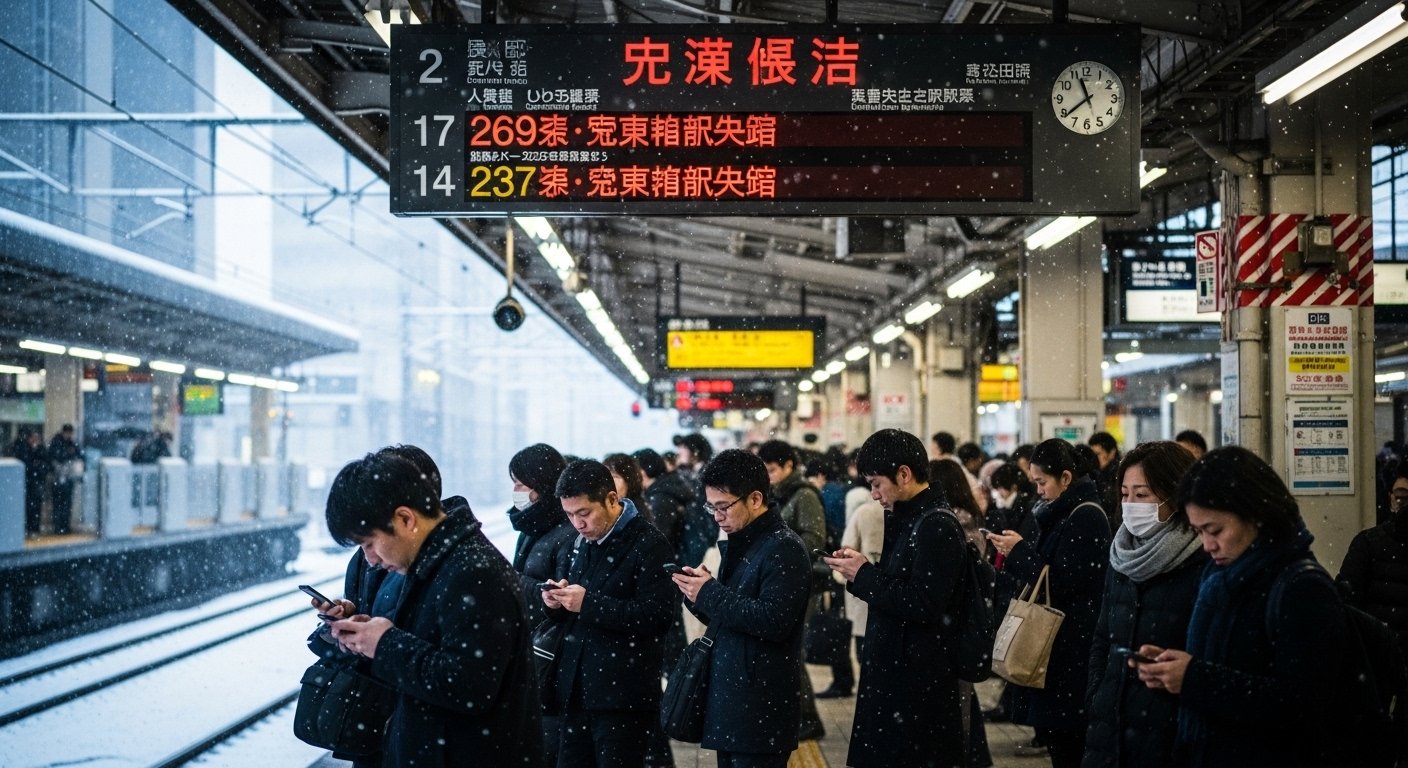
*Images used in this article are for illustration only. They may not be directly related to the content.
Japan Winter Commute Safety: Master Packed Trains, Icy Platforms & Delays
Navigating Japan’s bustling train system is an experience in itself. During winter mornings, however, it presents unique challenges. From surprisingly icy platforms to the sheer volume of commuters in a man’in densha (packed train), and the anxiety of unexpected delays, it can feel overwhelming for international visitors.
You’re not alone if you feel a sense of trepidation. Japan’s commitment to efficiency meets the raw forces of winter in a way that demands preparedness. This guide provides practical strategies to help you navigate your winter morning commute safely and confidently, reducing friction as you move through Japan’s urban landscape.
We’ll cover everything from appropriate gear and understanding crucial station cues to essential Japanese phrases and what to do when your train is delayed. Your safety and peace of mind are paramount.
Table of Contents
- Understanding Japan’s Winter Commute Landscape
- Practical Strategies for a Safe Winter Journey
- 🇯🇵 Point & Speak: Essential Japanese Phrases for Commuters
- Deciphering Station Cues: A Visual Guide
- Dealing with Unexpected Delays in Cold Weather
- 📋 Quick Reference Card: Your Winter Commute Cheat Sheet
- 🚨 Emergency Contacts
- Frequently Asked Questions
Understanding Japan’s Winter Commute Landscape
Japan’s cities are known for their efficiency, but winter adds layers of complexity. The combination of intense crowds and unpredictable cold weather creates a unique environment for daily travel.
The Double Whammy: Crowds & Cold
The morning rush in major Japanese cities is significant. Peak commute hours typically run from 7:30 AM to 9:30 AM on weekdays. During these times, trains are exceptionally crowded, often referred to as man’in densha (満員電車). You will likely experience minimal personal space.
Winter conditions, especially from January to February, bring additional challenges. Cold temperatures can lead to sudden ice formation on platforms and pathways, even in cities not known for heavy snowfall. Dark mornings, especially in northern regions, reduce visibility, making it harder to spot hazards.
These conditions directly contribute to increased risks of slipping on ice or wet surfaces, and the sheer density of passengers can feel overwhelming or even unsafe if you’re not prepared.
Decoding Weather Warnings
Awareness of weather conditions is crucial. The Japan Meteorological Agency (JMA) issues detailed weather warnings (気象警報・注意報) that directly impact public transport. These include warnings for heavy snow (大雪) and strong winds (暴風(雪)).
Information regarding the situation of wind (風の状況) and precipitation (雨雲の動き/降水の状況) provided by the JMA can indicate conditions that lead to slippery surfaces or service disruptions. Checking these reports before you leave can help you anticipate potential issues.
External Link: For the latest weather warnings and precipitation information, refer to the official Japan Meteorological Agency (JMA)防災気象情報 (Disaster Prevention Weather Information).
Practical Strategies for a Safe Winter Journey
Preparation and awareness are your best tools against the winter commute’s challenges. Implement these strategies for a smoother, safer experience.
Footwear & Gear: Your First Line of Defense
Your choice of attire can significantly mitigate risks, especially regarding slippery surfaces and cold weather.
- Slip-Resistant Footwear: Invest in boots or shoes with good traction. Look for rubber soles with deep treads. Many platforms are tiled and become extremely slippery with even a light layer of frost or melting snow.
- Waterproof Materials: Ensure your shoes and outer layers are waterproof or water-resistant. This keeps you dry and warm, crucial when waiting on an exposed platform or navigating slush.
- Layered Clothing: Japanese trains and stations can be warm, even in winter. Dress in layers that you can easily remove or add. This helps you adapt to temperature changes between the cold outdoors and heated train cars, preventing overheating or chills.
- Gloves and Hat: Protect your extremities. Waiting for a delayed train in freezing temperatures can quickly become uncomfortable.
Pre-Commute Checks: Knowledge is Power
Before you step out, take a few minutes to gather critical information. This proactive approach can save you time and discomfort.
- Check Weather Forecasts: Use reliable sources like the JMA website. Pay attention to forecasts for snow, ice, and strong winds. These are direct indicators of potential platform hazards and train delays.
- Monitor Train Status Updates: Download the official apps for the train lines you plan to use (e.g., JR East, Tokyo Metro, Odakyu, Tokyu). Many provide real-time updates in English on delays (遅延 – chien) or service suspensions. Major train operator websites also offer this information.
- Identify Alternative Routes: In case of severe delays or cancellations, having a backup plan is wise. However, be aware that alternative transport options (buses, other train lines) might be limited or similarly affected during widespread disruptions.
Platform Navigation: Avoiding Slips and Stumbles
Platforms can be hazardous, especially on dark, cold mornings. Exercise caution.
- Mind the Yellow Tactile Paving: The yellow tactile paving (点字ブロック – tenji burokku) marks a safety zone. Always stay behind this line, especially when trains are approaching. In winter, this line also indicates where you are less likely to slip on the very edge of the platform.
- Look for Slippery Signs: Station staff often place temporary signs (滑りやすい – suberi yasui) or ‘wet floor’ warnings (足元注意 – ashimoto chūi) in areas prone to ice or water. Heed these warnings and proceed with extra care.
- Walk with Caution: Adopt a slower, more deliberate walking pace on platforms. Avoid rushing. If available, use railings or walls for support, particularly when descending stairs or inclines.

Mastering the Packed Train Etiquette
Being inside a crowded Japanese train can be an intense experience. Understanding and following local etiquette helps maintain order and ensures your safety.
- Queue Orderly: Wait in line at the designated spots on the platform. Allow passengers to exit completely before attempting to board.
- Manage Your Backpack: Remove backpacks and carry them in front of you or hold them at your feet. This prevents accidentally hitting other passengers in tightly packed spaces.
- Minimize Noise: Avoid loud conversations, phone calls, or listening to music without headphones. Japanese commuters value quiet contemplation during their journey.
- Do Not Block Doors: Once inside, move towards the center of the car to make space for others to board. Do not linger by the doors, especially if you’re not getting off at the next stop.
- Maintain Balance: Hold onto overhead straps or poles. Sudden stops or starts are common, and in a packed train, you don’t want to fall or bump into others unnecessarily.
🇯🇵 Point & Speak: Essential Japanese Phrases for Commuters
Show this section to staff if you’re stuck. They can read the Japanese.
English: Is the train delayed?
電車は遅れていますか?
(Densha wa okurete imasu ka?)
English: It’s slippery here, please be careful.
ここは滑りやすいです、気をつけてください。
(Koko wa suberi yasui desu, ki o tsukete kudasai.)
English: Excuse me (to pass through a crowd).
すみません。
(Sumimasen.)
English: This train is very crowded.
この電車はとても混んでいます。
(Kono densha wa totemo konde imasu.)
English: Where is the information counter?
案内所はどこですか?
(Annaijo wa doko desu ka?)
Deciphering Station Cues: A Visual Guide
Japanese stations use a range of visual information to guide passengers. Understanding these cues, especially on dark winter mornings, is critical for seamless navigation and safety.
Reading the Digital Boards
Digital display boards (発車案内板 – hassha annai ban) are your primary source of real-time train information. These typically show departure times, destinations, and track numbers.
Visual cue: Look for large, brightly lit screens above platforms or near ticket gates. They usually cycle between Japanese and English.
What to do: Scan for your line and destination. If a train is delayed, you’ll often see the word 遅延 (chien) or a specific delay time displayed in red or blinking text. This indicates a disruption in service.

Spotting Station Staff & Safety Signs
Station staff are identifiable and crucial sources of help, especially during disruptions. Safety signs are your warning system.
Visual cue: Station staff (駅員 – ekiin) wear distinct uniforms, often with hats or armbands. They are typically positioned near ticket gates, platforms, or information counters.
What to do: If you are lost, confused, or need assistance, politely approach staff. Use the “Point & Speak” phrases if you struggle with English communication.
Visual cue: Temporary ‘slippery’ signs (滑りやすい – suberi yasui) or ‘wet floor’ (足元注意 – ashimoto chūi) cones or boards are placed in snowy or rainy conditions.
What to do: Adjust your walking speed and path. These signs are there for your safety.

Navigating Crowd Control
During peak hours, staff implement crowd control measures to manage passenger flow safely.
Visual cue: Look for temporary barriers, ropes, or staff (誘導 – yūdo) directing passengers. These are used to funnel crowds onto trains or guide them through congested areas.
What to do: Follow the directions of staff and the flow of the crowd. These measures are designed to prevent dangerous surges and ensure everyone boards safely.

Dealing with Unexpected Delays in Cold Weather
Despite Japan’s punctuality, severe winter weather can cause train and bus delays or even cancellations. Being prepared for these situations is vital for your comfort and safety.
Your Action Plan During Disruptions
- Stay Calm and Observe: Panicking will not help. Look at the digital display boards and listen to announcements. While announcements are often in Japanese, key information like “遅延” (chien – delay) or “運転見合わせ” (unten miawase – service suspended) is usually clear, or followed by an English translation.
- Seek Information: If you are unclear, approach a station staff member. Use the phrase “電車は遅れていますか?” (Densha wa okurete imasu ka? – Is the train delayed?). For more comprehensive information, ask “案内所はどこですか?” (Annaijo wa doko desu ka? – Where is the information counter?).
- Check Real-time Updates: Utilize your smartphone for official train operator apps or websites. These provide the most current delay information and estimated recovery times.
- Consider Alternatives (with caution): In case of significant delays or cancellations, you might consider alternative transport. However, during severe weather, buses might also be delayed, and taxis can be scarce or expensive. Evaluate your options carefully based on the severity of the disruption.
- Stay Warm: If you find yourself waiting for an extended period on an exposed platform, seek shelter within the station if possible. Keep your layers on to maintain body heat.
🎯 Local Pro-Tip: During widespread delays, major stations often have alternative lines available. While still crowded, sometimes a different operator’s line running parallel to yours might be less affected. Use mapping apps like Google Maps, which integrate real-time train data, to check these possibilities. Also, consider arriving at the station 15-20 minutes earlier than usual to account for any unforeseen minor disruptions.
📋 Quick Reference Card: Your Winter Commute Cheat Sheet
📋 Quick Reference Card
Screenshot or print this section for easy access:
- ✅ Wear Slip-Resistant Shoes: Essential for icy platforms.
- ✅ Check JMA & Train Apps: Know weather and train status before leaving.
- ✅ Stay Behind Yellow Line: Safety zone on platforms, especially when crowded.
- ✅ Manage Your Backpack: Carry it in front in crowded trains.
- ✅ Use Point & Speak Phrases: For delays or questions.
- ✅ Look for
遅延(Chien) on Boards: Indicates delays. - ✅ Dress in Layers: Adapt to varying temperatures.
- ✅ Walk Deliberately: Avoid rushing on potentially slippery surfaces.
🚨 Emergency Contacts
🚨 Emergency Contacts
In case of a serious accident or immediate danger during your commute:
| Police | 110 |
| Ambulance/Fire | 119 |
All numbers are free and work from any phone (including payphones and mobile phones without service). If on a train, alert staff via the intercom or nearby passengers.
Frequently Asked Questions
What are the peak commute hours in Japan?
Peak morning commute hours in major Japanese cities typically run from 7:30 AM to 9:30 AM on weekdays. During these times, trains are exceptionally crowded (man’in densha).
How can I check for train delays in winter?
You can check for train delays using official train operator websites or smartphone apps (e.g., JR East, Tokyo Metro). Digital display boards at stations also show real-time updates, often cycling between Japanese and English, with “遅延” (chien) indicating a delay. The Japan Meteorological Agency (JMA) website provides weather warnings that can predict potential disruptions.
What should I do if a platform is icy?
If a platform is icy, proceed with extreme caution. Walk slowly and deliberately, wear slip-resistant footwear, and look for temporary “slippery” (滑りやすい) or “wet floor” (足元注意) signs. Stay well behind the yellow tactile paving, and use railings for support if available.
Is it safe to take packed trains in Japan?
Yes, Japan’s packed trains (man’in densha) are generally safe due to strict operational procedures and commuter etiquette. While they can feel overwhelming, follow basic rules: remove your backpack, avoid phone calls, do not block doors, and hold onto handrails to maintain balance.
What’s the most important etiquette tip for crowded trains?
The most crucial tip is to remove your backpack and carry it in front of you or place it at your feet. This prevents you from accidentally bumping into others in tight spaces, showing respect and awareness for fellow passengers.
Conclusion
Japan’s winter morning commute, with its packed trains, icy platforms, and potential for delays, demands a proactive approach. By equipping yourself with the right gear, understanding station cues, and knowing essential etiquette, you can significantly reduce friction and enhance your safety.
Remember to check weather conditions, monitor train schedules, and be mindful of your surroundings. With these practical strategies, you’re not just navigating a commute; you’re experiencing an integral part of daily life in Japan, safely and confidently.
Disclaimer: This information is for general guidance. Always prioritize official announcements and directives from station staff. Weather and transport conditions can change rapidly. Stay vigilant and adapt to your immediate environment.