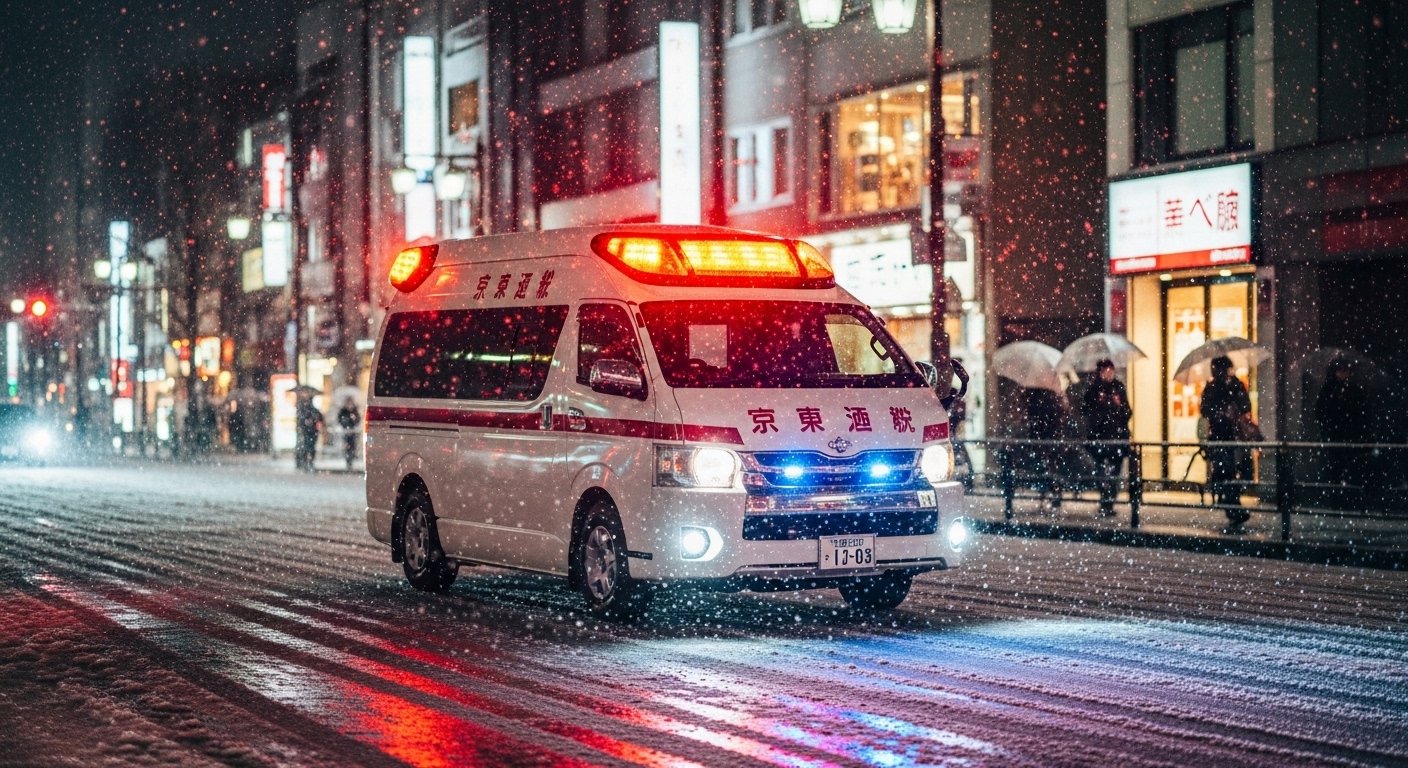
*Images used in this article are for illustration only. They may not be directly related to the content.
Japan Winter Transport: Master Snow Delays, Backup Plans & Icy Surface Safety
Planning a winter trip to Japan? The country’s efficient transport system is world-renowned, but heavy snow and ice can introduce unexpected challenges. Unpredictable delays or even cancellations can quickly disrupt your itinerary, leaving you unsure of your next steps, especially with language barriers. This guide is your practical toolkit for navigating Japan’s winter transport, from understanding real-time snow alerts to staying safe on icy paths and planning essential backup routes. We’ll equip you to handle winter travel like a local, ensuring your journey remains smooth and safe.
Table of Contents
- The Challenge of Japan’s Winter Transport
- Preparing for Your Winter Journey
- Real-Time Snow Alerts: Your Digital Lifelines
- When Services Stop: Your Backup Plan
- Icy Hazards: Staying Safe on Foot
- 🇯🇵 Point & Speak: Essential Japanese Phrases for Disruptions
- 📋 Quick Reference Card: Winter Transport Survival
- Common Mistakes to Avoid
- 🚨 Emergency Contacts in Japan
- Frequently Asked Questions
- Conclusion: Navigate Japan Winter with Confidence
- Disclaimer
The Challenge of Japan’s Winter Transport
Japan’s winter season, primarily January and February, brings substantial snowfall to regions like Hokkaido, Tohoku, Hokuriku, and the Japan Sea coast. While beautiful, this can significantly impact public transport. Train lines (JR and private), bus routes, and even air travel often face delays or cancellations. Even Tokyo and other major Pacific-side cities, though less frequent, can experience severe disruptions from heavy snowfall.
For international visitors, this presents a unique set of challenges. Real-time information, often displayed only in Japanese, can be difficult to interpret. The sheer volume of passengers affected means alternative transport options become scarce quickly. Beyond transport, walking on icy platforms and streets poses a slip hazard, which can lead to injury.
Preparing for Your Winter Journey
Proactive preparation is key to a smooth winter experience in Japan. Begin by researching the typical weather for your destination during your travel dates. The Japan Meteorological Agency (JMA) is an authoritative source for forecasts and warnings.
Essential Gear for Winter Safety
Footwear: Specialized winter footwear with good grip is crucial, especially if you plan to visit snow-prone areas. Regular fashion boots may not provide sufficient traction. Consider purchasing attachable non-slip sole covers (滑り止め – suberi-dome) which can be found at convenience stores (konbini), drugstores, or hardware stores in snowy regions.
Layered Clothing: Dress in layers to adapt to varying temperatures, from heated indoor spaces to cold outdoor conditions. Thermal underwear, waterproof outer layers, and warm accessories like gloves and hats are highly recommended.
Power Bank: Keep your smartphone charged. It will be your primary tool for checking updates, navigating, and translating.

Real-Time Snow Alerts: Your Digital Lifelines
When winter weather hits, immediate access to accurate information is critical for managing your journey. Do not rely solely on general news; go straight to the source.
Official Railway Websites
Major railway companies provide English-language service status updates. Check these before you leave your accommodation or if you encounter delays.
- JR East Service Status (English)
- JR West Service Status (English)
- JR Hokkaido Service Status (English)
🎯 Local Pro-Tip: Bookmark these official links on your phone *before* your trip. In a disruption, every second counts when trying to find alternative routes or accommodation.
Navigation Apps for Real-Time Updates
These apps are indispensable for Japan travel, especially in winter. They integrate real-time delay and cancellation information into route searches.
- NAVITIME for Japan Travel: Offers comprehensive public transport routing with delay indicators.
- Japan Transit Planner (Jorudan): Similar to NAVITIME, provides up-to-date service disruptions.
Install and familiarize yourself with at least one of these apps. Always check your chosen route immediately before heading to the station.

Understanding Visual Cues at Stations
Even without English announcements, Japanese stations provide visual information:
- Digital Display Boards (電光掲示板 – denkō keijiban): These show train status. Look for ‘遅延’ (chien) for delay, ‘運休’ (unkyū) for cancellation. Major stations may have English translations.
- Timetable Boards: Red X-marks or crossed-out lines next to train times often indicate cancellations.
- Station Staff (駅員 – eki-in): Look for staff in high-visibility vests or uniforms. They often hold whiteboards (手書きの案内板 – tegaki no annai-ban) with handwritten updates, sometimes with diagrams. They might also direct crowds with flags or megaphones.

When Services Stop: Your Backup Plan
Despite your best efforts, sometimes services halt entirely. Here’s what to do when your Japan winter transport plans go awry.
Step 1: Confirm the Disruption and Duration
Use the official websites, apps, or try to communicate with station staff (use our ‘Point & Speak’ phrases below). Ascertain if it’s a short delay or a long-term cancellation. If a service is cancelled, clarify if it’s for the entire day or just specific departures.
Step 2: Explore Alternative Transport
Highway Buses (高速バス – kōsoku basu): These can sometimes be an alternative for intercity travel, but they are also susceptible to snow/ice road closures. Check sites like Japan Bus Online (English). Be aware that bus tickets for immediate travel might be scarce during widespread disruptions.
Local Buses: For shorter distances, local bus services might still be running, though they will likely be delayed. Consult your navigation app for local bus routes.
Taxis: In extreme cases, a taxi may be your only option. However, fares will be significantly higher for long distances, and availability will be limited during severe weather. Always confirm the estimated fare with the driver or use a taxi fare estimator app before departing.
💰 Price Breakdown (Estimated Taxi Fares)
| Scenario | Estimated Cost |
| Short local ride (5-10 min) | ¥700-¥1,500 |
| Medium distance (20-30 min) | ¥3,000-¥6,000 |
| Long distance (e.g., city to airport in heavy snow) | ¥15,000+ |
Prices are approximate and subject to traffic, time of day, and specific location. Verify with driver.
Step 3: Secure Accommodation
If you’re stranded due to widespread cancellations, your immediate priority is finding a place to stay. Hotels near major stations or transport hubs fill up extremely quickly during emergencies. Use online booking apps (e.g., Booking.com, Agoda) immediately. Local convenience stores (コンビニ – konbini) sometimes have pamphlets for nearby hotels, though these might be in Japanese.
Step 4: Ticket Refunds and Exchanges
Most train tickets for cancelled services are fully refundable. Present your ticket at the ticket gate or a JR information counter (みどりの窓口 – Midori no Madoguchi). If you have a special pass (e.g., Japan Rail Pass), follow the specific refund/exchange procedures outlined by the pass provider. Always keep your tickets.

Icy Hazards: Staying Safe on Foot
Beyond transport logistics, your personal safety on icy surfaces is paramount. Even if snow has been cleared, black ice (路面凍結 – romen tōketsu) can form unexpectedly, especially at dawn/dusk, in shaded areas, or after a slight thaw and refreeze.
Navigating Platforms and Streets
Look for De-icing Efforts: Many stations and public areas in snow-prone regions actively use de-icing salts (融雪剤 – yūsetsusai) or sand (砂 – suna). Bags or containers of these materials are often placed near entrances, stairs, or ramps. Staff will also be clearing snow.
Identify Warning Signs: Keep an eye out for orange or red cones/barriers (カラーコーン – karā kōn) blocking off slippery areas. Warning signs with illustrations of people slipping (滑注意 – suberi chūi, meaning ‘caution, slippery’) are common.
Walk with Caution: Adopt a slow, deliberate walk, taking smaller steps. Avoid running, especially when hurrying to catch a train. Use handrails on stairs and escalators. Do not look at your phone while walking on potentially icy surfaces.

🇯🇵 Point & Speak: Essential Japanese Phrases for Disruptions
Show this section to staff if you’re stuck. They can read the Japanese.
English: Is the train delayed?
電車は遅れていますか?
(Densha wa okurete imasu ka?)
English: Is the train cancelled?
電車は運休ですか?
(Densha wa unkyū desu ka?)
English: Are there any alternative routes?
他にルートはありますか?
(Hoka ni rūto wa arimasu ka?)
English: Where can I find information in English?
英語の情報はどこで得られますか?
(Eigo no jōhō wa doko de eraremasu ka?)
English: Is the road/platform slippery?
道/ホームは滑りやすいですか?
(Michi / Hōmu wa suberiyasui desu ka?)
📋 Quick Reference Card: Winter Transport Survival
Screenshot or print this section for easy access:
- ✅ Before you leave: Check JMA weather, JR/private railway websites, and NAVITIME/Jorudan apps for current status.
- ✅ At the station: Look for digital boards (遅延/運休), crossed-out times, and staff with vests/signs.
- ✅ Foot safety: Wear appropriate footwear, walk slowly, use handrails, watch for slip warnings (滑注意).
- ✅ Stranded? Immediately check online booking for hotels near you. Consider highway buses (Japan Bus Online) or taxis for alternatives.
- ✅ Language: Use “Point & Speak” phrases or translation apps to communicate with staff.
- ✅ Tickets: Keep your tickets for potential refunds.
- ✅ Stay charged: Keep your phone powered for information and communication.
Common Mistakes to Avoid
Even with preparation, travelers sometimes make missteps during winter transport disruptions:
- Underestimating the conditions: Do not assume a little snow won’t affect the famously punctual Japanese transport. Heavy snow or ice can paralyze systems.
- Relying solely on one app: While NAVITIME and Jorudan are excellent, cross-reference with official railway websites for the most authoritative information, especially for major intercity routes.
- Waiting too long to act: If a major disruption occurs, alternative transport and accommodation options disappear quickly. Act decisively.
- Inappropriate footwear: Wearing fashion boots without grip can lead to falls, especially on black ice. Prioritize safety over style.
- Not having offline resources: Download offline maps and keep a screenshot of essential Japanese phrases, in case data connectivity becomes an issue.
🚨 Emergency Contacts in Japan
In case of a serious accident or injury related to icy conditions or any other emergency, these numbers are vital:
🚨 Emergency Contacts
| Police (for accidents, theft) | 110 |
| Ambulance/Fire (for medical emergencies, fires) | 119 |
All numbers are free and work from any phone (landline, mobile, public phone).
For general safety tips from the Japan National Tourism Organization, see: JNTO – Safety Tips for Travelers
Frequently Asked Questions
What are the best apps for checking Japan train delays in English during winter?
The most reliable apps for real-time train delay and cancellation information in English are “NAVITIME for Japan Travel” and “Japan Transit Planner” (Jorudan). These integrate service status updates directly into your route searches.
What should I do if my Shinkansen (bullet train) is cancelled due to snow?
First, check official JR websites (e.g., JR East, JR West) for the most current information. If cancelled, your ticket is generally refundable. Immediately explore alternative Shinkansen lines if available, or consider highway buses as a backup, though these are also susceptible to weather. Be prepared to book emergency accommodation if you cannot continue your journey.
Are icy roads common in Tokyo during winter?
Significant snowfall in Tokyo is rare, but when it does occur, it can cause severe disruption as the city is not as equipped to handle it as northern regions. Even light snow or freezing rain can lead to widespread black ice on roads and sidewalks. Always exercise caution, especially in shaded areas or during early morning/late evening hours.
Should I buy travel insurance for winter travel in Japan?
Yes, comprehensive travel insurance is highly recommended. It can cover unexpected expenses arising from transport delays or cancellations, such as emergency accommodation, missed flights, or medical costs due to injuries from falls on icy surfaces. Read the policy carefully to understand what is covered.
Conclusion: Navigate Japan Winter with Confidence
Winter travel in Japan offers unique beauty, but it demands a practical approach to transport and safety. By utilizing real-time alerts, having a robust backup plan, and taking proactive steps to stay safe on icy surfaces, you can mitigate potential disruptions and ensure a smooth experience. Stay informed, stay prepared, and embrace the magic of Japan’s winter with confidence.
Disclaimer
This guide provides general information and advice based on research. Weather conditions, transport policies, and local circumstances can change rapidly. Always verify information with official sources and exercise personal judgment for your safety. We are not liable for any issues arising from the use of this information.