*Images used in this article are for illustration only. They may not be directly related to the content.
Japan Winter Travel Safety: Navigate Snow Delays, Icy Platforms & Emergency Prep
Winter in Japan offers unique beauty, from snow-capped temples to world-class ski resorts. However, with this beauty comes specific travel challenges. The fear of slipping on ice, the confusion of unexpected train delays, struggling to understand Japanese announcements, or simply being unprepared for biting cold can quickly turn an anticipated adventure into a frustrating ordeal.
This comprehensive guide is designed to remove that friction. We’ll equip you with practical strategies, essential phrases, and real-time resources to navigate Japan’s winter travel landscape with confidence. From choosing the right footwear to understanding train refund policies and preparing for the unexpected, consider this your essential toolkit for a safe and smooth winter journey.
Table of Contents
- Master Icy Conditions: Preventing Slips and Falls
- Decoding Winter Transport Disruptions in Japan
- What to Do When Your Train is Delayed or Cancelled
- Bridging the Language Gap: Essential Phrases & Apps
- Emergency Preparedness: Stay Warm and Connected
- Critical Contacts & Protocols
- Frequently Asked Questions
Master Icy Conditions: Preventing Slips and Falls
One of the primary safety concerns for international visitors during winter is the risk of slipping on ice, particularly at stations, crosswalks, and smaller streets. While major urban areas generally clear critical pathways, secondary routes and less-trafficked spots, especially in northern Japan (Hokkaido, Tohoku) and along the Sea of Japan coast, can retain significant ice cover.
The Problem: Unseen Hazards
Often, the biggest threat isn’t visible snow but “black ice” – a thin, transparent layer of ice that blends with the pavement, making it nearly impossible to see. Station platforms, although regularly maintained, can become slick from melted snow or freezing rain. Outdoor walkways, steps, and even covered concourses near entrances can also pose a risk.
Visual cue: Keep an eye out for yellow and black striped ‘足元注意’ (Ashimoto Chūi – Caution: Watch your step/Slippery) signs. These are strategically placed in areas where ice or water accumulation is a known risk.
The Solution: Strategic Footwear and Walking
Your choice of footwear is paramount. Prioritize waterproof, insulated boots that offer both warmth and superior traction. Look for soles with deep treads or specialized anti-slip designs, such as those made with Vibram Arctic Grip technology or other winter-specific compounds.
- Invest in Proper Boots: Ensure your boots are waterproof to keep your feet dry and warm, and insulated to protect against the cold.
- Check Sole Quality: Deep treads are essential for gripping snow, but anti-slip rubber compounds are crucial for ice.
- Consider Traction Devices: For areas with consistently heavy ice, especially outside major city centers, consider packing removable anti-slip traction devices (e.g., micro-spikes or snow grips). These easily attach to your existing footwear for enhanced stability.
- Mindful Walking: Shorten your stride, walk slowly, and keep your weight centered. Avoid sudden movements. When walking on steps or slopes, use handrails if available.
🎯 Local Pro-Tip: Even if a path looks clear, assume it might be slick. Step carefully, particularly when entering or exiting buildings, crossing streets, or on shaded pathways where ice can persist longer. Japanese convenience stores sometimes stock simple, disposable shoe grips in winter, but it’s best to bring quality gear.
Decoding Winter Transport Disruptions in Japan
Japan’s public transport system is globally renowned for its punctuality and efficiency. However, even the most advanced networks are susceptible to the forces of winter. Heavy snowfall (大雪 – ōyuki), strong winds, and track freezing can significantly impact train and bus schedules.
The Problem: Causes and Impacts
Conventional train lines and buses are more prone to delays or cancellations due to direct exposure to weather elements. While Shinkansen (bullet trains) are built for resilience, they are not entirely immune. High winds can trigger automatic speed reductions or temporary halts, and track issues caused by snow or ice can affect even these advanced services.
A key challenge is the potential for communication gaps. While major stations might offer English announcements for significant disruptions, local station announcements are often exclusively in Japanese, leading to confusion and frustration.

The Solution: Staying Informed in English
Proactive information gathering is your best defense. Utilize official English-language resources provided by transport operators and reputable travel apps.
- Official Railway Websites: Major railway companies provide real-time service status updates in English.
- JR East English Service Status
- JR West English Service Status
- For other regions (e.g., JR Hokkaido, JR Central, JR Kyushu), search their official websites for “Service Status” or “Operation Information.”
- Trusted Travel Apps:
- NAVITIME Japan Transit Planner: Provides detailed route information, including delay notifications.
- Jorudan English Route Finder: Another robust transit planning app with real-time data.
- Google Maps: Often integrates real-time public transport updates, though accuracy can sometimes lag behind official sources.
- Japan Official Travel App (JNTO): Offers route search and may provide official alerts.
- Japan Meteorological Agency (JMA): Check JMA’s English website for weather forecasts and warnings (heavy snow, strong winds) that could impact travel.
What to Do When Your Train is Delayed or Cancelled
When delays hit, the initial frustration can be significant. However, understanding the system for refunds and documentation will streamline the process.
The Solution: Step-by-Step Recovery
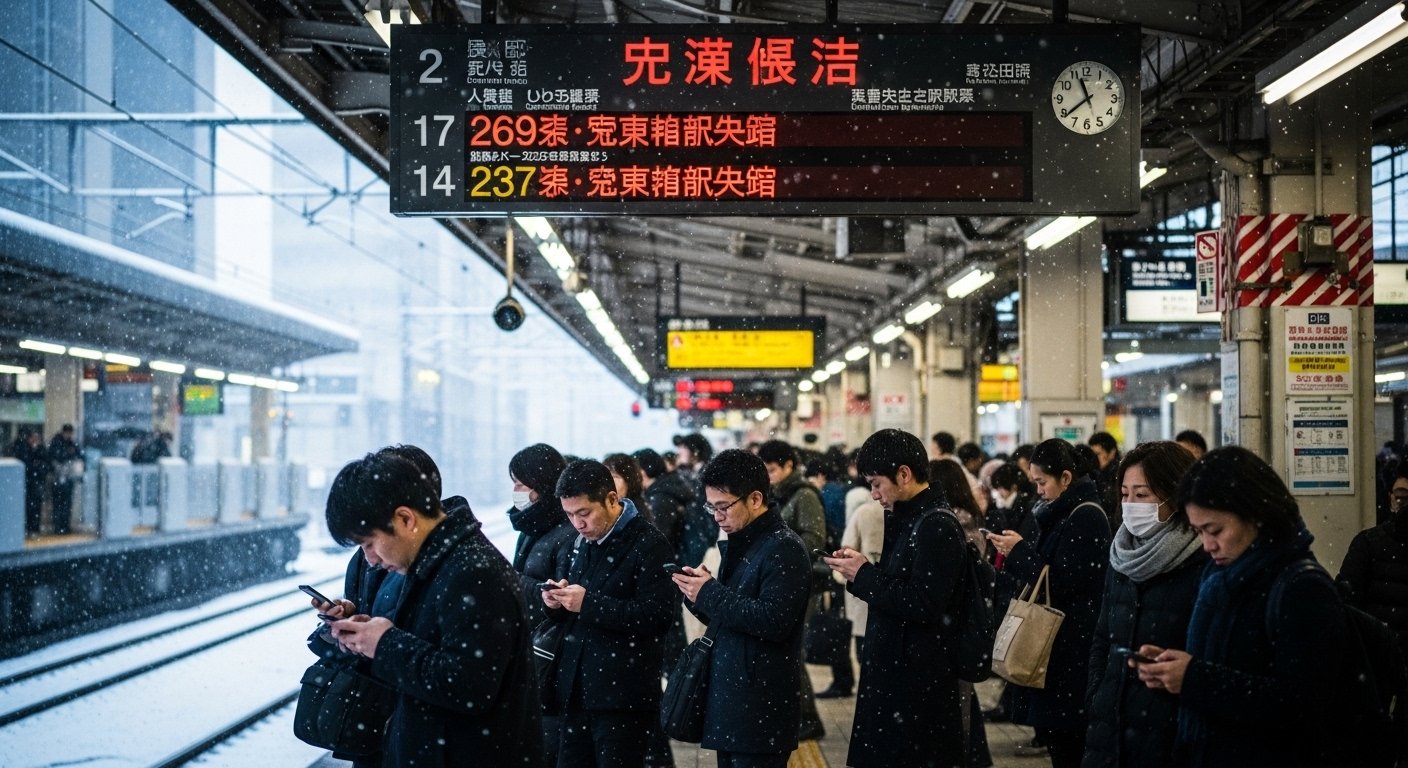
- Check Information Boards: Look for electronic information boards (電光掲示板 – denkō keijiban) at stations. While often in Japanese, they display train numbers, times, and status. Scrolling text usually indicates delays (遅延 – chien) or cancellations (運休 – unkyū).
- Seek Staff Assistance: Approach station staff. They are your best direct source of information. Even if they don’t speak fluent English, they can often point you to relevant information or use translation tools.
- Understand Refund Eligibility: In case of significant delays (e.g., Shinkansen >2 hours) or cancellations, you are typically eligible for a full refund. This applies to most tickets, including Japan Rail Passes, though specific rules vary by operator and ticket type.
- Process Refunds: Go to any ticket counter (みどりの窓口 – Midori no Madoguchi) to request a refund. Present your ticket and explain the situation.
- Obtain a Delay Certificate: If a delay has impacted your onward travel (e.g., flights, hotel check-in) or you need it for travel insurance claims, request a Delay Certificate (遅延証明書 – Chien Shōmeisho) from station staff at the ticket gates or information counter.
🎯 Local Pro-Tip: Japanese transport staff take delays seriously and work diligently to resolve them. Maintain politeness and patience, even when frustrated. Expect orderly queues and clear communication attempts. Do not expect public arguments or heated discussions.
Visual Step-by-Step: Locating Assistance
Step 1: Identify Station Staff
Visual cue: Look for staff wearing uniforms with distinct caps, usually near ticket gates or information counters. They are identifiable by their professional attire.
What to do: Approach them with your question or to show a phrase from our “Point & Speak” section.

Step 2: Find the Ticket Counter (Midori no Madoguchi)
Visual cue: Look for “みどりの窓口” (Midori no Madoguchi) signs, typically green with a white train logo, usually located in the main concourse or near ticket machines. These are the main ticket offices for purchases, changes, and refunds.
What to do: Head to this counter for ticket refunds or re-bookings due to delays or cancellations. Be prepared to wait in line during major disruptions.

📋 Quick Reference Card: Dealing with Delays
Screenshot or print this section for easy access:
- ✅ Check official apps/websites (JR, NAVITIME) FIRST.
- ✅ Locate station staff (uniformed) for direct info.
- ✅ Ask for “払い戻し” (haraimodoshi – refund) at “みどりの窓口” (Midori no Madoguchi).
- ✅ Request “遅延証明書” (Chien Shōmeisho – delay certificate) for insurance.
- ✅ Stay patient and polite.
Bridging the Language Gap: Essential Phrases & Apps
A significant barrier during disruptions is the language difference. While staff in major tourist hubs may offer English assistance, this is not guaranteed, especially in more rural areas or during stressful situations. Equipping yourself with a few key Japanese phrases can make a substantial difference.
🇯🇵 Point & Speak
Show this section to staff if you’re stuck. They can read the Japanese.
English: Is the train delayed?
電車は遅れていますか?
(Densha wa okurete imasu ka?)
English: Is this train cancelled?
この電車は運休ですか?
(Kono densha wa unkyū desu ka?)
English: When will the next train depart?
次の電車は何時に出発しますか?
(Tsugi no densha wa nanji ni shuppatsu shimasu ka?)
English: Do you have English information?
英語の案内はありますか?
(Eigo no annai wa arimasu ka?)
English: I need a delay certificate.
遅延証明書をください。
(Chien shōmeisho o kudasai.)
The Solution: Translation Apps
Beyond these phrases, keep a reliable translation app on your smartphone. Google Translate and DeepL offer excellent text and voice translation, with Google Translate also providing real-time camera translation for signs.
Emergency Preparedness: Stay Warm and Connected
Winter conditions in Japan can be severe, with temperatures dropping well below freezing, especially in mountainous or northern regions. Unexpected delays could mean extended waits in cold terminals or even on a stopped train.
The Solution: Dressing in Layers and Emergency Kit
- Dress in Layers: This is critical for adapting to varying temperatures.
- Base Layer: Thermal underwear (merino wool or synthetic) to wick moisture.
- Mid-Layer: Fleece or down vest for insulation.
- Outer Layer: Waterproof and windproof jacket.
- Accessories: Always wear a warm hat, gloves or mittens, and a scarf. These prevent significant heat loss.
- Pack an Emergency Kit: Keep a small bag with essentials accessible, especially on inter-city journeys.
- Portable Power Bank: Essential for keeping your phone charged for information and communication.
- Snacks: Energy bars, nuts, or other non-perishable snacks for sustained energy.
- Water: Stay hydrated, even in cold weather.
- Any Essential Medications: Carry at least a day’s extra supply in your hand luggage.
- Small Blanket/Shawl: For extra warmth during long waits.
Common Mistakes to Avoid
- Under-dressing: Assuming indoor heating will always be sufficient. Public areas can be chilly, and outdoor transfers are unavoidable.
- Not carrying essentials: Relying on readily available shops, which might be closed or out of stock during major disruptions.
- Ignoring weather forecasts: Daily checks of the JMA English Weather site are crucial for planning your day.

Critical Contacts & Protocols
Knowing who to call and what to do in a genuine emergency is non-negotiable for safety. While our focus is on prevention and managing delays, unforeseen accidents can still occur.
🚨 Emergency Contacts
| Police | 110 |
| Ambulance/Fire | 119 |
| Japan Visitor Hotline (JNTO) | 050-3816-2787 (24/7, English, Chinese, Korean) |
All numbers are free and work from any phone. State “English, please” if you need language assistance.
For more details: Emergency Numbers in Japan (JNTO)
What to Do in an Emergency
- If you fall: If you slip and injure yourself, try to alert someone nearby by saying “Korobimashita” (転びました – I fell down) or “Tasukete kudasai” (助けてください – Please help me). Many Japanese are eager to assist, even if there’s a language barrier.
- On a train: In an emergency inside a train carriage, locate the red emergency stop button. These are usually on pillars or near doors. Use it only for genuine emergencies (e.g., serious medical issue, fire).
- On the platform: Similar red emergency stop buttons are also found on train platforms. Use them to stop an approaching train if someone falls onto the tracks.
- Contact your embassy/consulate: In serious situations (e.g., lost passport, major accident), contact your country’s embassy or consulate in Japan.
Travel Insurance: A Non-Negotiable
While this guide focuses on practical steps, comprehensive travel insurance is your ultimate safety net. It can cover costs associated with:
- Emergency medical treatment.
- Trip cancellation or interruption due to severe weather.
- Lost or delayed luggage.
- Emergency accommodation due to unexpected delays.
Review your policy details carefully for clauses related to natural disasters and travel disruptions.
Frequently Asked Questions
What is “black ice” and why is it dangerous in Japan?
Black ice is a thin, transparent layer of ice on a surface, often blending in with the black pavement, making it nearly invisible. It’s dangerous because you might not see it until you’ve slipped. In Japan, it frequently forms in shaded areas, on bridges, or near building entrances after light rain or melted snow refreezes overnight.
Can I get a refund for a JR Pass if my Shinkansen is cancelled due to snow?
Yes, if your Shinkansen service is significantly delayed (typically over 2 hours) or cancelled, you are generally eligible for a refund for the affected segment or a change to an alternative service if available. Head to a Midori no Madoguchi (green ticket counter) at any JR station to process this. Keep your JR Pass and any reserved seat tickets.
Are there heated waiting rooms at Japanese train stations?
Yes, many train stations, especially those in colder regions or at outdoor/rural locations, provide heated waiting rooms (暖房待合室 – Danbō Machiaishitsu). Look for signs indicating these rooms. They offer a comfortable refuge during long waits or between transfers in cold weather.
What should I do if a snowstorm strands me overnight?
If you’re stranded due to severe weather, the first priority is safety and warmth. Station staff will often provide information on emergency accommodation, such as nearby hotels or community centers. Use your translation apps to communicate. Ensure your phone is charged and inform your travel companions or family of your situation. Your travel insurance may cover unexpected accommodation costs.
Conclusion
Winter travel in Japan is a unique and rewarding experience, offering breathtaking scenery and cultural immersion. By understanding potential challenges and preparing proactively, you can mitigate risks and navigate disruptions effectively. Equip yourself with the right gear, stay informed using official resources, know key phrases, and understand emergency procedures. With these practical strategies, you’re ready to enjoy Japan’s winter wonderland with peace of mind.
Safe travels!
Disclaimer
This guide provides general information based on current knowledge and common practices. Travel conditions and policies can change. Always verify information with official sources (e.g., railway companies, government advisories) and consult your travel insurance provider for specific coverage details. Your personal safety is your responsibility; exercise caution in all travel situations.