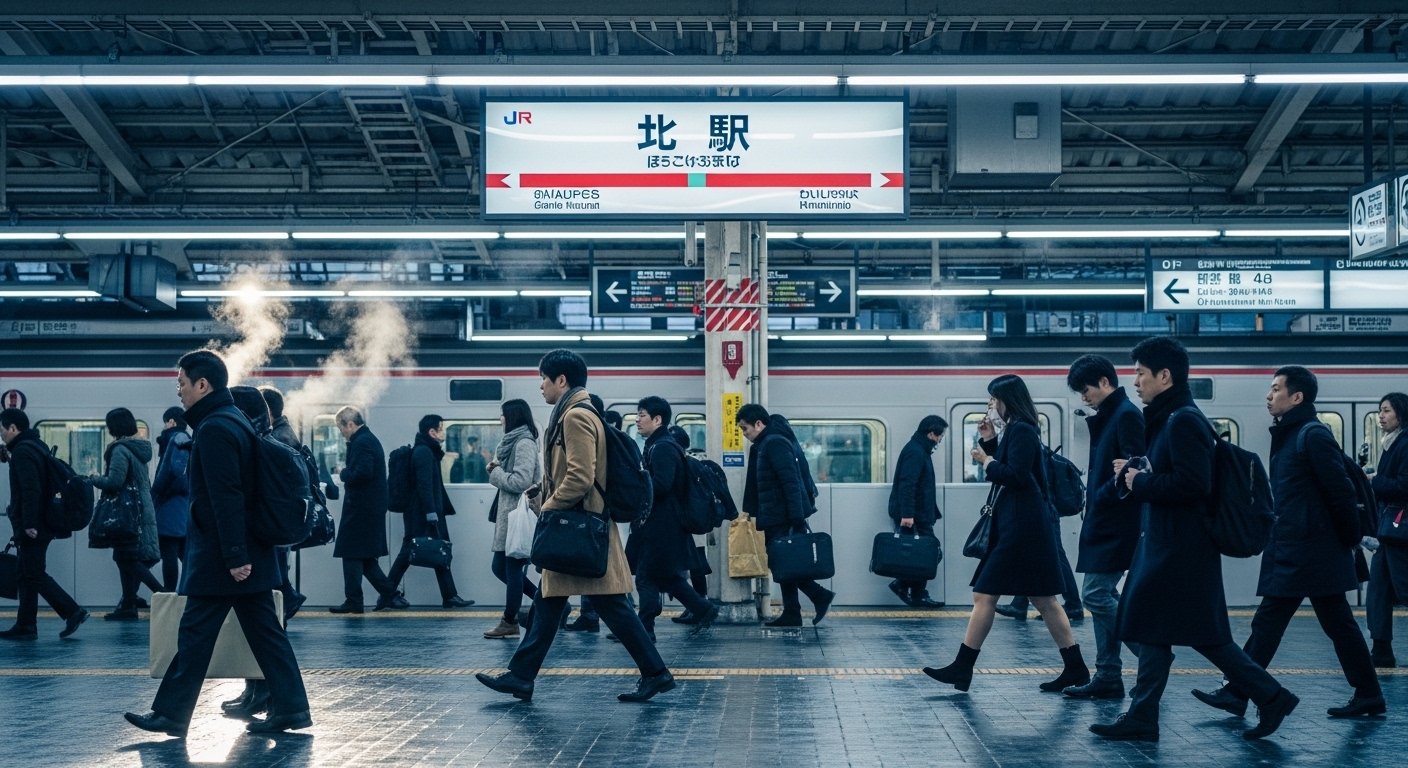
*Images used in this article are for illustration only. They may not be directly related to the content.
Japan Winter Travel Safety: Survive Snow Delays, Crowds & Lost Items
Traveling through Japan during the winter holidays presents a unique set of challenges, from unpredictable snow-related transport delays to navigating incredibly crowded stations and trains. The festive rush also heightens the risk of losing essential belongings, and icy conditions can create unexpected physical hazards, especially when you’re rushing in the early morning darkness.
You’re here because you want to avoid these frustrations, and you’ve come to the right place. As your local Japan fixer, this guide provides practical, actionable strategies to ensure your winter holiday transport experience is as smooth and safe as possible. We’ll equip you with the knowledge to proactively manage disruptions, move through peak crowds with confidence, safeguard your possessions, and stay firm on your feet, helping you focus on enjoying Japan’s unique winter charm rather than getting stranded or stressed.
Table of Contents
Navigating Winter Delays & Disruptions
Winter in Japan, particularly in regions prone to heavy snowfall, can impact even the country’s renowned punctual train system. Snow and ice can lead to significant delays, re-routing, or even cancellations, leaving travelers stranded. Understanding how to manage these situations is key to your Japan winter travel safety.
The Problem: Unexpected Snow and Ice Disruptions
Japanese railway companies prioritize safety, meaning they will slow down or halt services if conditions become dangerous. While major routes like the Tokaido Shinkansen are equipped to handle moderate snow, severe weather can overwhelm even advanced infrastructure. Unlike many countries, railway companies in Japan typically do not offer refunds or compensation for delays, even significant ones, unless explicitly stated for specific limited express services. Your ticket or IC card acts as proof of travel, but don’t expect financial recovery for lost time.
The Solution: Proactive Delay Management
Being prepared is your best defense against winter transport woes. Follow these steps to mitigate the impact of snow delays in Japan:
- Monitor Weather Forecasts Daily: Use reliable sources like the Japan Meteorological Agency (JMA). Check regional forecasts for your current location and your destination, paying attention to snowfall predictions and heavy weather warnings.
- Check Real-Time Service Status: Before heading to the station, consult official railway websites or apps.
- JR East Service Status (English)
- JR West Service Status (English)
- For other regions or private lines, search for the specific railway company’s “service status” or “operation information” (運行状況 – Unkō Jōkyō).
- Station electronic boards are updated in real-time, often displaying “遅延 (Chien – Delay)” or “運休 (Unkyu – Cancellation)”.
- Have Alternative Routes & Transport in Mind: For critical journeys, identify alternative train lines, bus routes, or even flight options if a major Shinkansen line is heavily impacted. Be aware that buses and taxis will also face delays in snowy conditions.
- Keep Essential Items Accessible: If you get stranded, ensure you have snacks, water, any necessary medications, a power bank for your phone, and warm layers in your daypack.
- Communicate & Seek Assistance: Station staff are your primary resource. While English proficiency varies, they can provide the most current information. Show them written questions or use translation apps if needed.
🎯 Local Pro-Tip: Always retain your physical train ticket or ensure your IC card transaction history is viewable. This is your only proof of travel for potential compensation, although it’s rare for weather delays. For long-distance Shinkansen during peak winter, consider booking the first train of the day. Early trains often face fewer initial delays than later ones, which can accumulate problems throughout the day.
Mastering Holiday Crowds in Japan
Japan’s public transport is a marvel of efficiency, but during peak winter holidays, especially the New Year period (generally December 28th – January 3rd), even this system can feel overwhelming. Stations transform into bustling human rivers, and trains fill to capacity.
The Problem: Extreme Crowding
Japanese holiday travel patterns mean major Shinkansen lines and popular tourist routes experience extreme density. This isn’t just about discomfort; it can be difficult to navigate with luggage, easy to get separated from travel companions, and increases the risk of petty theft or lost items. Feeling overwhelmed in such an environment is a common experience for international visitors.
The Solution: Strategic Crowd Navigation
Managing crowds safely requires foresight and patience.
- Avoid Peak Travel Times: If your itinerary allows, aim to travel before December 28th or after January 3rd. Mid-week travel (Tuesdays, Wednesdays, Thursdays) within the holiday period might be slightly less crowded than weekends.
- Book Reserved Seats Well in Advance: For Shinkansen and other limited express trains, reserved seats are essential. Book them weeks, or even months, ahead via JR Pass offices, JR ticketing windows, or online platforms if available for your pass/ticket type. Non-reserved cars will be standing room only, packed, and often stressful.
- Pack Light: Large luggage is a significant hindrance in crowded stations and trains. Utilize luggage forwarding services (e.g., Yamato Transport/Kuroneko Yamato or Sagawa Express) to send bags directly to your next hotel. Travel with only a small daypack.
- Allow Extra Time: Everything takes longer in crowds. Getting through ticket gates, finding your platform, and boarding will require more time. Arrive at stations at least 30-45 minutes before departure for Shinkansen, longer if you need to exchange passes or buy tickets.
- Maintain Situational Awareness: Keep an eye on your surroundings and your belongings. Avoid distractions like constantly looking at your phone.
Visual Step-by-Step: Navigating Crowded Platforms
Navigating a busy Japanese train platform safely is an art. Here’s how:
-
Step 1: Locate Your Car Number & Boarding Position
Visual cue: Look for overhead signs on the platform indicating train number, destination, and the specific car numbers that will stop at each point. You’ll also see painted lines or stickers on the platform floor marking queue positions for each car door.
What to do: Identify your car number (from your reserved ticket) and stand in the designated queue line painted on the platform. Even in dense crowds, people usually adhere to these lines. Do not stand directly on the track edge.
-
Step 2: Wait for Disembarkation
Visual cue: Station staff often line up at platform edges before a train arrives. When the train doors open, observe passengers exiting first.
What to do: Allow all passengers to exit the train completely before attempting to board. Japanese custom dictates that you wait for others to alight before entering. Do not push or rush.
-
Step 3: Board Methodically
Visual cue: Once the flow of exiting passengers subsides, the queue will start to move onto the train.
What to do: Board the train in an orderly fashion, keeping your luggage close. Find your seat quickly. If you have large luggage, utilize the overhead racks or designated luggage spaces at the end of some Shinkansen cars. Do not block aisles or doorways.


Protecting Your Belongings: Lost and Found in Japan
Amidst the rush of holiday travel and crowded spaces, the risk of misplacing or losing essential items, from passports to wallets, increases. Japan’s lost and found system is efficient, but knowing the procedure is crucial.
The Problem: The Holiday Rush and Lost Essentials
It’s easy to leave a bag on a luggage rack or drop a wallet in a bustling station. The panic of realizing a crucial item is gone can quickly overshadow your trip. While Japan has an impressive return rate for lost items, the initial steps you take are vital.
The Solution: Prevention & Recovery
Minimize risk and know how to act if something goes missing.
- Prevention is Key:
- Consolidate Valuables: Keep passport, money, and important cards in a single, secure, internal pocket or a dedicated travel wallet that is difficult to lose.
- Bag Checks: Before leaving any train, restaurant, or public space, do a quick visual and tactile check of your immediate area.
- Minimize Items: Don’t carry more than you need for the day.
- Photos of Documents: Keep digital copies (on your phone and cloud storage) of your passport, visa, flight details, and hotel bookings.
- If You Lose an Item: Immediate Action:
- Retrace Your Steps: If you know where you might have lost it, return immediately.
- Contact Railway Staff: If on a train, inform a conductor or station attendant at your next stop. If in a station, go to the nearest station office (駅務室 – Eki-mu-shitsu) or a Lost and Found office (忘れ物承り所 – Wasuremono Uketamari-jo).
- Be Specific: Provide a detailed description of the item, where and when you last saw it, and your contact information (hotel, phone).
- Know the Transfer Process: Lost items found on trains or in stations are typically held by the railway company for a few days (often 3 days), then transferred to a local police station (Koban 交番 or police headquarters).
- Reporting to Police:
- If the railway company doesn’t have it, or if you lost it in a public area outside a station (e.g., street, park), visit the nearest Koban (police box).
- You will fill out a lost item report (遺失物届 – Ishitsubutsu Todoke). This document is crucial for insurance claims or for obtaining an emergency passport.
🇯🇵 Point & Speak
Show this section to staff if you’re stuck. They can read the Japanese.
English: Is the train delayed?
電車は遅れていますか?
(Densha wa okurete imasu ka?)
English: I lost my bag/wallet/passport.
カバン/財布/パスポートをなくしました。
(Kaban/Saifu/Pasupōto o nakushimashita.)
English: Where is the lost and found office?
忘れ物承り所はどこですか?
(Wasuremono uketamari-jo wa doko desu ka?)
English: Can you help me?
手伝っていただけますか?
(Tetsudatte itadakemasu ka?)
📋 Quick Reference Card: Lost Item Action Plan
Screenshot or print this section for easy access:
- ✅ Stay Calm: Panic hinders clear thinking.
- ✅ Retrace: Immediately go back if you know the last location.
- ✅ Notify Railway Staff: At the station office or through a conductor. Be ready to describe your item.
- ✅ Visit a Koban: If not found by railway staff, report it to the nearest police box (交番).
- ✅ Inform Embassy/Consulate: Especially for lost passports.
- ✅ Contact Travel Insurance: If you have coverage for lost belongings.
Staying Safe: Icy Conditions & Physical Hazards
While Japanese infrastructure is generally well-maintained, winter weather introduces physical safety hazards, particularly around transport hubs. Icy platforms, pedestrian walkways, and station entrances can become extremely slippery, especially in the early morning darkness common during winter.
The Problem: Slipping and Falling Hazards
Snowfall and freezing temperatures can quickly create treacherous surfaces. Despite proactive measures like anti-slip mats and diligent clearing by staff, residual ice or freshly fallen snow can cause slips and falls, leading to injuries that disrupt your trip. Dimly lit areas exacerbate this risk.
The Solution: Personal Safety Measures
Your personal preparation and awareness are your best tools against icy conditions.
- Wear Appropriate Footwear: This is non-negotiable for Japan winter travel safety. Choose shoes with good traction, ideally waterproof and with non-slip soles. Avoid smooth-soled fashion boots or sneakers.
- Walk with Caution: Especially in areas prone to ice accumulation – shaded spots, under eaves, near entrances/exits. Short, shuffling steps are safer than long strides.
- Observe Warning Signs: Look for yellow or black-and-yellow striped warning tape or signs with “滑りやすい (Suberiyasui)” text, indicating slippery conditions.
- Utilize Handrails: When available, use handrails on stairs, escalators, and ramps.
- Keep Hands Free: If possible, avoid walking with hands in pockets. This allows you to break a fall more effectively.
- Mind the Gap: When boarding trains, be aware of the gap between the platform and the train. In icy conditions, this gap can be a particular hazard.
🚨 Emergency Contacts
| Police (for lost items, accidents) | 110 |
| Ambulance/Fire (medical emergencies, fires) | 119 |
| JNTO Japan Visitor Hotline (24/7 English support) | 050-3816-2787 |
All numbers are free and work from any phone. The JNTO hotline is excellent for non-life-threatening emergencies, travel info, and general assistance.
Common Mistakes to Avoid for Japan Winter Travel
Being aware of potential pitfalls can save you significant stress and ensure your Japan holiday transport tips are put to good use.
- Underestimating Crowds: Assuming Japan’s efficiency will magically dissipate holiday crowds. Peak times are genuinely packed; prepare for it mentally.
- Not Reserving Shinkansen Seats: Traveling during New Year without reserved Shinkansen tickets is a recipe for standing for hours, or not getting on at all.
- Ignoring Weather Forecasts: Daily weather checks are crucial, especially for regions you’ll be traversing. A clear sky in Tokyo doesn’t mean the mountain passes are clear.
- Wearing Inappropriate Footwear: Smooth-soled shoes are dangerous on icy platforms and streets. Prioritize function over fashion in winter.
- Panicking Over Delays: While frustrating, showing overt frustration won’t speed up a delayed train. Stay calm, follow staff instructions, and seek information politely.
- Not Documenting Lost Items: Failing to report lost items to the police (Koban) means you won’t have the necessary documentation for insurance claims.
- Carrying All Valuables Together: Spreading cash and cards between different bags/pockets lessens the blow if one item is lost or stolen. Keep passport separate from your main wallet.
Frequently Asked Questions
Are Japanese trains typically delayed by snow?
While Japan’s trains are known for punctuality, heavy snow or freezing rain can cause significant delays or cancellations, especially in northern regions or mountainous areas. Major lines are resilient, but always check real-time service updates during winter.
What are the most crowded times to travel in Japan during winter holidays?
The period between December 28th and January 3rd, especially for New Year’s, sees the highest domestic travel volume. Avoid major Shinkansen lines and popular tourist routes on these dates if possible. Mornings and evenings on weekdays are generally also peak commuter times in urban areas.
What should I do if I lose my Japan Rail Pass?
A Japan Rail Pass cannot be reissued if lost or stolen. You will need to purchase new tickets for your remaining travel. It’s crucial to report the loss to a police station (Koban) immediately and obtain a lost item report for potential travel insurance claims.
Is travel insurance necessary for a winter trip to Japan?
Yes, travel insurance is highly recommended. It can cover unexpected costs from significant delays (e.g., extra accommodation), medical emergencies due to falls on ice, or the loss of valuable items like passports or luggage. Review policies carefully for coverage specifics.
How can I find alternative transport if trains are cancelled due to snow?
First, consult station staff for official guidance. They may direct you to alternative train lines or bus services. In severe cases, taxis are an option but will be expensive and also subject to delays. Websites like HyperDia (or Japan Transit Planner apps) can help identify alternative routes, but always verify current operational status with official railway sources.
Conclusion
Navigating Japan’s public transport during winter holidays requires preparation and a practical approach. By understanding potential snow delays, strategically managing crowds, knowing the steps for lost items, and prioritizing physical safety on icy surfaces, you can mitigate common frustrations.
Equipped with these Japan winter travel safety tips, you’re ready to enjoy the unique beauty of Japan’s winter without unnecessary friction. Plan ahead, stay vigilant, and embrace the journey. Safe travels.
Disclaimer
The information provided in this guide is for general informational purposes only and is based on typical procedures and current knowledge as of the research date. Travel conditions, railway policies, and weather patterns can change rapidly. Always refer to official railway websites, local authorities, and real-time information for the most accurate and up-to-date guidance. We recommend purchasing comprehensive travel insurance for your trip to Japan to cover unforeseen circumstances.