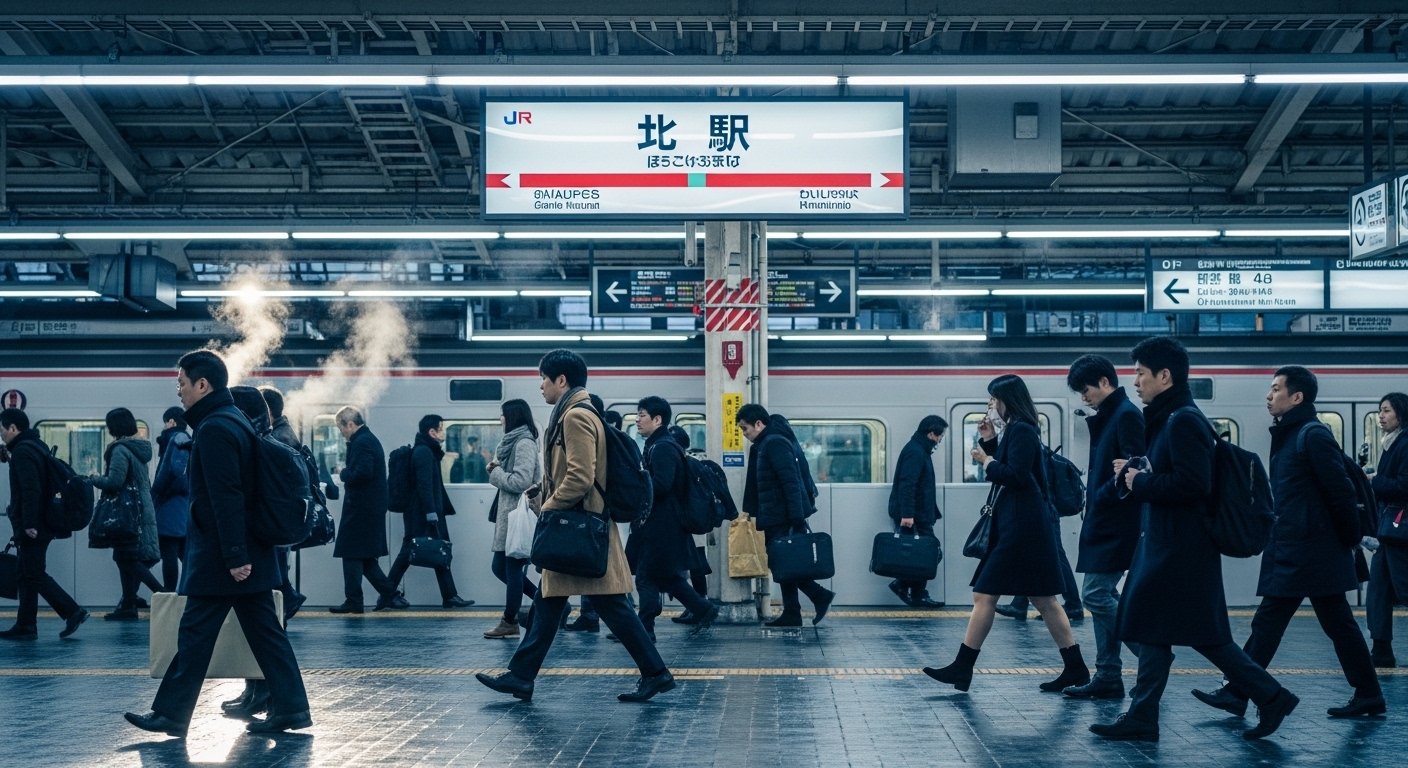
*Images used in this article are for illustration only. They may not be directly related to the content.
Japan’s Winter Gauntlet: From Ski Slopes to Icy Streets, Your Emergency Survival Guide
I remember it like it was yesterday: my first winter in Japan, feeling invincible on my snowboard in Nagano. I hit a patch of ice, went down hard, and felt a sickening pop in my knee. Lying there, buried in fresh powder, my helmet slightly askew, all I could think was, “Okay, this is bad. Now what?” I’d learned enough Japanese to order ramen and navigate the train system, but “my knee is dislocated and I need an ambulance, please” was definitely not in my vocabulary. The ski patrol eventually found me, but the sheer panic of not knowing what came next, of being utterly reliant on gestures and a few broken English words, stuck with me. Ten years on, that memory fuels my mission: to make sure you don’t face that same terrified confusion.
Japan in winter is magical, yes, but it’s also a beast. Heavy snow isn’t just a pretty backdrop for your photos; it’s a force that can shut down cities, cause brutal falls, and leave you utterly stranded. Trust me, I’ve seen it all, and more often than not, the friction isn’t just the ice on the pavement, but the gap between what you expect and what you get in an emergency here. Let’s fix that, shall we?
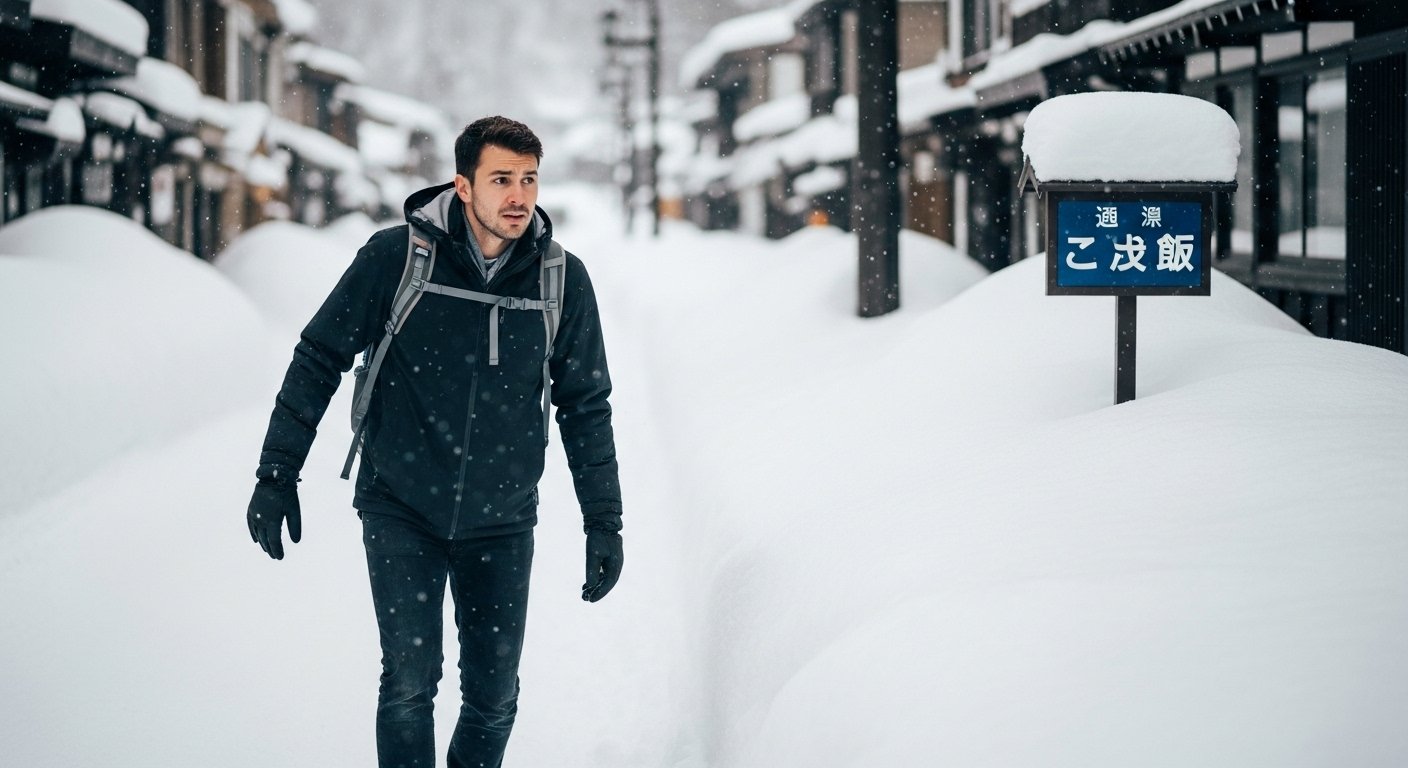
Table of Contents
- The Real Struggle: Why Winter Emergencies in Japan Hit Different
- Navigating the Snowy Minefield: My Step-by-Step Survival Guide
- Essential Gear & Emergency Fund: What You’ll Actually Spend
- Common Pitfalls & How to Dodge Them
- 🇯🇵 Point & Speak: Your Emergency Phrasebook
- When the Snow Hits the Fan: Real-Life Scenarios & What I Did (or Should’ve Done)
- FAQ: Your Burning Questions Answered
The Real Struggle: Why Winter Emergencies in Japan Hit Different
You’re here for the powder, the onsen, the cozy winter vibe. The last thing you imagine is a broken bone or being stuck in a remote town. But believe me, these aren’t just hypotheticals. I’ve seen countless tourists, and even seasoned expats, fall victim to the unique challenges of a Japanese winter emergency.
Think about it:
* The “Zero to Sixty” Injury: One minute you’re shredding powder at Hakuba or hitting the bustling streets of Sapporo, the next you’re on the ground, possibly with a serious injury. Your first thought might be “call 911,” but then you remember you’re in Japan. What’s the number? Who do you talk to? Is there an English speaker? This exact scenario played out for a friend of mine who slipped on a patch of black ice in Shinjuku – a simple walk turned into a fractured wrist and an hour of frantic Google Translate.
* The Language Wall: This is the biggest friction point. Even if you know the emergency numbers (which we’ll get to), trying to explain your injury to a dispatcher who might not speak English is terrifying. Or, worse, trying to understand a doctor’s instructions in a small-town hospital where an interpreter is a distant dream. I once had to act as an impromptu translator for a tourist whose child had a high fever in a rural clinic. It was stressful for everyone involved.
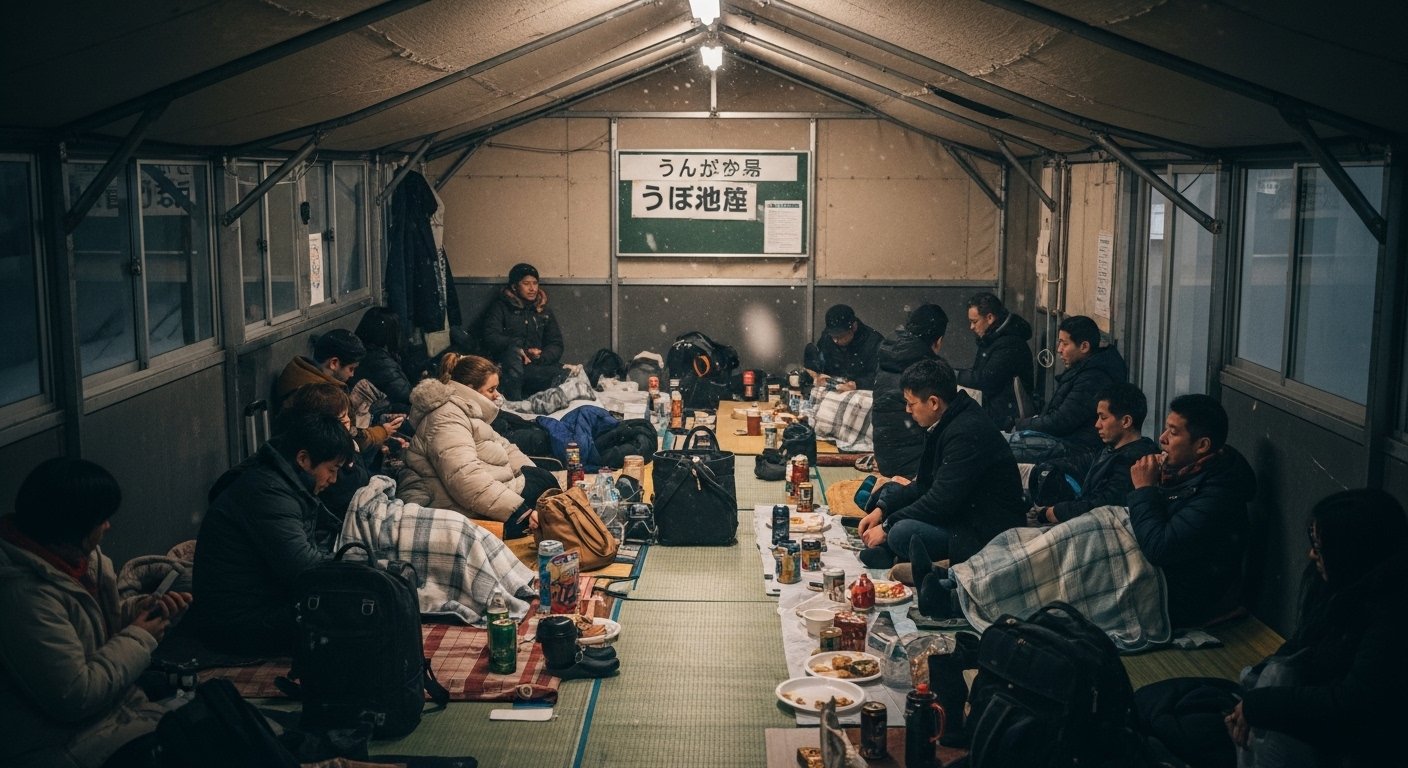
* The Stranded Shuffle: Japan’s infrastructure is legendary, but even it buckles under the weight of heavy snow. I’ve been stuck on a Shinkansen for five hours due to an unexpected blizzard, the train barely creeping along, before it finally cancelled the rest of its route. Suddenly, hundreds of us were dumped at a station in the middle of nowhere, with no hotel bookings, dwindling phone battery, and the next train not until “sometime tomorrow, maybe.” The announcements were, of course, entirely in rapid-fire Japanese. This isn’t rare; northern and western Japan frequently see heavy snow piling up, leading to significant damage and disruptions. Japan’s government has even revised disaster countermeasures repeatedly because of this recurring issue.
* Underestimation is Your Enemy: Many people, especially those from warmer climates, simply don’t grasp the severity of Japanese winter conditions. They wear regular sneakers on icy pavements (a common mistake!), or try to cycle through slush, dramatically increasing their risk of a nasty fall. I saw a guy try to bicycle across a frozen bridge in Kyoto once. Predictably, he wiped out spectacularly, luckily only bruising his ego.
These aren’t just “what ifs.” They are real_experiences for travelers and residents alike, causing confusion, struggle, and potentially serious harm. We need practical, actionable steps, not just good intentions.
Navigating the Snowy Minefield: My Step-by-Step Survival Guide
Okay, let’s get down to brass tacks. This isn’t about fear-mongering; it’s about preparation. Think of me as your seasoned guide, pointing out the hidden crevasses before you stumble into them.
-
Know Your Winter Battlefield (Before You Go):
- The Fixer Says: Don’t just book a ski resort and assume it’s all fluffy powder. Understand that places like Hokkaido, Tohoku, and the Japan Alps (Nagano, Niigata, Toyama) get serious snow – we’re talking meters, not inches. This means whiteouts, road closures, and power outages are a real possibility. I always check regional weather advisories and local news (NHK World-Japan is great for English updates) for my specific destination well in advance. My first trip to Hokkaido, I was shocked by how quickly a sunny day could turn into a blizzard that locked down the entire city for hours. Learn about the characteristics and risks of heavy snowfall in Japan’s specific regions.
-
When the Warnings Flash, Don’t Be a Hero:
- The Fixer Says: If a heavy snow warning or advisory is issued, or if the snow is already piling up,
avoid unnecessary outings. This isn’t just polite advice; it’s a critical safety regulation. That gorgeous photo op isn’t worth a broken ankle or getting trapped. I once ignored a warning to grab some snacks from a convenience store just a few blocks away. The wind picked up, visibility dropped to zero, and that short walk felt like an Arctic expedition. I made it back, but soaking wet and genuinely worried.
- The Fixer Says: If a heavy snow warning or advisory is issued, or if the snow is already piling up,
-
Driving? Chains or Bust, Period.
- The Fixer Says: I know, I know, rental cars offer freedom. But if
driving is absolutely unavoidable in heavy snow, your vehicle must be equipped withwinter tires or snow chains. Trying to drive on all-season tires is not just foolish, it’s illegal in designated snow road areas and incredibly dangerous. I’ve seen tourists stuck in ditches, causing massive delays and putting themselves and rescuers at risk, all because they thought they could “manage.” Don’t be that person. When the snow really comes down, even 4WD can’t save you on regular tires.
- The Fixer Says: I know, I know, rental cars offer freedom. But if
-
Footwear First, Fashion Second (or just combine them!):
- The Fixer Says: This is non-negotiable.
Always wear slip-resistant shoes or snow bootswhen walking in snowy or icy areas. Those sleek fashion boots or worn-out sneakers? They’re an invitation to disaster. I swear, the first time I saw someone slip and fall on a patch of black ice outside Kyoto Station, I could practically hear their coccyx cracking. Invest in decent winter footwear with good tread. It will save you immense pain and embarrassment.
- The Fixer Says: This is non-negotiable.
-
Walk Like a Penguin (No, Seriously):
- The Fixer Says: Forget your usual brisk pace.
Practice cautious walking by moving slowly and constantly checking the ground for slippery patches. Short, shuffling steps, like a penguin, distribute your weight better and reduce the chance of slipping. Use handrails whenever available. Walk on snow rather than clear, icy patches where possible. I learned this the hard way, rushing for a bus, losing my footing on a freshly cleared but now dangerously slick sidewalk, and landing in a heap. My dignity was more bruised than my ego.
- The Fixer Says: Forget your usual brisk pace.
-
Bikes and Ice Don’t Mix (Unless You Like Pain):
- The Fixer Says: Japan is a cycling nation. But
refrain from riding bicycles or minimize their use in snowy or icy conditions. It’s incredibly easy to lose control, especially when turning or braking. I’ve seen countless cyclists tumble on ice, often with painful results. Unless you’re a professional cyclocross racer with studded tires, just walk or take public transport.
- The Fixer Says: Japan is a cycling nation. But
-
The Emergency Kit is Your Best Friend:
- The Fixer Says: Japan has a culture of disaster preparedness, and you should too.
Prepare an emergency kit with essential supplies, including food, especially if you’re traveling through areas prone to heavy snow. This isn’t just for natural disasters; it’s forpotential transport cancellations or being stranded. A small bag with some high-energy snacks (calorymate is great!), water, a power bank for your phone, a small first-aid kit, and essential medications can be a lifesaver. NHK World-Japan even reported on “Repacking emergency kits for winter” just last December, showing this is an ongoing national concern.
- The Fixer Says: Japan has a culture of disaster preparedness, and you should too.
-
Know Your Local Emergency Handbook:
- The Fixer Says: In case of
injury, being stranded, or any emergency, don’t just wing it.Consult comprehensive local emergency guidesfor specific procedures and communication strategies. Many prefectures, especially those with heavy snow, provide multilingual resources. Keep digital copies on your phone and know the crucial emergency numbers:- 119 for Fire/Ambulance (Kaji/Kyūkyūsha)
- 110 for Police (Keisatsu)
- 0120-461000 for Japan Helpline (a general emergency hotline with multilingual support, if 110/119 proves difficult)
- The Fixer Says: In case of
🎯 Insider Tip: Always have an offline map (like Google Maps with downloaded areas) and screenshots of local emergency contacts, your accommodation details, and travel insurance information on your phone. If your battery dies or you lose signal during a snowstorm, you’ll be thankful. Also, always have at least ¥10,000 in cash, because during major disruptions, card machines and ATMs might be out of service.
Essential Gear & Emergency Fund: What You’ll Actually Spend
Okay, let’s talk about the practical side. Being prepared means having the right stuff and a little financial buffer. Here’s a rough breakdown based on what I’ve spent or recommend:
Price Breakdown: Winter Emergency Essentials
| Item | Purpose | Estimated Cost (JPY) |
|---|---|---|
| Quality Slip-Resistant Boots | Crucial for walking on icy surfaces. Brands like Columbia, Sorel, or even decent local options. | ¥8,000 – ¥25,000 |
| Waterproof Winter Jacket | Protection against snow, wind, and cold. Essential for warmth. | ¥10,000 – ¥30,000 |
| Warm Hat, Gloves, Scarf | Prevent frostbite and regulate body temperature. | ¥3,000 – ¥8,000 |
| Compact Emergency Food Supply (2-3 days) | High-calorie snacks, protein bars, water bottles. For being stranded. | ¥1,500 – ¥4,000 |
| Portable Power Bank | Keep your phone charged for communication and maps. | ¥2,000 – ¥5,000 |
| Basic First-Aid Kit | Band-aids, antiseptic wipes, pain relievers, any personal meds. | ¥1,000 – ¥3,000 |
| Travel Insurance (Comprehensive) | Absolute MUST. Covers medical emergencies, trip cancellations/disruptions. Prices vary *wildly*. | ¥5,000 – ¥20,000 (per person, per trip, estimate) |
| Emergency Cash Buffer | For unexpected hotel stays, emergency taxis, or food when cards fail. | ¥20,000 – ¥50,000 (minimum recommended) |
This isn’t about blowing your budget on stuff you’ll never use. It’s about smart, targeted investment for your safety and peace of mind. A good pair of boots is a game-changer. That ¥15,000 for decent boots sounds like a lot until you’re avoiding a ¥100,000 hospital bill for a sprained ankle.
Common Pitfalls & How to Dodge Them
Here are the classic mistakes I’ve seen over the years, and how you can avoid them:
- “It’s just a little snow!” (The Underestimation Trap): Coming from California, I initially thought Japanese snow couldn’t be that different. Wrong. It can come down harder, faster, and cause more widespread disruption than you might imagine.
Japan frequently experiences significant damage and disruptions from heavy snow.Don’t take it lightly. - The “I’ll be fine in these shoes” Syndrome: Please, I’m begging you.
Common mistakes include not wearing appropriate slip-resistant footwear. I’ve seen more slips and falls from people wearing fashion sneakers than anything else. Your safety is worth more than looking perfectly styled for your Instagram reel. - Cycling in Slush (The Darwin Award Nominee): As mentioned,
attempting risky activities like cycling on icy surfacesdramatically increases your likelihood of falls. Just don’t. That ¥200 bus fare is a better investment than a trip to the emergency room. - “Let’s just drive there, it’ll be faster!” (The Unprepared Driver): If you’re driving, and you don’t have
winter tires or chains,making unnecessary outings or driving unpreparedduring heavy snow is one of the most dangerous things you can do. Road closures can leave you stranded, and accidents on snowy roads are often severe. - Ignoring Local Warnings: Japanese public information systems are incredibly robust, but often in Japanese. If you hear sirens, see emergency broadcast alerts on TVs, or people around you start reacting to something on their phones, check NHK World-Japan or ask someone immediately (using the phrases below!). Don’t assume it’s just a drill.
🇯🇵 Point & Speak: Your Emergency Phrasebook
When seconds count, and language is a barrier, being able to point to a phrase is invaluable. These are practical, essential phrases for emergencies.
🇯🇵 Point & Speak
Show this to staff:
English: I am injured. Please call an ambulance.
怪我をしました。救急車を呼んでください。
(Kega o shimashita. Kyūkyūsha o yonde kudasai.)
English: I fell down. It hurts here. (Point to where it hurts)
転びました。ここが痛いです。
(Korobimashita. Koko ga itai desu.)
English: I am stranded by the snow. What should I do?
雪で立ち往生しました。どうすればいいですか?
(Yuki de tachiōjō shimashita. Dō sureba ii desu ka?)
English: Is this train/bus cancelled?
この電車/バスは運休ですか?
(Kono densha/basu wa unkyū desu ka?)
English: Do you speak English?
英語を話せますか?
(Eigo o hanasemasu ka?)
When the Snow Hits the Fan: Real-Life Scenarios & What I Did (or Should’ve Done)
Let’s face it, sometimes despite your best efforts, things go sideways. Here are a couple of situations I’ve navigated and my key takeaways.
Scenario 1: The Unexpected Overnight in Niigata
I was on a Shinkansen heading to Kanazawa from Tokyo when an unforecasted blizzard hit Niigata Prefecture. The train slowed, stopped, and after about an hour of increasingly urgent Japanese announcements, an English announcement finally came: “This train will terminate here. All passengers must disembark.” We were in a small, provincial city in Niigata. Hotels were booked solid almost instantly by the local commuters trying to get home. My phone battery was at 15%.
- What I Did (Right): I immediately went to the information counter and showed them my accommodation booking. I used my (then basic) Japanese, combined with Google Translate, to explain I had no idea where to go. Crucially, I had
emergency cashon me (¥30,000). I found a small, local ryokan a bit further from the station that wasn’t on the international booking sites and paid cash. - What I Should’ve Done (Better): I didn’t have an
emergency kitwith food or a fully chargedpower bank. I was lucky the ryokan had food. Had it been worse, I would’ve been hungry and powerless. Also, I should have learned “Where can I stay tonight?” in Japanese. My lack ofessential Japanese phrasesdefinitely added to the stress.
Scenario 2: My Friend’s Ski Accident in Hokkaido
My friend, an experienced skier, took a bad fall on an advanced slope in Niseko. He managed to signal the ski patrol, who were excellent and quickly got him down. But once at the base clinic, the language barrier became a huge problem.
- What I Did (Right): I had his
travel insurance detailsready on my phone, including the emergency contact number. This was crucial for coordinating with the clinic and eventually for his evacuation back home. I also used my phone to translate medical terms, pointing to symptoms and asking simple questions. - What I Should’ve Done (Better): We hadn’t discussed
local emergency proceduresspecific to the ski resort. While ski patrols are generally good, knowing exactly who to call after the initial contact (e.g., direct hospital vs. their recommended clinic) would have saved a lot of uncertainty. Having some basicJapanese phrases for injurybeyond just “It hurts” would have been immensely helpful, especially when describing the type of pain.
The overarching lesson from both? Being stranded by snow-related transport cancellations or getting injured during winter sports abroad and not knowing local emergency procedures are not abstract fears. They are real, recurring possibilities in Japan. And the less friction you have – with language, with knowing what to do, with having the right tools – the faster and safer you’ll navigate them.
FAQ: Your Burning Questions Answered
What should I do immediately if I slip and fall on an icy street in Japan?
First, assess your injury. If you can move, try to get to a safer, less slippery spot. If you suspect a serious injury (e.g., cannot put weight on a limb, severe pain, head injury), stay still and call 119 for an ambulance or ask a bystander for help (show them the “I am injured. Please call an ambulance” phrase). Try to stay warm. If it’s a minor fall, slowly get up, check for damage, and try to find a café or shop to warm up and recover. Always check for slippery areas and wear slip-resistant shoes to prevent future falls.
How can I overcome language barriers when dealing with Japanese emergency services or medical staff?
Keep essential phrases written down (like in the “Point & Speak” section) or easily accessible on your phone’s translation app. Many emergency services (especially 119) now have limited English support, but it’s not guaranteed. Japan Helpline (0120-461000) offers multilingual support and can assist with translation or connecting you to the right services. Having your passport, travel insurance details, and accommodation address ready can also help staff, as they can use this information even with limited language. Don’t be afraid to use gestures and point to specific body parts if you’re injured.
What’s the best way to handle transport cancellations and avoid being stranded by heavy snow in Japan?
Preparation is key. Always check weather forecasts and transport updates (train lines, airports, bus companies) before and during your travel. Use apps like Japan Transit Planner (Jorudan or Navitime) and check official company websites; some offer English versions. If heavy snow warnings are issued, consider altering your plans immediately. Always have an emergency kit with food, water, and a power bank. Have a backup plan for accommodation and sufficient emergency cash. When stranded, don’t wander off. Seek help at station staff counters or designated emergency shelters. Be patient, as disruptions can take hours or even a full day to resolve.
So there you have it. Japan is incredible, especially in winter. But like any adventure, it comes with its own set of rules. Don’t let a moment of confusion or a slip on the ice derail your trip. Arm yourself with this knowledge, prepare a little, and you’ll be ready for whatever the beautiful, snowy landscape throws your way. Stay safe, stay smart, and enjoy every powder-filled minute!
Your Japan Local Fixer,
[Your Name, The Expat]