*Images used in this article are for illustration only. They may not be directly related to the content.
Late-Night Lifesavers: Your Konbini Guide to Warm, Cheap Winter Dinners in Japan (After 9 PM, New Year’s Included!)
There I was, shivering, rain plastering my hair to my face, standing outside a ramen shop in Shibuya at 9:30 PM. The neon signs flickered, reflecting in puddles. My stomach was growling a desperate plea for something warm, something anything. I’d seen this ramen shop buzzing with salarymen just hours earlier, but now, a stern-looking sign on the sliding glass door simply said “閉店” (Heiten – Closed).
My phone battery was dying, the Google Maps translation wasn’t cooperating, and every other restaurant I’d scouted seemed to be either shuttered for the night or had prices that made my wallet weep. This wasn’t some remote village; this was central Tokyo! I’d been in Japan for two years at this point, thought I had it all figured out, but the cold, the late hour, and the simple reality of Japanese business hours had kicked me in the teeth. I felt like a rookie tourist all over again.
Sound familiar? That moment of dread when you’re hungry, tired, and every door seems closed? Or worse, you finally find a place, get through the language barrier, only to realize the bill is going to blow your day’s budget? Trust me, I’ve been there more times than I care to admit. But after a decade living here, navigating countless late-night emergencies and frosty winter nights, I’ve got your back. Forget the fancy restaurants and the stressed-out search; your real lifeline in Japan, especially after 9 PM and during the brutally challenging New Year’s period (December 26th to January 3rd), is right around the corner. It’s the humble, always-open, surprisingly gourmet Japanese convenience store – the konbini.
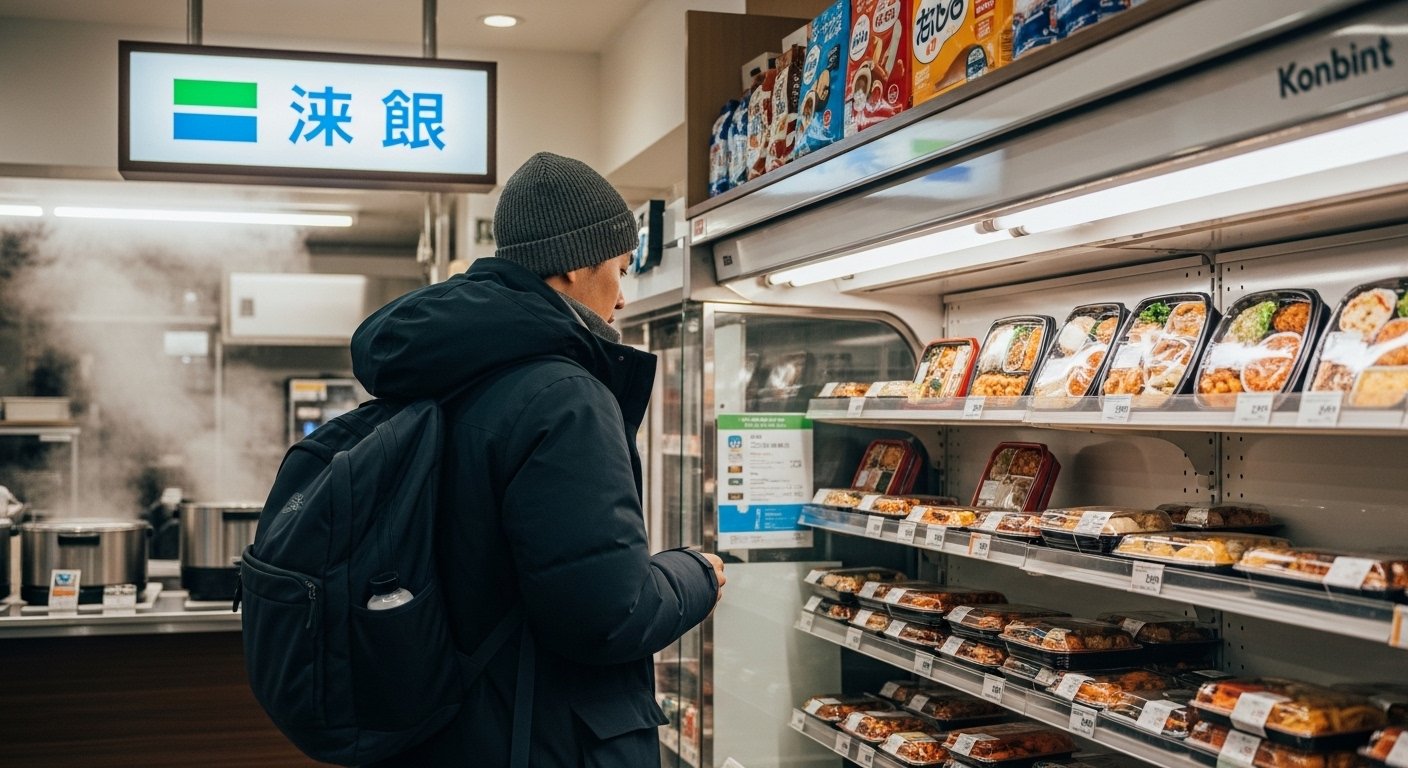
Table of Contents
- The Real Struggle: Why Finding Late-Night Dinner in Japan is Hard
- Your 24/7 Lifeline: The Humble Konbini
- Konbini Winter Dinner MVPs: My Go-To List for Warm, Cheap & Easy Meals
- How to Navigate the Konbini Like a Local (Step-by-Step)
- What Will This Cost Me? (A Budget-Friendly Price Breakdown)
- Common Pitfalls & How to Avoid Them
- 🎯 Insider Tip
- FAQ
The Real Struggle: Why Finding Late-Night Dinner in Japan is Hard
You’d think a country as obsessed with food and convenience as Japan would have endless late-night options, right? And to some extent, it does – if you know where to look, and if it’s not a holiday. But for a traveler, especially one battling jet lag, language barriers, and the biting cold of a Japanese winter, it can be a genuine nightmare.
First, the restaurant hours. Outside of tourist hotspots in Shibuya or Shinjuku, many local eateries, especially the smaller, more authentic ones, often close their doors between 9 PM and 10 PM. I’ve made the mistake too many times of assuming a place would be open, only to find the “closed” sign already out, even with people still inside finishing their meals. And forget finding anything open on a Sunday evening, or even worse, during the extended New Year’s holiday from around December 26th to January 3rd. During this time, entire towns can feel like ghost cities as people return to their hometowns or visit shrines. I remember one New Year’s Eve in Kyoto, wandering for an hour, utterly defeated, before stumbling into a Lawson that felt like a beacon of hope.
Then there’s the price. A sit-down dinner, especially if you’re hitting up a decent izakaya or specialty restaurant, can easily set you back ¥2,000-¥3,000 per person, before drinks. Do that every night, and your budget will evaporate faster than steam off a bowl of oden. For those of us trying to travel cheaply, this simply isn’t sustainable.
And finally, the language barrier. Ordering food in a new country can be stressful enough. Trying to decipher a menu that’s entirely in Japanese when you’re cold, tired, and just want something warm in your belly? It’s a recipe for frustration. I still blush thinking about the time I tried to order “chicken” and accidentally asked for “dog” (犬 – inu) at a yakitori joint. The chef just stared at me. Mortifying. The desire for “warm, quick, and easy meals in cold weather” isn’t just a preference; it’s a survival instinct when you’re battling the elements and cultural nuances.
This is where the konbini steps in, not just as a convenience, but as a genuine lifesaver.
Your 24/7 Lifeline: The Humble Konbini
Forget everything you think you know about convenience stores. Japanese konbini – primarily 7-Eleven, Lawson, and Family Mart – are a universe unto themselves. They are clean, well-stocked, and operate 24/7, becoming your absolute ’24/7 Lifeline’ in a pinch. They’re not just for snacks and drinks; they are mini-supermarkets, hot food counters, ATMs, ticket machines, and often, your only source of warm, affordable food after 9 PM. During those challenging New Year’s periods, when everything else is closed, the konbini stand tall, glowing like an oasis in the dark.
For a traveler, especially one facing the specific pain points we’ve talked about – closed restaurants, high prices, language barriers, and the cold – the konbini is your golden ticket. You can grab a full, satisfying, and warm dinner for less than ¥1,000, often significantly less. And the best part? No need to navigate complex menus or attempt questionable Japanese pronunciations. Most items are clearly packaged, and many have pictures, making your choice effortless.
Konbini Winter Dinner MVPs: My Go-To List for Warm, Cheap & Easy Meals
Over the years, I’ve developed a serious appreciation for certain konbini staples, especially when the temperature drops and my energy wanes. These aren’t just “good for convenience store food”; many are genuinely delicious.
1. Oden: The Ultimate Winter Comfort
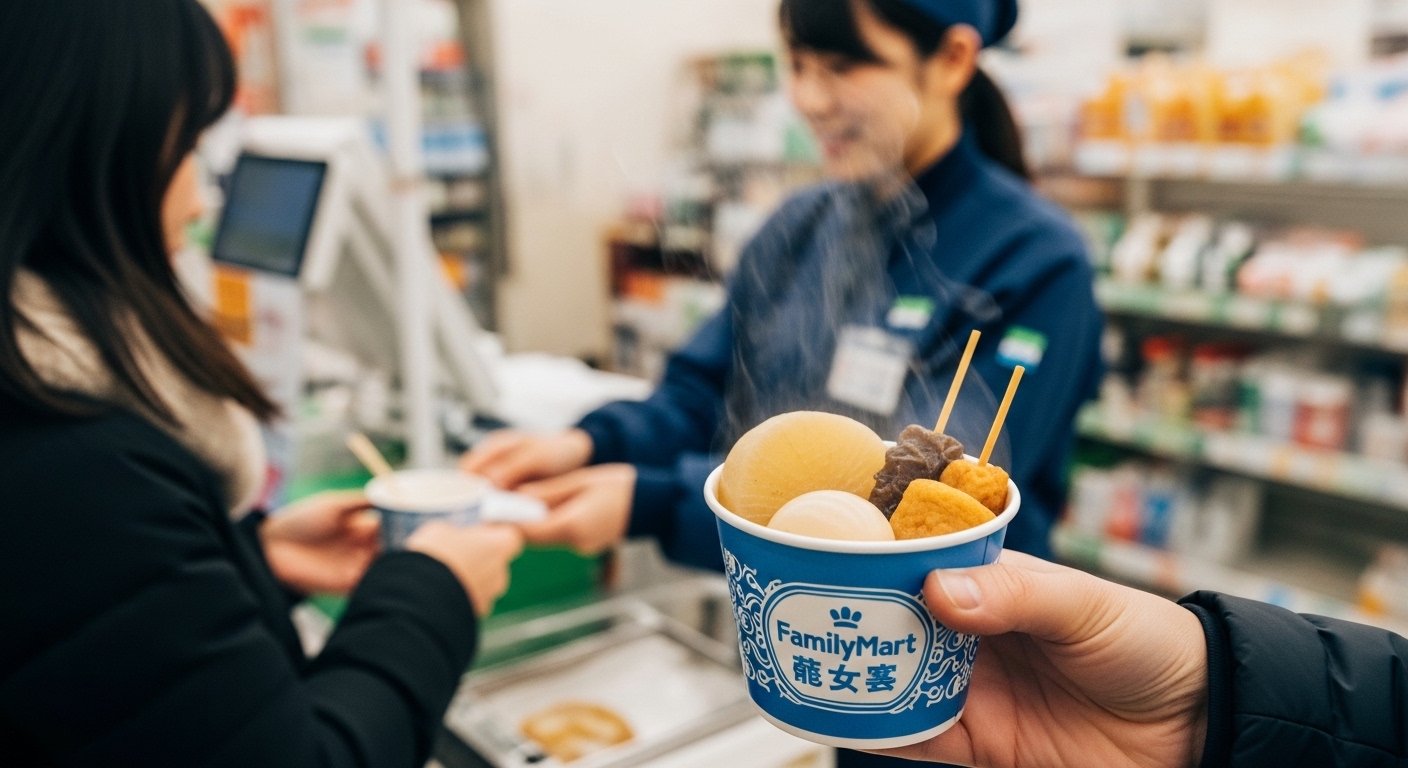
If there’s one item that screams “winter konbini dinner,” it’s Oden. You’ll spot the oden pot near the counter, a glorious steam-filled vat of simmering broth with various ingredients. It’s truly one of the most ‘warm, affordable, and authentic dinner options’ you can get.
What is it? It’s a type of Japanese hot pot, with different ingredients slowly stewed in a light, soy-dashi broth. The smell alone is enough to thaw your frozen toes. My first experience with oden was a bit intimidating – so many things bubbling! But a helpful cashier at Family Mart just pointed and smiled, and I started picking based on what looked good.
- My Must-Tries:
- Daikon (大根): A thick slice of white radish that has soaked up all the delicious broth. It’s incredibly tender and surprisingly flavorful.
- Tamago (卵): A hard-boiled egg, also infused with the broth. Simple, but satisfying.
- Chikuwa (ちくわ): A tube-shaped fish cake. Chewy and delicious.
- Atsuage (厚揚げ): Thick fried tofu. It’s spongy and soaks up the broth like a dream.
- Kombu (昆布): A strip of kelp, adds an earthy umami.
- How to Buy: You just point to what you want, and the staff will fish it out for you and put it into a cup with some broth. Sometimes they’ll ask if you want mustard (karashi). Say “Hai!” (Yes!) if you like a little kick.
- Why it’s a lifesaver: It’s piping hot, genuinely comforting, packed with savory flavors, and incredibly cheap. You can customize your meal by choosing just a few items or making it a full dinner.
2. Onigiri (Rice Triangles): The Quick & Portable Power-Up
Ah, the humble rice triangles, or onigiri. As one Reddit user wisely put it, ‘I recommend the rice triangles at Family Mart if you need something small, cheap, and quick.’ They’re everywhere, and they are brilliant.
These palm-sized rice balls, usually triangular or sometimes cylindrical, are wrapped in nori (seaweed) and come with various fillings. They are typically found in the refrigerated section, but trust me, they’re perfectly delicious even cold, or you can ask to have them warmed (more on that later).
- My Go-To Fillings:
- Shake (鮭): Salmon, usually grilled and flaked. A classic for a reason.
- Ume (梅): Pickled plum. Salty, sour, and incredibly refreshing. Great if you’re feeling a bit sluggish.
- Tuna Mayo (ツナマヨ): Exactly what it sounds like – tuna salad with mayonnaise. It’s surprisingly good and very popular.
- Konbu (昆布): Simmered kelp. Another umami bomb.
- Peeling the wrapper: There’s a specific, satisfying way to peel the plastic wrapper off an onigiri without tearing the nori. Look for the numbered tabs (1, 2, 3). Pull tab 1 down, then tabs 2 and 3 sideways. It’s a small victory every time.
- Why it’s a lifesaver: Super cheap (¥100-¥250 each), quick to grab, and a few of these make a surprisingly filling meal. Perfect for an on-the-go dinner or a late-night snack.
3. Hot Snacks from the Counter: Karaage, Nikuman & More
Beyond oden, the hot food counter near the register is a treasure trove. These are the perfect ‘warm, quick, and easy’ bites that truly hit the spot in winter.
- Karaage (唐揚げ): Japanese fried chicken. Crisp, juicy, and perfectly seasoned. It’s often sold by the piece or in small cups. My personal weakness after a long day of walking.
- Nikuman (肉まん): Steamed pork buns. Soft, fluffy white buns filled with savory seasoned pork. It’s like a warm cloud of deliciousness in your hands. Other variations include pizza-man (ピザまん) or curry-man (カレーまん).
- Frankfurt (フランクフルト): A hot dog on a stick, often grilled and served with a side of ketchup and mustard. Simple, satisfying.
Just point to what you want, and the staff will bag it up for you. No fuss, no language barrier headaches.
4. Microwaveable Bento Boxes & Instant Noodles
Don’t dismiss the pre-packaged bentos. Many of them are surprisingly good and, crucially, can be warmed up. Look for things like a small gyudon (beef bowl), chicken and egg donburi (oyakodon), or various pasta dishes. The staff will ask if you want it warmed (温めますか? – atatamemasu ka?).
And then there are the instant noodles. Japan takes instant noodles to an art form. From cup ramen to udon and soba, you can find incredibly elaborate and delicious options. Just add hot water (usually available in the store), wait 3-5 minutes, and you have a steaming hot meal. Some konbini even have small seating areas where you can eat your noodles right there. These are the ultimate ‘budget Japan dinner’ solution.
How to Navigate the Konbini Like a Local (Step-by-Step)
So you’ve stumbled into a konbini, cold and hungry. Here’s how to get your late-night winter dinner sorted without a hitch:
- Scan for the “Hot Zone”: As soon as you walk in, look for the brightly lit hot food counter near the cashier. This is where you’ll find oden, karaage, nikuman, and other freshly prepared warm snacks.
- Explore the Refrigerated Section: For onigiri, sandwiches, salads, and bento boxes, head to the refrigerated aisles. Take your time, look at the pictures, and pick what looks appealing. Don’t forget the drink section – Family Mart has a ‘pretty good selection of beer’, and all konbini have a wide variety of teas, juices, and coffees.
- To Warm or Not to Warm?: If you pick a bento box or a chilled pasta, when you get to the counter, the cashier will almost always ask, “Atatamemasu ka?” (温めますか? – Would you like me to warm it up?). A simple “Hai, onegaishimasu” (はい、お願いします – Yes, please) is all you need. They’ll pop it in their microwave, and it’ll be ready in a minute or two. For instant noodles, ask “Oyu arimasu ka?” (お湯ありますか? – Do you have hot water?). They’ll usually direct you to a dispenser.
- Payment is Easy: Konbini are incredibly tech-savvy. You can pay with cash (of course), credit cards, or most major IC cards like Suica or Pasmo. Just tap your card/phone, and you’re good to go. “Learning a few key phrases so you can at least make an effort if there’s a language barrier” is always appreciated, but payment is usually straightforward.
- Utensils & Bags: The cashier will automatically give you chopsticks (お箸 – ohashi) or a fork (フォーク – fōku) if you buy something that requires them. They’ll also put your items in a plastic bag. If you need extra, just ask “Fukuro, onegaishimasu” (袋、お願いします – Bag, please).
- Eat & Enjoy: Some konbini have small eat-in areas with counters and stools, sometimes with hot water dispensers for instant noodles. If not, most hotels are perfectly fine with you bringing konbini food back to your room.
What Will This Cost Me? (A Budget-Friendly Price Breakdown)
Here’s a rough idea of what you can expect to pay for a satisfying konbini dinner. As you can see, it’s significantly cheaper than most restaurants, making it a true ‘budget Japan dinner’ option.
| Item | Approx. Price Range (JPY) | Notes |
|---|---|---|
| Onigiri (rice ball) | ¥120 – ¥250 per piece | Fillings vary; a few make a meal. |
| Oden (per item) | ¥80 – ¥250 per piece | Daikon, egg, fish cakes, etc. 3-4 items make a good snack/light meal. |
| Karaage (fried chicken) | ¥200 – ¥350 per cup/small portion | Perfect hot snack. |
| Nikuman (steamed pork bun) | ¥150 – ¥200 per bun | Warm and filling. |
| Bento Box (microwaveable) | ¥400 – ¥700 | Full meal, often rice with meat/fish and sides. Get it warmed! |
| Cup Noodles / Instant Ramen | ¥150 – ¥350 | Wide variety, hot water available. |
| Hot Coffee / Tea (from dispenser) | ¥100 – ¥200 | To warm you up from the inside. |
| Can of Beer | ¥200 – ¥400 | For relaxing after a long day. |
You can easily get a satisfying and warm dinner for under ¥700-¥1,000, which is an absolute steal for late-night dining in Japan!
Common Pitfalls & How to Avoid Them
Even with the konbini as your reliable ally, there are a few things to keep in mind:
- The New Year’s Freeze: I cannot stress this enough – December 26th to January 3rd is prime time for things to be closed. While konbini stay open, their fresh food deliveries might be slightly less frequent, or popular items might sell out faster. If you’re traveling during this period, plan to rely heavily on konbini for dinner. Maybe even stock up on a few extra onigiri if you see your favorite.
- Mistaking Cold for Hot: Not all bentos are meant to be eaten cold. If you pick up a chilled bento, always ask “Atatamemasu ka?” (温めますか?) at the register. The staff are usually very proactive about this, but it doesn’t hurt to be ready with the phrase.
- Oden Overwhelm: The oden counter can be a bit daunting. Don’t feel pressured to know exactly what everything is. Point to what looks good, or just ask for the classics like “Daikon to tamago, onegaishimasu” (大根と卵、お願いします – Daikon and egg, please). You can always add more later if you’re still hungry.
- Not Grabbing Utensils: While staff usually remember, sometimes in a rush, they might forget. If you’re getting a bento, make sure you get chopsticks or a fork! A quick “Hashi, onegaishimasu?” (箸、お願いします? – Chopsticks, please?) or “Fōku, onegaishimasu?” (フォーク、お願いします? – Fork, please?) will sort you out.
🇯🇵 Point & Speak
Show these to staff or say them:
English: Can you warm this up?
温めますか?
(Atatamemasu ka?)
English: Yes, please.
はい、お願いします。
(Hai, onegaishimasu.)
English: Chopsticks, please.
お箸、お願いします。
(Ohashi, onegaishimasu.)
English: Hot water, please. / Do you have hot water?
お湯、お願いします。 / お湯ありますか?
(Oyu, onegaishimasu. / Oyu arimasu ka?)
🎯 Insider Tip: While all konbini are great, I’ve consistently found Family Mart to have the best and widest selection for both oden and those hot counter snacks like Karaage. Their Nikuman often beats the others too. If you’re trying to pick a chain, start with a Family Mart and you’re rarely disappointed with the ‘warm food Japan winter’ options. Also, don’t overlook the ready-to-eat microwaveable pasta and gratin dishes – they are surprisingly decent and often have English labels!
When you’re facing a cold Japanese night, a rumbling stomach, and closed restaurant doors, remember my cold, ramen-less face in Shibuya. Don’t make my mistake. Head straight to the nearest konbini. It’s not just a place to grab a quick snack; it’s a warm, bright beacon of hope, offering delicious, cheap, and easy meals that will truly save your night. Your journey through Japan is an adventure, and sometimes, the greatest treasures are found in the most unexpected places – like the glowing aisles of a 24/7 convenience store. Happy eating, and stay warm out there!
FAQ
Which konbini chain is best for late-night winter food in Japan?
While 7-Eleven, Lawson, and Family Mart all offer great options, many expats (including myself!) find Family Mart to have a particularly strong selection for warm winter foods. Their oden, karaage, and steamed buns (nikuman) are consistently high quality. However, any of the major chains will be a lifesaver when you need a warm, cheap, and easy meal after 9 PM.
How do I get my konbini food warmed up, especially with a language barrier?
It’s incredibly easy! When you take your cold bento box or other microwaveable item to the cashier, they will almost always ask you “Atatamemasu ka?” (温めますか?), meaning “Would you like me to warm it up?”. A simple “Hai, onegaishimasu” (はい、お願いします), which means “Yes, please,” is all you need to say. They’ll pop it in the microwave for you. If they don’t ask, you can point to your food and say “Atatamemasu ka?” yourself.
Is it difficult to find dinner options in Japan during the New Year’s holiday (Dec 26 – Jan 3)?
Yes, it can be extremely challenging! Many traditional restaurants, shops, and even some tourist attractions close for an extended period during the New Year’s holiday (typically December 26th to January 3rd). This is a time when many Japanese people travel to their hometowns or visit shrines. During this specific window, konbini (7-Eleven, Lawson, Family Mart) become an absolute essential for finding warm, budget-friendly, and convenient dinner options, as they remain open 24/7. Plan ahead and rely on your friendly neighborhood konbini.