*Images used in this article are for illustration only. They may not be directly related to the content.
Navigating Late-Night Winter Dinners in Japan: Warming, Wallet-Friendly, & Veggie-Savvy After 9 PM
You’ve spent the day exploring ancient temples, navigating vibrant city streets, or maybe even carving fresh powder on a snowy mountain. Now it’s past 9 PM, your stomach is rumbling, and a chill has set in. Finding a satisfying late-night dinner in Japan, especially in winter, can feel like a challenge. Many traditional eateries have already closed their doors, and identifying budget-friendly or vegetarian/vegan options past standard dining hours can be difficult.
This guide is your local fixer for those late-night cravings. We’ll show you exactly where to find delicious, warming meals that won’t break the bank, and practical strategies for navigating dietary needs, even after 9 PM. We’ll ensure your Japan late night dinner experience is comfortable and rewarding, not stressful.
Table of Contents
- The Late-Night Dining Dilemma in Japan
- Your Late-Night Lifelines: Where to Eat After 9 PM
- Warming Up: Essential Winter Dishes for Cold Nights
- Veggie-Savvy: Navigating Vegetarian & Vegan Options Late-Night
- Dining Solo: Comfort and Convenience in Japan
- Practical Tools & Tactics: Finding What You Need
- 🇯🇵 Point & Speak: Essential Phrases for Late-Night Dining
- 💰 Price Breakdown: Wallet-Friendly Options
- 📋 Quick Reference Card
- 🎯 Local Pro-Tips
- Common Mistakes to Avoid
- Frequently Asked Questions
- Conclusion
- Disclaimer
The Late-Night Dining Dilemma in Japan
It’s a common scenario for international visitors: you’re accustomed to cities that buzz with open restaurants well past midnight. Japan, however, operates differently. While major hubs like Tokyo and Osaka have their 24/7 spots, outside of these centers or in less tourist-heavy neighborhoods, dining hours can be shorter.
Many traditional Japanese restaurants, including smaller izakayas, sushi bars, or specialized eateries, often close between 9 PM and 10 PM. Crucially, their “last order” can be 30 to 60 minutes before closing. This means that rolling up to a restaurant at 9:30 PM hoping for a full meal might result in disappointment or being turned away.
Adding to this is the challenge of finding genuinely vegetarian or vegan options. Dashi, a fish-based broth, is a fundamental ingredient in much of Japanese cuisine, often present even in dishes that appear to be vegetable-based. This requires careful navigation, especially when language barriers are present and kitchens are winding down for the night.
During the colder winter months, the desire for a warm, comforting meal becomes even more pronounced. This guide cuts through the confusion, providing clear, actionable advice to secure your late-night, warming, and wallet-friendly dinner.
Your Late-Night Lifelines: Where to Eat After 9 PM
When most establishments dim their lights, specific types of eateries remain brightly lit, serving satisfying meals. These are your most reliable options for a late night dinner in Japan.
Major Chain Restaurants: Consistent and Convenient
These chains are found across Japan, from bustling city centers to smaller towns, and many offer extended hours or even 24/7 service.
- Gyudon Chains (Beef Bowl): Yoshinoya, Sukiya, and Matsuya are ubiquitous. They offer fast service, affordable prices, and diverse menus beyond just gyudon (beef bowl), including curry, set meals, and sometimes seasonal specials. They are very solo-dining friendly with counter seating.
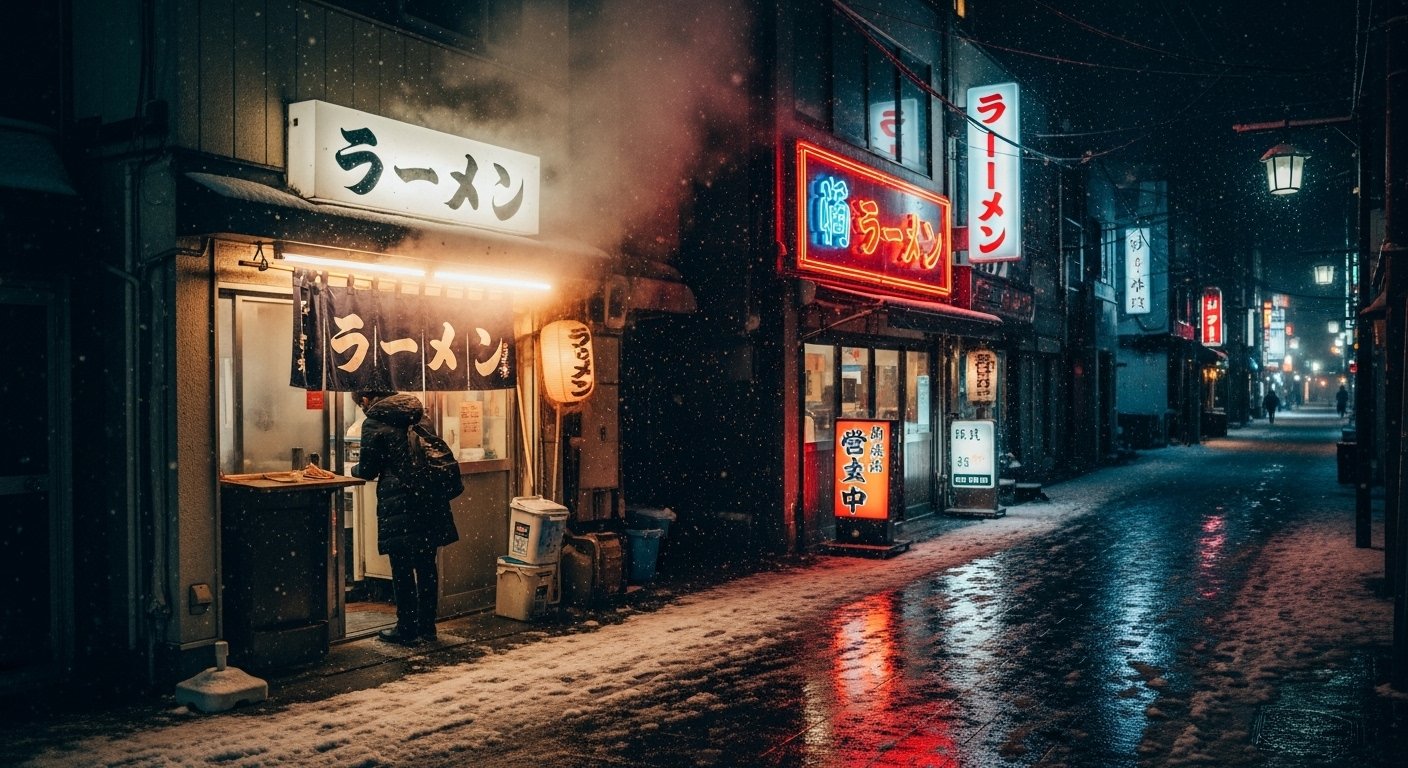
- Ramen Shops: While not all ramen shops are open late, many popular chains and independent shops in entertainment districts operate until midnight or later. Look for their distinctive flags and steam from the kitchen. Ramen is the quintessential warming winter food.
- Udon/Soba Chains: Hanamaru Udon and Fuji Soba offer quick, customizable, and budget-friendly noodle bowls. You often choose your noodles, broth, and add-ons (tempura, fried tofu). Many are open quite late.
- Family Restaurants (Family Resu): Denny’s, Gusto, and Jonathan’s are Japanese-style diners offering a wide range of Japanese and Western dishes. They often have individual booths, Wi-Fi, and some locations are open 24/7. They are very comfortable for solo diners.

Convenience Stores (Conbini): Your 24/7 Pantry
7-Eleven, Lawson, and FamilyMart are more than just stores; they are culinary hubs. They are open 24 hours, everywhere, and are a lifesaver for late-night food, especially in winter.
- Hot Food Counter: Check the hot food section for freshly prepared items like Nikuman (steamed pork buns, often veggie versions available), Karaage (fried chicken), and especially during winter, Oden (a hot pot of various ingredients simmering in dashi).
- Bento Boxes & Onigiri: Freshly made daily, these offer complete meals or quick snacks. Look for a wide variety, including rice bowls, noodle salads, and sandwiches.
- Instant Noodles & Soups: An entire aisle is dedicated to instant ramen, udon, and other soups. Many conbinis have hot water dispensers, allowing you to prepare a hot meal on the spot.
- Fresh Bakery & Sweets: Don’t overlook the fresh bread, pastries, and extensive dessert selection.

Warming Up: Essential Winter Dishes for Cold Nights
When the temperature drops, certain Japanese dishes become highly sought after for their comforting warmth and satisfying flavors. These are readily available late-night.
- Ramen: The ultimate cold-weather comfort. A steaming bowl of rich broth, springy noodles, and various toppings is a perfect late-night warmer. Options range from shio (salt-based) to miso (fermented soybean) to tonkotsu (pork bone broth).
- Udon & Soba: Thicker udon noodles or buckwheat soba noodles served in a hot, savory broth. You can add tempura, aburaage (fried tofu), or mountain vegetables (sansai).
- Oden: A winter staple found seasonally at convenience stores and some izakayas. It’s a hot pot stew with various ingredients like daikon (radish), boiled eggs, fish cakes, and konnyaku, all simmering in a light dashi broth. It’s comforting and often budget-friendly.
- Japanese Curry (Kare Raisu): While less common at dedicated late-night spots than ramen, some gyudon chains and family restaurants offer Japanese curry with rice. It’s a milder, thicker, and slightly sweeter curry than its Indian counterparts, offering a hearty warmth.

Veggie-Savvy: Navigating Vegetarian & Vegan Options Late-Night
Finding strictly vegetarian or vegan food in Japan, especially late at night, requires diligence. The pervasive use of dashi (fish stock) is the primary hurdle. However, it’s not impossible.
Your Best Bet: Convenience Stores
Conbinis offer the most reliable self-selected vegetarian/vegan options, as you can read ingredient labels (with translation apps).
- Onigiri: Look for rice balls with fillings like ume (pickled plum) or kombu (seaweed). Avoid salmon, tuna-mayo, or other fish fillings.
- Edamame: Boiled and salted soybeans, almost always vegan.
- Salads & Fruits: Pre-packaged salads and fresh fruit are safe bets. Check dressings carefully for non-vegan ingredients.
- Sweet Potato & Roasted Chestnuts: Seasonal items, often available hot, are naturally vegan.
- Instant Noodles/Soups: Some brands are labeled vegan or vegetarian, but careful label checking (with a translation app) is essential. Look for products specifically stating “no animal ingredients” (動物性原料不使用 – dōbutsusei genryō fushiyō).
- Soy Milk & Tofu Products: Available in various forms.
- Oden: While the broth is dashi-based, some ingredients like daikon, konnyaku, and certain mochi may be suitable if you can remove them and perhaps rinse. However, cross-contamination is a concern. It’s not truly vegan.
At Restaurants: Communicate Clearly
For restaurants, be prepared for potential limitations. Even if a dish contains vegetables, it often uses dashi. Use the provided “Point & Speak” phrases to clarify. Focus on:
(Internal link suggestion: Link to a dedicated “Vegetarian/Vegan Dining in Japan” article)
- Plain Rice & Pickles: A simple, safe option at most eateries.
- Tofu Dishes: Agedashi tofu (fried tofu in broth) is common, but the broth is usually dashi. Plain hiyayakko (cold tofu) with soy sauce and ginger is often safer.
- Vegetable Tempura: The batter is usually egg-free, but it’s often fried in shared oil with seafood or meat tempura. Ask if dedicated oil is used, though this is rare.
- Some Udon/Soba: If you can convey “dashi nuki” (no dashi), some shops might prepare a plain soy sauce broth, but this is an advanced request and not always possible.

Dining Solo: Comfort and Convenience in Japan
Worried about dining alone late at night? Don’t be. Solo dining, or ohitori-sama (お一人様), is widely accepted and common in Japan. You won’t feel out of place, especially at the types of establishments recommended for late-night meals.
- Ramen and Gyudon Shops: These are designed for quick, efficient solo meals. Counter seating is standard, allowing you to enjoy your food without fuss.
- Family Restaurants: Many offer comfortable booths and quiet corners, making them excellent choices for a relaxed solo dinner.
- Izakaya (Pubs): While typically for groups, many izakayas have counter seating where solo diners can enjoy a drink and a few small dishes.
🎯 Local Pro-Tip: Don’t hesitate to enter a restaurant alone. When greeted with “Irasshaimase!” (Welcome!), simply hold up one finger and say “Hitori desu” (一人です – One person). You’ll be promptly seated.

Practical Tools & Tactics: Finding What You Need
Leverage technology and observation to simplify your late-night food hunt.
Restaurant Search Apps
These apps are indispensable for checking real-time opening hours and filtering options, though English support can be limited outside of major cities. Ensure you have a reliable data connection.
- Google Maps: Often the most user-friendly for international visitors. Search for “restaurants near me” and filter by “open now” or specific cuisine types. Always double-check hours.
- Tabelog / Gurunavi / Hot Pepper Gourmet: These are Japan’s primary restaurant review and reservation sites. They offer detailed information, including opening hours, menus, and sometimes English versions. Learning to navigate these is a useful skill.
(External link: Tabelog English, Gurunavi English, Hot Pepper Gourmet English) - HappyCow: Essential for vegetarian and vegan diners. It specifically lists plant-based eateries and restaurants with clear options. Cross-reference hours with Google Maps.
(External link: HappyCow Japan)
Visual Cues: Read the Street Signs
Even without Japanese language proficiency, you can identify late-night friendly establishments.
- Bright Lights & Specific Colors: Gyudon chains often have bright red, orange, or yellow signs. Convenience stores have distinctive logos (7-Eleven, Lawson, FamilyMart).
- “24時間営業” (24-jikan eigyō): This means 24-hour business. Look for it on signs.
- “深夜営業” (shin’ya eigyō): Indicates late-night business.
- Food Samples (Shokuhin Sample): Many restaurants, especially those catering to a wider audience, display realistic plastic food models in their windows. These are incredibly helpful for ordering without knowing Japanese, and prices are usually listed.
- Ticket Vending Machines (Shokkenki): Common at ramen, udon, and some gyudon shops. You buy a ticket for your meal from the machine, then hand it to staff. These machines often have pictures, making ordering easier.

🇯🇵 Point & Speak: Essential Phrases for Late-Night Dining
Show this section to staff if you’re stuck. They can read the Japanese. Politeness and a bow go a long way.
🇯🇵 Point & Speak
Show this section to staff if you’re stuck. They can read the Japanese.
English: What time are you open until?
何時まで開いていますか?
(Nanji made aite imasu ka?)
English: One person.
一人です。
(Hitori desu.)
English: Is there anything without meat or fish?
肉や魚が入っていないものはありますか?
(Niku ya sakana ga haitte inai mono wa arimasu ka?)
(This combines two specific requests into one, acknowledging dashi is usually implied for soups.)
English: No dashi/fish broth, please. (Very difficult request for standard dishes)
出汁抜きでお願いします。
(Dashi nuki de onegaishimasu.)
English: Takeaway, please.
持ち帰りでお願いします。
(Mochikaeri de onegaishimasu.)
💰 Price Breakdown: Wallet-Friendly Options
Eating well late at night doesn’t have to be expensive. Here’s a realistic look at costs for a single person.
💰 Price Breakdown (Approximate)
| Meal Type / Item | Cost (¥) |
| Gyudon (Beef Bowl) at chains | ¥500-1000 |
| Bowl of Ramen | ¥800-1500 |
| Udon/Soba (basic bowl) | ¥400-800 |
| Convenience Store Bento Box | ¥400-800 |
| Convenience Store Onigiri (x2) | ¥200-400 |
| Convenience Store Oden (2-3 items) | ¥300-500 |
| Japanese Curry (Kare Raisu) | ¥600-1200 |
Prices verified as of January 2026. Costs may vary by region and specific menu items.
📋 Quick Reference Card
Screenshot or print this section for easy access on the go.
📋 Quick Reference Card: Late-Night Japan Survival
Screenshot or print this section for easy access:
- ✅ After 9 PM, prioritize: Gyudon Chains (Yoshinoya, Sukiya, Matsuya), Ramen Shops, Family Restaurants (Denny’s, Gusto), Convenience Stores (7-Eleven, Lawson, FamilyMart).
- ✅ Warming Winter Foods: Ramen, Udon/Soba, Oden (conbini seasonal), Japanese Curry.
- ✅ Vegetarian/Vegan Best Bet: Convenience stores for labeled items (onigiri with ume/kombu, edamame, salads, instant noodles with no animal ingredients).
- ✅ Solo Dining: Completely normal and comfortable at recommended chains. Say “Hitori desu” (一人です – One person).
- ✅ Tools: Google Maps for hours, HappyCow for veggie options, visual cues like food samples or “24時間営業” signs.
- ✅ Crucial Phrases: “Nanji made aite imasu ka?” (What time are you open until?), “Niku ya sakana ga haitte inai mono wa arimasu ka?” (Anything without meat or fish?).
🎯 Local Pro-Tips
🎯 Local Pro-Tip: Convenience Store Meals in Winter: For a truly warm, budget-friendly, and surprisingly satisfying meal, head to a conbini. Grab a fresh bento or instant noodles, buy a hot drink (like canned coffee or tea from the hot case), and utilize their hot water dispenser for instant items. Some even have microwaves you can use. You can then take it back to your accommodation or find a quiet spot to eat. Don’t underestimate the quality and variety.
🎯 Local Pro-Tip: Embrace the Vending Machine: At many ramen, udon, and some gyudon shops, you’ll order from a ticket vending machine (食券機 – shokkenki) near the entrance. Don’t be intimidated! Many now have English language options (look for a button like “English” or “EN”). If not, use the food samples in the window as a guide and point to what you want on the machine. This streamlines ordering and is very common.

Common Mistakes to Avoid
- Assuming Open Hours: Don’t assume a restaurant will be open late just because it’s a popular spot. Always check hours beforehand, especially outside major tourist zones.
- Ignoring “Last Order”: Arriving right at closing time is often too late. Last order is typically 30-60 minutes before the stated closing time.
- Underestimating Dashi: Believing a dish is vegetarian because it contains vegetables is a frequent error. Dashi is used in many broths, sauces, and simmering liquids. Always assume dashi unless explicitly stated otherwise or you’re at a dedicated vegan establishment.
- Expecting Extensive English Menus: While tourist-heavy areas have English menus, don’t rely on them everywhere. Visual cues (food samples) and translation apps are your allies.
- Feeling Awkward Dining Solo: This is a cultural misconception for many visitors. Japanese society is very comfortable with solo dining. Embrace the efficiency and privacy.
Frequently Asked Questions
Are there any 24-hour restaurants in Japan?
Yes, many major chain restaurants like some Yoshinoya, Sukiya, Matsuya, and family restaurants like Denny’s or Gusto have 24-hour locations, especially in larger cities. Convenience stores (7-Eleven, Lawson, FamilyMart) are always open 24/7 nationwide and offer hot and cold food options.
Is it rude to ask about vegetarian/vegan options in Japan?
It’s not rude to ask politely. However, be aware that the concepts of “vegetarian” and “vegan” might not be universally understood, especially the strictness regarding dashi (fish broth). Staff may offer a dish without meat, but it could still contain fish products. Using specific Japanese phrases like “niku ya sakana ga haitte inai mono wa arimasu ka?” (Is there anything without meat or fish?) can be more effective.
What are the best apps for finding late-night food in Japan?
Google Maps is generally the easiest for real-time location and opening hours, allowing you to filter for restaurants open now. For more detailed Japanese restaurant information, Tabelog, Gurunavi, and Hot Pepper Gourmet are popular, though their English interfaces can be less comprehensive. HappyCow is invaluable for specifically locating vegetarian and vegan establishments.
Can I find hot food at convenience stores in winter?
Absolutely. Convenience stores are a goldmine for hot food in winter. Look for their hot food counters offering items like Nikuman (steamed buns), Karaage (fried chicken), and seasonally, Oden (a hot pot stew). They also stock a wide range of instant noodles, soups, and hot drinks, with free hot water available for preparation.
Is it okay to eat a convenience store meal back at my hotel?
Yes, eating convenience store meals in your hotel room is common practice and perfectly acceptable. Many hotels provide small fridges and electric kettles, making it convenient to store items or prepare instant hot foods. This is often a comfortable and budget-friendly option for late-night dining.
Conclusion
Navigating late-night winter dinners in Japan after 9 PM, particularly for budget-conscious or vegetarian/vegan travelers, can initially seem daunting. However, with the right knowledge and practical tools, you can easily find warming, satisfying meals without stress. Embrace the widespread availability of chain restaurants and the unparalleled convenience of Japan’s conbinis. Utilize visual cues and a few key Japanese phrases, and remember that solo dining is a comfortable cultural norm.
With this guide, you are equipped to confidently find your next late night dinner Japan offers, ensuring you stay warm, fed, and within budget, even during the coldest winter nights.
Disclaimer
While this guide provides up-to-date and practical advice based on general knowledge and experience in Japan, restaurant opening hours, menu availability, and ingredient information (especially concerning dietary restrictions) can change. Prices are approximate and subject to fluctuation. Always verify specific details with the establishment directly, and use translation apps for ingredient labels if you have strict dietary requirements. The “Dashi nuki” request may not always be feasible or fully understood by staff, particularly in busy, late-night settings.