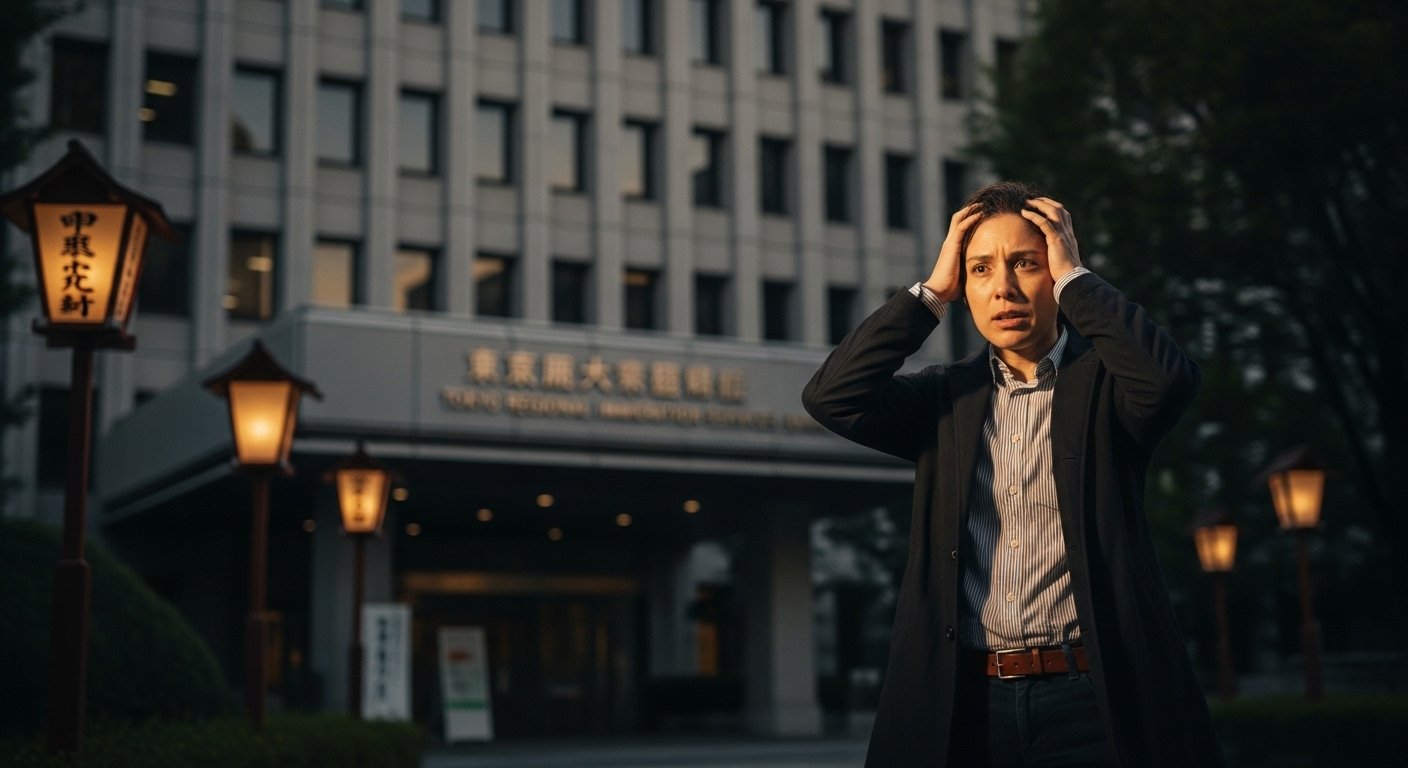
*Images used in this article are for illustration only. They may not be directly related to the content.
Post-New Year Power-Up: Your Expat’s Honest Guide to Banking, Utilities & Connectivity in Japan
The New Year in Japan, right? Everyone’s talking about hatsumode, ozoni, and those incredible fukubukuro lucky bags. But if you’re like me, a long-term expat or a fresh face just arriving, January can also feel like a gauntlet. Because, let’s be honest, those administrative tasks? The ones that hit you right after the festive calm? They’re a beast.
I remember my first January, fresh off the boat, trying to set up my life. I stood in front of a utility payment machine for what felt like an eternity, sweating, clutching a piece of paper covered in kanji I mostly didn’t understand. The machine rejected my foreign credit card (of course), and I felt a wave of absolute defeat wash over me. That feeling, that overwhelming mix of confusion, frustration, and a dash of shame? Yeah, I know it well. You’re not alone.
This isn’t a romanticized travel blog. This is the real talk, the stuff they don’t put in the glossy brochures. This is your “Japan Local Fixer” giving you the lowdown on powering up your essential services – banking, utilities, and connectivity – after the New Year lull. Because navigating Japan’s bureaucracy, especially when you’re still figuring out where the good ramen is, can be a whole adventure in itself.
Table of Contents
The Real Struggle: Why Japan’s Admin Feels Like a Boss Battle
Let’s cut to the chase: setting up your basic life in Japan can feel like you’re playing a video game on the hardest difficulty. Why? A few reasons I’ve bumped my head against countless times:
- The Language Barrier is Real (and Deep): It’s not just about understanding spoken Japanese. It’s about deciphering complex administrative jargon on forms written in dense kanji. I’ve spent hours staring at documents, trying to match characters to my dictionary app, only to realize I was trying to sign up for a car loan instead of an internet plan. The nuanced phrasing, the polite but unyielding replies, the sheer volume of paper – it’s exhausting.
- The “Gaijin Gauntlet” of Banking: Ah, banking. My personal nemesis. You walk into a branch, confident you have your resident card, your “My Number” card, maybe even a hanko (personal stamp). You think you’re ready. Then they hit you with the “you haven’t been here six months” rule, or ask for a utility bill in your name, for an address you haven’t even finished moving into. It’s a chicken-and-egg problem that makes you want to pull your hair out. Japanese banks are under strict regulation by the Financial Services Agency (FSA) for standard services, and they require additional licenses for anything related to securities. This stringent oversight means they err on the side of caution, which, for a foreigner with a non-standard history, translates into a lot of “no.” They’re not being mean, they’re just following very specific rules.
- Utility Providers: A Labyrinth of Choices (and Dead Ends): You’d think electricity is electricity, right? Wrong. Japan has privatized many of its utility markets, meaning a bewildering array of providers. Each one has its own application process, its own website (often only in Japanese), and its own customer service numbers. Trying to figure out which company covers your area, offers the best rates, and has an application process you can actually complete without an advanced degree in Japanese bureaucracy? Good luck. I once spent an entire afternoon trying to cancel a previous tenant’s gas service that was still connected to my apartment – turns out I just needed to say “stop” louder.
- Scattered Information Syndrome: This is the big one. There’s no single, golden website that consolidates all the information you need. You’re piecing it together from random expat forums, outdated blog posts, your landlord’s cryptic instructions, and often, just painful trial and error. It’s like a treasure hunt where the treasure is just having running water.
Your Post-New Year Power-Up: A Step-by-Step Solution
Let’s get tactical. Here’s how I’d tackle the post-New Year admin, broken down into manageable chunks. Remember, patience is your most valuable currency here.
1. Banking: Unlocking Your Yen Flow
Getting a Japanese bank account is often the first hurdle, and it’s a big one. Without it, paying bills, getting paid, and generally existing in Japan is incredibly difficult.
-
Get Your Essential Documents Ready:
- Resident Card (在留カード – Zairyu Card): This is non-negotiable. You need to have registered your address at your local ward office (区役所 – kuyakusho or 市役所 – shiyakusho) first.
- “My Number” Card (マイナンバーカード – My Number Card) or Notification Card: Increasingly required. Get this sorted ASAP.
- Proof of Address: Sometimes your resident card is enough, but they might ask for a utility bill in your name (which is ironic if you’re trying to set up utilities!). A rental contract or official mail from your ward office helps.
- Hanko (印鑑 – Inkan/Hanko): While some banks offer signature-based accounts, a hanko is traditional and can simplify things. Get one made cheaply at Don Quijote or online.
- Japanese Phone Number: Essential for verification and contact. Get a basic SIM card first (more on this below).
- Initial Deposit: Usually ¥1,000 or more.
-
Choose Your Bank Wisely:
- Foreigner-Friendly Banks: Yuucho Bank (Japan Post Bank) is often cited as the easiest for new arrivals, sometimes even before the 6-month mark. Shinsei Bank and Prestia (SMBC Trust Bank) are also known for English support and less strict rules.
- Local Banks vs. Megabanks: Megabanks (MUFG, Sumitomo Mitsui, Mizuho) are ubiquitous but can be stricter, especially if you haven’t lived in Japan for long. Local banks are heavily regulated by the FSA, meaning they require specific licenses and are often restricted in securities-related businesses, typically needing a subsidiary for such activities. This caution trickles down to account opening.
-
The Application Process:
- Go to a branch with all your documents. Ideally, bring a Japanese speaker if your Japanese isn’t robust.
- Fill out many forms. Be prepared for questions about your purpose in Japan, expected income, etc.
- They might scrutinize your residency period. If you’ve been in Japan for less than 6 months, some banks may refuse to open a full account, offering only a basic “non-resident” account or delaying activation of certain features. This isn’t just arbitrary; it’s part of strict anti-money laundering regulations.
- EPIs and the JPY 1 Million Rule: While not directly about opening a bank account, it’s worth noting that if you use electronic payment instruments (EPIs) or digital wallets with balances exceeding JPY 1 million, the issuer has to implement systems to prevent accumulation of non-remittance funds. This is a crucial regulation (Payment Services Act, Article 51) to protect consumers and prevent financial crime. So, don’t be surprised if large balances in certain digital wallets face restrictions. Interestingly, Category III EPIs can sometimes bypass this JPY 1 million cap, offering more flexibility for certain digital services.
-
Receive Your Card/Passbook: Your cash card might be mailed to you later. Some banks still issue a passbook (通帳 – tsuucho) for recording transactions.
🎯 Insider Tip: If possible, open your bank account at a smaller branch in a residential area rather than a busy downtown branch. Staff there often have more time and may be more accommodating or willing to help navigate language barriers. Avoid going right after opening or during lunch rush.
2. Utilities: Keeping the Lights On (and Water Running)
Electricity, gas, and water are typically managed separately. Your landlord might help with initial setup, but you’ll usually need to register them in your name.
-
Gather Information:
- Provider Names: Ask your landlord or previous tenant for the names of the electricity, gas, and water companies for your apartment.
- Meter Readings/Customer Numbers: Have the meter numbers or previous customer numbers ready if available.
- Move-in Date: Crucial for activation.
- Contact Info: Your Japanese phone number and resident card.
-
Electricity (電気 – Denki):
- Providers: Major regional companies (e.g., TEPCO, Kansai Electric) are reliable. However, the market is liberalized, so you can choose from many new, often cheaper, providers. Check sites like Enechange or Kakaku.com for comparisons (in Japanese, so enlist help!).
- Application: Usually online or by phone. Some modern apartments have smart meters; for older ones, someone might come to turn on the power.
-
Gas (ガス – Gasu):
- Providers: Also regional (e.g., Tokyo Gas, Osaka Gas). Unlike electricity, gas options are often more limited.
- Application: Almost always requires a technician visit to open the main valve and perform a safety check. You must be home for this. Schedule it in advance!
- Types: Remember there’s city gas (都市ガス – toshi gasu) and LPG (プロパンガス – propangas). LPG is more expensive but common in rural areas or older buildings. Your building type dictates which you use.
-
Water (水道 – Suidou):
- Provider: Typically handled by the municipal water bureau.
- Application: Often a postcard-sized form left by the previous tenant or landlord, which you fill out and mail. Or you can call them directly. This is usually the easiest of the three.
-
Payment:
- Bank Transfer (口座振替 – kouza furikae): Set up automatic deductions from your Japanese bank account. This is the most common and often cheapest method.
- Convenience Store Payment (コンビニ払い – konbini barai): You’ll receive a bill (請求書 – seikyuusho) that you can pay at any convenience store. This is what I was doing, sweating at the machine, before I got my bank account set up. It’s convenient in a pinch but remember to pay by the due date.
- Credit Card (クレジットカード – kurejitto kaado): Some providers accept Japanese credit cards. Foreign cards are rarely accepted for direct utility payments.
3. Connectivity: Your Lifeline to the World
Staying connected is non-negotiable. This usually means a mobile phone and home internet.
-
Mobile Phone (携帯電話 – Keitai Denwa):
- First Step: Get a basic SIM card first. You need a Japanese number for everything from bank applications to online shopping.
- Options:
- Major Carriers (Docomo, au, Softbank): Great coverage, often bundled with home internet, but expensive and long contracts (2+ years). Requires a Japanese bank account or Japanese credit card for monthly payments.
- MVNOs (Rakuten Mobile, Y!Mobile, UQ Mobile, Line Mobile, IIJmio, etc.): Cheaper, more flexible plans, shorter contracts. Some are more foreigner-friendly than others and might accept foreign credit cards or direct debit from Yuucho Bank. Rakuten Mobile has been a popular choice for expats due to its often more lenient application process.
- Documents: Resident card, passport, Japanese phone number (if porting), sometimes a foreign credit card if it’s an MVNO.
-
Home Internet (インターネット – Intānetto):
- Options:
- Fiber Optic (光回線 – Hikari Kaisen): The gold standard. Fast, reliable, but installation can take weeks (or even months for new buildings). Requires a Japanese bank account for payments. Examples: FLET’S Hikari (NTT), au Hikari, Softbank Hikari.
- Home Wi-Fi Routers (WiMAX, Pocket Wi-Fi): Portable and quick to set up, but generally slower and subject to data caps (even if advertised as unlimited, there are usually soft caps). Good as a temporary solution or for those who move frequently.
- Application: Usually online or by phone. Installation requires a technician visit, similar to gas.
- Contracts: Typically 2-year or 3-year contracts with hefty cancellation fees if you leave early. Read the fine print!
- Documents: Resident card, Japanese bank account/credit card for payment.
- Options:
Estimated Monthly Price Breakdown (for a single person)
This is just a rough guide, costs vary wildly based on usage, provider, and region.
| Service Category | Estimated Monthly Cost (JPY) | Notes |
| Banking | ¥0 – ¥1,000 | Most basic accounts are free. Some premium services or international transfers may incur fees. |
| Electricity | ¥4,000 – ¥8,000 | Varies greatly by season (AC/heating use). Summer/winter will be higher. |
| Gas (City Gas) | ¥3,000 – ¥6,000 | Higher in winter for heating and hot water. LPG can be 1.5-2x more expensive. |
| Water | ¥2,000 – ¥4,000 | Billed bi-monthly, so plan for ¥4,000-¥8,000 every two months. Fairly consistent. |
| Mobile Phone (MVNO) | ¥2,000 – ¥4,000 | For a decent data plan (e.g., 20GB). Major carriers could be ¥6,000+. |
| Home Internet (Fiber) | ¥4,000 – ¥6,000 | Often has initial setup fees (¥10,000-¥20,000) that can sometimes be waived with long contracts. |
| Total Estimated Minimum | ¥15,000 – ¥29,000+ | This doesn’t include initial setup costs, deposits, or cancellation fees. |
Common Pitfalls: Don’t Make My Mistakes!
I’ve stumbled into every single one of these. Learn from my pain.
- The “Six-Month Rule” Loophole (and not knowing about it): Some banks, especially the big ones, might require you to have lived in Japan for six months before opening a full bank account. I didn’t know this, spent hours filling out forms, only to be politely but firmly rejected. It’s frustrating. Yuucho and Shinsei are generally more flexible.
- Assuming English Support: Just because a company is international doesn’t mean their Japanese branch will have English support. Many utility companies and smaller banks have Japanese-only websites and phone lines. Always assume you’ll need a translator or a Japanese friend.
- Ignoring Installation Deadlines: Gas and fiber internet often require a technician to visit your apartment. If you miss this appointment, rescheduling can push your setup back weeks. I once waited three weeks for internet because I misread the appointment time. Three. Weeks.
- Forgetting Your Hanko: While not always mandatory, having a registered hanko (実印 – jitsuin) can unlock services or streamline processes that would otherwise require multiple forms or signatures. It makes you look “more official.”
- Hidden Contract Fees (especially for internet/mobile): Japan loves its contract terms. Read them carefully. Many “free installation” or “discounted” plans come with 2-3 year commitments, and if you cancel early, you’ll be hit with a hefty penalty. I’ve paid my fair share of those.
- The JPY 1 Million EPI Cap Surprise: If you’re planning to use a lot of digital payment apps and expect to hold significant balances (over ¥1 million), be aware that some services might have limits or stricter verification due to the “funds retention regulation.” Don’t assume your foreign digital wallet habits will seamlessly transfer over.
- Mail Delays for Cards: Don’t expect your bank card or utility account numbers to arrive instantly. They are often sent by standard mail, sometimes requiring a signature, and can take a week or more. Patience!
🇯🇵 Point & Speak
When your Japanese fails you, sometimes pointing to a phrase can be your saving grace. Show these to staff when you’re stuck.
🇯🇵 Point & Speak
Show this to staff:
English: I would like to open a bank account. I just moved to Japan.
銀行口座を開設したいのですが。日本に来たばかりです。
(Ginkou kouza wo kaisetsu shitai no desu ga. Nihon ni kita bakari desu.)
English: I want to start electricity/gas/water service. My move-in date is [Date].
電気/ガス/水道の利用を開始したいです。[日付]に入居します。
(Denki/Gasu/Suidou no riyou wo kaishi shitai desu. [Hizuke] ni nyuukyo shimasu.)
English: I do not understand. Do you have someone who can speak English?
わかりません。英語を話せる方はいらっしゃいますか?
(Wakarimasen. Eigo wo hanaseru kata wa irasshaimasu ka?)
English: I want to pay this bill using automatic bank transfer.
この支払いを口座振替にしたいです。
(Kono shiharai wo kouza furikae ni shitai desu.)
FAQ: Your Burning Questions Answered
Why is it so difficult for foreigners to open a bank account in Japan?
It’s a common struggle, and I’ve certainly felt it! The difficulty largely stems from Japan’s strict banking regulations and anti-money laundering laws, overseen by the Financial Services Agency (FSA). Banks are required to obtain licenses and adhere to stringent compliance, particularly regarding new accounts and foreign residents who might have less established financial histories in Japan. The “six-month rule” many banks enforce isn’t arbitrary; it’s a measure to ensure a stable residency, which aligns with their regulatory obligations to prevent financial crime. It’s not personal, it’s just how the system works to maintain financial security and transparency.
Can I use digital payment services (EPIs) instead of a traditional bank account for everything?
While digital payment instruments (EPIs) like PayPay, Line Pay, and Rakuten Pay are incredibly popular and convenient in Japan, they can’t fully replace a traditional bank account for *everything*. For instance, receiving your salary or setting up automatic deductions for rent and utilities often still requires a Japanese bank account. Furthermore, be aware of the “funds retention regulation”: if your balance in an EPI exceeds JPY 1 million, the issuer must have specific systems in place to prevent the accumulation of non-remittance funds. While Category III EPIs can sometimes avoid this transfer cap, it highlights that these services are regulated differently than traditional banks, meaning they might have different limits or rules on large balances. So, while they’re fantastic for daily transactions, a bank account remains essential for core financial tasks.
What’s the easiest way to pay my utility bills if I don’t have a Japanese bank account yet?
Been there, done that! The easiest workaround until you get your bank account sorted is to pay your utility bills at a convenience store (コンビニ – konbini). When you receive your bill in the mail (usually a postcard or a folded paper with tear-off slips), it will have a barcode. Just take that bill to any major convenience store (7-Eleven, FamilyMart, Lawson, etc.), show it to the cashier, and they’ll scan the barcode. You pay in cash, and they’ll give you a receipt. It’s incredibly convenient and widely accepted for almost all utility payments, rent, and even some online purchases. Just make sure to pay before the due date written on the bill!
Final Thoughts: You Got This. Probably.
Look, I’m not going to lie and say it’s easy. It’s Japan. Things are different, and sometimes incredibly frustrating. But it’s also incredibly rewarding once you crack the code. Every time you successfully set up a utility, open an account, or navigate a confusing form, you’re leveling up your Japan skills.
The post-New Year administrative crunch is real, but armed with a bit of foresight, patience, and maybe a Japanese-speaking friend or translation app, you can get through it. And hey, if you mess up, join the club. We’ve all been there, sweating in front of a payment machine, utterly confused. Just dust yourself off, re-strategize, and keep going. That’s the expat life here, and honestly, it’s part of the adventure. Good luck, and may your forms be few and your kanji decipherable!