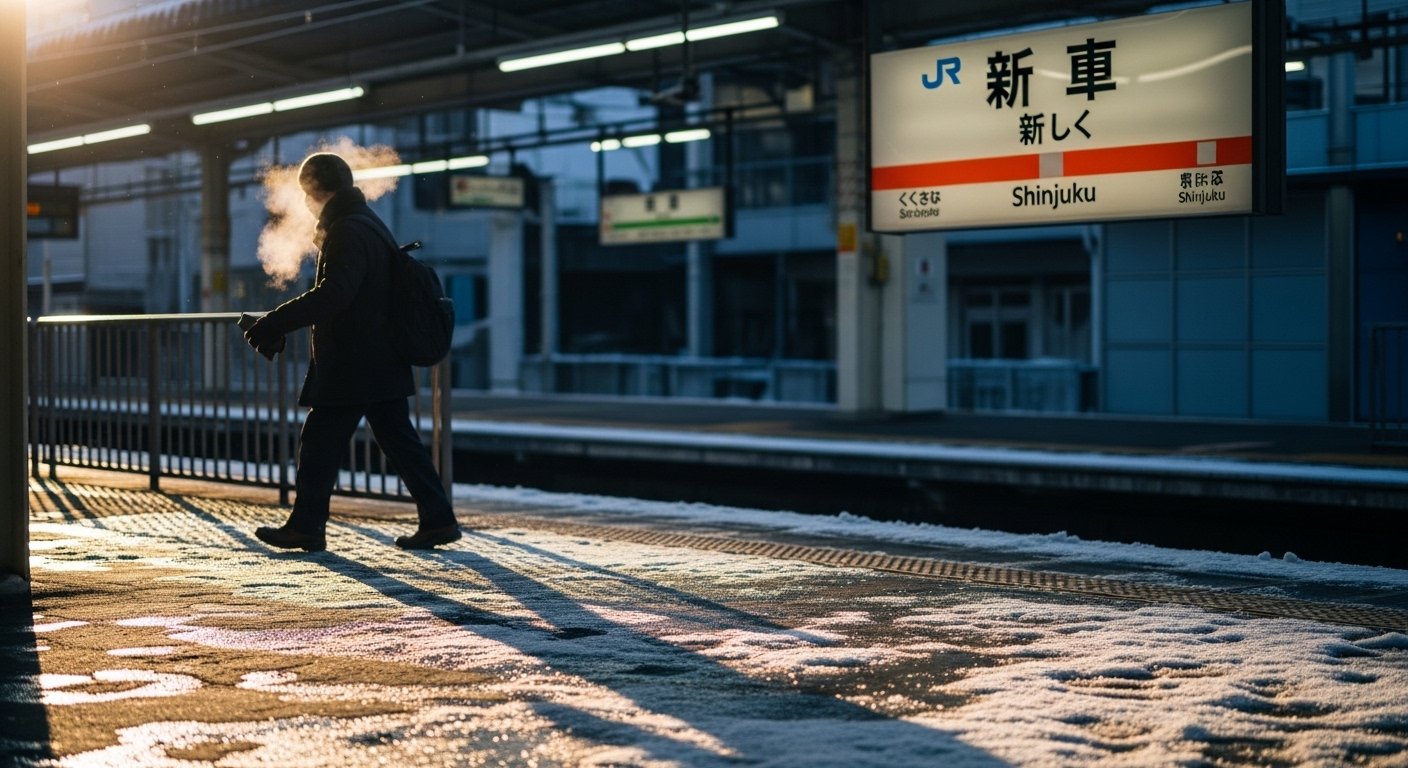
*Images used in this article are for illustration only. They may not be directly related to the content.
Stranded in Remote Japan? Your Essential Winter Disaster Survival Guide Beyond 119
The allure of Japan’s winter is undeniable: pristine snowscapes, cozy ryokans, and unique cultural experiences. Yet, venturing into remote regions during this season brings a critical underlying concern for international visitors: Japan winter disaster survival. The fear of being isolated or stranded during a natural disaster like a heavy snowfall or earthquake, especially in an unfamiliar, remote area, is a valid one. You might worry about how to communicate, find help if traditional emergency services (like 119) are overwhelmed, or lack specific knowledge for winter-related emergencies like power outages or being snowed in.
This guide cuts through the uncertainty. As your Japan Local Fixer, I’m providing practical, actionable strategies. You’ll learn how to navigate potential winter emergencies, understand Japan’s specific warning systems, and equip yourself for self-reliance when traditional help might be distant or delayed. Prepare now to ensure your remote Japan winter adventure is memorable for all the right reasons.
Table of Contents
- The Unique Challenges of Winter Travel in Remote Japan
- Your Winter Disaster Preparedness Kit: Essential Gear for Self-Reliance
- Immediate Actions: What to Do When Disaster Strikes
- Finding Safety & Communicating When Isolated
- Essential Pro-Tips for Remote Winter Survival
- Common Mistakes to Avoid for Foreigners
- Emergency Contacts
- Quick Reference Card
- Frequently Asked Questions
- Conclusion
- Disclaimer
The Unique Challenges of Winter Travel in Remote Japan
Remote Japan offers solitude and beauty, but these very qualities can amplify risks during winter disasters. Understanding the context is the first step in remote Japan emergency preparedness.
Snow, Isolation, and Power: A Triple Threat
Heavy snowfall can quickly cut off roads, making travel impossible and delaying emergency services. Power outages are a real concern, especially in older, less urbanized areas, leading to loss of heating, light, and communication. This combination creates a situation where you might find yourself isolated, possibly without a reliable way to charge your phone or call for help.
Understanding Japan’s Warning System: Beyond the Sirens
Japan has a sophisticated disaster management system, but its warnings are predominantly in Japanese. Familiarizing yourself with the key types and their visual cues is crucial.
- Emergency Warnings (緊急速報 – Kinkyū Sokuhō): These include Earthquake Early Warnings. They provide precious seconds (often 5-10 seconds) before strong tremors (JMA seismic intensity 6-lower or more) hit. Your phone or TV will make a distinctive, loud siren sound, often accompanied by a red screen or banner.
- Evacuation Information (避難情報 – Hinan Jōhō): Issued by the Japan Meteorological Agency (JMA) and local municipalities, these come in five warning levels for various hazards like floods and landslides. While primarily for residents, travelers must understand that these warnings dictate actions, from preparing to evacuate to immediately seeking safety. Look for JMA weather warning maps (often color-coded for snow, heavy rain, etc.) on news channels.
🎯 Local Pro-Tip: Never dismiss any warning message, even if you don’t understand the full Japanese text. An immediate, unusual sound or visual on your phone or TV means an event is imminent. Take cover or prepare to move.
Your Winter Disaster Preparedness Kit: Essential Gear for Self-Reliance
Being prepared means having the right tools. A well-packed emergency kit is your first line of defense for foreigner disaster safety Japan. This is not just a suggestion; it’s a necessity for remote winter travel.
- Communication & Power:
- Portable Charger/Power Bank: Fully charged, with appropriate cables for all your devices. Essential for phone, headlamp, etc.
- Phone with “Safety tips” App: Download this official app from the Japan Tourism Agency. It provides push notifications for warnings in multiple languages, an evacuation flow chart, and useful communication phrases. Safety tips App Link
- Headlamp/Flashlight: With extra batteries. Frees your hands, crucial during power outages.
- Offline Maps & Translation Apps: Download maps of your destination (Google Maps allows this) and translation apps (e.g., Google Translate) for offline use.
- Warmth & Shelter:
- Hand Warmers (Kairo – 貼るカイロ/貼らないカイロ): Numerous, easy to use, and provide hours of warmth. Stick-on (貼る) types are great for clothing.
- Emergency Blanket (Space Blanket): Compact, lightweight, and can reflect body heat to prevent hypothermia.
- Warm Layers: Thermal underwear, fleece, waterproof/windproof outer layers, hat, gloves, warm socks. Ensure you have more than you think you’ll need.
- Food & Water:
- High-Calorie Snacks: Energy bars, nuts, dried fruit, chocolate. Easy to eat, non-perishable.
- At least 1 Liter of Water: More if possible, or purification tablets.
- Health & Navigation:
- Basic First-Aid Kit: Bandages, antiseptic wipes, pain relievers, any personal medications.
- Whistle: For signaling if you’re trapped or lost.
- Cash (Japanese Yen): ATMs and credit card systems may be down during power outages or widespread disasters.
- Copies of Important Documents: Passport, visa, travel insurance, accommodation bookings. Keep digital copies on your phone (and cloud) and a physical copy in a waterproof bag.

Investing in Your Safety: A Preparedness Budget
While an emergency kit requires initial investment, these items are reusable and could be invaluable. Consider these general costs for planning your Japan winter disaster survival kit:
💰 Price Breakdown (Estimated)
| Item | Cost Range (¥) |
| Portable Power Bank (10,000-20,000mAh) | ¥3,000-8,000 |
| Headlamp with extra batteries | ¥1,500-4,000 |
| Hand Warmers (Kairo, 10-pack) | ¥300-600 |
| Emergency Blanket (Space Blanket) | ¥500-1,200 |
| High-calorie snacks (3 days supply) | ¥1,000-2,000 |
Prices verified as of January 2026. Available at drugstores, 100-yen shops, electronics stores, and outdoor retailers.
🎯 Local Pro-Tip: Invest in comprehensive travel insurance that explicitly covers natural disaster disruptions. This can include extended stays, alternative transport, or medical emergencies related to the event. Verify coverage details before you go.
Immediate Actions: What to Do When Disaster Strikes
Knowing what to do in the first few minutes can make a significant difference. Staying calm and acting decisively is key to Japan earthquake survival guide and heavy snow safety.
Earthquake Early Warning: Seconds Count
When you hear the loud siren and see the red screen of an Earthquake Early Warning:
- Drop, Cover, Hold On: Immediately drop to the floor, take cover under a sturdy table or desk, and hold on until the shaking stops. If outdoors, move to an open area away from buildings, power lines, and falling debris.
- Stay Calm: Panic reduces your ability to think clearly. Take deep breaths.
- Assess Your Surroundings: After the shaking stops, carefully check for injuries, structural damage, gas leaks, or fire.
- Monitor Information: Check your phone (Safety tips app, NHK World-Japan app) or local TV for updates. Be prepared for aftershocks.

Heavy Snowfall & Being Snowed In
Winter storms can develop rapidly. If a heavy snow warning (大雪警報 – Ōyuki keihō) is issued:
- Stay Indoors: Do not attempt to travel. Roads may be closed (通行止め – tsūkōdome signs), and conditions can be hazardous.
- Conserve Heat: Keep doors and windows closed. Layer your clothing. If in a hotel/ryokan, inquire about backup heating options. Many remote accommodations use kerosene heaters or wood stoves; ensure proper ventilation to prevent carbon monoxide poisoning.
- Prepare for Power Outages: Have your headlamp, charged power bank, and warm items ready.

Power Outage Protocol
A power outage (停電 – Teiden) in winter is more than an inconvenience; it can be a survival situation due to loss of heat.
- Stay Warm: Put on all your warm layers. Use emergency blankets and hand warmers. Huddle together with travel companions if possible.
- Emergency Lighting: Use your headlamp or flashlight. Avoid candles unless absolutely necessary and ensure they are in safe, non-flammable holders, away from curtains or bedding.
- Conserve Phone Battery: Use your phone sparingly. Turn off unnecessary apps and put it in airplane mode if you don’t need network access. Use it only for essential communication or checking emergency updates.
- Inquire with Accommodation: Hotels/ryokans may have limited backup power for essential services. Ask staff about their emergency procedures and estimated restoration time.
Finding Safety & Communicating When Isolated
When 119 is inaccessible or overwhelmed, proactive measures for communication and locating safe havens are crucial for stranded Japan help for tourists.
Identifying Evacuation Shelters (Hinanjo)
Local municipalities establish designated evacuation shelters (避難所 – hinanjo). While information is often in Japanese, increasing efforts are being made for multilingual support.
- Look for Signs: Evacuation shelter signs typically feature a green background with white pictograms (often a running person, or a house with a person inside) and the text ‘避難所’.
- Consult Hazard Maps: Before traveling, research your specific region’s hazard maps (ハザードマップ – Hazard Map) online through prefectural or municipal websites. These often indicate flood zones, landslide risks, and evacuation routes.
- Ask Locals: If communication is possible, local residents are often the best source of immediate information about the nearest safe place.

Bridging the Language Gap in an Emergency
Language barriers are a significant concern. Prepare simple phrases to convey your situation.
🇯🇵 Point & Speak
Show this section to staff or locals if you’re stuck. They can read the Japanese.
English: I need help.
助けてください。
(Tasukete kudasai.)
English: I don’t understand Japanese.
日本語がわかりません。
(Nihongo ga wakarimasen.)
English: Is this an evacuation shelter?
ここは避難所ですか?
(Koko wa hinanjo desu ka?)
English: Where is the nearest safe place?
一番近い安全な場所はどこですか?
(Ichiban chikai anzen na basho wa doko desu ka?)
English: I am stranded / isolated.
孤立しました。
(Koritsu shimashita.)
Alternative Communication Strategies
When phone lines are down, consider these options:
- NHK WORLD-JAPAN: Provides multilingual news and disaster updates via live stream. If you have any internet access, prioritize checking this. NHK WORLD-JAPAN Live
- Text Messages: Sometimes text messages can get through when voice calls cannot, due to lower bandwidth requirements.
- Local Assistance: Seek out local community centers, schools, or larger businesses. They often become unofficial hubs for information and assistance during an emergency.
Essential Pro-Tips for Remote Winter Survival
Leverage these insights to enhance your Japan winter disaster survival strategy.
🎯 Local Pro-Tip: Cultural Context: Japanese people are generally very helpful during disasters, but initial communication might be a challenge. Be polite and patient. Understand that local emergency services will prioritize Japanese citizens, so self-sufficiency and clear, concise communication are vital for foreigners to receive aid. Your ‘Point & Speak’ phrases will be invaluable here.
🎯 Local Pro-Tip: Seasonal Considerations: Winter travel requires specific gear beyond just warm clothes, including waterproof footwear, layers, and possibly microspikes for icy conditions in remote areas. Awareness of local weather forecasts (especially snow accumulations and strong winds) is paramount, as is understanding the risks of hypothermia and frostbite. Dress in layers, stay dry, and recognize the early signs of cold-related injuries.
🎯 Local Pro-Tip: Logistics & Accessibility: Researching the specific region’s disaster risks and local evacuation procedures *before* travel is critical. Understand that remote areas will have fewer resources, slower response times, and potentially limited connectivity. Consider booking accommodations known for good disaster preparedness or with alternative heating/power sources. Public transportation can shut down completely during heavy snow, leading to immediate isolation, so factor this into your travel plans.
Common Mistakes to Avoid for Foreigners
Avoid these pitfalls to enhance your remote Japan emergency preparedness:
- Over-reliance on 119: While essential, during widespread disasters, phone lines may be jammed, or services overwhelmed. Don’t assume immediate response if you’re in a remote area.
- Ignoring Warnings: Dismissing unfamiliar Japanese warnings can be dangerous. Assume any unusual alarm or broadcast is serious.
- Lack of Cash: Cash is king when electronic systems fail. Always carry a reasonable amount of yen, especially in remote areas.
- Not Informing Someone: Always tell family or friends your itinerary, including remote destinations and expected return times.
- Underestimating the Cold: Hypothermia is a silent killer. Even indoors during a power outage, temperatures can drop dangerously low. Dress warmly in layers even if you’re not going outside.
🚨 Emergency Contacts
While this guide focuses on “beyond 119,” these numbers are your first resort when possible.
🚨 Emergency Contacts
| Police | 110 |
| Ambulance/Fire | 119 |
| Safety tips app | Download Here |
| Cabinet Office (Disaster Mgmt) | Official Website |
| Japan Met. Agency (JMA) | Official Website |
All numbers are free and work from any phone. For non-emergency travel assistance, JNTO also operates a helpline: +81-50-3816-2787 (available 24/7 in English, Chinese, Korean).
📋 Quick Reference Card
Screenshot or print this section for easy access – your condensed guide to Japan winter disaster survival:
📋 Quick Reference Card: Remote Japan Winter Safety
- ✅ Download “Safety tips” App: Essential for warnings & info.
- ✅ Pack Emergency Kit: Power bank, headlamp, kairo, blanket, snacks, water, cash.
- ✅ Offline Tools: Maps, translation apps, saved phrases.
- ✅ Heed ALL Warnings: Act immediately on unusual sounds/visuals.
- ✅ Earthquake: Drop, Cover, Hold On.
- ✅ Heavy Snow: Stay indoors, conserve heat, avoid travel.
- ✅ Power Outage: Layer up, use emergency lights, conserve phone battery.
- ✅ Locate Hinanjo (避難所): Look for official shelter signs.
- ✅ Inform Contacts: Share itinerary with family/friends.
- ✅ Carry Cash: ATMs may not work.
Frequently Asked Questions
What if I don’t speak Japanese during an emergency?
This is a common concern for foreigner disaster safety Japan. Your smartphone is your most powerful tool. Utilize the “Safety tips” app, which offers multilingual information and specific communication phrases. Have offline translation apps ready. Crucially, save or print the “Point & Speak” phrases provided in this guide. While direct communication may be challenging, showing written Japanese can convey your needs clearly to locals or authorities. Remember, patience and clear gestures go a long way.
Is travel insurance necessary for natural disasters in Japan?
Yes, absolutely. Robust travel insurance is not just recommended; it’s essential for remote Japan emergency preparedness. Ensure your policy explicitly covers natural disasters, including provisions for emergency medical treatment, evacuation, extended accommodation due to disruption, and unforeseen changes to travel plans. Read the fine print before purchasing to understand what is covered and what conditions apply.
How do I find current disaster information in English?
The “Safety tips” app (Japan Tourism Agency) is your primary source for push notifications on Earthquake Early Warnings, tsunami alerts, and other weather warnings in multiple languages. Additionally, the NHK WORLD-JAPAN website and app provide live multilingual news broadcasts and updates. The Japan Meteorological Agency (JMA) also offers an English website with weather and earthquake information. Bookmark these official sources before you travel: Safety tips, NHK World-Japan, JMA English.
What if I’m snowed in at my accommodation during a power outage?
This scenario highlights the importance of your Japan winter disaster survival kit. Prioritize warmth: layer clothing, use emergency blankets and hand warmers. Conserve your phone battery and use your headlamp for light. Communicate with your accommodation staff about their emergency protocols and backup power options. Stay in your room unless instructed otherwise, and listen for updates. If you have enough food and water, self-reliance is key until conditions improve or help arrives. Remember the Japanese phrase for “Power outage”: 停電 (Teiden).
Conclusion
Venturing into remote Japan during winter is an experience worth having, and with the right preparation, it can be done safely. This guide has equipped you with practical knowledge for Japan winter disaster survival, moving beyond the expectation of immediate 119 response to a strategy of self-reliance and informed action. By understanding the risks, packing smartly, and knowing how to communicate, you reduce friction and increase your confidence.
Your journey should be about discovery, not distress. Prepare now, travel mindfully, and embrace the unique beauty of Japan’s winter, knowing you’re ready for whatever comes your way. Be safe, and enjoy your adventure.
Disclaimer
The information provided in this guide is for general informational purposes only and does not constitute professional advice. While we strive for accuracy, situations during natural disasters are dynamic and can vary. Always prioritize official warnings from local authorities (Japan Meteorological Agency, Cabinet Office of Japan, local municipalities) and follow their instructions. Personal safety is your responsibility. We are not liable for any actions taken or not taken based on the information provided herein.