*Images used in this article are for illustration only. They may not be directly related to the content.
Unearthing Japan’s Retro Gaming & TCG Treasures: Your No-BS Guide to Real Bargains & Authenticity
I remember it like yesterday. I was standing in front of a glass display case in Akihabara, heart pounding, convinced I’d found the holy grail: a pristine, boxed copy of Mother 2 (EarthBound for you Westerners) for the Super Famicom. The price tag, at ¥15,000, felt like a steal. I clutched it, mentally high-fiving myself. This was it, my big score, something I’d brag about back home.
Turns out, I was a total idiot.
I bought it, brought it home, and a week later, my Japanese friend, a hardcore retro collector himself, took one look and burst out laughing. “Dude,” he said, holding up the box to the light, “this isn’t just a re-seal. The manual’s a reprint, and I’m pretty sure that cart label is slightly off-color. You paid a premium for a good fake, and a used copy that’s worth maybe a third of what you shelled out.”
That, my friends, was my baptism by fire into the wild, wonderful, and utterly treacherous world of hunting retro games and TCGs in Japan. Ten years later, after countless missteps, wasted yen, and more than a few “oops, this won’t ship to you” moments, I’ve learned a thing or two. And now, I’m here to save you from making my exact same boneheaded mistakes. Because trust me, Japan is a treasure trove, but it’s also a master of illusion if you don’t know the ropes.
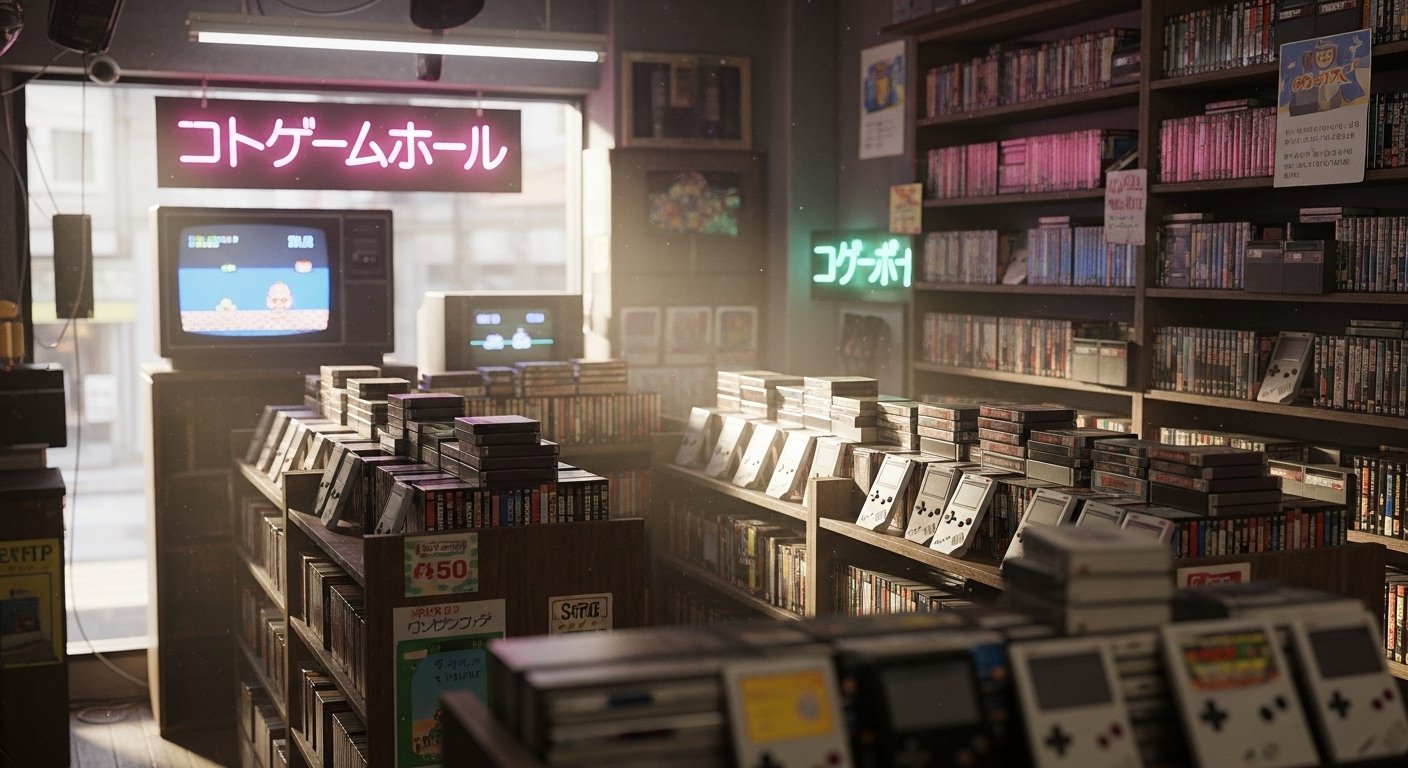
Table of Contents
- The Real Struggle: Why Your Dream Haul Might Be a Nightmare
- Your Step-by-Step Playbook for Japanese Retro Gaming & TCG Success
- 🇯🇵 Point & Speak: Essential Phrases for the Hunt
- The Real Price Breakdown: What You Should ACTUALLY Pay
- Common Pitfalls: Don’t Be That Guy (Like I Was)
- 🎯 Insider Tip: Beyond Akihabara
- FAQ: Your Burning Questions Answered
The Real Struggle: Why Your Dream Haul Might Be a Nightmare
Let’s be honest, you’re not just looking for a souvenir; you’re looking for an investment, a piece of history, or that one missing link in your collection. And Japan, with its meticulous culture and love for pop media, seems like the perfect place. But it’s not as simple as walking into a brightly lit store in Akihabara and picking up a mint condition Pokémon Red. Here’s why:
-
The Language Barrier is a Brick Wall, Not a Picket Fence: You walk into a shop, you see a rare card, maybe a sealed Chrono Trigger SFC cartridge. You want to know if that little tear on the box is a big deal, or if the “play condition” TCG card actually has a huge crease on the back. But trying to ask, “Excuse me, is this card authentic and what exactly is the condition rating for this vintage item, specifically regarding minor edge wear versus surface scratching?” is going to get you a polite, bewildered stare and a lot of sou desu ne…. I’ve tried, using Google Translate live speech, and it’s like playing a game of broken telephone. Descriptions like “中古品” (chūko-hin – used item) or “ジャンク品” (junk-hin – junk item) can hide a multitude of sins, from a slightly bent manual to a completely non-functional console.
-
Fakes Are Getting Scarily Good: Remember my Mother 2 debacle? That wasn’t some shoddy bootleg. It was a well-crafted deception. As retro gaming and TCGs explode in value, so does the sophistication of fakes. Cartridges re-shelled with reproduction labels, “graded” cards that are clever reprints, or even entire console bundles with non-original components. Tourist-heavy areas are often the worst for this, as sellers know you’re less likely to scrutinize or understand the nuances of a Japanese release. Distinguishing a genuine, age-appropriate sticker from a modern, high-quality replica takes an experienced eye – and some knowledge of what you’re looking at.
-
Beyond the Tourist Traps: The Real Gems are Hiding: Everyone goes to Akihabara. Everyone goes to Den-Den Town in Osaka. And for good reason – they’re awesome! But they’re also picked over, often overpriced, and the staff are used to foreigners who don’t haggle or know what they’re truly buying. The real bargains, the truly untouched collections, are often found in smaller, local shops, tucked away in quiet shopping districts, or in second-hand stores in residential areas. But good luck finding them or even knowing what to look for without some local knowledge or a very specific Japanese search query.
-
Pricing is a Black Art: What’s a fair price for a Japanese copy of EarthBound? Or a first-edition holographic Charizard? The online market (Yahoo Auctions, Mercari JP) often dictates the baseline, but store prices can vary wildly. Some stores are infamous for charging “foreigner tax,” while others simply have no idea what they have. There’s no universal price guide you can whip out, and comparing prices on the fly across multiple stores with a language barrier is a nightmare. As The Japan Hobbyist pointed out in their January 21, 2026 article on “The Real Price of Japanese Retro Games: Nintendo Products,” the perceived value online and the actual in-store price can be vastly different, especially for items with variable conditions.
-
Shipping is a Fragile Dance: So you’ve found your holy grail. Now what? Getting that precious, potentially fragile console or that graded card overseas is another hurdle. Customs declarations, proper packaging for delicate electronics, navigating shipping restrictions, and simply understanding the various services (EMS, DHL, surface mail) and their costs can be daunting. I once had a Famicom Disk System shipped that arrived looking like it had played a round of rugby. Lesson learned: proper communication about packaging is key.
Your Step-by-Step Playbook for Japanese Retro Gaming & TCG Success
Alright, enough with the doom and gloom. You’re here to conquer, not to surrender. Here’s how you navigate this labyrinth and emerge victorious.
-
Pre-Trip Homework (Your Secret Weapon):
- Price Check, Price Check, Price Check: Before you even land, get a feel for real market prices. Spend time on Japanese online marketplaces like Yahoo Auctions Japan (using a proxy service like Buyee or ZenMarket) and Mercari JP. Look up completed listings for the specific items you want, noting their condition (loose cart, boxed, sealed, graded TCG). This is crucial for understanding what “The Real Price” of that Nintendo product or TCG actually is, rather than what a tourist trap tries to charge you.
- Know Your Fakes: Seriously, YouTube is your friend. Search for “fake Japanese Famicom cartridge” or “how to spot fake Pokémon cards Japanese.” Learn the subtle tells: the quality of the plastic, font inconsistencies on labels, specific card textures, color saturation. There are dedicated communities for this.
- Build Your Wishlist (with backups): Have a prioritized list of what you want, along with acceptable condition levels and maximum prices. Don’t go in blind.
-
Strategic Store Selection: Go Off the Beaten Path:
- Akihabara/Osaka’s Den-Den Town: Yes, visit them! But treat them as your initial recon and comparison shopping grounds. Good for high-volume, readily available items. Check out places like Super Potato (iconic, but usually premium prices), Trader, and Mandarake Complex. For TCGs, Radio Kaikan has several floors dedicated to cards.
- Book Off & Hard Off (Your Unsung Heroes): These general second-hand chains are goldmines. Hard Off specializes in electronics and junk, often having incredibly cheap consoles (some working, some true junk, but clearly marked). Book Off has games, manga, and often TCGs. They’re everywhere, often in quieter, residential areas. Prices here are usually much fairer, but stock is hit-or-miss. I’ve found pristine Famicom carts for ¥100 here.
- Local Mom-and-Pop Shops: This is where the real deals and hidden gems are. These are tough to find. Your best bet is to search Google Maps for “レトロゲーム” (retro game) or “カードショップ” (card shop) in areas slightly outside the main tourist hubs, like Nakano Broadway in Tokyo, or smaller shopping streets in Sapporo or Fukuoka. Staff here are often more passionate, knowledgeable, and sometimes more willing to talk.
-
The Art of Inspection: Trust No One, Not Even Yourself (Until You Verify):
- For Cartridges/Discs:
- Weight & Feel: Fakes often feel lighter or cheaper.
- Label Quality: Is the printing crisp? Are the colors accurate? Are the edges cleanly cut? Does it feel like a sticker placed on top? Genuine labels are usually flush.
- Screws: For cartridge games, check the type of screws (often security screws). Are they stripped? Does the plastic look like it’s been pried open?
- Circuit Board (If Visible): Look for manufacturer markings (Nintendo, Sega, etc.) on the PCB. Compare with online images of authentic boards.
- Disc Condition: Not just scratches! Check for disc rot, discoloration, or any warping.
- For TCG Cards:
- Texture & Feel: Authentic Japanese cards have a specific tactile feel. Fakes can be too glossy, too matte, or feel flimsy.
- Print Quality: Check for crispness of text, accurate colors, and proper holographics. Fakes often have pixelated images or poorly rendered holographic patterns.
- Edge Test: Carefully check the edges for fraying, tears, or signs of being layered (if it’s a proxy).
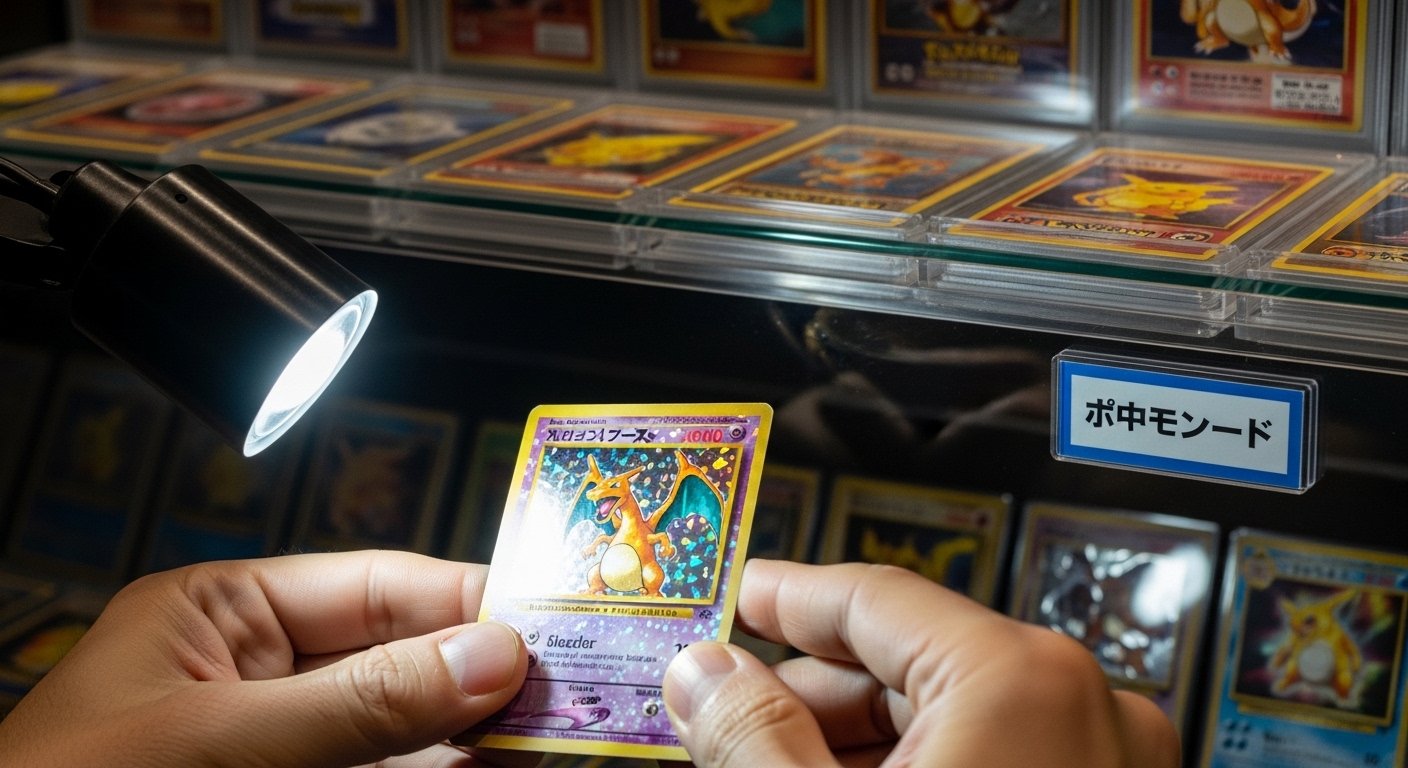
- Light Test: Sometimes, shining a light through a card can reveal inconsistencies in thickness or printing layers.
- Weight/Thickness: Hold a known authentic card next to it if you have one.
- For Boxed/Sealed Items: This is where my Mother 2 mistake hit hard. Look for original shrinkwrap (not modern plastic wrap), correct seals, and the quality of the box art and manual printing. Reprints often have slightly blurred text or incorrect paper stock.
- For Cartridges/Discs:
-
Conquering the Language Barrier (Don’t Be Shy):
- Google Translate (Camera Mode): Your best friend for deciphering condition notes on price tags. Point, snap, translate. It’s not perfect, but it helps immensely.
- Pre-Written Phrases (See ‘Point & Speak’ Below): Have these ready on your phone to show staff. It shows respect and gets your point across quickly.
- Visual Communication: Pointing, gesturing, and making “X” (no) or “O” (yes) with your hands are universal.
-
Shipping Your Spoils Home:
- In-Store Shipping (Rare but Amazing): Some larger stores, particularly the big chains like Mandarake (in certain locations), offer international shipping. This is the easiest option, though possibly pricier. They’ll handle the customs forms and packaging.
- Japan Post (EMS, Airmail, Surface Mail):
- EMS (Express Mail Service): Fastest, most reliable, fully trackable, and insured. Best for expensive, fragile items. Can be costly.
- Airmail (Small Packet/ePacket): Cheaper than EMS, decent speed, limited tracking for small items.
- Surface Mail (Boat): Cheapest, slowest (can take months), minimal tracking, but great for heavy, non-fragile items where you’re not in a rush.
- Courier Services (DHL, FedEx): Generally more expensive than Japan Post but offer excellent tracking and speed. Good for high-value items where you want peace of mind.
- Packing is Paramount: If you’re shipping yourself, invest in good quality bubble wrap, packing peanuts, and sturdy boxes. Electronics need to be well-padded and secured. For TCGs, use rigid top loaders, plastic sleeves, and sandwich them between cardboard. Always declare the true value for insurance, but be aware of potential customs duties in your home country.
🇯🇵 Point & Speak
Show this to staff:
English: Is this authentic?
これ、本物ですか?
(Kore, honmono desu ka?)
English: What is the condition of this item?
商品の状態はどうですか?
(Shōhin no jōtai wa dō desu ka?)
English: Is international shipping possible?
海外発送は可能ですか?
(Kaigai hassō wa kanō desu ka?)
English: Are there any discounts if I buy multiple items?
複数買うと割引はありますか?
(Fukusū kau to waribiki wa arimasu ka?)
English: Can I inspect the item closely?
商品を詳しく見てもいいですか?
(Shōhin o kuwashiku mite mo ii desu ka?)
The Real Price Breakdown: What You Should ACTUALLY Pay
This is where your homework pays off. Forget those inflated prices you see in glossy tourist shops. Based on insights from market trends and my own hunting, here’s a rough guide to what you can expect for popular Nintendo retro items and TCGs, distinguishing between a tourist price (often in Akihabara’s main shops) and a more realistic “local” price (found in Book Off, Hard Off, or smaller, less-trafficked shops). These are for good used condition items, not mint/sealed unless specified.
| Item Category | Specific Item Example | Typical Tourist Area Price (JPY) | Realistic Local Bargain Price (JPY) | Notes |
|---|---|---|---|---|
| **Famicom Cartridge** | *Super Mario Bros.* (loose) | ¥1,500 – ¥3,000 | ¥300 – ¥800 | Very common, should be cheap. Boxed adds ¥1,000+. |
| **Super Famicom Cartridge** | *Donkey Kong Country* (loose) | ¥1,800 – ¥4,000 | ¥500 – ¥1,200 | Japanese versions often cheaper than Western. |
| **Nintendo 64 Cartridge** | *The Legend of Zelda: Ocarina of Time* (loose) | ¥2,500 – ¥5,000 | ¥800 – ¥1,800 | Condition of label is key. |
| **Game Boy Cartridge** | *Pokémon Red* (Japanese, loose) | ¥2,000 – ¥4,500 | ¥600 – ¥1,500 | Battery life (for save files) is a factor. |
| **PlayStation 1 Disc** | *Final Fantasy VII* (Japanese, good condition) | ¥1,000 – ¥3,000 | ¥200 – ¥700 | Mass produced. Discs often found for a song. |
| **Famicom Console** | Famicom (AV modded, tested working) | ¥8,000 – ¥15,000 | ¥4,000 – ¥7,000 | Unmodded/untested can be ¥2,000 at Hard Off. |
| **Pokémon TCG Card** | Holo Charizard (Base Set, JP, good condition) | ¥30,000 – ¥100,000+ | ¥20,000 – ¥80,000 | Heavily depends on grading/condition. Online auctions often best for these. |
| **Yu-Gi-Oh! TCG Card** | Blue-Eyes White Dragon (Early JP Secret Rare) | ¥15,000 – ¥50,000+ | ¥10,000 – ¥40,000 | Similar to Pokémon, condition is EVERYTHING. |
Disclaimer: Prices fluctuate wildly based on rarity, demand, condition, and yen exchange rates. This is a snapshot, but it gives you a sense of the potential difference between a tourist-facing store and a true local bargain. Always refer to current online market data.
Common Pitfalls: Don’t Be That Guy (Like I Was)
- Impulse Buying in Akihabara: My Mother 2 story is a perfect example. The excitement, the atmosphere, the pressure of “I might not find this again!” can make you spend way too much on something that’s either overvalued or not quite right. Take a breath, compare prices, and if it’s super rare, do a quick authenticity check on your phone (if you have internet access).
- Ignoring Condition Notes: “Ah, a little scratch, no big deal.” Famous last words. That “little scratch” on a disc might be a deep gouge. That “minor wear” on a TCG card could be a crease. Always, always scrutinize the condition labels (use Google Translate!) and ask to inspect the item if you’re unsure.
- Assuming Everything is Cheaper in Japan: While many things are cheaper, especially for Japanese market exclusives, highly sought-after, international collector items (like a sealed Pokémon Red in English) might actually be more expensive due to import/scarcity. Do your research!
- Not Budgeting for Shipping: You found a great deal on a heavy console, but then EMS shipping costs more than the console itself! Factor in shipping costs when determining if something is truly a bargain.
- Forgetting Customs Duties: Depending on your home country and the declared value, you might get hit with import taxes. It’s an unpleasant surprise if you don’t account for it.
🎯 Insider Tip: For vintage electronics and consoles, always check Hard Off first. They categorize items meticulously: “動作保証あり” (dōsa hoshō ari – guaranteed working) are pricier but reliable. “ジャンク品” (junk-hin – junk item) means it’s sold as-is, potentially broken, but incredibly cheap. I once grabbed a working Super Famicom with no cables for ¥800 from the junk bin. You need to be willing to test it or assume it’s for parts. For TCGs, smaller card shops near train stations (especially outside major hubs) often have less traffic and better overlooked deals than the huge stores in Akihabara. Look for a sign with ‘カード’ (kādo – card).
FAQ: Your Burning Questions Answered
Q: Is it safe to buy retro games and TCGs from smaller, independent shops in Japan?
A: Generally, yes! Japan has a very low crime rate, and shop owners are usually honest. The main risks aren’t theft or outright scams, but rather unknowingly buying an item in poorer condition than you realize, or simply overpaying. Your biggest challenge will be the language barrier and knowing how to spot condition issues or fakes. Use your judgment, stick to the inspection tips, and if a deal seems too good to be true, it probably is.
Q: How can I tell if a vintage Nintendo product, like a Famicom console, is authentic and not a modern reproduction?
A: Authenticity for consoles often comes down to original casings, labels, and internal components. Look for the Nintendo logo molded into the plastic, serial numbers matching known ranges, and the specific texture of vintage plastic which reproductions often can’t perfectly replicate. Check screw types; modern reproductions might use different, more common screws. If you can, open it up (at home!) to check the PCB for genuine Nintendo markings. For smaller items like cartridges, examine the label quality, font, and the color of the plastic compared to verified authentic items online. Fakes often have slight color shifts or lower print resolution.
Q: What’s the best way to ship fragile TCG cards or a retro console internationally from Japan without damage?
A: For TCG cards, the gold standard is a top loader inside a team bag, sandwiched between rigid cardboard pieces (cut slightly larger than the card), then placed in a bubble mailer or small box. Use painter’s tape to secure the top loader to the cardboard, so it doesn’t shift. For consoles, double-boxing is key. Wrap the console in multiple layers of bubble wrap, ensuring no gaps. Place it in a snug inner box, then put that inner box into a larger outer box with at least 2 inches of packing peanuts or crumpled paper all around. Mark the outer box clearly with “FRAGILE” (こわれもの – kowaremono) in Japanese and English, and use a reliable, trackable service like EMS or DHL with insurance.
Look, this isn’t about telling you to avoid Akihabara. Go, soak it in, take pictures, and enjoy the experience! But when it comes to dropping serious yen on your grail items, be smart. Do your homework, ask the right questions (even if it’s via Google Translate), and don’t be afraid to venture beyond the tourist-heavy districts.
My early failures taught me resilience and a healthy dose of skepticism, lessons I still use today when hunting for that perfect Pokémon card or an elusive Famicom peripheral. Japan is truly a paradise for collectors, but like any good adventure, it requires preparation and a willingness to learn from your mistakes. Good luck, and may your hauls be authentic and your prices fair!


