*Images used in this article are for illustration only. They may not be directly related to the content.
Solo, Warm & After 9 PM: Your Expat’s Guide to Cozy Winter Dinners in Japan
I remember my first winter here, about a decade ago. Fresh off the plane, jet-lagged, and utterly unprepared for how utterly cold Japan gets. The air was like a bite, right through my inadequate jacket. I’d spent the day exploring, and by 9 PM, my stomach was rumbling like a taiko drum. Problem was, I was staying in a quiet neighborhood, and every restaurant I passed either looked aggressively formal, or already had its “CLOSED” sign flipped.
I walked for what felt like miles, my teeth chattering, my internal alarm screaming for something warm. Eventually, I stumbled into a brightly lit chain restaurant, ordered some sad, lukewarm curry, and sat there, feeling like a total outsider. It was a failure of epic proportions, and it definitely wasn’t the cozy, heartwarming experience I’d dreamed of for a Japanese winter night.
Fast forward ten years, and I’ve cracked the code. Japan’s winters are cold, no doubt, but that just makes it the absolute coziest time of the year to experience its food. And finding a delicious, warming, solo-friendly meal after 9 PM? It’s not a stress anymore; it’s an art form I’m about to teach you. Trust me, I’ve navigated the awkward stares, the language barriers, and the freezing streets so you don’t have to.
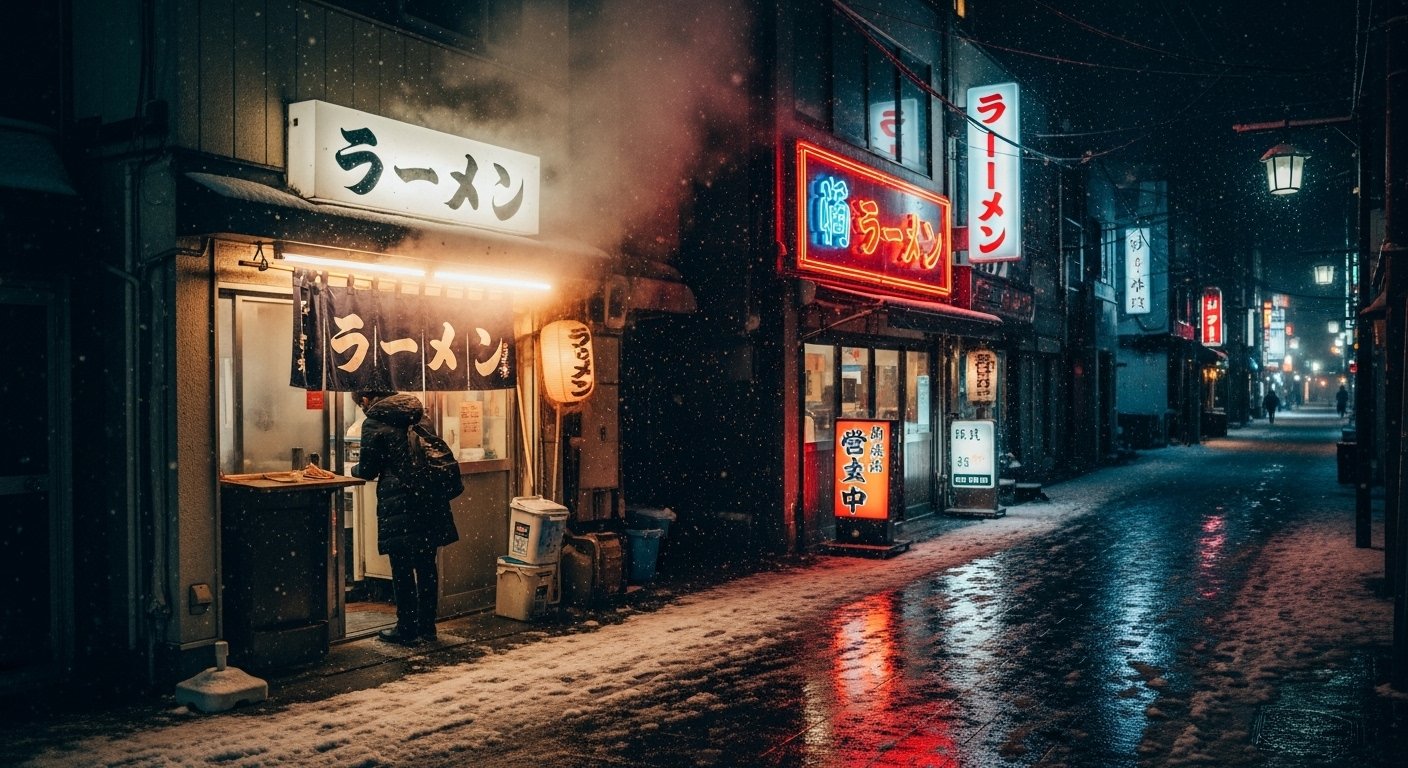
Table of Contents
- The Real Struggle: Why is Late-Night Solo Dining in Japan So Hard?
- Your Late-Night Lifelines: Solo & Cozy Winter Dinners
- Step-by-Step Solution: Navigating the Night (Even When It’s Freezing)
- 🇯🇵 Point & Speak
- Budget Breakdown: What to Expect (and How to Keep it Reasonable)
- Common Pitfalls & How to Avoid Them
- FAQ (Frequently Asked Questions)
The Real Struggle: Why is Late-Night Solo Dining in Japan So Hard?
Let’s be honest, trying to find a quality dinner in Japan after 9 PM, especially as a solo traveler, can feel like you’re playing a high-stakes game of hide-and-seek. It’s not just you. Many people struggle with this, and here’s why:
- The “Closed” Conundrum: Unlike some Western cities that never sleep, many traditional Japanese restaurants wrap things up relatively early. You’ll find yourself walking past tempting spots, only to see the lights dimming or the last customers leaving right as your hunger peaks. That beautiful izakaya you eyed at 7 PM? Might be shuttered by 9:30 PM.
- The Solo Scrutiny (or perceived scrutiny): Dining alone is absolutely fine in Japan, but if you’re not used to it, or you pick the wrong kind of place, it can feel intimidating. Picture a lively ramen shop packed with salarymen after work, or a quiet, romantic kaiseki restaurant. Strolling in alone can make you feel like you’re crashing a party, even if nobody actually cares. That feeling of awkwardness? I’ve felt it countless times.
- The Chilling Hunger: When that cold winter wind whips around you, you don’t just want food, you want a warm, hearty hug in a bowl. A convenience store sandwich isn’t going to cut it. You crave steaming broths, rich stews, and something that makes you feel toasty from the inside out.
- The Language Barrier Limbo: Okay, so you found a place that looks open and promising. But the menu is entirely in Japanese, there are no pictures, and the staff’s English might be limited. Trying to reserve a table or even just order can become a stressful charade. I’ve definitely pointed at random items on a menu only to be surprised by what arrived – sometimes delightfully, sometimes… less so.
- Budget Blunders: Late-night often implies premium prices, and Japan can be expensive. Finding something delicious, warm, and solo-friendly that won’t break the bank after 9 PM? That’s the real challenge, and a major pain point for many.
But don’t despair! I’ve been there, shivered through that, and now I’m here to tell you it gets better. You just need to know where to look and what to ask for.
Your Late-Night Lifelines: Solo & Cozy Winter Dinners
Forget the tourist traps and the early-closing establishments. Japan offers a fantastic array of places that truly shine after 9 PM, especially during the colder months. These are your go-to spots for warmth, comfort, and a genuinely local experience.
Izakaya: More Than Just Drinking
Ah, the humble izakaya! Often described as Japanese pubs, they’re so much more than just a place for drinks. They are social hubs, but many are incredibly solo-friendly, especially at the counter. I’ve spent countless hours perched on a stool at an izakaya, chatting with the master (or just observing the local chatter) and savoring delicious bites.
- Why they’re great after 9 PM: Many izakaya stay open quite late, some until midnight or even later, especially in popular areas.
- Solo comfort: Counter seats (
kauntā-seki) are perfect for solo diners. You can watch the chefs work, or simply enjoy your meal without feeling conspicuous. - Winter Warmers: This is where you’ll find
atsukan(hot sake), a staple of the Japanese winter, frequently enjoyed alongside savory dishes. And the food? Many izakaya feature heartwarming components of Japan’s winter cuisine likenabe(Japanese chicken hot pot, a type of mixed hot pot, oryose nabe), or various small plates, including grilled items and stews. They’re like tapas, but distinctly Japanese and utterly comforting.
Ramen Shops: The Undisputed King of Late-Night
If there’s one dish synonymous with late-night warmth in Japan, it’s ramen. It’s a national food culture, with unique regional styles that are worth exploring. Whether you prefer the rich pork broth of Tonkotsu, the lighter Shio (salt), or the robust Miso, there’s a ramen for every palate.
- Why they’re great after 9 PM: Ramen shops are practically designed for late-night meals. Many operate until the wee hours, catering to hungry office workers, students, and night owls.
- Solo comfort: Most ramen shops have counter seating, making solo dining not just acceptable, but the norm. You sit, slurp, and savor. No fuss, no awkwardness.
- Winter Warmers: A steaming bowl of ramen on a cold night is pure bliss. The rich, hot broth, the springy noodles, the tender pork – it’s a complete meal that wards off the chill instantly.
Oden Stalls & Specialized Shops: A Steaming Hug
Oden is a classic Japanese winter dish, often described as a winter hot pot. It’s a medley of various ingredients (like daikon radish, boiled eggs, fish cakes, konnyaku, tofu) slowly simmered in a light, savory dashi broth.
- Why they’re great after 9 PM: You’ll find oden at some izakaya, but specialized oden shops or even small street stalls (though less common in major cities now) offer a truly authentic and cozy experience. They usually keep pots simmering late into the night.
- Solo comfort: Often served at counters, you simply point to what you want, and the master will fish it out for you. It’s an intimate, unpretentious dining experience.
- Winter Warmers: The deep, umami-rich broth and the tender, infused ingredients are incredibly soothing and warm. It’s like a warm hug from the inside. Pair it with
atsukanfor the ultimate cozy combo.
Nabe Restaurants: Hot Pots for the Heart
While some nabe experiences are communal, many specialized nabe restaurants offer smaller, individual portions, or counter seats where you can enjoy your own mini hot pot. Yose Nabe (mixed hot pot) and Japanese chicken hot pot are particularly beloved winter dishes.
- Why they’re great after 9 PM: While some may close earlier, dedicated nabe restaurants in entertainment districts will stay open to accommodate late diners.
- Solo comfort: Look for restaurants that explicitly advertise
hitori nabe(一人鍋 – solo hot pot) or have counter seating with individual burners. - Winter Warmers: There’s nothing quite like a bubbling hot pot in front of you on a freezing night. The steam, the fresh ingredients cooking right before your eyes, the customizable flavors – it’s a truly interactive and deeply satisfying meal. Don’t forget to try
amazake(sweet fermented rice drink), a traditional Japanese winter beverage, or, of course, someatsukan.

Step-by-Step Solution: Navigating the Night (Even When It’s Freezing)
So, you’re out there, the mercury has dropped, and your stomach is starting to grumble. Here’s my battle-tested strategy for finding that perfect cozy, solo, late-night meal.
Step 1: Know Your Restaurant Types (and Their Signs)
Before you even leave your hotel, have a general idea of what you’re looking for. Knowing the basic kanji for these places can be a lifesaver.
- Ramen: Look for signs with 「ラーメン」 (ramen) or 「中華そば」 (chūka soba – Chinese noodles, often ramen).
- Izakaya: Look for 「居酒屋」 (izakaya). These can range from super traditional to modern and flashy.
- Oden: Sometimes you’ll see 「おでん」 on a noren (curtain) or signboard, especially for specialty shops.
- Nabe: Look for 「鍋」 (nabe). Often combined with a specific ingredient like 「鶏鍋」 (tori nabe – chicken hot pot).
Step 2: Spotting a Solo-Friendly Joint
This is crucial for comfort.
- The Counter is Your Friend: Always prioritize places with counter seating (
kauntā-seki). This is the universal sign of solo-friendliness in Japan. You’ll see them at ramen shops, many izakaya, sushi bars, and even some nabe places. - Smaller Establishments: Often, the smaller, more local-looking spots are more welcoming to solo diners than large, boisterous group-focused restaurants.
- Look for Ticket Machines: Many ramen shops, and some other casual eateries, use a ticket vending machine (
shokkenki) near the entrance. This means minimal interaction with staff for ordering – just push buttons and hand over the ticket. It’s an absolute godsend for language barriers!
Step 3: Ordering Without the Headache
Don’t let language be a barrier to deliciousness.
- The Point & Speak Section (below): Memorize or have these phrases ready.
- Picture Menus: Many tourist-friendly spots (and even some local gems) will have menus with pictures, or even English versions. Don’t be afraid to ask, “Eigo no menyū arimasu ka?” (英語のメニューありますか? – Do you have an English menu?).
- Google Translate Camera: Use the camera function on Google Translate. It’s not perfect, but it can give you a rough idea of what’s on offer.
- Chef’s Choice/Omakase: In some izakaya or oden spots, if you can establish a bit of rapport, you might just say “Osusume wa nan desu ka?” (お勧めは何ですか? – What do you recommend?) and trust the chef. Or simply point at the big steaming pot of oden and say “Kore kudasai.”
Step 4: Embrace the Warmth
Once you’re seated, lean into the cozy experience.
- Hot Beverages: Order
atsukan(hot sake) if you drink alcohol. It warms you to your toes. If not, ask forocha(お茶 – tea). Many places will serve hot green tea automatically, especially in winter. Some cafés or dessert shops might even offeramazake(甘酒 – sweet fermented rice drink), a non-alcoholic, surprisingly filling winter treat. - Steaming Dishes: Focus on the hot pots, the rich broths, the deep-fried
kushikatsu, or grilled items that come straight off the flame. These aren’t just meals; they’re an experience designed to make you forget the biting cold outside. - Savor the Silence (or the buzz): Whether it’s the quiet contemplation of a ramen bowl or the lively hum of an izakaya, allow yourself to soak in the atmosphere. It’s part of the magic.
🇯🇵 Point & Speak
Show this to staff:
English: Just one person.
一人です。
(Hitori desu.)
English: Do you have an English menu?
英語のメニューありますか?
(Eigo no menyū arimasu ka?)
English: (Pointing at a dish) This, please.
これください。
(Kore kudasai.)
English: The check, please.
お会計お願いします。
(O-kaikei onegai shimasu.)
English: Thank you for the meal (after eating).
ごちそうさまでした。
(Gochisōsama deshita.)
Budget Breakdown: What to Expect (and How to Keep it Reasonable)
One of the biggest worries, especially late at night, is getting hit with an unexpected bill. But fear not, cozy winter comfort food doesn’t have to bankrupt you. Here’s a rough guide to what you can expect for a solo dinner after 9 PM.
| Food Type | Typical Cost (Yen) | Notes |
|---|---|---|
| Ramen | ¥800 – ¥1,500 | A hearty, full meal. Toppings (extra chashu, egg) add to the cost. Budget-friendly and incredibly satisfying. |
| Oden (per item) | ¥100 – ¥400 | Often ordered à la carte. A few items can make a light meal (¥500-¥1,500). Best for a warm snack or lighter dinner. |
| Izakaya (light solo meal) | ¥1,500 – ¥3,000+ | For a few small dishes and a drink (like `atsukan`). Can go higher if you order more or choose fancier items. Many have an `otoshi` (cover charge appetizer). |
| Nabe (solo portion) | ¥1,500 – ¥3,500+ | A more substantial and often premium meal. Look for `hitori nabe` options for best value. |
| Japanese Rice Soup (Zosui/Okayu) | ¥700 – ¥1,500 | A lighter, incredibly comforting option, often found at izakaya or specialized eateries. Perfect for when you want something gentle. |
| Atsukan (Hot Sake) | ¥400 – ¥800 per cup | Perfect accompaniment. Prices vary by sake quality and restaurant. |
Remember, these are just averages. In major cities like Tokyo or Osaka, especially in popular districts, prices might lean towards the higher end of the spectrum. But even there, a fantastic ramen or a fulfilling oden experience can be had for well under ¥2,000.
Common Pitfalls & How to Avoid Them
Even with the best intentions, things can go sideways. I’ve learned these the hard way, so you don’t have to.
- The “Closed Early” Surprise: This is probably the most common one. You scouted a place on Google Maps, it said it was open until 10 PM, but you arrive at 9:15 PM and the lights are out, or they’re doing last order.
- Avoidance: Always cross-reference Google Maps with local reviews or the restaurant’s official website if possible. Better yet, once you’re near an area, look for signs of life. If you see people still eating, you’re usually good to go. Don’t be shy to politely ask “Sumimasen, mada daijōbu desu ka?” (すみません、まだ大丈夫ですか? – Excuse me, is it still okay to enter/order?)
- Menu Overload/No English: You’ve walked into a charming little spot, but the menu is a hieroglyphic nightmare.
- Avoidance: If there are no pictures and no English menu, and you’re feeling adventurous, rely on “Kore kudasai” (pointing). If you’re not, politely bow, say “Sumimasen” (Excuse me), and try another place. Don’t waste precious time agonizing.
- Feeling Self-Conscious: Dining alone can feel awkward anywhere, but in a foreign country, it can be amplified.
- Avoidance: Embrace it! Most Japanese people are too busy with their own lives to care who you’re with. Focus on places with counter seating. It’s perfectly normal there. Bring a book, scroll on your phone, or just people-watch. It’s your experience.
- Getting Lost in the Labyrinthine Streets: Japanese addresses can be confusing, and what looks close on a map can feel like a trek.
- Avoidance: Have your phone charged, use Google Maps, and consider downloading offline maps if you’re worried about data. Remember that many amazing places are often tucked away in small alleys – that’s part of the charm!
🎯 Insider Tip: For the absolute best chance of finding a buzzing, late-night, solo-friendly spot, head to areas around major train stations or entertainment districts like Shinjuku’s Kabukicho, Shibuya, or Osaka’s Dotonbori. Even in smaller cities, the area right outside the main train station will likely have a cluster of ramen shops and izakaya open late. Look for places with brightly lit exteriors and, crucially, a `noren` (暖簾 – traditional Japanese entrance curtain) still hanging, indicating they’re open for business. A steaming window is always a good sign!
FAQ (Frequently Asked Questions)
Is it really okay to eat alone in Japan, especially at night?
Absolutely! Dining alone, especially at places like ramen shops, izakaya with counter seats, or even casual eateries, is completely normal in Japan. Many people, particularly salarymen after work, eat alone. Don’t feel self-conscious; just enjoy your meal. In fact, some of my favorite moments have been solitary meals at a counter, watching the world go by.
How can I find restaurants open after 9 PM that serve warm food?
Your best bet is to target specific restaurant types: ramen shops, izakaya, and specialized oden or nabe restaurants in bustling areas near train stations or entertainment districts. Use Google Maps and filter for “open now,” but always be prepared for a place to be closed early. Look for signs of life – steam coming from a shop, bright lights, people still dining inside. Knowing a few key Japanese phrases (like “open?” or “one person”) can also help.
What are some budget-friendly late-night options in winter?
Ramen is king for budget-friendly late-night warmth, typically costing ¥800-¥1,500 for a filling bowl. Oden is another excellent option; you can pick a few items for a satisfying meal around ¥500-¥1,500. Some casual izakaya also offer affordable small plates. Convenience stores are always there as a last resort for very basic warm food (like instant ramen or hot drinks), but for a proper dining experience, stick to the options above.
So there you have it. That shivering, hungry version of me ten years ago would have killed for this guide. Japan in winter is magical, and your late-night meals should be too. Embrace the cold, know your spots, learn a few key phrases, and you’ll be slurping down hot ramen or savoring a steaming bowl of oden like a seasoned local. No more sad, lukewarm curry. Just pure, unadulterated, cozy comfort. Go get ‘em!


