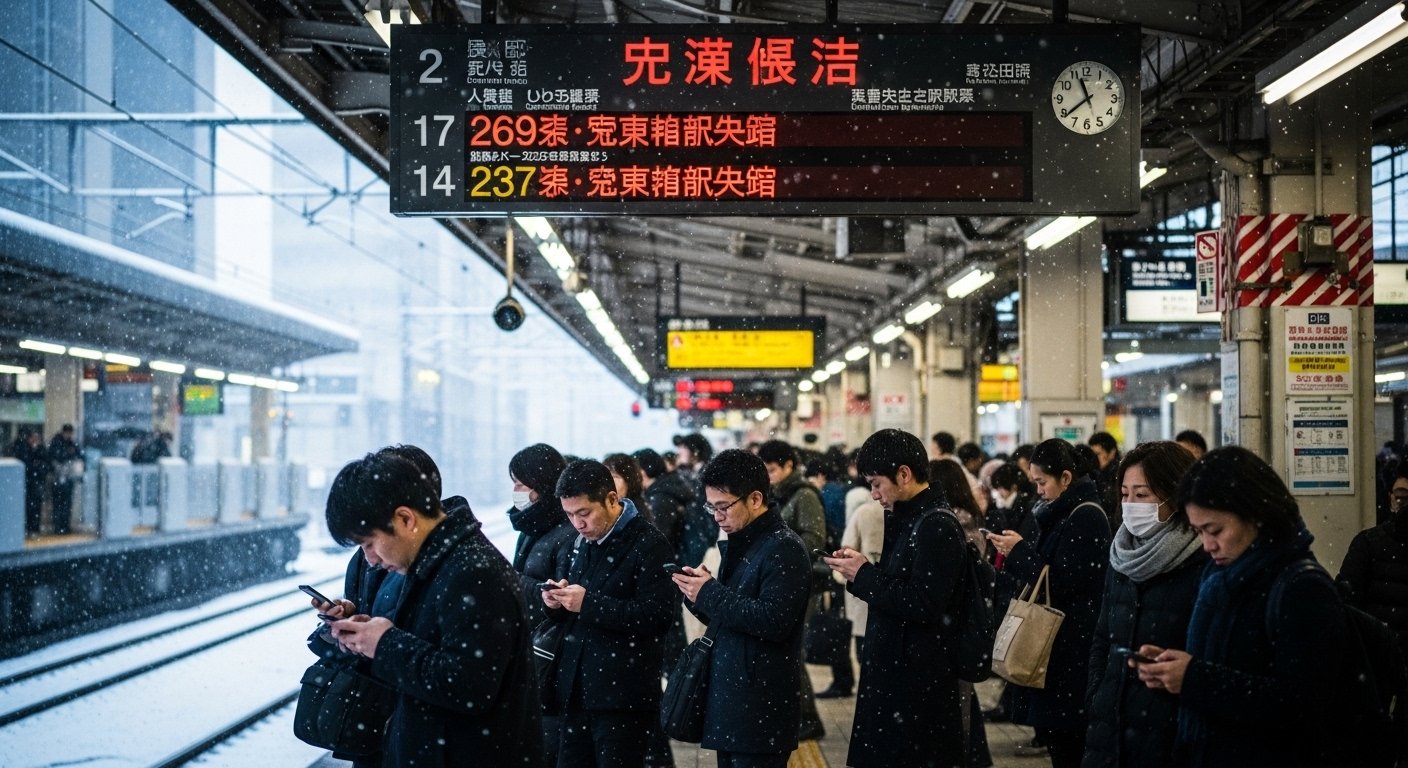
*Images used in this article are for illustration only. They may not be directly related to the content.
Winter Earthquake Preparedness: Your Foreigner’s Guide to Alerts, Shelters & Staying Warm in Japan
The thought of an earthquake in a foreign country can be unsettling, especially during Japan’s colder months. For international visitors and residents, the challenges amplify: language barriers, unfamiliar emergency procedures, and the fear of cold exposure during a disaster.
This comprehensive guide cuts through the confusion, providing clear, practical steps for winter earthquake preparedness in Japan. You’ll learn how to interpret alerts, locate safe shelters, ensure warmth, and navigate emergencies with confidence, turning uncertainty into actionable readiness.
Table of Contents
- The Challenge for Foreigners: Why Winter Earthquakes Demand Specific Preparation
- Understanding Japan’s Multi-Layered Alert System
- Immediate Action: When the Earth Shakes
- Finding Safe Harbor: Evacuation and Shelters (Hinanjo)
- Staying Warm: Your Essential Winter Emergency Kit
- Emergency Contacts
- Communication Post-Quake: Staying Connected
- 🇯🇵 Point & Speak: Essential Japanese Phrases
- 🎯 Local Pro-Tips
- 🚫 Common Mistakes to Avoid
- 📋 Quick Reference Card
- Frequently Asked Questions
The Challenge for Foreigners: Why Winter Earthquakes Demand Specific Preparation
Japan is prone to seismic activity. While the country is well-prepared, foreign visitors often face unique hurdles during a winter earthquake:
- Language Barrier: Crucial announcements, instructions, and local information may be in Japanese only.
- Unfamiliarity with Procedures: Japanese emergency protocols differ from those in other countries.
- Fear of Cold & Exposure: Winter conditions intensify the risk of hypothermia if heating or proper gear is unavailable.
- Locating Shelters: Identifying and reaching designated evacuation centers can be difficult without clear guidance.
- Lack of Localized Information: General advice may not cover hyper-local routes or specific shelter provisions for foreigners.
Proactive preparation is not just recommended; it is essential for your safety and well-being.
Understanding Japan’s Multi-Layered Alert System
Japan employs a robust alert system designed to provide early warnings for various disasters, including earthquakes. Knowing how these alerts work is your first step in preparedness.
Earthquake Early Warning (EEW)
The EEW system detects initial, non-damaging P-waves and rapidly calculates the earthquake’s epicenter and intensity, issuing warnings before stronger S-waves arrive. This provides precious seconds (or tens of seconds) to take cover.
J-Alert
J-Alert is a broader nationwide system that broadcasts critical warnings for major earthquakes, tsunamis, volcanic eruptions, and other emergencies via satellite. These alerts reach mobile phones (as distinct, loud alarms), TV, radio, and public address systems.
Essential Tools: The ‘Safety tips’ App
This app, officially endorsed by JNTO, is crucial. It provides push notifications for EEW and Tsunami Warnings in English, Japanese, Korean, and Chinese. It also includes an evacuation flowchart, useful phrases, and links to vital information.
🎯 Local Pro-Tip: Download the JNTO ‘Safety tips’ app immediately upon arrival or before your trip. Ensure notifications are enabled and your phone’s volume is audible. Do this for everyone in your travel party.

Immediate Action: When the Earth Shakes
When an earthquake alert sounds or you feel tremors, your immediate response can prevent injury.
If Indoors:
- Drop, Cover, and Hold On: Immediately drop to the floor, take cover under a sturdy table or desk, and hold on to it until the shaking stops.
- Stay Away: Move away from windows, heavy furniture, large appliances, or anything that could fall.
- Protect Your Head: If no sturdy cover is available, drop to the floor and cover your head and neck with your arms.
- Avoid Elevators: Do not use elevators during or immediately after an earthquake.

If Outdoors:
- Move to Open Areas: Get to an open space away from buildings, utility poles, streetlights, and power lines.
- Stay Clear of Structures: Avoid steep slopes or cliffs where landslides could occur.
- If Driving: Pull over safely, stop the car, set the parking brake, and stay inside until the shaking stops.
- At the Beach/Coast: If near the coast and a strong earthquake occurs, immediately move to higher ground in case of a tsunami, even if no tsunami warning is issued yet.

Finding Safe Harbor: Evacuation and Shelters (Hinanjo)
After the initial shaking, assessing your situation and moving to a safe location is paramount. Designated evacuation centers (避難所 – hinanjo) are established across Japan.
Identifying Shelters:
Designated evacuation centers are typically public schools, community centers, and large public facilities. Look for specific green and white signboards with the universal evacuation pictogram – a person running towards a building/shelter. These signs prominently display ‘避難所’ (hinanjo) or ‘避難場所’ (hinan basho), often with English text.
🎯 Local Pro-Tip: Before your trip, or upon arrival, use your hotel’s local map or ask staff to point out the nearest designated evacuation center. Save a screenshot of its location on your phone. Local municipality websites (e.g., Tokyo Disaster Prevention Information) often have English maps.

During Evacuation:
- Prioritize Personal Safety: Check yourself and those around you for injuries.
- Follow Authority: Heed directions from emergency personnel (police, fire, local government staff, or volunteers wearing identifiable uniforms or reflective vests).
- Move Calmly: Walk towards your nearest designated evacuation center. Be aware of aftershocks and secondary hazards like fires or fallen debris.
- What to Bring: If possible and safe, grab your emergency kit (detailed below), essential medications, wallet, passport, and phone.

Staying Warm: Your Essential Winter Emergency Kit
In winter, cold is a significant threat. Your emergency kit needs to be winter-proof. While shelters offer basic provisions, personal supplies are critical for comfort and safety.
Core Kit Items:
- Water: At least 1 liter per person per day (for 3 days).
- Non-Perishable Food: Energy bars, dried fruit, canned goods (with a can opener), or ready-to-eat meals.
- Flashlight: With extra batteries.
- Portable Phone Charger (Power Bank): Fully charged.
- Essential Medications: Include a 3-day supply.
- Whistle: To signal for help.
- Cash: Small denominations, as electronic payment systems may be down.
- Small First-Aid Kit: Band-aids, antiseptic wipes, pain relievers.
- Personal Hygiene Items: Small towel, toothbrush, wet wipes.
- Photocopies: Passport, visa, accommodation details, insurance information.

Winter-Specific Additions:
- Layers of Warm Clothing: Thermal underwear, fleece, sweaters, down jacket, waterproof outer layer.
- Emergency Blanket (Space Blanket): Compact and highly effective at retaining body heat.
- Kairo (カイロ – Disposable Hot Packs): These stick-on or handheld packs provide hours of warmth. Stock up.
- Warm Hat, Gloves, Scarf: Essential for heat retention.
- Wool Socks: Keep feet dry and warm.
💰 Price Breakdown: Winter Emergency Kit Essentials (Approximate)
| Item | Cost (¥) |
| Emergency Blanket (Space Blanket) | ¥300-800 |
| Kairo (10-pack) | ¥200-500 |
| Portable Phone Charger | ¥1,500-4,000 |
| Flashlight + Batteries | ¥800-2,000 |
| Water (2L bottle) | ¥100-200 |
| Emergency Food (e.g., Calorie Mate) | ¥150-300 per pack |
Prices verified as of January 2026. Available at convenience stores, ¥100 shops, pharmacies, and electronics stores.

Emergency Contacts
🚨 Emergency Contacts
| Police | 110 |
| Ambulance/Fire | 119 |
All numbers are free and work from any phone. Use 119 for life-threatening emergencies only during a widespread disaster; lines may be overwhelmed.
Communication Post-Quake: Staying Connected
After a disaster, communication is challenging. Knowing alternative methods to connect with family and friends is crucial.
- ‘00000JAPAN’ Wi-Fi: During major disasters, a free, unsecured Wi-Fi network named ‘00000JAPAN’ becomes active in public spaces and evacuation centers. This allows basic communication even if mobile data networks are congested. Be aware that it is unencrypted.
- Disaster Emergency Message Dial (171): This service allows people to record and listen to voice messages for family/friends. While primarily for domestic use, it’s good to know the system exists. Your embassy may also provide communication assistance.
- Social Media: Platforms like Facebook often activate Safety Check features, allowing you to mark yourself safe.
- Your Embassy/Consulate: Register your travel plans with your embassy. They can assist in emergencies.

🇯🇵 Point & Speak: Essential Japanese Phrases
Overcoming the language barrier is critical. Print this section or save it on your phone. Point to the Japanese phrases if you need assistance.
🇯🇵 Point & Speak
Show this section to staff if you’re stuck. They can read the Japanese.
English: Is this an earthquake?
地震ですか?
(Jishin desu ka?)
English: Where is the evacuation center?
避難所はどこですか?
(Hinanjo wa doko desu ka?)
English: Please help me.
助けてください。
(Tasukete kudasai.)
English: I am a foreigner. / I don’t understand Japanese.
私は外国人です。 / 日本語が分かりません。
(Watashi wa gaikokujin desu. / Nihongo ga wakarimasen.)
English: I’m cold. / Do you have a blanket?
寒いです。 / 毛布はありますか?
(Samui desu. / Mōfu wa arimasu ka?)
English: Do you have water? / Is there Wi-Fi?
水はありますか? / Wi-Fiはありますか?
(Mizu wa arimasu ka? / Waifai wa arimasu ka?)
🎯 Local Pro-Tips
Leverage these insights for smoother navigation during a winter earthquake:
🎯 Local Pro-Tip: Pre-identify a meeting point with your travel companions if you get separated. Cell service may be down or overwhelmed, making pre-arranged meeting spots essential. Have a low-tech backup like writing down a physical location.
🎯 Local Pro-Tip: Carry a small, portable translation device or have a robust offline translation app downloaded. While not perfect, it can bridge critical communication gaps with emergency responders.
🎯 Local Pro-Tip: Respect Japanese cultural norms during emergencies: maintain order, cooperate quietly with authorities, and prioritize the collective group’s well-being. This helps emergency response operate efficiently.
🎯 Local Pro-Tip: Consider travel insurance that specifically covers emergency accommodation, medical care, and potential trip disruptions or cancellations due to natural disasters. Read the fine print.

🚫 Common Mistakes to Avoid
Being prepared also means understanding what not to do during a crisis.
- Relying Solely on English: While efforts are made, hyper-local information during a disaster will often be in Japanese first. Proactive language tools are vital.
- Ignoring Alerts: The distinct J-Alert sound is not a drill. Take immediate action when you hear it.
- Not Preparing a Kit: Assuming shelters will provide everything, especially winter essentials, is a risk. Personal preparedness is key.
- Panicking: While natural, panic can hinder effective action. Focus on the immediate “Drop, Cover, Hold On” and then calmly assess.
- Using Elevators: Never use elevators during or immediately after an earthquake. They can become traps.
- Not Checking Local Information: Evacuation routes and shelter locations are municipality-specific. Rely on local government resources rather than general online searches in an emergency.

📋 Quick Reference Card
Screenshot or print this section for easy access:
📋 Quick Reference Card: Winter Earthquake Safety in Japan
- ✅ Download ‘Safety tips’ app (JNTO) – Enable notifications.
- ✅ Know ‘Drop, Cover, Hold On’ – Practice it.
- ✅ Locate Nearest Hinanjo (避難所) – Look for green/white running person signs.
- ✅ Prepare Winter Emergency Kit – Water, food, power bank, kairo, layers, emergency blanket.
- ✅ Learn Key Japanese Phrases – Especially for “Hinanjo wa doko desu ka?” (Where is the shelter?).
- ✅ Emergency Numbers: Police 110, Ambulance/Fire 119.
- ✅ Use ‘00000JAPAN’ Wi-Fi for communication post-disaster.
- ✅ Carry Cash – Small denominations.
Frequently Asked Questions
How much time do I have after an Earthquake Early Warning (EEW)?
The EEW system typically provides a few seconds to tens of seconds of warning before strong shaking begins. This short window is critical for taking immediate safety actions like “Drop, Cover, and Hold On.”
Are evacuation centers (hinanjo) heated in winter?
While designated shelters are public facilities, their heating capabilities can vary. Some may have limited heating, while others might be large, unheated spaces. It is critical to bring your own warm clothing, emergency blankets, and kairo (hot packs) to ensure your warmth and prevent hypothermia.
What if I’m not near a designated shelter when an earthquake occurs?
First, prioritize immediate safety by performing “Drop, Cover, and Hold On.” Once the shaking stops, assess your surroundings. If safe, move towards an open, unobstructed area. Then, use your “Safety tips” app or ask locals (using the provided phrases) for directions to the nearest hinanjo. Do not attempt to travel long distances immediately after a major earthquake as transport will be disrupted and aftershocks are a risk.
Will my phone work for communication after a major earthquake?
Mobile networks can become congested or damaged during a major disaster. While calls might not connect, text messages often have a better chance of getting through. The free ‘00000JAPAN’ Wi-Fi network, which activates in many public spaces, is also a vital communication tool. Ensure your phone is fully charged and you have a power bank.
Should I carry my passport and important documents during an evacuation?
Yes, if it is safe to retrieve them quickly. Always keep your passport, visa, travel insurance, and essential medication readily accessible. Consider carrying photocopies or digital copies on your phone (backed up) as well. These documents are vital for identification and assistance from your embassy.
Conclusion
Preparing for a winter earthquake in Japan requires specific knowledge and practical steps. By understanding the alert systems, knowing immediate actions, identifying shelters, and packing a winter-ready emergency kit, you proactively mitigate risks.
Equipping yourself with these tools removes friction and enhances your safety. Stay informed, stay warm, and travel with greater peace of mind.
Further Resources:
- JNTO Safety tips for travelers (Earthquake information)
- JNTO Safety tips App information
- Tokyo Disaster Prevention Information (English)
- NHK World-Japan (Live news and emergency information in English)
Disclaimer
This guide provides general information for earthquake preparedness. Local conditions and specific emergency instructions may vary. Always prioritize instructions from local authorities and emergency personnel. This content is for informational purposes only and does not constitute professional advice. Japan Local Fixer assumes no liability for any actions taken based on the information provided.