*Images used in this article are for illustration only. They may not be directly related to the content.
Winter Quakes in Japan: My 10-Year Guide to Staying Warm, Safe & Connected
I remember my first decent quake in Japan. It was a 5.8, nothing crazy, but enough to rattle the cheap IKEA shelves right off the wall. My heart was pounding like a taiko drum. I instinctively ducked under the kitchen counter, grabbing my dog. Everything was shaking, glass jingling, the whole apartment groaning like an old ship. When it finally stopped, I emerged, shaking, into a mild spring evening. I remember thinking, “Thank God it’s not winter.” That thought has stuck with me for ten years. Because as much as tourists and even new residents stress about any earthquake in Japan, very few truly grasp the absolute nightmare a winter earthquake can become. I’ve seen enough winters here to know that the risk of hypothermia, power cuts, and snow-impeded evacuations isn’t just theory; it’s a terrifying reality.
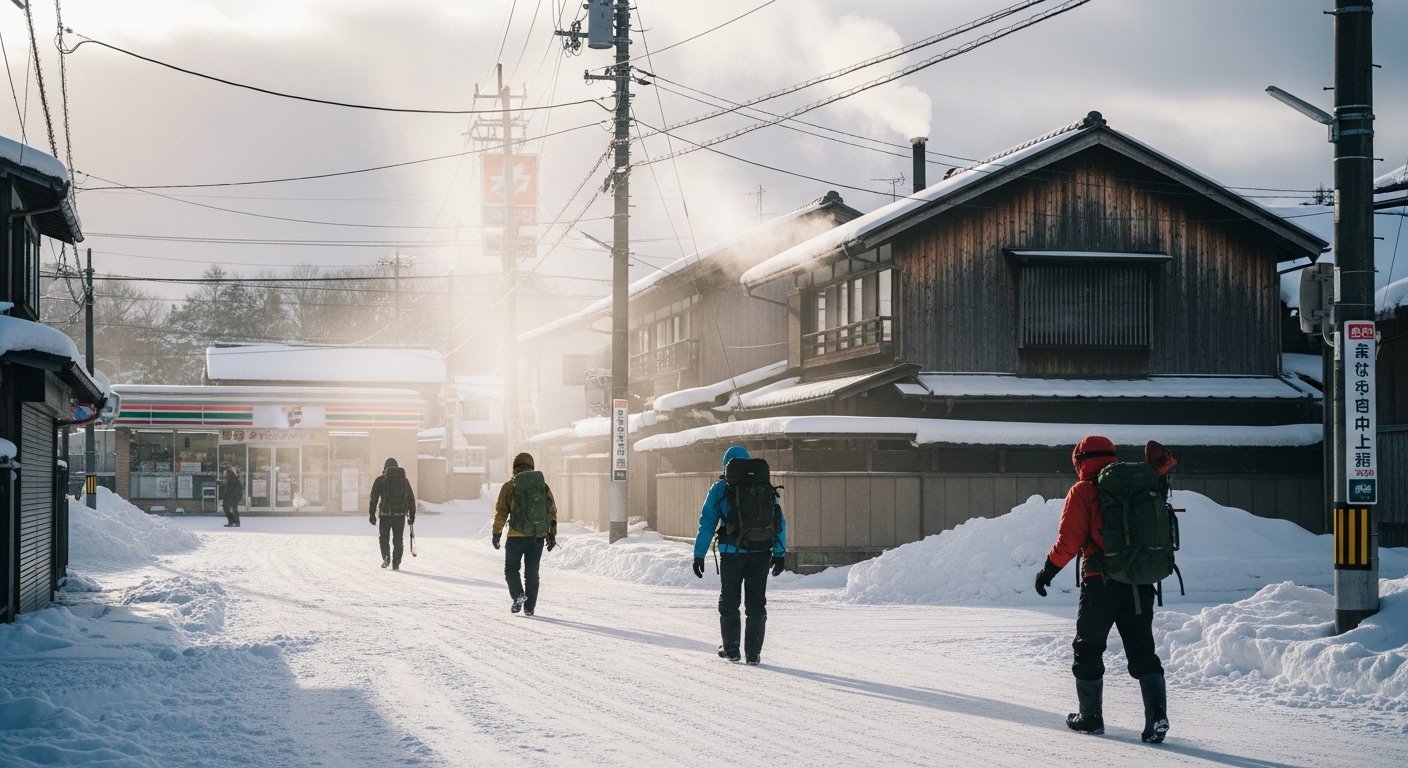
Table of Contents
- The Real Struggle: Why Winter Quakes Are a Different Beast
- Prepping Your Winter Quake Arsenal: Beyond the Basics
- The Cost of Preparedness: What You’ll Spend
- Common Pitfalls: Don’t Make My Mistakes
- What to Say When You’re Lost & Cold: Point & Speak
- Pro-Tip from Your Local Fixer
- FAQ: Quick Answers to Your Burning Questions
The Real Struggle: Why Winter Quakes Are a Different Beast
Let me tell you, when the ground starts swaying violently underfoot, no matter the season, it’s terrifying. But picture this: it’s January, the wind outside is howling, and the temperature has plummeted to a bone-chilling 2°C (36°F). Snow is starting to fall, thick and fast. Now, imagine a major earthquake hits. Suddenly, your cozy, heated apartment is without power. The lights go out, the heater dies, and that familiar Japanese efficiency you’ve come to rely on? Gone. This isn’t just about things falling off shelves anymore; this is about survival in sub-zero conditions.
I’ve been here long enough to experience a few close calls, and the thought of being caught without heat or light in the dead of winter? It sends shivers down my spine. Many international visitors and even long-term residents, myself included once upon a time, simply don’t have a clue about the unique dangers of a winter earthquake. We worry about structural damage, yes, but we often overlook the insidious threat of hypothermia. One Mainichi article I read even highlighted how snow and cold can seriously slow down evacuation efforts. Think about trying to trek through knee-deep snow, in the dark, with freezing rain, all while dealing with aftershocks and trying to figure out where to go. It’s a whole new level of panic.
Then there’s the language barrier. Japan’s emergency systems are incredibly robust, but if you don’t speak Japanese, understanding rapid-fire announcements, deciphering cryptic signs, or asking for help can feel like trying to solve a Rubik’s Cube in the dark. I once got lost trying to find a train platform during a minor service disruption, and even with Google Translate, the sheer volume of unique, rapid Japanese announcements was overwhelming. Imagine that scenario, but with your life potentially on the line, shivering, and needing to find a shelter or medical aid. It’s not just difficult; it’s genuinely terrifying. You’re cold, disoriented, and the one thing you desperately need – clear, actionable information – feels miles away.
Prepping Your Winter Quake Arsenal: Beyond the Basics
Okay, enough with the scary stuff. Let’s get practical. As your local fixer, my goal is to make sure you’re not just ‘prepared,’ but winter-quake-prepared. This isn’t just about having a bottle of water; it’s about having insulated water, if you catch my drift.
The basic principles apply, of course: ‘Drop, Cover, and Hold On’ when the shaking starts. But what happens after that, especially if it’s snowing outside and the power’s out? That’s where the winter-specific survival strategies come in. We need to think about warmth, communication, and self-sufficiency.
Your Emergency Go-Bag: Winter Edition
This isn’t your summer hiking pack. This is your ‘I might be sleeping in a public gym with 300 strangers in sub-zero temperatures’ pack. You need this packed and easily accessible, not buried under a pile of laundry. I keep mine right by the genkan (entranceway), ready to grab and bolt.
- Warmth is Life: This is non-negotiable.
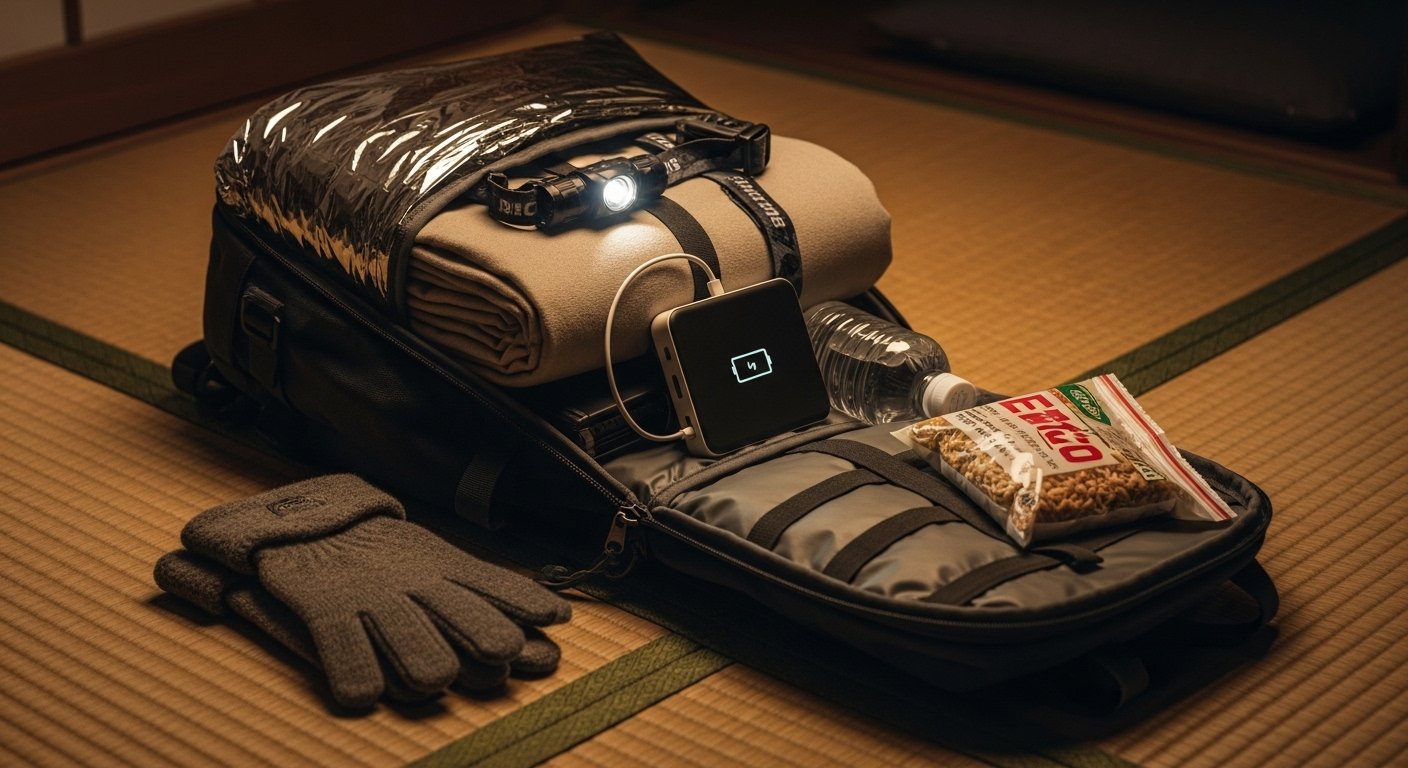
- Thermal Blankets/Sleeping Bag: Not just any blanket. We’re talking Mylar emergency blankets (the crinkly silver ones, they work wonders for reflecting body heat), or a compact, warm sleeping bag. I picked up a super-light down sleeping bag for ¥5,000 at a second-hand shop – best investment ever.
- Extra Layers: A full set of thermal underwear, wool socks, waterproof gloves, a warm hat, and a scarf. Even if you’re already dressed for winter, you might need more. Remember, during winter evacuations, it is crucial to keep your skin covered and remain dry to prevent hypothermia. Wet clothes equal a fast track to freezing.
- Heat Packs (Kairo): These little self-heating packets are a godsend. Buy a big multi-pack. You can stick them to your inner layers or just hold them in your pockets. I always have a few in my regular winter jacket, just in case.
- Water & Food: Store enough drinking water to last for several days. This means at least 3 liters per person per day.
- Insulated Water Bottle: A regular plastic bottle of water will freeze solid. An insulated bottle (like a Thermos) will keep your water from turning into an ice block for a while longer.
- High-Energy, Non-Perishable Food: Think calorie-dense bars, nuts, dried fruit, instant ramen (if you can boil water, which might be a big ‘if’). Something that doesn’t need cooking and provides quick energy.
- Light & Power:
- Headlamp/Flashlight: With extra batteries. Your phone flashlight won’t last. A headlamp lets you keep your hands free.
- Portable Power Bank: A large-capacity one. Charge it regularly. This is your lifeline for communication.
- First Aid & Hygiene:
- Basic First Aid Kit: Bandages, antiseptic wipes, pain relievers.
- Prescription Meds: If you need them daily, pack a few days’ supply.
- Hand Sanitizer, Wet Wipes, Tissue Packs: Public facilities might be overwhelmed or non-existent.
- Important Documents:
- Copies: Passport, residence card (Zairyu Card), insurance info. Keep them in a waterproof baggie.
- Cash: Small denominations. ATMs might be down, and cashless payment systems could fail. I always keep at least ¥10,000 in my go-bag.
Inside Your Home: Safe Zones & Supplies
Before an earthquake even strikes, you need a plan for your immediate surroundings. This is where that ‘determine the safest place within your house or apartment beforehand’ advice comes in.
- Identify Your Safe Spot: Is it under a sturdy dining table? A desk? Away from windows and heavy furniture that could fall? Practice ‘Drop, Cover, Hold On’ with your family.
- Secure Furniture: Use earthquake straps to secure tall bookshelves, TVs, and heavy cabinets. I learned this the hard way after my TV almost took a dive!
- Water Storage: Beyond your go-bag, store extra water bottles around the house. Japanese apartments often have small storage spaces, use them.
- Emergency Toilet: If water is cut off, your toilet won’t flush. Stock up on emergency toilet kits (凝固剤 – gyōkozai – solidifier packets) from drugstores or 100-yen shops. Trust me, you don’t want to find yourself in that situation.
- Warmth in Place: If you can’t evacuate immediately, or shelters are full, you’ll need to stay warm indoors without power. Think sleeping bags, extra duvets, thick blankets, and even wrapping yourself in cardboard boxes (yes, really!). Consider a tent pitched inside your apartment to trap body heat in a smaller space.
Communication is Key (Even if Your Japanese Isn’t)
You’ve survived the quake, you’re warm, you’re hydrated. Now what? You need to know what’s happening and how to get help. Effective winter earthquake survival for tourists requires understanding Japan’s emergency systems, preparing a basic kit, knowing how to stay warm, and familiarizing oneself with communication tools.
- NHK WORLD-JAPAN: This is your absolute lifeline. NHK WORLD-JAPAN is the country’s public broadcaster, offering news, analysis, and feature videos, serving as a critical source for emergency information. Download their app, bookmark their website. They provide English-language broadcasts during emergencies.
- Emergency Apps: Essential apps and knowledge of crucial Japanese phrases are vital components for survival during a winter earthquake.
- Japan Official Travel App: Has a safety tips section, including push notifications for earthquakes (early warning system).
- Safety Tips app: From the Japan Tourism Agency, offers real-time alerts in multiple languages.
- Google Translate: Download the offline Japanese language pack now. Don’t wait until the internet is down.
- Public Communication: Look for public loudspeakers (often in parks or community centers) and listen for announcements. If you see people gathering, follow them – they might be heading to an evacuation point.
- Confirming Safety:
- 171 Disaster Emergency Message Dial (災害用伝言ダイヤル): You can record a message after a disaster, and others can retrieve it by dialing 171 and your phone number. Practice using it (they often have practice days, usually on the 1st and 15th of the month).
- Web171: The web version of the same service.
- SNS: While often unreliable immediately after a major disaster, services like X (formerly Twitter) can become useful for sharing and finding information once network congestion clears. Use hashtags like #地震 (jishin – earthquake) or #災害 (saigai – disaster).
The Cost of Preparedness: What You’ll Spend
So, what’s this winter-proof peace of mind going to set you back? Honestly, it’s not as much as you might think, especially compared to the alternative. Here’s a rough breakdown, based on my decade of scavenging good deals and figuring out what’s actually useful.
| Item | Specifics | Estimated Price (¥) |
| Emergency Go-Bag (backpack) | Sturdy, 20-30L capacity | ¥2,000 – ¥5,000 |
| Thermal Blankets / Sleeping Bag | Mylar sheets (5-pack) or compact sleeping bag | ¥1,000 – ¥5,000 |
| Extra Warm Layers | Heat-tech equivalents, wool socks, gloves, hat | ¥3,000 – ¥7,000 |
| Heat Packs (Kairo) | Large box (60-100 pieces) | ¥1,500 – ¥2,500 |
| Drinking Water | 9L (3 days for 1 person) + insulated bottle | ¥1,000 – ¥3,000 |
| Emergency Food | Energy bars, emergency rations (3-day supply) | ¥2,000 – ¥4,000 |
| Headlamp / Flashlight & Batteries | Decent quality, extra AA/AAA | ¥1,500 – ¥3,000 |
| Portable Power Bank | 10,000-20,000mAh capacity | ¥3,000 – ¥6,000 |
| First Aid Kit & Meds | Basic kit, any prescriptions | ¥1,500 – ¥3,000 |
| Emergency Toilet Kits | 5-10 packets | ¥500 – ¥1,000 |
| Cash | Small bills (¥10,000-¥20,000 recommended) | ¥10,000 – ¥20,000 |
| Estimated Total (excluding cash): | ¥17,000 – ¥40,500 | |
Remember, these are estimates. You can find many items at ¥100 shops (like Daiso or Seria) for very cheap, but some things like a good power bank or insulated bottle are worth investing a bit more. Think of it as a one-time investment for peace of mind.
Common Pitfalls: Don’t Make My Mistakes
I’ve lived here for a decade, and I’ve stumbled through enough cultural nuances and minor disasters to have a healthy respect for what can go wrong. Here are a few traps I’ve seen people fall into, or almost fell into myself:
- Underestimating the Cold: Coming from warmer climates, you might think “It’s just a bit chilly.” Trust me, without central heating or power, Japanese homes get freezing fast. I once lost power for about 6 hours in late autumn, and my apartment dropped from a comfortable 22°C to a painful 10°C in just a few hours. In winter, that drop is even faster and more severe. Don’t skimp on those extra layers and heat packs! Hypothermia is a silent killer.
- Relying Solely on Your Phone: Your phone is amazing, until the battery dies or there’s no signal. And if everyone’s trying to call at once, networks crash. I remember during a smaller typhoon, trying to reach friends and getting ‘network busy’ messages for hours. A fully charged power bank, a battery-powered radio, and knowing where to get information via NHK World Japan are critical backups.
- Forgetting Offline Maps and Translate: Imagine you’re evacuated, disoriented, and your data runs out. Having Google Maps with offline areas downloaded, and the Japanese language pack for Google Translate, means you can still navigate and communicate basic needs. I only learned this after a frustrating incident trying to find an obscure ramen shop in a rural area with patchy signal.
- No Cash: Japan is increasingly cashless, but in a disaster, cash is king. Convenience stores, small shops, and even some public transportation might only accept cash if power is out or systems are down. I once got stuck at a remote train station because their card reader was broken, and I only had ¥500. Had to walk 3km to the next ATM. Imagine that with an emergency.
- Assuming Shelters Are Always Available/Easy to Access: While Japan has a robust shelter system, in a major winter event, they might be overwhelmed, hard to reach due to snow, or not immediately set up with heating. Being self-sufficient for the first 24-48 hours is crucial. And if you have pets, remember many official shelters might not allow them. Have a plan for your furry friends.
What to Say When You’re Lost & Cold: Point & Speak
So, you’re out there, it’s cold, and you need to communicate. Don’t panic. Here are some simple, crucial phrases that can make all the difference. Just point to the Japanese text or try to sound it out. Most Japanese people will appreciate the effort, even if your pronunciation isn’t perfect.
🇯🇵 Point & Speak
Show this to staff:
English: Are you okay? (To check on others)
大丈夫ですか?
(Daijoubu desu ka?)
English: I need help.
助けてください。
(Tasukete kudasai.)
English: Where is the evacuation center?
避難所はどこですか?
(Hinanjō wa doko desu ka?)
English: I am cold.
寒いです。
(Samui desu.)
English: Do you have water?
お水ありますか?
(Omizu arimasu ka?)
English: Do you have food?
食べ物ありますか?
(Tabemono arimasu ka?)
English: I am a foreigner / tourist.
私は外国人です / 観光客です。
(Watashi wa gaikokujin desu / Kankōkyaku desu.)
Pro-Tip from Your Local Fixer
🎯 Insider Tip: For cheap, essential winter earthquake supplies like heat packs, emergency ponchos, basic first-aid, or small headlamps, hit up your local 100-yen shops (Daiso, Seria, Can Do) *before* an emergency. They’re often overlooked but are absolute lifesavers for stocking up on budget-friendly items. Also, remember that many Japanese convenience stores, especially during winter, will have small emergency kits near the registers – grab one to supplement your main go-bag!
FAQ: Quick Answers to Your Burning Questions
What are the biggest risks of a winter earthquake in Japan?
The absolute biggest risks are hypothermia due to extreme cold and potential power loss, which leaves you without heating. Snow and ice can also severely impede evacuation efforts, making it harder to reach safe shelters or receive aid. Keeping dry and covered is paramount!
How can I get emergency information in English during an earthquake?
Your best bet is NHK WORLD-JAPAN, the public broadcaster, which provides news and emergency updates in English. Download their app and the “Safety Tips” app from the Japan Tourism Agency for real-time alerts. Having offline Google Translate (with the Japanese language pack) is also crucial for understanding local signs or communicating basic needs.
What are the absolute essential items for a winter earthquake survival kit?
Beyond general earthquake supplies, prioritize warmth: Mylar thermal blankets, extra thermal layers (socks, gloves, hat), and plenty of heat packs (kairo). Also, an insulated water bottle to prevent water from freezing, a large portable power bank, a headlamp, and a supply of high-calorie, non-perishable food are critical. Don’t forget cash and copies of important documents in a waterproof bag.
Look, nobody wants to think about a disaster, especially when you’re visiting or living in a beautiful place like Japan. But as your local fixer, I’ve seen firsthand that being prepared isn’t about paranoia; it’s about common sense and respect for nature’s power. Take these steps, prepare your winter kit, and learn the basics. That way, if the ground ever does decide to put on a show in the middle of winter, you’ll be one of the people staying warm, staying safe, and helping others, not just struggling to survive. It’s about being smart, not scared. Stay safe out there, folks.


